by gaukcars.com | Oct 2, 2024 | Blog
- Design prize: New Land Rover Defender named 2021 World Car Design of the Year as unstoppable all-terrain model beats shortlisted rivals to win coveted award
- Breadth of capability: Judges commend Defender’s distinctive design, all-conquering off-road capability, excellent on-road dynamics and 21st century practicality and connectivity
- Customer appeal: Line-up provides incredible choice, including 90 and 110 body designs, commercial Hard Top derivatives and powertrains ranging from a plug-in hybrid to a new V8
- Serial success: Latest prize means Defender has now won 53 international awards since launch, with Land Rover experiencing unprecedented demand for the 90 and 110
- Choose your model: 90 Hard Top priced from £35,360 OTR (ex. VAT), 90 from £44,825 and 110 starting at £46,215 in the UK. Configure yours at www.landrover.co.uk/Defender
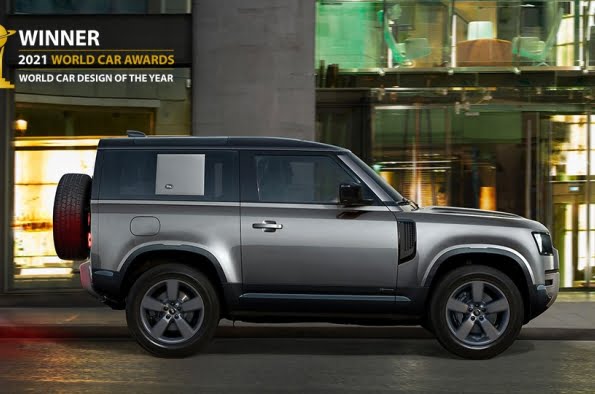
The Land Rover Defender has been named 2021 World Car Design of the Year at the annual World Car Awards.
It’s the third time Land Rover has claimed the coveted prize following previous wins for Range Rover Velar (2018) and Range Rover Evoque (2012) and is the latest in a number of global awards for the rugged 4×4.
New Defender remains true to the pioneering spirit that has been a Land Rover hallmark for more than 70 years and redefines adventure for the 21st century. Iconic in name, shape and capability, it is available in a choice of body designs and can be personalised with a choice of four Accessory Packs to help owners make more of their world.
The World Car Design of the Year prize recognises the most outstanding new car of the last 12 months and rewards vehicles demonstrating the highest standards of technical innovation and design and that push established boundaries.
Prof. Gerry McGovern OBE, Chief Creative Officer, Jaguar Land Rover, said: “New Defender is influenced by its past but is not constrained by it and we are delighted it has been honoured with this award. Our vision was to create a 21st century Defender by pushing the boundaries of engineering, technology and design while retaining its renowned DNA and off-road capability. The result is a compelling 4×4 that resonates with customers on an emotional level.”
This year, all the contenders competing in the other four award categories were eligible for the World Car Design of the Year prize. A panel of seven automotive design experts reviewed the contenders to establish a shortlist of recommendations for the jurors’ final vote, made by the 93 international journalists that comprise the jury panel.
The design experts included Gernot Bracht (Germany – Pforzheim Design School), Ian Callum (United Kingdom – Director of Design, CALLUM), Gert Hildebrand (Germany – Owner Hildebrand-Design), Patrick le Quément (France – Designer and President of the Strategy Committee – The Sustainable Design School), Tom Matano (USA – Academy of Art University, Former Head of Design – Mazda), Victor Nacif (USA – Chief Creative Officer, Brojure.com and Design instructor, New School of Architecture and Design) and Shiro Nakamura (Japan – CEO, Shiro Nakamura Design Associates Inc.).
A distinctive silhouette makes the New Defender instantly recognisable, with minimal front and rear overhangs providing excellent approach and departure angles. Land Rover’s designers re-envisioned familiar Defender trademarks, giving the 4×4 a purposeful upright stance and Alpine light windows in the roof, while retaining the side-hinged rear tailgate and externally-mounted spare wheel that make the original so identifiable.
The stripped-back personality of the original Defender has been embraced inside, where structural elements and fixings usually hidden from view have been exposed, with the emphasis on simplicity and practicality. Defender 110 offers five, six or 5+2 seating configurations, while the 90 is capable of accommodating six occupants in a vehicle the length of a compact family hatchback.
Defender’s breadth of capability raises the threshold for off-road ruggedness and on-road comfort. Underpinned by Land Rover’s strong D7x aluminium platform – the brand’s stiffest ever body structure – advanced all-terrain technologies and state-of-the-art powertrains deliver unstoppable capability. Its carefully honed handling delivers a rewarding drive and first-class comfort across all terrains, and the experts at Euro NCAP awarded the Defender a maximum five-star safety rating.
A choice of advanced Ingenium petrol and cleaner diesel engines ensure Defender has the power, control and efficiency for any environment, while a Plug-in Hybrid Electric Vehicle (PHEV) powertrain provides silent EV-only progress of up to 27 miles*. In addition, the new 525PS Defender V8 combines characteristic Land Rover capability with incredible performance and bespoke chassis settings for heightened driver engagement.
The Defender family now encompasses the Defender 90 and Defender 110, as well as the 90 and 110 Hard Top commercial variants. Since its launch, Defender has won more than 50 global accolades, including Top Gear’s 2020 Car of the Year, MotorTrend’s 2021 SUV of the Year and Autocar’s Best SUV 2020.
*All fuel consumption and CO2 data quoted above relates to Official EU-WLTP TEL Combined Test Figures for five-seat derivatives. The figures provided are as a result of official manufacturer’s tests in accordance with EU legislation. For comparison purposes only. Real world figures may differ. CO2 and fuel economy figures may vary according to factors such as driving styles, environmental conditions, load and accessories.
by gaukcars.com | Oct 2, 2024 | Blog
- Citroën celebrates 60 years of AMI 6, first revealed on 24 April 1961.
- Citroën AMI 6 was the first car manufactured at the newly opened Citroën plant in Rennes, France.
- Over one million AMI 6 models were sold up until 1971, 551,880 were the estate version.
- AMI 6 completed Citroën’s range, which at the time consisted of the iconic 2CV, ID and DS.
- With its unforgettable inverted rear window, AMI 6 embodied the 60s with its ‘Z-Line’ design.
- Discover more about AMI 6 at Citroën’s virtual museum, Citroën Origins: www.citroenorigins.com
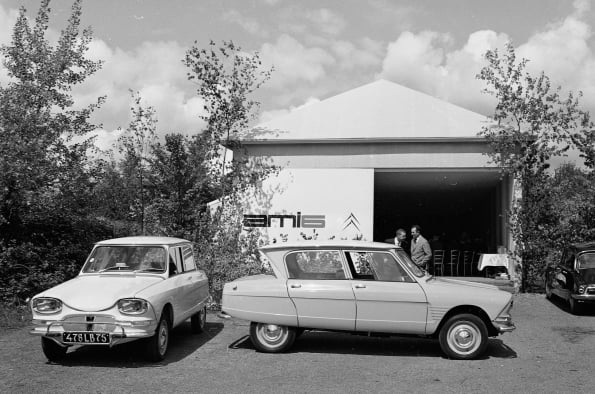
Citroën is celebrating 60 years of the iconic AMI 6, which was first revealed on 24 April 1961.
With its compact dimensions and spacious interior, the vehicle went on to be a great success for the brand with over one million models sold, half of which were the capacious estate version that arrived in 1964. At launch, the new AMI 6 completed Citroën’s vehicle line up, joining the iconic 2CV, ID and DS models. It presented a shape and style that many perceived as surprising in the automotive sector at the time.
The original design was 3.87m long and 1.52m wide, which later evolved to include rear sliding windows (from 1962), and an enhanced Club trim (from 1967). AMI 6 was originally priced from just 6,550 French Francs.
After designing Traction Avant, 2CV and DS with the Citroën design team, Flaminio Bertoni was asked to lend his talent to the design of a middle-range car, known as the ‘AM Project’. AMI 6 was the end result. Bertoni described the car to his friends and family as his masterpiece – as the model was developed without the creative input of anyone else, Bertoni was able to fully express himself with the design of the vehicle.
For AMI 6, Bertoni had the bold idea of inverting the rear window, meaning that it would remain clear when it rained. It also allowed for a well-proportioned boot with a traditional boot lid. The design also boasted spacious rear seats, whilst retaining compact dimensions. AMI 6 had a dual-cylinder 602cm3 engine, capable of 22hp at 4,500 rpm, the same as seen in the 2CV. In a first at the time, the car also had large rectangular headlights at the front. The model displayed a strong character, with a sloping bonnet, the pagoda-style roof and panels highlighted with clearly embossed lines – some onlookers even described the car as being in a “baroque style”.
The interior of AMI 6 was inspired directly by that of the iconic DS, which was the gold standard at the time. From its single-spoke steering wheel and stylish door handles, to its dashboard controls and seats, everything indicated that the model was a top-of-the-range Citroën. The on-road handling and compliant ride – inherited from the famous suspension setup of the 2CV – was received positively by customers and the press.
From its creation, in keeping with the Citroën spirit, AMI 6 has been regarded fondly as an original and innovative car. Its die-hard fans continue to maintain a particular interest in the Club versions of the model that came with four headlights and white trim. They were sold from September 1967. The iconic advertising slogan for AMI 6 was “the least expensive comfort mile in the world”.
The turning point for the model came in late 1964, with the arrival of a small estate version with a 320kg payload that was designed by Flaminio Bertoni’s assistant, Henri Dargent, as well as Robert Opron, who would become Bertoni’s successor after he passed away in 1964. The estate version would go on to boost sales and overtake the saloon in terms of popularity, something that has rarely happened in automotive history.
The design of the estate version offered a great amount of space for a leisure vehicle in this category, along with easy and convenient accessibility. It was a versatile model, providing just as much comfort to a family travelling on a trip, as it would for a professional using the car for business needs. In 1966, AMI 6 was named in France as the nation’s favourite car of the year.
Production of the saloon ended in March 1969, six months before production of the estate ended. The model made way for the new AMI 8 that featured a more conventional rear design. Eventually AMI 8 handed the baton on to Citroën Visa in 1978.
CITROËN AMI 6, DID YOU KNOW?
- The name AMI 6 comes from a phonetic combination that refers to the name of the design project (AM vehicle), the title “Miss”, and the Italian word for friend, “amici”, which is considered to have been inspired by Bertoni’s Italian heritage.
- Yvonne de Gaulle, wife of General de Gaulle, drove an AMI 6.
- The vehicle inaugurated the Citroën plant in Rennes-La-Janais on 10 September 1960. The factory was still under construction at the time and it was a little over a year before production began on the site.
- A rally named “Le Tour de Gaule d’Amisix” was held by Citroën, setting off from Rennes-La-Janais on 19 January 1966, with two standard AMI 6 estate models to demonstrate the endurance and qualities of the model. When the team crossed the finish line, 23 hours and 11 minutes later they had covered 1,291 miles at an average speed of 55.7 mph.
- In June 1963, AMI 6 was launched in America. The export model adopted four round headlights and reinforced bumpers.
- The model was produced in Paris from 1961 to 1963 and Rennes-La-Janais from 1961 to 1969, marking the brand’s first major decentralisation from Paris. The model was also produced in Forest, Belgium from 1961 to 1969, and Catila, Argentina, where cars were shipped in parts to the plant to be assembled on site until 1971.
- In total 1,039,384 AMI 6 vehicles were produced, of which 483,986 were saloons (from April 1961 to March 1969) and 551,880 were estates (from October 1964 to September 1969). An additional 3,518 vehicles were sold in ‘Enterprise’ specification, which was a two-seater service estate with both glazed and panelled versions available.
- On the last production AMI 6 models, a small knob that controlled a rheostat was introduced to allow adjustment for the brightness of the dials.
- Miniatures of the model can be purchased as gifts from the Citroën Lifestyle store. The AMI 6 1967 saloon in Typhoon Grey can be bought as a 1:43 miniature for €37 at the following Link
Citroën’s virtual museum – Citroën Origins – offers an immersive experience in 3D, offering a closer look at AMI 6 and 80 other iconic Citroën models. To discover more, please click: www.citroenorigins.com
To discover more about the Citroën Lifestyle store and the items for sale, go to: www.lifestyle.citroen.com

by gaukcars.com | Oct 2, 2024 | Blog
Volvo Cars aims for annual savings of SEK 1 billion and reductions of 2.5 million tonnes in carbon emissions from 2025 using circular business principles.
Supporting the company’s long-term goal of becoming a circular business by 2040, Volvo Cars will create closed material loops for emission-heavy materials such as steel and aluminium. It will also remanufacture, repair, reuse and refurbish parts.
“Volvo Cars has one of the most ambitious climate plans in the car industry, and if we are to reach our goals, we need to embrace the circular economy,” said Anders Kärrberg, Head of Global Sustainability at Volvo Cars. “This requires us to rethink everything we do and how we do it. We put a strong focus on integrating sustainability into the way we think and work as a company, and we are making it as important as safety has always been to us.”
To become a circular business by 2040, Volvo Cars is convinced that every part in its cars should be designed, developed and manufactured to be used and reused, either by the company or its suppliers.
By focusing on resource efficiency and retaining the value created in materials and components for as long as possible during the lifecycle, the company wants to optimise the use of materials, components and cars, and eliminate waste in the process. This will lead to financial savings and new revenue streams, as well as significantly lowering its environmental impact.
Volvo Cars already remanufactures parts such as gearboxes and engines to make better use of materials and reduce emissions. In 2020, around 40,000 parts were remanufactured, saving nearly 3,000 tonnes of CO2 emissions. By 2025, Volvo Cars aims to more than double its remanufacturing business. To ensure that valuable material can be kept in circulation, the company recycled 95 per cent of its production waste last year. This included 176,000 tonnes of steel, avoiding the generation of nearly 640,000 tonnes of CO2.
In 2020, Volvo Cars became a member of the Ellen MacArthur Foundation, which is the world’s leading circular economy network.
“We welcome Volvo Cars’ commitment to design, develop and manufacture its products to be used and reused. It is very encouraging to see the link being made between circular solutions, business strategy and a reduction in carbon emissions,” said Joe Murphy, Network Lead at the Ellen MacArthur Foundation. “The circular economy offers companies a framework for viable long-term growth that also benefits society and the environment.”
New business models such as giving electric vehicle batteries a second life are important from a circular business perspective. By using batteries in energy storage applications outside of cars, new revenue streams and cost savings can be realised while also extending the batteries’ lifecycles.
Together with suppliers and partners, Volvo Cars is exploring the potential in second-life applications for its high-voltage batteries. A current example is the collaboration with BatteryLoop, a company within the Swedish Stena Recycling Group that reuses batteries from the automotive industry.
BatteryLoop and Volvo Cars use batteries from electrified Volvo cars for a solar-powered energy-storage system. Starting in April, the system will power charging stations for electrified cars and electric bikes at Swedish hygiene and health firm Essity’s business centre outside of Gothenburg.
In a similar project, Volvo Cars, Comsys AB, a Swedish cleantech company, and Fortum, a European energy company, are engaged in a commercial pilot project. It aims to increase supply flexibility at one of Fortum’s hydropower facilities in Sweden while contributing to a second life for electric vehicle batteries at the same time. Battery packs from Volvo plug-in hybrid cars will serve as a stationary energy storage unit, helping to supply so-called ‘fast-balancing’ services to the power system.
Through these and other projects, Volvo Cars is investigating how batteries age when reused in second-life applications that have significantly less aggressive cycling compared to in-car use. They also allow the company to gain more knowledge about the commercial value of batteries after use in cars and identify potential future revenue streams.
by gaukcars.com | Oct 2, 2024 | Blog
- The London Concours has announced its latest class – this time celebrating performance ‘Youngtimers’ from the ‘80s and ‘90s
- On display are nine of the best German performance Youngtimers with high top speeds, big engines and outrageous body kits
- Celebrating the homologation specials, the class includes the Mercedes 190E 2.5-16 Evo II and the Audi Sport Quattro – with appearances from tuners Alpina, Brabus, Hartage and Koenig
- The fifth annual London Concours will take place from 8-10 June, taking in a VIP Preview Day, Style Edition and Supercar Day
- Tickets are on sale now at londonconcours.co.uk/tickets, from just £25
The London Concours has revealed its latest class, celebrating ‘The Youngtimers’.
The class will appear at the Honourable Artillery Company HQ from 8-10 June, and will celebrate the German performance youngtimers of the ‘80s and ‘90s with their high top speeds, huge engines and outrageous body kits.
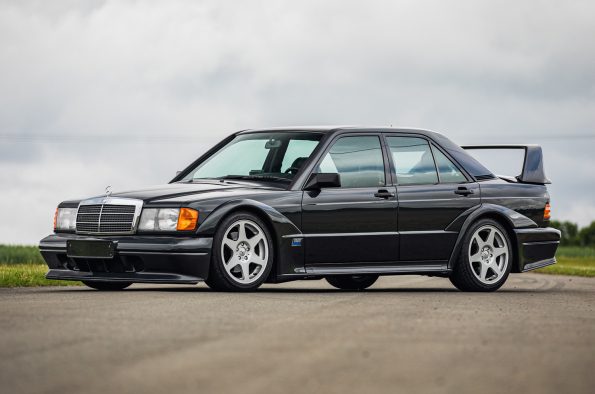
Among them, homologation specials, including the Mercedes 190E 2.5-16 Evo II, designed for the German Touring Car series, or Deutsche Tourenwagen Masters (DTM), and an Audi Sport Quattro, homologated for ‘Group B’ rallying. Both cars create immediately recognisable silhouettes with their prominent rear wings.
Alongside the homologation specials will be a feast of ‘80s and ‘90s German nostalgia. The class also includes the best of the fast-tuned saloon and estate models of the era. The 190E and Sport Quattro will be joined by two models from fast estate car royalty, the Audi RS2 Avant, and the Alpina B10 V8 S Touring.
The notion of the fast estate car very much came to life in the late ‘80s and early ‘90s – and the Audi RS2 was one of the first of the breed. The RS2 was the first Audi ‘RS’ product, and it quickly became the perfect embodiment of the breed – co-developed with Porsche, the car featured a 2.2-litre five-cylinder turbocharged engine producing 315bhp, which was fed to the wheels by Audi’s legendary quattro four-wheel drive system. But crucially, the car also featured plenty of space for carrying people and luggage.
Set alongside it, will be one of the rarest BMW M3s ever made. The BMW E30 M3 Roberto Ravaglia Edition had a super limited production run of just 25 cars, all of which were made exclusively for the UK market. Also a homologation car for DTM, the ‘Ravaglia’ name comes from Roberto Ravaglia a very successful Italian DTM driver with BMW in the late ‘80s and early ‘90s.
Also on display two models from Mercedes’ back catalogue that were tweaked, tuned and reimagined by Brabus and Konig. The Mercedes 300CE ‘widebody’ by Brabus and the Mercedes 560SEC ‘widebody’ by Koenig, feature two of the more exaggerated body kits on display at the show. At a time when excess was everything, Brabus and Konig took two relatively ordinary German cars, and made them into something very unique.
These seven cars are part of a nine-car line-up of the most significant cars from the German performance youngtimer era, which itself is one of eleven classes and features that will grace this year’s London Concours, hosted 8-10 June at the Honourable Artillery Company HQ.
Andrew Evans, London Concours Director, said: “Among our world-class line-up of eclectic vehicles, we’ve never before celebrated this particular era of extraordinary German performance. During the ‘80s and ‘90s in Germany, the motoring world was alive with motorsport, and the youngtimers class incorporates some of those exciting homologation specials that we all lusted after. But more than that, we also celebrate the tuners such as Alpina, Brabus, Koenig and Hartage – that really came to embody that era of motoring excess.”
Previously held over two days, the London Concours 2021 shifts to a three-day event to capitalise on visitor demand for more luxury brand content – from jewellery to bespoke suits – and modern supercars. The three days will be a VIP Preview Day, Style Edition and Supercar Day. At the heart of each day will remain the collection of nearly 100 rare and iconic luxury cars of all ages that has quickly cemented London Concours as one of the UK’s top motoring events.
The London Concours takes place from 8-10 June 2021. Tickets are available from londonconcours.co.uk/tickets
by gaukcars.com | Oct 2, 2024 | Blog
- One of the rarest Ford Capris ever made is being sold this month
- Car & Classic is auctioning a one-off factory Capri, built specifically for Henry Ford II to use whilst in the UK
- Commissioned by Ford’s Design Department, its bespoke specification includes automatic transmission, wider, full leather seats and interior trim
- Prepared with additional care at the factory, including extra layers of paint, and then finished at Ford’s legendary SVE department
- Key part of Ford history featuring in magazine and marque books
- Available 35 years after sales of the Capri ended, this special car’s online-only auction starts on 23rd April with an estimate of £25,000 – £35,000
- www.carandclassic.co.uk/auctions
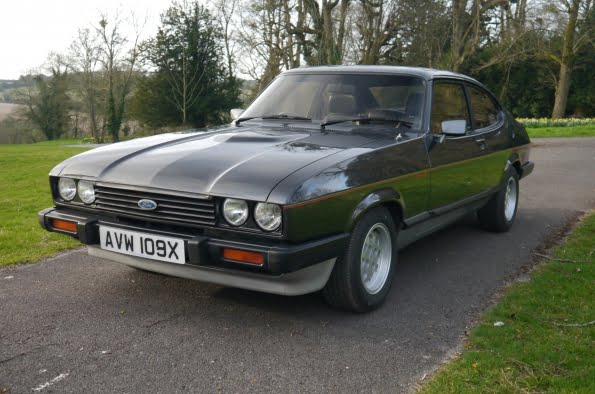
A 1981 Ford Capri 2.8 injection created specifically for Henry Ford II will be auctioned on April 23rd by online specialists Car & Classic.
It is one of three special Fords created for Henry Ford II and this Capri was specifically for him to use when traveling in the UK.
Starting life being hand-picked off the Cologne production line, this very special Capri then underwent a transformation that included additional layers of paint, stricter quality control and comfort features such as a C3 automatic transmission and wider, leather trimmed seats and door cards.
Grandson of founder Henry Ford, Henry Ford II was a key driver of Ford’s Total Performance programme that led to projects including the Ford GT40 and Mustang that were a catalyst for Ford’s success at the time. It was critical that Henry Ford II was available for dealer and supplier visits in the UK, hence his need for a bespoke Capri during that time.
The work on AVW109X was undertaken by Ford’s SVE division at Dunton before being delivered to Turville Grange, the Ford family’s home in the UK. It was enjoyed by the family until 1983 when it was purchased by Ron Mellor who was then Head of Ford Product Development. After three years, he put a for sale sign on the staff notice board, leading to Alan Jarman, a designer at Ford, buying the car to commute from Torquay to Dunton. In 1993 Jarman sold the car to Leslie Garner who kept it until April 2007 when the next owner, recommissioned the car with many new original Ford parts.
Now showing 68,958 miles on the odometer, the Capri has only covered around 6,800 miles in the last 28 years. Fresh from a comprehensive refresh this February 2021, restoring it to its full glory, it’s now ready to be enjoyed once more.
“Fast Fords are always highly sought after but this Capri is much more than that,” says Chris Pollitt, head of editorial at Car & Classic. “Specifically prepared by the legendary SVE department for one of the most influential people in the history of Ford and then subsequently enjoyed by other key members of the company, it is a widely appreciated, documented and renowned part of the Ford story.”
The seven-day online auction will start from April 23rd on Car & Classic, with the special Capri’s estimated to be sold for £25,000 – £35,000. It comes to the sale with a vast array of history including old invoices, MOTs as well as copies of its time in Classic Cars Magazine this February and in Steve Saxty’s book – Secret Fords, which came out in 2020.
