Leading classic rally specialist Bespoke Rallies has responded to the pent-up demand for classic events by creating two brand new rallies, and reshuffling its original 2021 calendar in order to take full advantage of the proposed lifting of restrictions.
The result is the choice of no less than four enticing events between June 23 and November 2 – two in the UK and two overseas.
First up is the Pennine 1000, a brand new four-day regularity rally that will take place amidst the stunning scenery of the Pennines, Yorkshire Dales, Cheviots and Southern Uplands of Scotland. It is scheduled for June 23 to 27 and will therefore start just two days after the intended removal of all travel restrictions. This event is likely to prove very popular and Bespoke Rallies urges any interested parties to sign up asap. Then comes the Highland 1000 (September 8 to 12), a highly-popular annual fixture that will start in Erskine and terminate in Edinburgh after progressing through 1000km of some of the most stunning countryside the UK has to offer.
The ensuing Pyrenees 1000 (September 29 to October 3) will start and finish near Pamplona, with stops in the region of Viehla (Spain) and Pau (France), allowing entrants to experience the unparalleled panoramas of the spectacular Pyrenean mountain range via seldom used roads and passes. Last but not least is another newcomer to the Bespoke Rallies line-up, the 19-day Grand Tour Canarias (November 2 to 21) – a unique island-hopping escapade that will provide contestants with a taste of winter sun in Tenerife, La Gomera, El Hierro, Gran Canaria, Fuerteventura and Lanzarote.
Commenting on his company’s revised 2021 offerings, Bespoke Rallies’ Managing Director John Brigden said: “We know from our postbox that classic car enthusiasts everywhere are desperate to take to the road once more and enjoy the camaraderie of our events. This quartet of rallies should hopefully help them to put the gloom and doom of the COVID era behind them.”
Bespoke Rallies’ full calendar of events through to March 2022 is now:
2021 Pennine 1000 – June 23-27 Highland 1000 – September 8-12 Pyrenees 1000 – September 29 to October 3 Grand Tour Canarias – November 2-21
2022 Cuba Classic – January 4-21 Dakar Enduro – February 28 to March 20
Full details for all Bespoke Rallies’ automotive adventures can be found at www.bespokerallies.com.
The London Concours has revealed Porsche as the first of the ‘Great Marques’ classes to appear at the Honourable Artillery Company HQ from 8-10 June:
Celebrating over 70 years of iconic sports car design, from 1948 to the present day, the display will feature 12 of the rarest Porsches ever made.
Among them, models such as the iconic 911 930 Turbo, one of the most sought-after 911s of the modern era, and a ’55 Porsche 356 T1A GS Carrera Coupe – one of the earliest GS Carrera Coupes ever built.
Joining the 930 Turbo will be a beautiful lightweight 911 2.7 RS. Built as a homologation special, only 500 of the early ‘thin-gauge’ lightweight 2.7 RS models were ever built. The first model to wear the ‘RS’ moniker, the 2.7 represented for many the pinnacle of the 911’s career. Sporting wide wheel arches and the iconic duck-tail spoiler, the car’s distinctive profile is immediately recognisable.
Another road-going homologation car, the legendary Porsche 959 was originally designed to compete in the infamous ‘Group B’ rally class. The 959 destined for the London Concours is one of just 292 cars produced. When it was launched, the 959 was ‘the fastest road-legal car in the world’ serving as a testbed for Porsche for both turbocharged power and all-wheel drive – technologies which have made their way into many modern Porsches.
Sitting alongside these two is one of the most critically acclaimed sportscars of the 20th century. The spiritual successor to the original 2.7 RS, the 997 GT3 RS 4.0-litre’s striking rear wing, and aggressive front splitter provide a visual nod to the car’s ‘RS’ pedigree, while the race bred 4.0-litre ‘Mezger’ engine provides the car with an aural thrill unlike any other. Paired with an exquisite six-speed manual gearbox, the RS 4.0-litre’s 493hp and 460Nm of torque and low 1,360kg weight, mean it is capable of propelling itself to 60mph in just 3.5 seconds. The car’s hydraulic steering rack and sense of ‘feel’ behind the wheel secured its place as driver’s car royalty.
These five cars are part of a 12-strong line-up of the most significant cars from the marque’s 72-year history, which itself is one of eleven classes and features that will grace this year’s London Concours, hosted 8-10 June at the Honourable Artillery Company HQ.
Andrew Evans, London Concours Director, said: “When it comes to significant marques in the world of motoring, they don’t come much bigger than Porsche. Throughout the marque’s history it has created some of the most important and collectable cars in the world, and undoubtedly some of the world’s greatest driver’s cars. We’re thrilled to welcome an eclectic selection of some of the company’s rarest and most interesting vehicles from the past seven decades, to the London Concours this summer.”
Previously held over two days, the London Concours 2021 shifts to a three-day event to capitalise on visitor demand for more luxury brand content – from jewellery to bespoke suits – and modern supercars. The three days will be a VIP Preview Day, Style Edition and Supercar Day. At the heart of each day will remain the collection of nearly 100 rare and iconic luxury cars of all ages that has quickly cemented London Concours as one of the UK’s top motoring events.
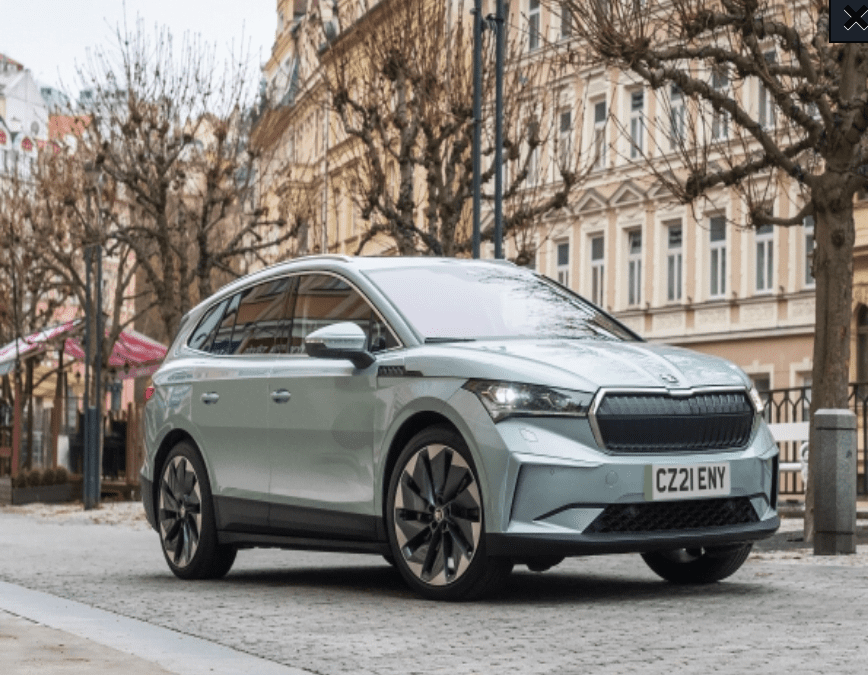
Enyaq iV SUV available to order with two battery sizes: 62kWh and 82kWh*
WLTP range of up to 333 miles
Rapid charging capability of up to 125kW; charging to 80 per cent in just 38 minutes
High specification levels across all models; prices from £31,085 OTR**
New Lease&Care finance package offers complete peace of mind
Up to 7,500 miles of free charging with ŠKODA’s green energy partner, Octopus EnergyɅ
The wait is over – ŠKODA will officially open order books for the all-new Enyaq iV, the brand’s first purpose built battery electric vehicle on 10 March 2021.
Based on the Volkswagen Group’s modular electrification toolkit (MEB), the highly-awaited all-electric SUV is offered with two battery size options, a new range structure and a new finance offering: Lease&Care.
A new way for customers to create their perfect car The new Enyaq iV introduces a new way for customers to perfectly tailor the car to their tastes and requirements. Instead of selecting from traditional trim levels, customers choose the battery size they need, select an interior design and then personalise their vehicle from a comprehensive range of equipment packs and individual options.
From launch, the range consists of two variants; Enyaq iV 60 Nav and Enyaq iV 80 with 62kWh and 82kWh battery packs respectively. Five design selections are available; Loft, Lodge, Lounge, Suite and ecoSuite, all of which offer a different interior look and materials.
Enyaq iV 60 Nav (62 KWh 179 PS) –from £31,085 OTR** The entry-level Enyaq iV comes with a generous equipment list that includes 19-inch Proteus alloy wheels, an infotainment system with satellite navigation and 13-inch screen, rear parking sensors, dual-zone climate control and keyless go. All models also feature ambient interior lighting, multifunction leather steering wheel and Front Assist as standard. In terms of interior trim, all 60 Nav models are equipped with an interior spec called Loft. This features fabric / artificial leather seat facings and brushed aluminium decor panels as standard.
Enyaq iV 80 (82 KWh 204 PS) – from £35,950 OTR**) Customers choosing the 82kWh battery pack benefit from an increased standard specification that includes chrome detailing, front parking sensors and a rear-view camera. 80 models also come with a heated two-spoke leather steering wheel that features paddles for setting the levels of regenerative braking, Drive Mode Select and infotainment system with navigation. 80 models also include 19-inch Regulus alloy wheels and, as with the 60 Nav version, the option to upgrade from the standard Loft to Lodge, Lounge, Suite or ecoSuite interiors.
A new way for customers to finance their new Enyaq iV The Enyaq iV also comes with a new finance option that gives owners even greater peace of mind. Lease&Care has been developed by Volkswagen Financial Services specifically for electric car buyers and is a personal lease that includes built-in aftersales packages in one monthly payment.
Enyaq iV customers select their ideal Enyaq iV, choose an initial deposit which can be as little as one monthly payment, choose their annual mileage and select their term of either 24, 36 or 48 months. Customers can then tailor their package by choosing one of three aftersales ‘care’ packages they would like: Small, Medium or Large.
The most affordable Small package covers a customer for essential servicing, which includes all routine manufacturer servicing, brake fluid changes, as well as dust and pollen filters. It also includes access to the Driverline concierge – a dedicated 24/7 service that covers breakdown, recovery and glass care.
The Medium package adds all routine maintenance items, including brake, suspension and cooling system repairs, electric system maintenance, and all fluid top-ups, while the Large package includes tyre replacement and wheel alignment (due to fair wear and tear), puncture repair, geometry check and wheel balance.
Example with ŠKODA Lease&Care Small package
ENYAQ iV 60 NAV LOFT*** 62 KWh 179PS Single speed
Retail cash price (excluding paint)
£ 31,085
Monthly Payment
£ 393
Initial Rental
£ 2,358
Contract length
48 month(s)
Annual mileage
10,000 Miles per year
Excess mileage
13.74 p (ex VAT)
Optional VWFS Rent-a-Car allowance at additional cost
£16 per month
All customers can also select to add on VWFS Rent-a-Car Mobility credits for as little as £16 per month. This gives Enyaq iV owners access to a non-electric vehicle for seven days per year.
At the end of the contract, customers have three choices; simply renew into another vehicle, extend their contract with the car or hand the car back.
Customers will also be able to finance their new Enyaq iV with a Solutions PCP which comes with the additional option of purchasing the vehicle at the end of the contract term.
Octopus Go To help customers reduce their carbon footprint in their home as well as on the road, ŠKODA has partnered with green energy supplier Octopus Energy to give customers who switch to a dual fuel home energy supply, £90 of credit for charging, which is the equivalent of up to 7,500 miles in the Enyaq iV. Octopus Go is Octopus Energy’s 100% green electricity tariff for electric vehicle drivers. It offers a low cost 5 p/kWh electricity rate between 00.30am-4:30am every night, meaning customers can fully charge whilst asleep, keeping fuel costs around 1p per mile Ʌ.
New Enyaq iV charging options All Enyaq iV models have a minimum DC rapid charging capability of 50kW as standard. Customers can specify higher 100kW (for 62kWh battery) and 125kW (for 82kWh battery only) DC charge rates as options.
The Enyaq iV offers customers three charging options. In addition to using a standard household 230V socket with 2.3 kW alternating current (AC), it can be charged at home overnight using a wallbox of up to 7.2kW. Depending on the battery size, the charging process with a 7.2kW wallbox takes approximately 9 hours 30 minutes for the 62 kWh and approximately 13 hours for the 82 kWh battery (both to 100% charge). As a third charging option, the vehicle can be connected to rapid DC charging points with a charging capacity of up to 125 kW. This allows the Enyaq iV 80 to be charged from 10 to 80 per cent in as little as 38 minutes and 35 minutes for the Enyaq iV 60 Nav.
Performance and range The entry level 62kWh battery model is equipped with a 180PS (132kW) motor that drives the rear wheels through a single-speed transmission. It has a WLTP combined range of up to 256 miles on a single charge. The larger 82kWh model generates 204PS (150kW) and is capable of returning up to 333 miles on a single charge (WLTP)****.
Design and practicality Measuring 4,649 millimetres long and 1,879 wide, the Enyaq iV delivers the space and practicality customers have come to expect from ŠKODA’s award-winning SUV models. Thanks to its all-electric platform, ŠKODA’s design team has been able to completely reimagine the Enyaq iV’s interior architecture. With the traction battery housed in the floor and a compact motor mounted beneath the boot floor, the Enyaq iV has a cabin unburdened by the packaging compromises of a traditional internal combustion engine car. As a result, occupants can enjoy a spacious interior with a flat floor and a boot that can hold 585-litres of luggage. This can be extended to 1,710 litres with the rear seats folded.
For more information, images, media and other assets, please visit www.ŠKODAmedia.com.
Jeep Renegade 4xe owners will receive a text notification if their car is broken into
Innovative security feature notifies drivers when individuals attempt to access the cabin, or if the vehicle is being towed
Technology, recently launched in the UK, enables police to track the whereabouts of the vehicle
To find out more about the new Jeep Renegade 4xe visit: here
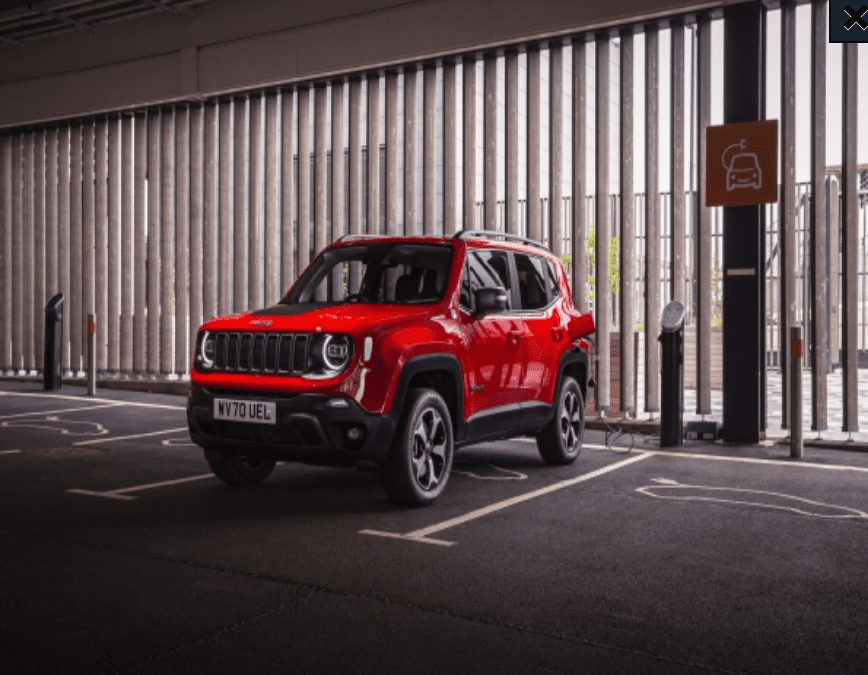
The new Jeep Renegade 4xe plug-in hybrid can send a text to alert owners if thieves are trying to break into their car.
My Theft Assistance has recently launched in the UK as part of My Uconnect services, available across the MY20 Renegade range. It can provide owners and prospective buyers with added peace of mind given the rise of car thefts in 20201.
Should the Renegade 4xe detect that someone is trying to break into the car, tow it without authorisation or disconnect the battery, the owner will be made aware thanks to an instant ‘Theft Alarm Notification’ via text.
Customers also have the option to receive an email, a push notification in the My Uconnect mobile app or phone call depending on what options they have chosen in the settings.
If thieves do successfully steal the car, owners can request immediate assistance through the My Uconnect mobile app, the connected vehicle platform available to all Jeep customers.
Once the theft is confirmed through the Uconnect contact centre and a police report, a number of additional safety technologies are activated through the app. Much like the ‘Find My Phone’ feature available on most smartphones, a vehicle tracking function will be triggered and the vehicle’s ignition locked.
Damien Dally, country manager Jeep UK said: ‘The increase in car thefts across the UK is cause for concern and an experience that owners will be looking to avoid at all costs. The innovative theft assistance technology will undoubtedly give Jeep owners, and future buyers, peace of mind that their car and possessions are in the safest possible hands.”
Owners can benefit from the next generation of connected services and the latest security features that Jeep has to offer by downloading the free My Uconnect mobile app – available on Apple and Android devices. Alternatively, the connected services can be accessed from within the cabin or via the dedicated My Uconnect web portal.
Some of these additional standout features include:
My e-Charge: Allows owners to check battery status and schedule charging
My Navigation: Enables drivers to search for a destination or amenities, such as the nearest car park or charging station, on their smartphone before sending the address directly to car’s navigation system
My Wi-Fi: Simultaneous connectivity of up to eight devices allowing passengers to surf the internet while enjoying their journey with a three-month/1GB free trial, additional data can be purchased
Remote Operations: Owners can lock and unlock the vehicle’s doors and activate the lights via their phone
The Jeep Renegade 4xe is available in retailers now, priced from £32,600 OTR. For more information visit www.jeep.co.uk/4xe-hybrid.
Official Safety Car of Formula 1® based on Aston Martin’s sports car, Vantage
Aston Martin DBX becomes an Official Medical Car of Formula 1®
Both cars make their debut at pre-season F1® test in Bahrain on 12-14 March
Previous Aston Martin Racing successes contribute to safety car development
When Aston Martin makes its return to the FIA Formula One World Championship® at the end of this month, it will be with more than two grand prix contenders on the Formula 1® Gulf Air Bahrain Grand Prix 2021 grid:
For the first time in the history of the sport the Official Safety and Medical cars of Formula 1® will also bear the famous wings of the British luxury brand.
A specially equipped version of the Aston Martin Vantage has been developed for the critical role of intervening and controlling the pace of an event involving the fastest racing cars in the world. Engineered by an experienced team at Aston Martin’s Headquarters in Gaydon, the car benefits from significant chassis and aerodynamic improvements. With only a few additional modifications to make it FIA compliant, the new safety car is the pinnacle of Vantage performance.
Aston Martin DBX, the brand’s critically acclaimed first SUV, will also take on the role of an Official Medical Car of Formula 1®, showcasing its own power and handling prowess as it launches into action to support in the event of an emergency.
Aston Martin Vantage – An Official Safety Car of Formula 1® Piloted by FIA’s appointed driver, Bernd Mayländer (DE) who has been at the helm of the F1® safety car for over twenty years, the Aston Martin will remain on standby in the pit lane throughout the race.
When deployed by Race Control in the event of bad weather or an accident, the former race driver and co-driver, Richard Darker (UK) will take to the track at the head of the field to safely control the pace of the pack, neutralizing the event and allowing any incident to be managed safely by the circuit’s officials.
F1® tyre temperatures can drop when the cars are running at sub-optimal speeds, therefore fast lap times are essential for the Official Safety Car of Formula 1®. This responsibility led the Aston Martin Lagonda CEO, Tobias Moers to task the engineering team with enhancing the already sporting Vantage, focusing on improved track performance and lap times.
The results? Power has increased by 25PS to 535PS, delivered by a 4.0-litre twin-turbo V8 delivering significant performance capability going from 0-60mph in just 3.5 seconds. 685Nm of peak torque remains the same but is now sustained for longer, and with additional work on the transmission means the driver has a better sense of directness, precision, and control through upshifts and downshifts. The Vaned grille coupled with a new front splitter creates 155.6kg of downforce at 200km/h; more than 60kg than the production Vantage produces at the same speed. Modifications to the suspension, steering and dampers have also been undertaken, with further detailed underbody bracing modifications to increase front structural stiffness. All this, together with a comprehensive aero kit and a switch to lower profile tyres, the Aston Martin Vantage Official F1® Safety Car has all the credentials to handle a Formula 1® circuit.
Aston Martin is known worldwide for its high-profile successes in sports car racing, most recently last year’s multi-class victory at the 24 Hours of Le Mans that contributed to becoming FIA GT World Endurance Manufacturers’ Champions. Engineering developments derived from these successes have aided the systems that feature in the F1® safety car. The unique requirements of the safety car mean the vehicle must be capable of going from top speeds, back to idling in the pit lane without so much as a cool-down lap, so a reliable and robust thermal management system is a key element to its performance. Having already developed a cooling system that proved effective in extreme conditions and temperatures on the multiple championship-winning Vantage GT4 race car, Aston Martin transferred this technology into the safety car, along with the addition of extra vents in the bonnet to support further cooling.
As it performs on standard Pirelli road tyres, the safety car is also equipped with the same carbon-ceramic brakes found on the production Vantage, with additional brake ducts hidden within the front grille to aid cooling.
The safety car mimics the Aston Martin Cognizant Formula One® Team car with an all-new paint colour, 2021 Aston Martin Racing Green, which was developed specifically to celebrate the marques return to Formula 1® racing after more than 60 years. A Lime Essence pinstripe highlights the front splitter; a colour synonymous with Aston Martin’s successful racing pedigree, and most recently used on the ultra-successful Vantage that competed in the FIA World Endurance Championship (WEC). The F1® safety car is otherwise distinguished by its prominent FIA safety car livery, bodyside mounted radio antennas, an LED rear number plate and a bespoke, roof-mounted LED light-bar, developed by Aston Martin.
The light-bar sits on a carbon fibre plinth, raised above the roof line. The aerodynamic profile is designed to offer the least possible resistance while providing an optimised flow of air towards the exaggerated rear wing. Bright orange lights on the outer edges of the light-bar illuminate when the Official Safety Car of Formula 1® joins the track. A centrally positioned amber flashing light then illuminates once the safety car is in position ahead of the race leader – indicating that no one should overtake; two centrally positioned green lights are illuminated once it is safe for the F1® cars to pass. The headlamps and taillamps also flash to aid the safe deployment of the car. The rear number plate displays ‘Safety Car’ illuminated by LED’s, making it clear to see from vehicles behind in all weather conditions. A rear facing camera is also fixed to the light-bar that feeds a live image into a second rear-view mirror located inside the cabin, allowing the co-driver to monitor any activity at the rear.
Further, inside the cabin the production seats have been replaced by FIA-approved racing seats equipped with a 6-point safety harness, the same as those found in the F1® team cars. Two screens are mounted on the dashboard, providing the driver and co-driver with a live television feed and a variety of customizable information displays, including live lap timing and the track positioning of all active race cars. The centre console has been modified significantly. The rotary dial has been moved back to where the cup holder was positioned, and in its place sits a switch control system used to execute a number of actions, including activating the siren, radio communications and controlling the light-bar LED’s. The ‘Marshalling System’ is integrated into the instrument cluster and the dashboard, allowing both the driver and co-driver to see which colour flag is being shown on the track, by the illumination of the same coloured LED light; mirroring the system that also features by regulation in all F1® team cars. TV cameras are also mounted on top of and inside the car, to provide live TV footage.
Safety Car driver, Bernd Mayländer said “Formula 1® fans around the world are delighted to see the return of Aston Martin to the track, as am I. The Official Safety Car of F1® is a beautiful, capable car that signifies an exciting new era for Aston Martin.”
Aston Martin DBX – An Official Medical Car of Formula 1® Aston Martin DBX will also share the Official Medical Car of Formula 1® responsibilities this season, driven by Alan van der Merwe (41, South Africa). Like the safety car, the medical car is distinguishable by its 2021 Aston Martin Racing Green paint with Lime Green accents – as well as the prominent FIA medical car livery, LED rear number plate and roof-mounted LED light-bar which sits upon the roof rails.
Powered by the 4-litre, twin-turbo V8 engine, also found in DB11 and Vantage, DBX provides an impressive output of 550PS and 700NM of torque which launches DBX from 0 to 62mph in just 4.5 seconds, reaching a top speed of 181mph. All this ensures the FIA medical team can respond effectively to an emergency. With a sound that is unquestionably Aston Martin, the active exhaust system means DBX will not only be seen, but heard, as it does.
The Official Medical Car of Formula 1® is required to carry a substantial amount of equipment including a large medical bag, a defibrillator, two fire extinguishers and a burn kit – and the DBX is more than equipped with 632 litres of boot space.
Whilst the interior trim is fully representative of a customer vehicle, the central rear seat has been removed, and the remaining four have been replaced with sport bucket seats, each equipped with a 6-point safety harness. These provide seating for the driver, Alan van der Merwe and Dr Ian Roberts – the FIA Formula 1® Medical Response Coordinator, as well as a Local Doctor, leaving one spare, in case an incident requires a racing driver to be driven back to the pit lane. Much like the safety car, two screens have been mounted onto the dashboard to provide live race footage. An additional screen is used to read live biometric data delivered via technology in the drivers’ gloves, which in the event of an accident, provides critical information on their condition. The ‘Marshalling System’ and the rear-view mirror camera display have also been installed into the medical car.
The development of both these Official Safety Car of Formula 1® and Official Medical Car of Formula 1® was carried out by the engineering team at Aston Martin. Both vehicles have endured significant testing, which included high-speed durability assessments and aggressive circuit driving at the Aston Martin facility at Silverstone, totting up almost 15,000km collectively. The vehicles have also been tested in a dyno climate chamber to ensure they will perform in all race conditions.
Tobias Moers, Chief Executive Officer of Aston Martin Lagonda said “Together with the whole company, I am extremely proud of the Aston Martin brands return to Formula 1®, the pinnacle of motorsport for the first time in more than 60 years and represents the start of a significant new era for Aston Martin. To see our acclaimed Vantage, our most dynamic sports car, performing the role of the Official Safety Car of Formula 1 and our first SUV, DBX, operate as the Medical Car on Formula 1® circuits around the world is a proud moment for us all”.
Aston Martin fans will be able to see the Aston Martin Vantage Official Safety Car of Formula 1® in action for the first time during the three-day pre-season test at Bahrain on 12-14 March, and then again during the opening round of the FIA Formula One® World Championship, at the same venue two weeks later.
The Formula 1® Gulf Air Bahrain Grand Prix 2021 will be broadcast live on Sunday 28 March 2021 from 16:00 GMT.
Volvo Cars’ global sales performance remained strong in February, after the company posted 29.1 per cent growth for the first two months of the year compared with the same period last year.
Total sales during the period amounted to 110,383 cars, as the US, Europe and China reported a growth in volumes. The sales increase was driven by an ongoing recovery from the Covid-19 pandemic in China compared to last year, a solid performance in the US market and increased sales in Sweden.
For the month of February, Volvo Cars sold a total of 50,795 cars, up 27.8 per cent compared with the same month last year, and the company’s best February sales performance ever.
Its Recharge line-up of chargeable models, with a fully electric or plug-in hybrid powertrain, continued to grow in popularity among customers and accounted for 26.6 per cent of all Volvo cars sold globally in February. In Europe, Recharge cars represented 44 per cent of the overall sales volume.
In China, Volvo Cars sold 29,243 cars in the first two months of the year, up 160.6 per cent year-on-year, as the company managed to more than recover lost sales due to Covid-19 shutdowns last year.
US sales continued to grow year-on-year and reached 17,315 cars in January and February, up 23.7 per cent compared with the same period last year. The strong increase was led by the brand’s premium SUVs, which accounted for 80 per cent of total sales.
The company’s European sales grew 5.5 per cent in the first two months of 2021, to 48,784 cars, compared with the same period last year, driven mainly by increased sales in Sweden.
A detailed break-up of regional sales is given below:
February
January-February
2020
2021
Change
2020
2021
Change
Europe
23,442
23,927
2.1%
46,252
48,784
5.5%
China
1,205
10,083
736.8%
11,220
29,243
160.6%
US
7,841
9,164
16.9%
13,998
17,315
23.7%
Other
7,254
7,621
5.1%
14,024
15,041
7.3%
Total
39,742
50,795
27.8%
85,494
110,383
29.1%
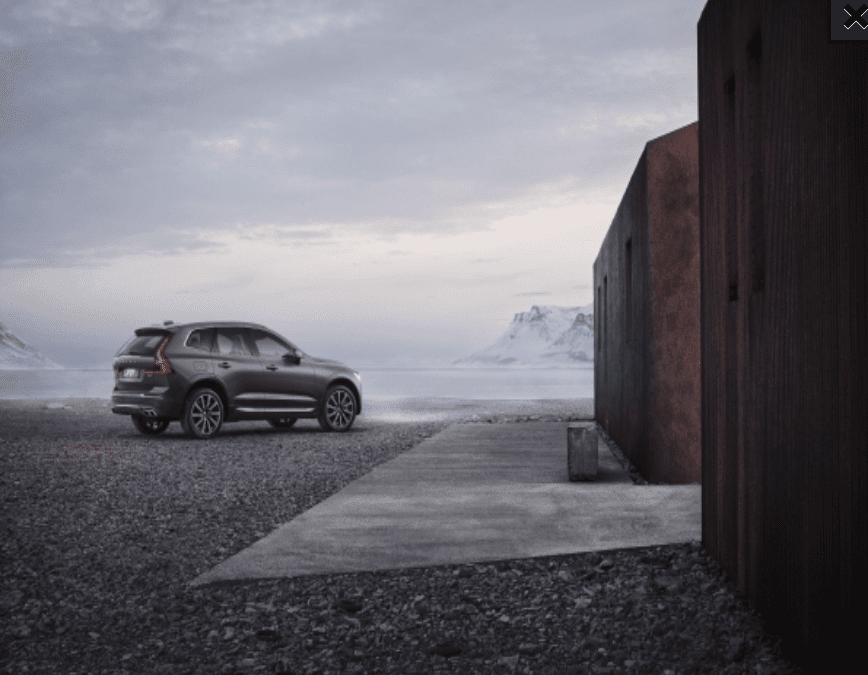
In February, the XC40 was the top-selling model, with sales of 15,818 cars (2020: 10,266), followed by the XC60 with total sales of 14,463 cars (9,774 units) and the Volvo XC90 with 6,808 cars (4,852 units).