
by gaukcars.com | Oct 2, 2024 | Blog
A prototype of the new Grecale SUV has been photographed outside the historic Maserati plant on Viale Ciro Menotti in Modena.
The employees were the first to diffuse these images on the social networks.
Innovative by nature, Maserati decided to share the photos of the new model exclusively with the Maserati Family.
The prototype cars are currently undergoing a period of intensive road, circuit and off-road tests, in various conditions of use, to acquire vital data for the preparation of the new SUV’s final setup.
The Grecale will be built at Cassino (Italy), where an investment of about 800 million Euros is planned.
The Maserati Grecale will receive its World Premiere before the end of 2021.
Maserati S.p.A.
Maserati produces a complete range of unique cars with an amazing personality, immediately recognisable anywhere. With their style, technology and innately exclusive character, they delight the most discerning, demanding tastes and have always been a global automotive industry benchmark. A tradition of successful cars, each of them redefining what makes an Italian sports car in terms of design, performance, comfort, elegance and safety, currently available on more than seventy markets internationally. Ambassadors of this heritage are the Quattroporte flagship, the Ghibli sports sedan, now also available in hybrid version, the Trident Brand’s first electrified car, and the Levante, the first made by Maserati SUV, all models denoted by use of the choicest materials and technical solutions of superlative excellence. A complete range, including V6 and V8 petrol, 4 cylinder hybrid and V6 diesel powerplants, with rear-wheel and four-wheel drive. The range’s prestige was recently even further enhanced by the introduction of the new Trofeo Collection, comprising Ghibli, Quattroporte and Levante, equipped with the powerful 580 hp V8 engine. The top-of-the-range is the new MC20 supercar, powered by the ground-breaking Nettuno V6 engine, incorporating F1-derived technologies now made available in the power unit of a standard production car for the first time. Today, the Maserati range is produced at three plants: Ghibli and Quattroporte are built at Grugliasco (Turin) at the Avvocato Giovanni Agnelli Plant (AGAP), and Levante at the Mirafiori Plant in Turin. The new MC20 supercar is produced in Modena, at the historic Viale Ciro Menotti plant.
by gaukcars.com | Oct 2, 2024 | Blog
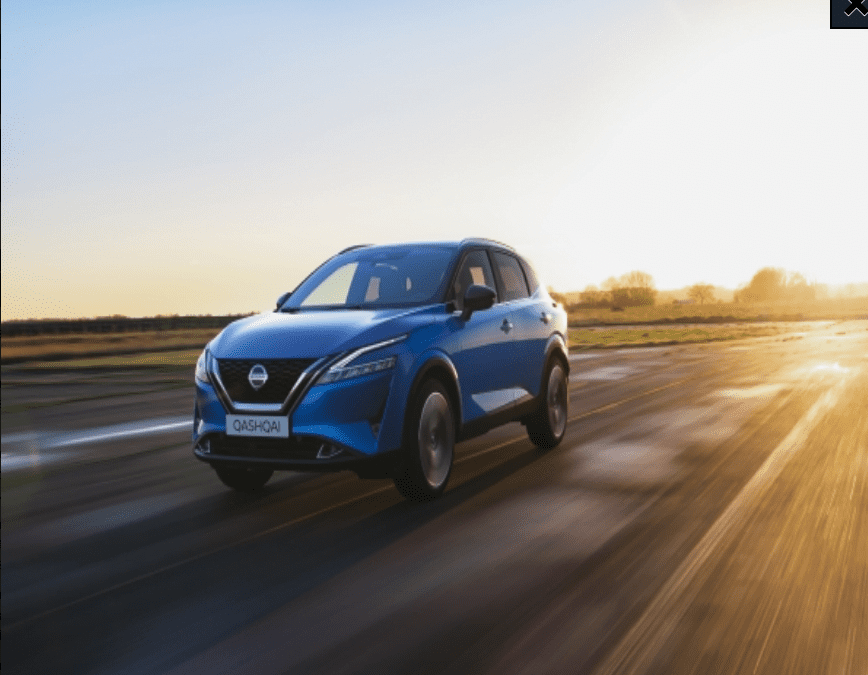
Nissan today reinforces its position as the leader in the European crossover segment with the unveil of the all-new, third generation Qashqai.
All-new Nissan Qashqai breaks cover
Nissan today reinforces its position as the leader in the European crossover segment with the unveil of the all-new, third generation Qashqai.
All-new Nissan Qashqai: Striking attraction, elegant design
As with the two previous generations, the design for the all-new Nissan Qashqai came out of Nissan’s European Design Studio in London, UK.
All-new Nissan Qashqai: Advanced new platform for improved refinement, response and efficiency
The new Qashqai is the first model in Europe to use the Alliance CMF-C platform, which represents a state-of-the-art automotive structure and technology architecture.
All-new Nissan Qashqai: Efficient, electrified powertrains for dynamic performance
The all-new Nissan Qashqai offers an uncompromising combination of dynamic performance, refined running gear and fuel efficient powertrains.
All-new Nissan Qashqai: Connected technology
The all-new Qashqai offers an advanced infotainment system with a class-leading portfolio of connected services including effortless integration of smartphones, in-car WiFi for up to seven devices and NissanConnect Services, a dedicated app with which to interact with and monitor the vehicle.
Nissan Qashqai: A pioneering legacy
In 2007, when the Qashqai was introduced there was nothing else like it on the road.
All-new Nissan Qashqai Premiere Edition: Limited edition version for first Qashqai customers
First customers of the all-new Nissan Qashqai, the third generation of the pioneering crossover, will be offered a limited availability launch version called the Premiere Edition.

by gaukcars.com | Oct 2, 2024 | Blog
New research from the UK’s largest independent road safety charity, IAM RoadSmart, has revealed some positive long-term trends in relation to speeding behaviour in the UK with motorists now considering it less acceptable to speed than they did five years ago.
The findings come after recent provisional figures, released by the Department for Transport, highlighted that the number of UK road deaths was down significantly compared to the previous year due to less traffic being on the roads due to COVID-19.
IAM RoadSmart’s annual Safety Culture Report, which tracks drivers’ changing attitudes to key road safety issues over time, discovered that while there was a significant improvement towards speeding the figures were still worryingly high.
Out of the 2,000 motorists surveyed, 43 per cent (down from 55 per cent in 2016) thought it was acceptable to drive up to 80mph on a motorway and that 23 per cent (down from 28 per cent in 2016) thought it was acceptable to drive even faster than that.
Neil Greig, IAM RoadSmart Director of Policy & Research, said: “While there are signs of improvement, the results of this survey are still deeply concerning and there is clearly much more work to do on education and training.
“Speeding consistently causes more than 4,400 casualties on UK roads each year, which is an average of 12 people a day killed or injured on UK roads.”
The vast majority of drivers find it unacceptable to speed in towns and this has remained basically unchanged in the last five years. However, a disconcerting one in five of those surveyed still think it is acceptable to drive five miles-per-hour over the speed limit on a residential street and nearly one in ten thought it was acceptable to drive at these speeds outside a school.
by gaukcars.com | Oct 2, 2024 | Blog
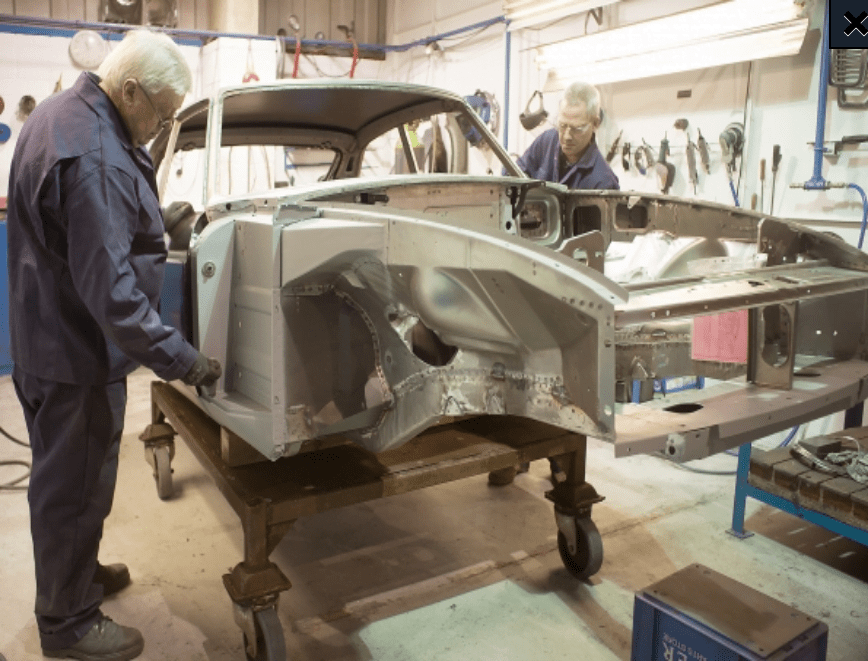
British Motor Heritage (BMH) builds two batches of replacement bodyshells for the MGB per annum, and orders for the first run of 2021 are required by March 31 latest.
So, all those in urgent need of a new shell should ring their nearest Heritage Approved Specialist without delay, a full list of which can be found at www.bmh-ltd.com.
As owners of the original tooling, BMH is the only company able to reproduce MGB bodies to exactly the same specification as those manufactured in period, and orders for replacement shells have for some time been rising year on year. They are available for all versions of the Roadster and GT with prices starting from £11,548.95 (inc. VAT). There is even the option of seam-welded bodies for competition use. The full range of complete shells and myriad of individual panels and related fixings is listed on the website.
Since its formation in 1975, British Motor Heritage has built over 6,100 replacement bodyshells for the MGB, MGR V8, MG Midget, Austin-Healey Sprite, Triumph TR6, original Mini and Mini Clubman, as well as literally tens of thousands of individual replacement panels. The decision to put such genuine components back into manufacture using the original tools has been the saviour of countless classic vehicles that would otherwise have been scrapped long ago.
by gaukcars.com | Oct 2, 2024 | Blog
- First W12 engine destined for Bacalar completes production testing at Bentley’s centre of excellence for W12 engines
- Bentley’s W12 is the most advanced 12-cylinder engine in history
- Producing 659 PS (650 bhp) and 900 Nm (667 lb.ft) of torque
- W12 engine development has increased power by up to 27 per cent, torque by 38 per cent and reduced emissions by 28 per cent since 2003
- Each engine passes through three specific test regimes before fitting to a vehicle
- More than 100,000 W12 engines have been handbuilt at Crewe since 2002, producing more than six million horsepower
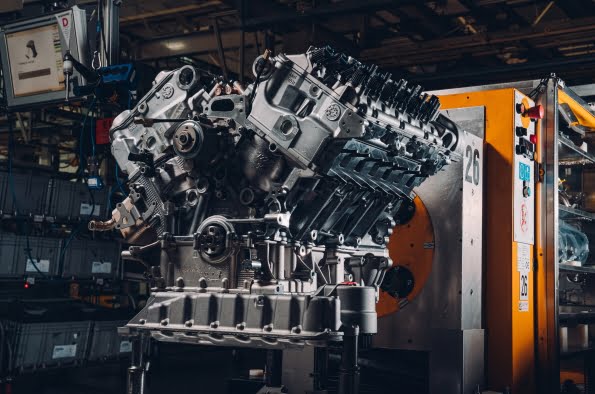
Producing 659 PS (650 bhp) and 900 Nm (667 lb.ft) of torque, the engine for the first customer Bentley Mulliner Bacalar has now completed assembly and production testing at Bentley’s centre of excellence for W12 engines.
The Bacalar spearheads a return to coachbuilding by Bentley Mulliner and features an enhanced version of Bentley’s peerless 6.0-litre, W12 TSI engine, the most advanced 12-cylinder engine in the world.
Since the first introduction of the twin-turbocharger W12 in 2003, the refinement of the engine has seen an increase of up to 27 per cent in power, 38 per cent in torque and a reduction of 38 per cent in emissions.
This has been realised through evolution and optimisation of the crankcase, improvements in the oil and cooling systems, twin-scroll turbocharging technology and more effective injection and combustion processes.
Each W12 engine is hand-built over 6.5 hours by a team of 45 craftspeople before undertaking a highly sophisticated test regime of over an hour via three specialist diagnostic machines during the engines assemble.
The testing not only provides feedback on the quality of each engine but also provides multiple checkpoints to catalogue the exact behaviour of each engine from the moment of manufacture.
Quality Guaranteed Through Testing
The three tests that the Bacalar engine has already been put through are part of Bentley’s exceptional quality control processes.
The first test is for leakage and can be undertaken after the engine has been assembled to the point that fuel, water and oil systems can be closed – a production stage known as a “short engine”.
The leakage test is conducted by pressurising each of the systems, for fuel, oil and water individually. The different cavities are pressurised to values between 0.2 – 5.0 bar respectively and then measured whilst the pressure decays over time. The reduction in pressure versus time represents the quality of the sealing of the engine assembly. If the pressure drops faster than expected, a leak is indicated. A fluid is sprayed on to the exterior of the engine to pin-point any leakage paths.
The second and most advanced test is Cold Test. The engine is loaded on to a testbed plate and connections are made to the engine loom and all engine systems, whilst a large electric motor couples to the engine via the crankshaft.
“Motoring” the engine via the crankshaft allows the test bed to collect data from a suite of sensors. The facility measures 600 individual properties and characteristics of the engine during a 15-minute cycle.
Due to the low running speed of 120 RPM for the test, finer details and any inconsistencies can be identified thanks to a sample rate that highlights even the briefest of anomalies that would be invisible if the engine was firing or running at speed.
This fine detail analysis is also valuable for confirming the precise timing of the engine. Using positioning information from sensors on the crankshaft, crankcase and camshafts along with cylinder compression values, the Cold Test can confirm the engine timing is accurate and therefore achieving the best possible combustion cycle.
In order to gather cylinder-specific data, Cold Test is carried out before the exhaust manifolds, turbochargers and other ancillaries are fitted. The third and final test – Hot Test – checks the complete engine assembly once these parts are installed, and simulates real world usage in the vehicle.
When the engine arrives for hot testing, a UV dye is added to the engine to help identify any leaks. The coolant and fuel system are pressurised with air and nitrogen respectively for a final check before introducing the necessary fluids ready for testing. The engine is cranked to build oil pressure before the ignition system is energised and then left to idle whilst the engine test technician listens for any refinement issues and checks for leaks with a UV lamp.
Each W12 is then tested for a minimum of 21.5 minutes and runs up to 3800 rpm with a maximum load of 300 Nm. One in every one hundred engines receives a full eight-hour power test, achieving 6000 RPM, and must achieve 900Nm.
Since the installation of the three testbeds in 2002, over 100,000 W12 engines have been handcrafted in Crewe and passed through the test facility.
Engine Technology Advancements
Bentley’s legendary 6.0-litre twin-turbocharged W12, created in 2002, has evolved into the latest iteration of W12 engine used across today’s current model range. The unique W-configuration means that the engine is 24 per cent shorter than an equivalent V12, benefitting packaging and maximising usable cabin space.
The latest generation of W12 was launched in the Bentayga in 2016. A thoroughly reworked engine included a crankcase 30 per cent stronger than its predecessor, while the cylinder surfaces were coated to reduce friction and improve corrosion resistance. A low-alloy steel coating is applied to the bores using an Atmospheric Plasma Spray (APS) process.
Improvements were also made to the cooling system, with the engine featuring three separate coolant circuits. The first is designed to bring the cylinder heads up to optimum operating temperature as quickly as possible for best engine performance and low emissions. The second cools the engine block and oil system, while the third handles the thermal load of the turbochargers. Each system has a dedicated water pump, allowing optimised individual control.
The W12 combines high-pressure direct fuel injection (200 bar injection pressure) with low-pressure port injection (six bar). The combination of these two systems maximises refinement, lowers particulate emissions and optimises power and torque delivery.
Twin-scroll turbochargers minimise turbo response time and provide a more efficient exhaust package. The exhaust assemblies for the three front and three rear cylinders are separate from one another which then feed the twin-scroll impellers. The turbocharger housing is welded directly to the exhaust manifolds and feature integrated speed sensors, allowing the engine to monitor turbo performance for maximum efficiency.
Bentley’s Variable Displacement system shuts down half of the engine under defined conditions. Intake and exhaust valves, fuel injection and ignition are all shut down on defined cylinders, with the engine running as a six-cylinder for improved efficiency. The system will run in this mode in gears three to eight, below 3,000 rpm and up to 300 Nm torque output.
by gaukcars.com | Oct 2, 2024 | Blog
- 0% APR finance available on Solutions PCP deals* – up to 36-month contracts
- £1,000 deposit contributions on Fabia, Scala, New Octavia and Superb models
- Discounted service plans^ also available from just £99
- Class-leading digital tools offers complete virtual retail experience
- Offer ends 28 February 2021
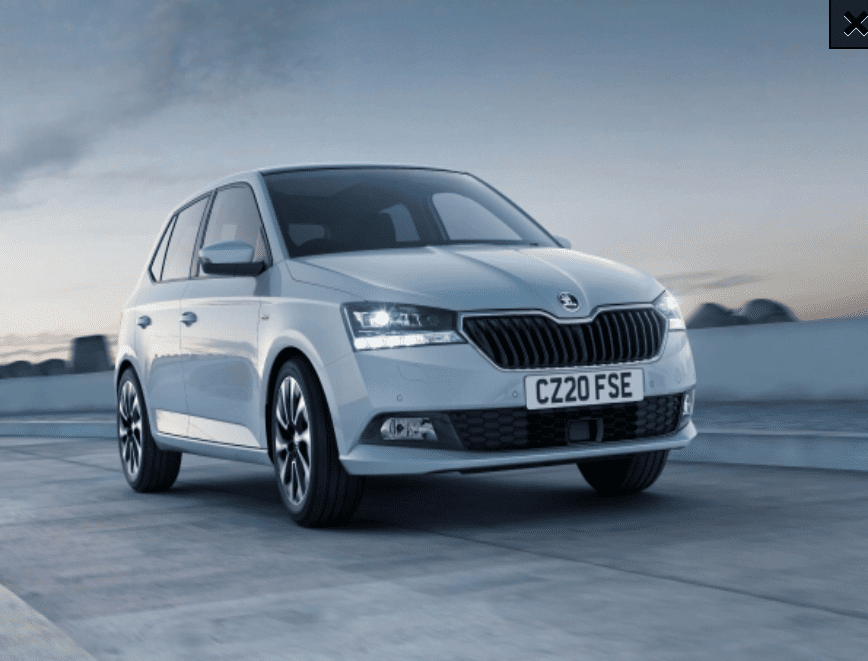
There’s never been a better time to buy a new ŠKODA thanks to the launch of the brand’s first ever Virtual Event that will see every model in the award-winning range offered with 0% APR finance.
Customers can choose a stock vehicle from all seven product ranges and finance through a Solutions Personal Contract Plan (PCP), with no interest for up to three years.
ŠKODA retailers across the country have a range of digital tools to offer a class-leading experience, giving customers an easy, engaging and convenient environment, all from the safety of their own homes. These include Zoom video calls that allow staff to share screens from the retailer’s Digital Assistant app. The iPad-based app gives retailers (and customers) access to a host of features, including a national stock database and product information. Retailers can also use a connected camera and screen sharing to deliver virtual tours of models, create a bespoke customer presentation or brochure, facilitate the handover of cars, renew finance agreements, and also set up new agreements with new customers.
The remarkable new offer covers all models across the range with the exception of SE Technology, iV and vRS trim grades. The 0% APR finance packages are available with 18, 24 and 36 month contracts with four models; Fabia, Scala, New Octavia and Superb all coming with £1,000 deposit contributions from ŠKODA.
Not forgetting ŠKODA’s award-winning SUVs, the Kamiq, Karoq and Kodiaq are also available with a 0% APR finance package, and buyers opting for the Kamiq benefit from a deposit contribution of £750. Customers are required to pay a minimum deposit of 10% on all PCP finance deals across the range.
As an added bonus, customers can also add a discounted service plan to their package. The plan covers the car’s first two consecutive services and is available on the Fabia for just £99, and £159 for all other models in the range.
Customers can also choose to visit the ŠKODA Virtual Showroom at skoda.co.uk, which offers a real-time guide by one of the brand’s product experts. The Virtual Showroom can display three cars at any one time, and is currently giving customers an early-look and presentation of the all-new Enyaq iV electric SUV, which comes to the UK later in the year. The Virtual Showroom is open from 11:00 – 21:00 on Monday to Friday and 11:00 – 19:00 on weekends. Customers can connect immediately, or arrange a call-back at a time that works for them.
