Hyundai is using motorsport as a testing ground for new technologies
New Veloster N ETCR and i20 N Rally2 racing models are based on road-going Hyundai cars to illustrate technology transfer for the digital age
By building an all-electric race car like the Veloster N ETCR, Hyundai proves that high-performance EVs are possible
Hyundai Motorsport will soon participate in the inaugural all-electric touring car championship PURE ETCR, which will commence later this year.
PURE ETCR will set the benchmark for electric racing around the world and accelerate the transition to emissions-free mobility. Hyundai’s involvement marks the latest step in the company’s quest to make motorsport greener.
Hyundai Motorsport will compete in PURE ETCR with its new all-electric high-performance touring car, the Veloster N ETCR. It heralds an exciting new era for Hyundai, which will see electric racing become one of the pillars of the company.
Alongside its electrification strategy, Hyundai has also used its leadership in fuel cell technology to develop its hydrogen generator. This generator will be able to charge electric cars through converting green hydrogen into charging power.
For Hyundai, motorsport is a field in which the company can do more than experiment with new technologies, which can then inform the development of its production cars. It reflects the company’s pioneering spirit that results in constant innovation and leadership in future mobility. Knowledge transfer between Hyundai Motorsport and the Hyundai N brand has proved fruitful so far, with success in both the WRC and TCR championships as well as well-received road cars like the all-new i20 N.
“Hyundai is undertaking huge efforts to develop sustainable mobility for a better world, and motorsport is not exempt from this goal. That’s why we are very excited to have the opportunity to build on our WRC and TCR success as part of the upcoming PURE ETCR,” says Andrea Adamo, Hyundai Motorsport Team Principal. “With our holistic approach, we are able to significantly reduce emissions in motorsport while ensuring the spectacular sport we know and love remains fun, for drivers and fans alike.”
WRC and TCR: Hyundai’s motorsport heritage Motorsport is an extension of Hyundai’s “performance” pillar. Despite being a fresh player in this field, the company has already made a mark. The Hyundai Motorsport team formed in 2012, overseeing the establishment of its Alzenau facility and the development of its first rally car, the i20 WRC. Hyundai Motorsport entered the FIA World Rally Championship for the first time in 2014. After five successful seasons laying the foundations for success, the team won the World Rally Championship for the first time in 2019. This feat was successfully repeated last year, as Hyundai strengthened its reputation in global motorsport.
After a successful foray into WRC, Hyundai Motorsport entered the world of circuit racing in 2018 with the i30 N TCR. Gabriele Tarquini took the car to the top of the inaugural WTCR standings in 2018. A year later, Norbert Michelisz powered the i30 N TCR to its second consecutive championship.
Technology transfer between Hyundai Motorsport and Hyundai N Hyundai Motorsport competes in the WRC with the i20 Coupe WRC, which is based on a highly-modified version of the Hyundai i20. In the WTCR, the team races with the i30 N TCR. This dedicated touring car is based on the company’s first high-performance production model, the i30 N. Both cars demonstrate how Hyundai’s road-going models serve as an optimal basis for Hyundai Motorsport’s competitive racing cars.
The i20 Coupe WRC is equipped with a 1.6-litre turbocharged engine with direct injection, which is connected to a six-speed sequential transmission. It offers four-wheel drive and provides a maximum output of 380 PS, with 450 Nm of torque. As a further sign of the company’s commitment to sustainability in its performance models, Hyundai Motorsport is currently developing a mild hybrid powertrain for the i20 WRC. This is scheduled to launch in 2022, and it is set to be the world’s first rally car with such technology.
The i30 N TCR is powered by a two-litre turbocharged 4-cylinder inline engine, which is connected to a six-speed sequential gearbox. It features front-wheel drive and is fitted with a 100-litre fuel tank. It provides a maximum output of 350 PS with 450 Nm of torque.
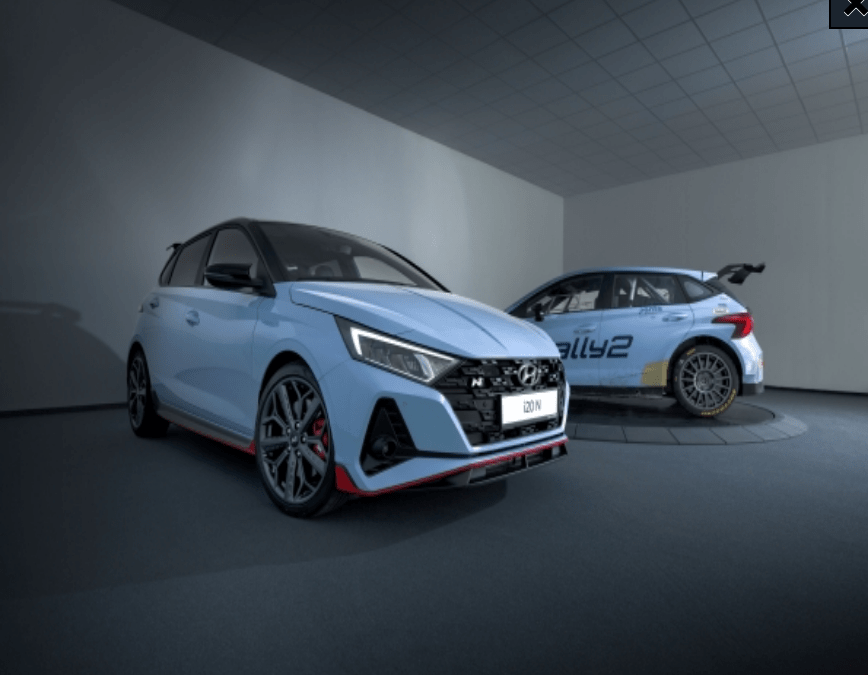
As well as competing in WRC and TCR with models based on road-going cars, Hyundai uses motorsport as a testing ground for new technologies. This approach has a direct impact on the company’s future N production models through knowledge transfer. For example, the company’s latest racetrack-capable hot hatch, the all-new i20 N, is directly influenced by the i20 WRC car. The all-new i20 N carries the same weight as the minimum required in WRC and bears a rallying-inspired roof spoiler for enhanced aerodynamics.
Hyundai Motorsport Customer Racing recently unveiled the i20 N Rally2, an all-new rally car intended for privateer teams and drivers. In another example of how Hyundai Motorsport and Hyundai N work together to enhance their performance offerings, the i20 N Rally2 car is based on the strong foundation of the all-new i20 N’s chassis. The i20 N Rally2 builds on the dynamic look of the road car – part of Hyundai’s new ‘Sensuous Sportiness’ identity – and includes several design elements inspired by the world of motorsport.
The Veloster N ETCR – Hyundai’s first all-electric high-performance vehicle Ahead of the PURE ETCR championship, Hyundai Motorsport’s engineers designed and built the company’s first all-electric high-performance vehicle, the Veloster N ETCR, at its headquarters in Alzenau, Germany. Like the i30 N TCR and i20 N Rally2, it is based on a highly-modified version of another Hyundai N car, the North American Veloster N model.
Testing on the Veloster N ETCR began with a prototype design in September 2019, which the team continued to develop throughout 2020. It is a zero-emission, rear-wheel drive touring car with mid-mounted motors and designed specifically for ETCR regulations. Equipped with a 798-volt battery pack from Williams Advanced Engineering located in the floor of the car and a double-wishbone rear suspension, the chassis is radically different from any previous Hyundai Motorsport project. It boasts a peak power output of 500 kW (equivalent to 680 PS) and a continuous power of 300 kW. The Veloster N ETCR’s engine consists of four motors – two per wheel – which are connected to a single gear ratio gearbox.
“ECTR is a testbed for Hyundai’s future mobility models. With the Veloster N ETCR, we are proving how cutting-edge technology can be combined with eco-friendly driving to make motorsport cleaner,” says Till Wartenberg, Vice President and Head of N Brand Management and Motorsport Sub-division at Hyundai Motor Company. “By building an electric race car, we will prove a high-performance EV is feasible. The gathered knowledge and data through our experiences on the track, are the basis to optimise and improve our BEV and FCEV models.”
The hydrogen-powered Hyundai Generator PURE ETCR presents Hyundai with the opportunity to push its electrification systems to the limit under the most extreme conditions. However, while high-performance is a key tenet for the company, it is also committed to making the competition, as well as the future of motorsport and performance cars more generally, as environmentally-friendly as possible. For Hyundai, this does not stop with the zero-emission drivetrain. Rather, the whole ecosystem has to be sustainable, from power generation to fuel transport.
Hyundai will be offering its new hydrogen generator as a recharging system for electric vehicles. The Hyundai Generator is the newest feature of emission-free electric charging and consists of two fuel cell stacks. First, the generator is filled up using tanks of compressed hydrogen. Inside the fuel cell stack, the hydrogen is exposed to oxygen. The ensuing chemical reaction generates energy. This energy is used to charge the batteries of the electric touring vehicles. This way, participants can be sure that the electricity used to charge the cars also comes from emissions-free, sustainable sources.
The Hyundai Generator allows two EVs to charge simultaneously. As well as featuring a high-speed charging capability, it also offers significantly reduced noise levels compared to a diesel generator. Beyond e-racing, Hyundai is also confident its hydrogen-powered generator has a range of different potential use cases, such as festivals, construction sites and crisis situations.
“For Hyundai it is important to always have a holistic view on zero-emission mobility. With solutions like the Hydrogen Generator, we are able not only to run emission free vehicles but also guarantee that the electricity is produced emissions-free by using green hydrogen to power the generator,” says Thomas Schemera, Executive Vice President and Chief Marketing Officer, Hyundai Motor Company. “In Hyundai’s move to become a Smart Mobility Solutions Provider, we will further develop zero-emission appliances for different aspects of our lives.”
How electric racing combines sustainability and performance Electric racing represents the perfect opportunity for Hyundai to combine both environmental sustainability and motorsport, bringing together the brand’s “progress” and “performance” pillars. In the future, electric racing is set to become one of the core pillars of Hyundai Motorsport. ETCR showcases how future-oriented technologies and cleaner racing can be combined.
Electrified motorsport is also a way for Hyundai to reach out to new target groups. By developing an emissions-free touring car like the Veloster N ETCR, the company is demonstrating the feasibility of high-performance EVs. These models can be eco-friendly, while at the same time being fun to drive.
About Hyundai Motor Established in 1967, Hyundai Motor Company is present in over 200 countries with more than 120,000 employees dedicated to tackling real-world mobility challenges around the globe.
Based on the brand vision ‘Progress for Humanity,’ Hyundai Motor is accelerating its transformation into a Smart Mobility Solution Provider.
The company invests in advanced technologies such as robotics and Urban Air Mobility (UAM) to bring about revolutionary mobility solutions, while pursuing open innovation to introduce future mobility services.
In pursuit of sustainable future for the world, Hyundai will continue its efforts to introduce zero emission vehicles equipped with industry-leading hydrogen fuel cell and EV technologies.
About Hyundai Motor Europe HQ Hyundai Motor Europe HQ was formally established in 2000 with its main office in Offenbach, Germany. It is the regional headquarter responsible for over 40 markets with more than 3,000 outlets, taking 3.6 per cent market share in 2020 (ACEA data).
About Hyundai Motor UK Hyundai has sold vehicles in the UK since 1982. In 2005, Hyundai opened its own UK subsidiary, Hyundai Motor UK Ltd, which is now based in Leatherhead, Surrey. As of January 2021, Hyundai has one of the youngest product ranges of any manufacturer, with almost all models younger than 1 ½ years old. More than 75 per cent of the Company’s line-up is now available as an electrified version, and the company plans to electrify its entire range by 2025. Furthermore, Hyundai is a pioneer in zero-emission mobility, including its fully-electric 300-mile range Kona Electric, its second-generation fuel cell electric vehicle NEXO, and the soon-to-be launched battery-electric IONIQ 5, the first model in its new IONIQ line-up brand. All passenger cars come with Hyundai’s unique Five Year Unlimited Mileage Warranty package, providing customers with a five-year warranty with unlimited mileage, five years of roadside assistance and five years of vehicle health checks. The High Voltage battery warranty is 8 years or 100,000 miles.
Offered from 43 years of ownership in The Race Retro Live Online Auction
Two further Series 1 E-Types also feature in the sale; a restoration project with just 2,805 miles and an original example with celebrity provenance
Silverstone Auctions Race Retro Live Online Auction will see three Series 1 Jaguar E-Types, each with their own unique provenance, offered in the sale.
2021 is the 60th Anniversary of the iconic Jaguar E-Type and remarkably, coinciding with this milestone, Chassis number 60 (860060) will be offered on Saturday 27th March in Silverstone Auctions Race Retro Live Online Auction.
This 1961 Series 1 is a beautiful home-market, right-hand drive, flat-floor, fixed-head Coupe and is finished in the classic colour combination of Opalescent Gunmetal over a red leather interior. Manufactured in 1961 and first registered on 1st January 1962, Chassis 860060 is an early flat floor example, one of the first 175 Coupes built before the recessed footwells were adopted and one of just 1,559 right-hand drive, 3.8 Coupes constructed in total, so a rather rare car in its own right.
A ground-up restoration commenced in 2000 and it is now offered following a staggering 43-year ownership. Estimated at (£) 95,000 – 115,000, this is a unique opportunity to take ownership of Chassis #60, on the 60th Anniversary of the Jaguar E-Type.
Gary Dunne, Silverstone Auctions Sales Controlled commented “We have a trio of very special Series 1 Jaguar E-Types in our forthcoming auction, each one offering a special opportunity into the ownership of this British Classic. To have the 60th E-Type on the 60th birthday of the marque is truly wonderful”.
The second example offers an incredible restoration opportunity; at three months old the 1964 Jaguar E-Type 4.2 Series 1 had covered just 2,805 miles from new when it suffered a sideways impact at Snetterton race circuit. Whilst repairs were carried out, nothing further happened and as such the car remains at this incredibly low mileage today, having only ever been driven by one owner. In need of total restoration, this is an exciting prospect and is sensibly guided at (£): 70,000 – 90,000.
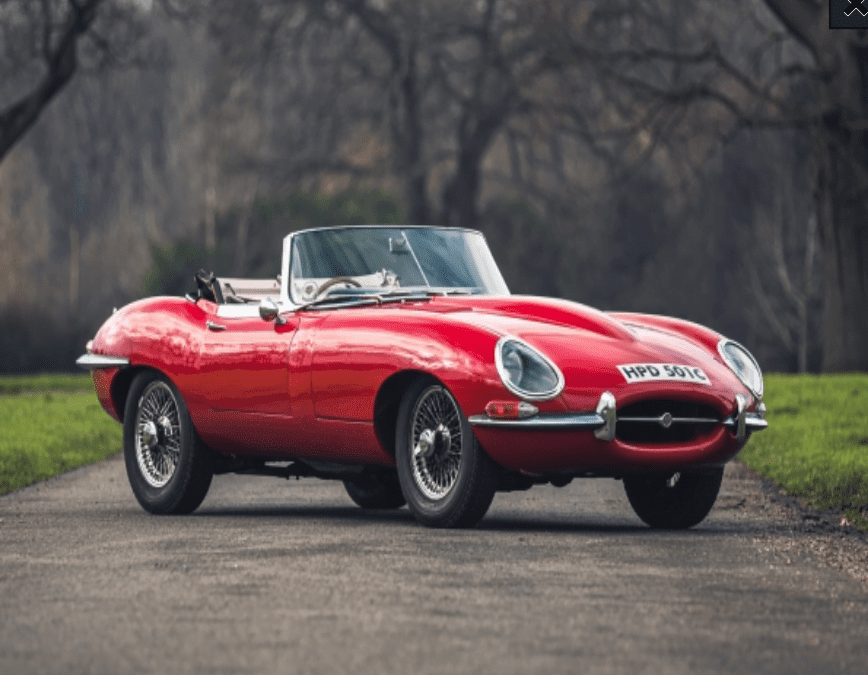
Looking glorious in red over black is the final example, a 1965 Jaguar E-Type Series 1 Roadster 4.2, which was once the property of TV and film actor, Nigel Havers. This rare UK, right-hand drive 4.2 Series 1 Roadster is believed to be original colours, engine, and gearbox, with it displaying all the signs of a very original and honest car. Estimated at (£): 60,000 – £70,000 it will be going under the hammer next month.
The catalogue for the Race Retro Live Online Auction (27th March) is still open for both classic and competition cars. Interested sellers can contact the team on 01926 691141 to discuss their car or by utilising their online submission options.
For high resolution copies of the images please get in touch with the PR contact below
2021 AUCTIONS
The Race Retro Live Online Auction: 27th March
The May Sale: 22nd May
A Sale of Ferraris in association with Ferrari Owner’s Club GB: 5th June
The Classic Sale at Silverstone: 30th July – 1st August
The NEC Classic Motor Show Sale: 12th – 14th November
ABOUT SILVERSTONE AUCTIONS Formed in 2011, Silverstone Auctions is a world-class, specialist auction house for the sale of classic cars, modern supercars, all types of competition cars, modern and historic motorcycles as well as automotive memorabilia.
We hold the exclusive automotive auction rights for Silverstone circuit and host sales as stand-alone events as well as an integrated element of some of Europe’s biggest motorsport events such as the Silverstone Classic Festival.
In addition to our sales at the circuit, we also host a number of auctions each year at other major classic car events including the NEC Classic Motor Show and Race Retro.
At Silverstone Auctions we take pride in selecting the very best of breed vehicles for our sales which not only attracts buyers from around the world, but has already helped us achieve a number of record-breaking auction prices on behalf of our vendors.
We are committed to providing the best possible service for both buyers and vendors alike, so if you’d like to know more about buying or selling a classic vehicle with Silverstone Auctions, call us today on +44(0)1926 691141.
Next generation small van range to be built on Alliance platform
All-electric and internal combustion engine versions to be made in France
Will include LCV and passenger car options with various size combinations
Nissan today confirmed plans for its next generation of small vans for customers in Europe.
Leveraging further the strength and scale of the Alliance, Nissan’s future range of small vans will be manufactured in Maubeuge, France, the Alliance’s small van center of excellence.
Although naming and detailed product information will be released closer to the launch date, Nissan has confirmed the range will include all-electric and internal combustion engine options, as well as commercial and passenger vehicle variants, with various size combinations.
Nissan’s Chief Operating Officer Ashwani Gupta said: “This future van announcement is more evidence of the strong momentum building for Nissan in Europe as we continue to advance our Nissan NEXT business transformation plan.
“Manufacturing our future products together with our Alliance partner brings competitive advantages for both companies and is another example of our win-win strategy.
“While it is too early to give any detailed product information, our customers can be sure they will have a strong Nissan identity and continue our mission of making the all-electric driving experience a viable option for everyone.”
Like the current Nissan NV250 van, which has been manufactured at the Renault Maubeuge plant since 2019, the next-generation model will be built on an Alliance platform alongside the next-generation Renault Kangoo.
The allocation of the next-generation of Nissan small vans to Maubeuge plant means that in the future, all of Nissan’s vans for European customers will be manufactured in France.
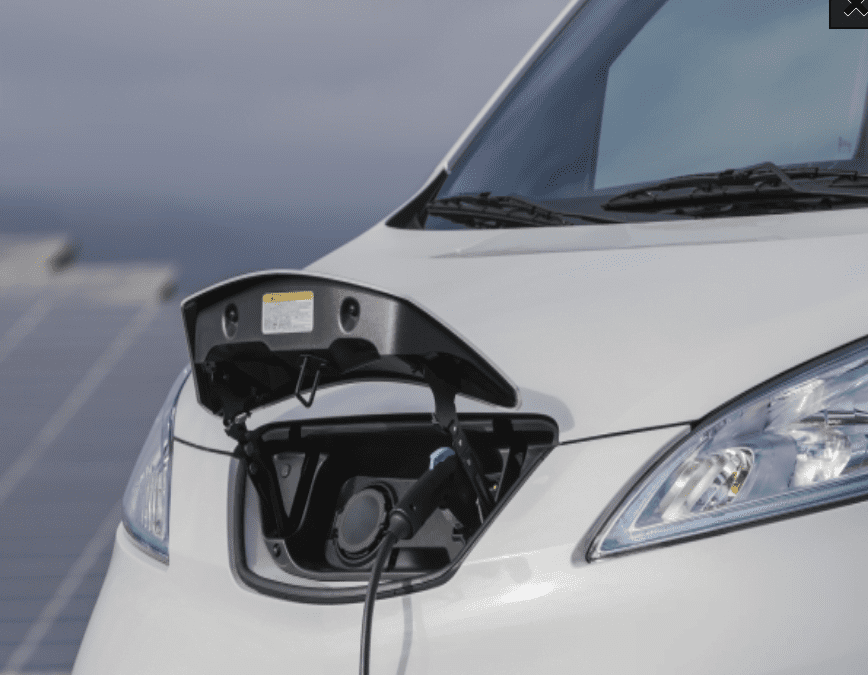
The next-generation all-electric van will continue the success of the Nissan e-NV200, which was the first all-electric commercial vehicle for the mass market when it launched in 2014. Not only does it offer a zero-emission solution for deliveries into towns and cities, but can save businesses significant amounts of money through avoiding fuel, vehicle duty and city centre congestion zone charges.
Nissan GB is celebrating the sale of its one millionth crossover vehicle to UK customers, the first car brand to achieve the major milestone.
The combined sales of both generations of Qashqai (2007-2014) & (2014-2020), Juke (2010-2019) & (2019- ) and the current generation X-Trail (2014- ), collectively reached and have since passed the one million total.
Nissan marked the occasion by wrapping the five models that contributed to the sales milestone in platinum. A platinum record is traditionally awarded to music artists who achieve one million sales of their album or single.
Since the Nissan Qashqai invented the crossover segment in 2007, and the Juke created the compact crossover segment in 2010, Nissan has been the market leader for UK crossover sales. The Qashqai is a main fixture in the UK’s top 10 selling cars, with the Nissan Juke regularly entering the top 15 best-selling models.
Andrew Humberstone, Managing Director, Nissan Motor (GB) Ltd. commented; “We are thrilled to have reached this unprecedented sales milestone and wish to express sincere gratitude to our customers for putting their trust and loyalty in the quality of Nissan’s vehicles.”
“Quite simply, if you are thinking of buying a crossover you will not find another brand that has even close to the number of happy customers as Nissan. We’re the market leaders in this segment because we put our customers first – in the design and engineering of our vehicles, but also in the purchasing and ownership experience.”
Of the one million Nissan crossovers sold in the UK, 93% were made at the company’s Sunderland plant in North East England. Sunderland has produced crossovers for Nissan since December 2006 when the first generation Qashqai rolled off the line. Juke production began in 2010, with the second generations of Qashqai in 2014 and Juke in 2019. The current generation X-Trail has been produced at Nissan’s Kyushu plant in Japan since 2014 and accounted for 7% of the one million UK sales.
Both generations of Qashqai and Juke were designed, engineered and produced in the UK. The Qashqai is the UK’s largest volume manufactured car with more than three million manufactured in Sunderland.
Nissan’s Sunderland plant is also the largest automotive factory in UK history, with one in three British-made cars coming off its production lines, making Nissan the UK’s biggest car manufacturer.
Crossovers are a significant focus for Nissan and will continue to play an important role in the brand’s product line-up as part of its Nissan NEXT business transformation plan. The third generation Nissan Qashqai, which will also be made in Sunderland, will go on sale later in 2021.
Humberstone concluded; “As a brand Nissan is always looking to our future and ensuring we exceed both the demands and desires of our customers. We launched the next generation Nissan Juke at the end of 2019 and in July 2020 we unveiled Ariya, our first all-electric crossover. The next generation of Qashqai will also be with us very soon featuring two electrified powertrains that will reinforce its benchmark position in the segment. We have the best for our customers today, but we will also have the best for them tomorrow.”
Whilst Nissan has had to close showroom doors during the national lockdown, the brand’s Shop@Home service is supporting customers with their next purchase from the comfort of their homes. Customers can browse and configure models, explore finance options, and even click-and-collect from their nearest COVID-secure Nissan showroom.
Crossovers combine the raised seating position, ground clearance and capable styling of SUVs, with the compact external dimensions, efficient performance and handling refinement of a hatchback.
A hugely popular segment of vehicle, crossover sales have continued to outperform the overall UK car market over the past few years. In 2019, the B-SUV (Juke) and C-SUV (Qashqai & X-Trail) segments were up 10% and 8% respectively on 2018, in a market that overall was down 5% year-on-year.
NISSAN MODEL
TOTAL UK SALES
% SHARE OF SALES
MANUFACTURING LOCATION
Qashqai (2007 – 2014)
246,993
25%
Sunderland, UK
Qashqai (2014 – 2020)
373,014
37%
Sunderland, UK
Juke (2010 – 2019)
292,723
29%
Sunderland, UK
Juke (2019 – Present)
20,208
2%
Sunderland, UK
X-Trail (2014 – Present)
67,062
7%
Kyushu, Japan
TOTAL
1,000,000
100%
For more information on Nissan’s crossover range, please visit; www.nissan.co.uk
Maserati’s successful Ghibli has already won several prizes and awards, and today it has received a very special one as it won the “Upper Middle Class – Import” category at BEST CARS 2021.
Initiator of this readers’ choice is the leading German car magazine AUTO MOTOR UND SPORT. More than 100,000 readers had followed the call and picked their favourites from 378 vehicles in eleven categories. This is the 45th time that these prestigious awards have been held.
Davide Grasso, CEO Maserati, said: “Ghibli is an iconic Maserati model. With over 100,000 units produced since its launch in 2013, this model perfectly embodies our DNA and the Brand’s values. For this reason we have chosen Ghibli to ignite the spark of electrification which projects the Brand into the future: last year we revealed the new Ghibli Hybrid, the first hybrid vehicle in Maserati’s history.”
The success of the Maserati Ghibli underscores the brand’s claim for continuous development of its models. Even years after the debut of the sports sedan with its coupé silhouette, automotive connoisseurs are impressed. Especially for the current MY 2021, Ghibli received comprehensive technical and stylistic enhancements. Among other things, the completely new infotainment system MIA (Maserati Intelligent Assistant) with a 10.1” screen in 16:10 upgrades the car. Furthermore, the new Maserati Connect* program enables the owner to stay connected to their vehicle and, for example, to be informed about the cars condition in detail.
For the first time a V8 engine is also available in the Ghibli’s range. The 580 hp 3.8 litre twin turbo unit accelerates the Ghibli Trofeo from 0 to 100 km/h in just 4.3 seconds and provides a top speed of 326 km/h – a Maserati sedan has never been faster. The exclusivity of this version is also underlined by the new “Corsa” driving mode and stylistic elements that make the uniqueness clearly recognizable.
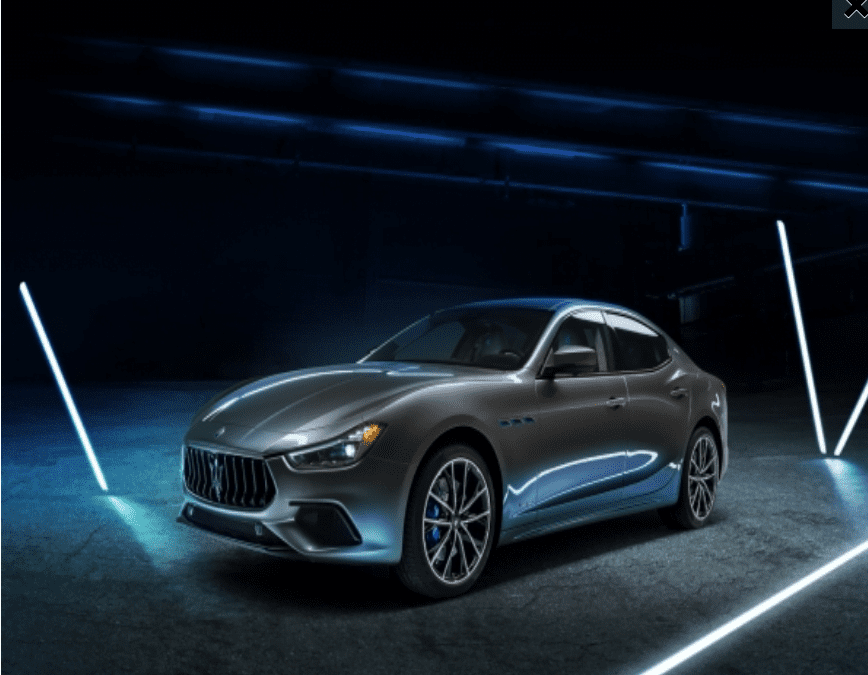
Ghibli Hybrid is another milestone in Maserati’s history, which goes back more than 106 years. It initiates the electrification of the brand which is breaking into a new era. The new Ghibli Hybrid has a 2.0 litre 4 cylinder engine that is coupled with BSG, eBooster and 48 volt battery. It achieves an output of 330 hp, which ensures a top speed of 255 km/h and a sprint from 0 to 100 km/h in 5.7 seconds. When it comes to hybridizing its vehicles, Maserati is successfully pursuing the strategy of saving fuel and increasing performance.
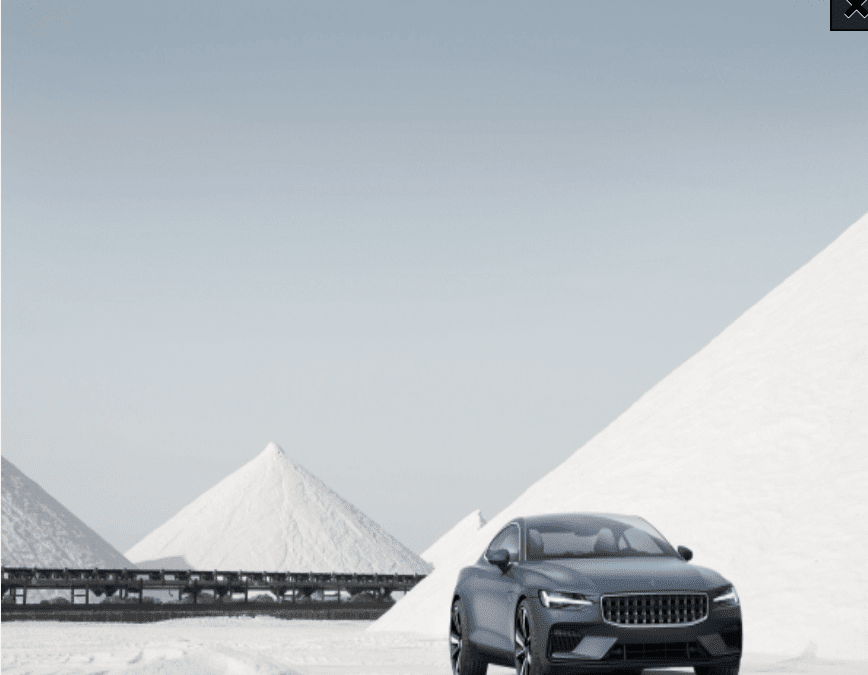
Final build slots for Polestar 1 available; purchase exclusively at polestar.com
Electric performance hybrid with the longest electric-only range of any hybrid is a “technological tour-de-force”
609 hp and 1,000 Nm produced by seamless combination of electric motors; supercharged and turbocharged combustion engine
Final build slots for Polestar 1 – the Polestar brand’s electric performance hybrid halo car – are now available. Produced in Polestar’s leading production facility in Chengdu, China, Polestar 1 will see the completion of its production run towards the end of 2021.
As the halo of the Polestar lineup and the car which launched the brand, Polestar 1 features a crisp design and state-of-the-art technology, with 609 horsepower and 1,000 Nm of torque available from its hybrid powertrain. Electric first, the GT features two electric motors on the rear axle, complemented by a 2.0-litre supercharged and turbocharged petrol engine and integrated starter generator at the front.
A carbon fibre body, 6-piston Akebono brakes and adjustable Öhlins Dual Flow Valve dampers turn driving Polestar 1 into a highly-tuned sensory experience, and with advanced features such as mechanical torque vectoring, it faithfully represents Polestar’s role as a guiding star for the advancement of technology.
With 34 kWh of battery capacity, Polestar 1 still boasts the longest pure-electric driving range of any hybrid – 124 km (WLTP) – which makes it usable in everyday situations as a pure electric vehicle.
Available to buy exclusively online at Polestar.com, interested customers can also visit Polestar Spaces in all launch markets where possible for a hands-on experience and test drive.