by gaukcars.com | Oct 2, 2024 | Blog
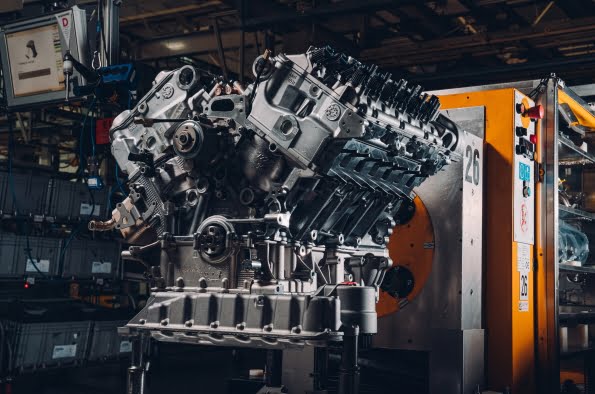
- First W12 engine destined for Bacalar completes production testing at Bentley’s centre of excellence for W12 engines
- Bentley’s W12 is the most advanced 12-cylinder engine in history
- Producing 659 PS (650 bhp) and 900 Nm (667 lb.ft) of torque
- W12 engine development has increased power by up to 27 per cent, torque by 38 per cent and reduced emissions by 28 per cent since 2003
- Each engine passes through three specific test regimes before fitting to a vehicle
- More than 100,000 W12 engines have been handbuilt at Crewe since 2002, producing more than six million horsepower
Producing 659 PS (650 bhp) and 900 Nm (667 lb.ft) of torque, the engine for the first customer Bentley Mulliner Bacalar has now completed assembly and production testing at Bentley’s centre of excellence for W12 engines.
The Bacalar spearheads a return to coachbuilding by Bentley Mulliner and features an enhanced version of Bentley’s peerless 6.0-litre, W12 TSI engine, the most advanced 12-cylinder engine in the world.
Since the first introduction of the twin-turbocharger W12 in 2003, the refinement of the engine has seen an increase of up to 27 per cent in power, 38 per cent in torque and a reduction of 38 per cent in emissions.
This has been realised through evolution and optimisation of the crankcase, improvements in the oil and cooling systems, twin-scroll turbocharging technology and more effective injection and combustion processes.
Each W12 engine is hand-built over 6.5 hours by a team of 45 craftspeople before undertaking a highly sophisticated test regime of over an hour via three specialist diagnostic machines during the engines assemble.
The testing not only provides feedback on the quality of each engine but also provides multiple checkpoints to catalogue the exact behaviour of each engine from the moment of manufacture.
Quality Guaranteed Through Testing
The three tests that the Bacalar engine has already been put through are part of Bentley’s exceptional quality control processes.
The first test is for leakage and can be undertaken after the engine has been assembled to the point that fuel, water and oil systems can be closed – a production stage known as a “short engine”.
The leakage test is conducted by pressurising each of the systems, for fuel, oil and water individually. The different cavities are pressurised to values between 0.2 – 5.0 bar respectively and then measured whilst the pressure decays over time. The reduction in pressure versus time represents the quality of the sealing of the engine assembly. If the pressure drops faster than expected, a leak is indicated. A fluid is sprayed on to the exterior of the engine to pin-point any leakage paths.
The second and most advanced test is Cold Test. The engine is loaded on to a testbed plate and connections are made to the engine loom and all engine systems, whilst a large electric motor couples to the engine via the crankshaft.
“Motoring” the engine via the crankshaft allows the test bed to collect data from a suite of sensors. The facility measures 600 individual properties and characteristics of the engine during a 15-minute cycle.
Due to the low running speed of 120 RPM for the test, finer details and any inconsistencies can be identified thanks to a sample rate that highlights even the briefest of anomalies that would be invisible if the engine was firing or running at speed.
This fine detail analysis is also valuable for confirming the precise timing of the engine. Using positioning information from sensors on the crankshaft, crankcase and camshafts along with cylinder compression values, the Cold Test can confirm the engine timing is accurate and therefore achieving the best possible combustion cycle.
In order to gather cylinder-specific data, Cold Test is carried out before the exhaust manifolds, turbochargers and other ancillaries are fitted. The third and final test – Hot Test – checks the complete engine assembly once these parts are installed, and simulates real world usage in the vehicle.
When the engine arrives for hot testing, a UV dye is added to the engine to help identify any leaks. The coolant and fuel system are pressurised with air and nitrogen respectively for a final check before introducing the necessary fluids ready for testing. The engine is cranked to build oil pressure before the ignition system is energised and then left to idle whilst the engine test technician listens for any refinement issues and checks for leaks with a UV lamp.
Each W12 is then tested for a minimum of 21.5 minutes and runs up to 3800 rpm with a maximum load of 300 Nm. One in every one hundred engines receives a full eight-hour power test, achieving 6000 RPM, and must achieve 900Nm.
Since the installation of the three testbeds in 2002, over 100,000 W12 engines have been handcrafted in Crewe and passed through the test facility.
Engine Technology Advancements
Bentley’s legendary 6.0-litre twin-turbocharged W12, created in 2002, has evolved into the latest iteration of W12 engine used across today’s current model range. The unique W-configuration means that the engine is 24 per cent shorter than an equivalent V12, benefitting packaging and maximising usable cabin space.
The latest generation of W12 was launched in the Bentayga in 2016. A thoroughly reworked engine included a crankcase 30 per cent stronger than its predecessor, while the cylinder surfaces were coated to reduce friction and improve corrosion resistance. A low-alloy steel coating is applied to the bores using an Atmospheric Plasma Spray (APS) process.
Improvements were also made to the cooling system, with the engine featuring three separate coolant circuits. The first is designed to bring the cylinder heads up to optimum operating temperature as quickly as possible for best engine performance and low emissions. The second cools the engine block and oil system, while the third handles the thermal load of the turbochargers. Each system has a dedicated water pump, allowing optimised individual control.
The W12 combines high-pressure direct fuel injection (200 bar injection pressure) with low-pressure port injection (six bar). The combination of these two systems maximises refinement, lowers particulate emissions and optimises power and torque delivery.
Twin-scroll turbochargers minimise turbo response time and provide a more efficient exhaust package. The exhaust assemblies for the three front and three rear cylinders are separate from one another which then feed the twin-scroll impellers. The turbocharger housing is welded directly to the exhaust manifolds and feature integrated speed sensors, allowing the engine to monitor turbo performance for maximum efficiency.
Bentley’s Variable Displacement system shuts down half of the engine under defined conditions. Intake and exhaust valves, fuel injection and ignition are all shut down on defined cylinders, with the engine running as a six-cylinder for improved efficiency. The system will run in this mode in gears three to eight, below 3,000 rpm and up to 300 Nm torque output.
by gaukcars.com | Oct 2, 2024 | Blog
- 0% APR finance available on Solutions PCP deals* – up to 36-month contracts
- £1,000 deposit contributions on Fabia, Scala, New Octavia and Superb models
- Discounted service plans^ also available from just £99
- Class-leading digital tools offers complete virtual retail experience
- Offer ends 28 February 2021
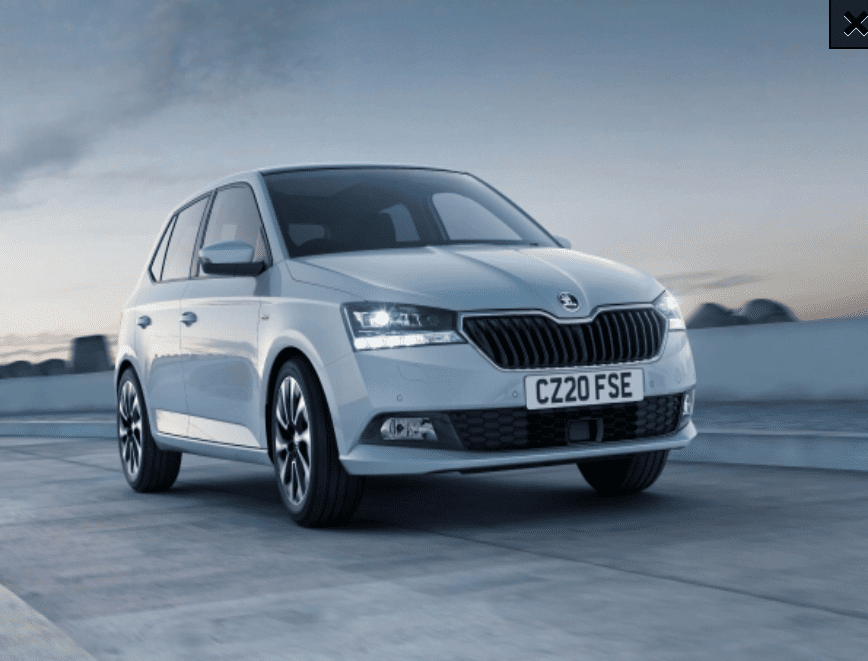
There’s never been a better time to buy a new ŠKODA thanks to the launch of the brand’s first ever Virtual Event that will see every model in the award-winning range offered with 0% APR finance.
Customers can choose a stock vehicle from all seven product ranges and finance through a Solutions Personal Contract Plan (PCP), with no interest for up to three years.
ŠKODA retailers across the country have a range of digital tools to offer a class-leading experience, giving customers an easy, engaging and convenient environment, all from the safety of their own homes. These include Zoom video calls that allow staff to share screens from the retailer’s Digital Assistant app. The iPad-based app gives retailers (and customers) access to a host of features, including a national stock database and product information. Retailers can also use a connected camera and screen sharing to deliver virtual tours of models, create a bespoke customer presentation or brochure, facilitate the handover of cars, renew finance agreements, and also set up new agreements with new customers.
The remarkable new offer covers all models across the range with the exception of SE Technology, iV and vRS trim grades. The 0% APR finance packages are available with 18, 24 and 36 month contracts with four models; Fabia, Scala, New Octavia and Superb all coming with £1,000 deposit contributions from ŠKODA.
Not forgetting ŠKODA’s award-winning SUVs, the Kamiq, Karoq and Kodiaq are also available with a 0% APR finance package, and buyers opting for the Kamiq benefit from a deposit contribution of £750. Customers are required to pay a minimum deposit of 10% on all PCP finance deals across the range.
As an added bonus, customers can also add a discounted service plan to their package. The plan covers the car’s first two consecutive services and is available on the Fabia for just £99, and £159 for all other models in the range.
Customers can also choose to visit the ŠKODA Virtual Showroom at skoda.co.uk, which offers a real-time guide by one of the brand’s product experts. The Virtual Showroom can display three cars at any one time, and is currently giving customers an early-look and presentation of the all-new Enyaq iV electric SUV, which comes to the UK later in the year. The Virtual Showroom is open from 11:00 – 21:00 on Monday to Friday and 11:00 – 19:00 on weekends. Customers can connect immediately, or arrange a call-back at a time that works for them.
by gaukcars.com | Oct 2, 2024 | Blog
- McLaren’s expertise in super-lightweight engineering and racing technology concentrated into next-generation electrified supercar
- Artura revealed in showcase broadcast from the McLaren Technology Centre in Woking, England and featuring McLaren’s Formula 1 driver Daniel Ricciardo
- McLaren Artura is the company’s first series production hybrid supercar
- 30km* pure electric range – capable of zero-emissions driving to cover most urban journeys
- First McLaren supercar to use the all-new, in-house designed, developed and manufactured McLaren Carbon Lightweight Architecture (MCLA) architecture designed for the brand’s electrified future, exactly four decades after McLaren unveiled its first carbon fibre chassis
- Artura launch coincides with anniversary of a decade of supercar production
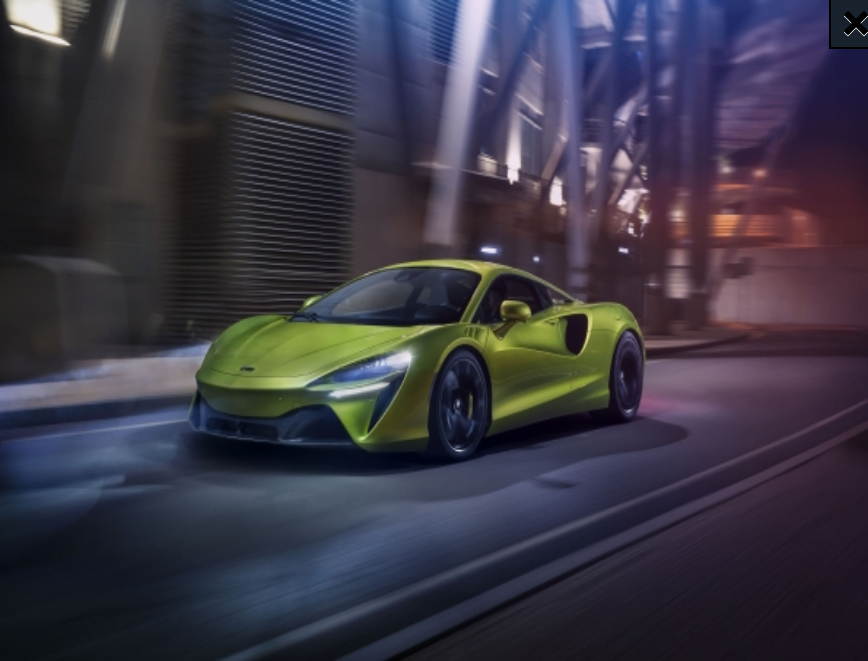
Luxury supercar company McLaren Automotive has today revealed the McLaren Artura, its next generation high-performance hybrid supercar.
The McLaren Artura was revealed to the world in a spectacular digital launch coming from its global headquarters featuring McLaren’s new Formula 1 driver Daniel Ricciardo.
The all-new Artura is the company’s first high-performance hybrid series supercar and opens a new era for electrification across the McLaren range.
With the new McLaren Carbon Lightweight Architecture (MCLA) at its core, the Artura is testament to McLaren’s commitment to super-lightweight engineering to deliver outstanding levels of thrilling performance and engagement while powered by an all-new hybrid powertrain that features a brand new V6 engine.
“Every drop of McLaren’s experience and expertise has been poured into the Artura. Our all-new, high-performance hybrid delivers all of the performance, driver engagement and dynamic excellence for which McLaren is renowned, with the additional benefit of electric driving capability.
“The introduction of the Artura is a landmark moment – not only for McLaren, or for our customers who will enjoy this car on every emotional level and for the supercar market but also for the wider sector as we demonstrate that lightweight engineering and electrification must go hand-in-hand to deliver agile performance and driver engagement as part of an electrified future.”
Mike Flewitt, Chief Executive Officer, McLaren Automotive
Sleek supercar design inside and out
The engineering artistry beneath the Artura’s skin is complemented by its exterior design.
The low-nose and high-tail stance is pure supercar with the drama underlined by McLaren’s signature dihedral doors – which open closer to the body and house mirrors that fold in more tightly. It is a stance further enhanced by the Artura’s short wheelbase and low stance.
The overall effect gives the Artura a ‘shrink-wrapped’ appearance, evolving a McLaren design approach seen in recent models to a new level.
The lithe, technical sculpture has only minimal body shut lines and panel joints.
The shape of the Artura, sculpted to optimise performance and manage airflow for aerodynamic performance and cooling, is driven by the McLaren design principle of ‘everything for a reason’ that is in evidence throughout the car.
Inside, occupants will find the Artura is no less of a revolution, with the cockpit centred more than ever around the driver.
Ergonomics have been carefully thought through. Consequently, the steering wheel is kept clear of unnecessary switches and the driver is able to adjust driving modes without taking their hands away from the wheel, keeping them fully connected to the driving experience.
An all-new McLaren infotainment and connectivity system utilises two high-definition screens. The Artura also features a Bluetooth low-energy vehicle key which detects when the driver is heading towards the vehicle and powers up to welcome occupants. This includes ambient, ‘hidden-until-lit’ lighting in the doors, which act like beacons to occupants about to drive at night.
Once inside the Artura, a driver can choose from four Powertrain modes, including an E-mode for up to 30km* of emissions-free, electric-only driving.
Comfort mode maximises range and efficiency, with the combustion engine shut off under 40km/h using an extended stop and start mode that is phased in for greater speed and power requirements.
In Sport and Track modes, however, the electric power is deployed in an increasingly aggressive manner for low-end response and acceleration. The handling mode choices adjust damper firmness and the degree of Electronic Stability Control intervention to suit driver preference and weather and road conditions.
Powertrain and battery capabilities
The Artura is underpinned by McLaren’s philosophy of super-lightweight engineering, with electrification now bringing the additional benefits of even faster throttle response, lower emissions and being able to run in pure EV mode for emissions-free journeys of up to 30km.*
Being entirely new, Artura presented McLaren’s designers and engineers with opportunities to innovate, chief among these being how to preserve McLaren’s super-lightweight engineering prowess when adding hybrid powertrain elements including an E-motor and battery pack.
The Artura is designed with full plug-in hybrid (PHEV) capability and can be charged to an 80 per cent charge level in just 2.5 hours.
The batteries can also harvest recharging power from the combustion engine during driving and tailored to the driving mode selected.
Innovative chassis
The Artura is the first supercar to have the new McLaren Carbon Lightweight Architecture (MCLA) at its core.
Designed and manufactured at the McLaren Composites Technology Centre (MCTC) in the Sheffield region, which was opened by the Duke and Duchess of Cambridge in 2018, the MCLA sets a new standard for McLaren’s advanced chassis design.
Optimised for high-performance hybrid applications, MCLA includes a bespoke battery compartment and introduces a ground-breaking domain-based ethernet electrical architecture which reduces cabling by 25 per cent while speeding up data transmission.
Every Artura comes with a five-year vehicle warranty, a six-year battery warranty and 10-year body warranty.
Advance orders for the all-new McLaren Artura are now being taken at McLaren retailers with first deliveries to customers expected in Q3 of this year.
by gaukcars.com | Oct 2, 2024 | Blog
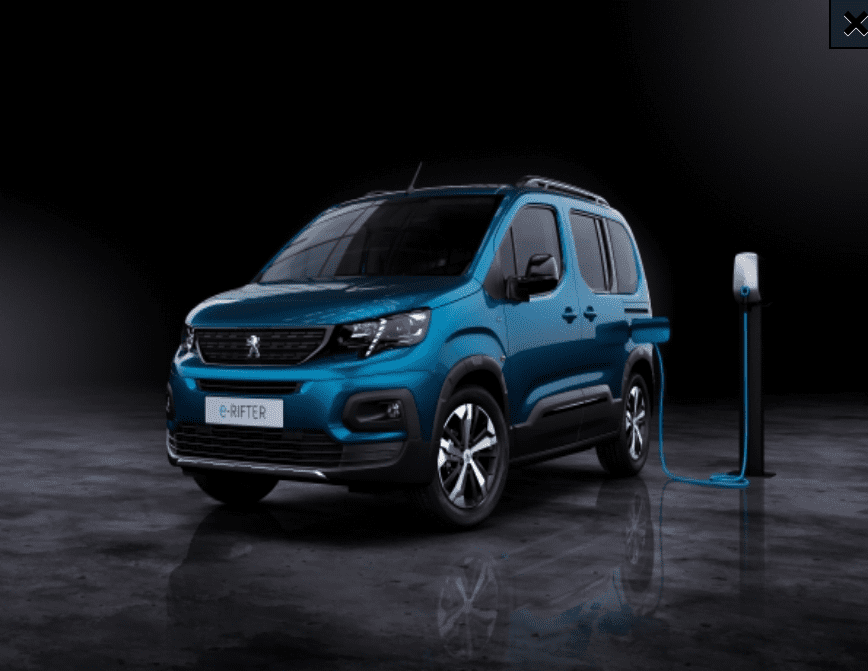
The new PEUGEOT e-Rifter is the latest fully electric vehicle to join PEUGEOT’s growing line-up of zero emissions models.
In showrooms later this autumn, the e-Rifter is capable of up to 171 miles (WLTP)* from a single charge and is available in five and seven-seat configurations. With a towing capacity of up to 750kg and up to 4,000-litres of boot space, the e-Rifter is ideal for both families and fleet users looking for a practical zero emissions vehicle.
Based on the award-winning Rifter, the e-Rifter is built on PEUGEOT’s multi-energy EMP2 platform and features a 100kw (136hp) electric powertrain capable of up to 260Nm of torque. Connected to a 50kWh battery, the e-Rifter achieves up to 171 miles from a single charge under WLTP testing*. With a top speed of 83mph, the e-Rifter can accelerate from 0-62mph in 11.2-seconds.
Julie David, Managing Director of PEUGEOT UK, said: “The new e-Rifter is our latest electric model, and is one step closer to fulfilling our promise of offering an electrified variant across our entire model line-up by 2023. With a range of practical features, and available in five or seven-seat configurations, we believe the e-Rifter is the ideal choice for both families and businesses looking for a versatile, zero-emissions vehicle and are excited to introduce it to our customers later this year.”
The e-Rifter comes standard with a 7.4kW single-phase charger and with an optional 11kW three-phase charger. Supporting a variety of charging methods, the e-Rifter can be charged using wallbox or 100kW rapid charging. A full charge from a 7.4kW Wallbox will take 7.5 hours, or five hours using the optional 11kW three-phase charger. Supporting rapid charging, 0 to 80% charge can be completed in just 30 minutes using a 100kWh rapid charger.
Using the MyPEUGEOT® smartphone app, owners can schedule delayed charging to take advantage of off-peak electricity tariffs.
The e-Rifter also comes with three driving modes and two regenerative braking modes to optimise battery range and vehicle performance.
Drivers have access to three driving modes:
- Eco (60 kW/180 Nm): Optimises vehicle range.
- Normal (80 kW/220 Nm): Ideal for daily use.
- Power (100 kW/260 Nm): Optimises vehicle performance.
Drivers can also pick between two regenerative braking modes:
- Moderate: This is similar to the feeling in normal internal combustion vehicles when lifting off the throttle.
- Increased: Accessed from the “B” button on the gearbox control unit, this increases the regenerative braking when lifting off the throttle.
All e-Rifter models also come with an electronic parking brake as standard.
New PEUGEOT i-Cockpit® and Safety Features
The e-Rifter comes with PEUGEOT’s innovative digital i-Cockpit® interior, and is available with both a digital instrument panel and a digital central display – the first in the segment. The 8-inch touchscreen gives buyers access to a dedicated ‘Electric’ menu where they can view live energy flows when driving, energy efficiency and charge status. Drivers can also set delayed charging through the central touchscreen, while public charging points are highlighted in the navigation menu.
For full smartphone compatibility, the e-Rifter comes standard with Apple CarPlay™ and Android Auto™.
To ensure the safety of drivers, passengers and other road users, the e-Rifter is available with the latest driver aids and safety features, including:
- Keyless Entry & Start (PEUGEOT Open & Go)
- Advanced Grip Control with five grip levels
- Hill Start Assist
- Visiopark 180° (reversing camera)
- Lane Departure Warning System
- Automatic Collision Alert
- Automatic Emergency Braking
- Driver Attention Alert
- Automatic Smartbeam Assist
- Speed Sign Recognition and Recommendation
- Blind Spot Monitoring System
- Trailer Stability Control System
To ensure pedestrian safety, the e-Rifter emits an audible signal to indicate its presence when driving at speeds below 18mph.
Versatile and Practical
The new PEUGEOT e-Rifter is available in Standard or Long variants, with Standard models measuring 4.40m long, and Long variants measuring 4.75m. All variants have an external height of 1.90m and thanks to a specially adapted power steering system, have an agile turning circle of just 10.8m.
Compared to the standard Rifter, the e-Rifter features distinct styling features to ensure it stands out, including an ‘e-RIFTER’ monogram on the back, large 16-inch wheels and a load hatch on the left rear fender.
Each variant is available with a five or seven-seat configuration. For added practicality, the second row of seats comes with PEUGEOT’s ‘Magic Flat’ feature, meaning each seat can be slid up or down the cabin, folded, or fully removed from the vehicle.
The 50kWh lithium-ion battery is cleverly located underneath the floor, resulting in no compromise over boot and cabin space compared to the standard Rifter. Boot space ranges from 775-litres for the five-seat Standard length variant up to 4,000-litres with the seats folded on Long variants.
The e-Rifter is available with a number of very generous and easily accessible storage compartments for added practicality, adding up to 186-litres of additional storage capacity. These storage spaces are located throughout the passenger compartment on the centre console, in the overhead storage compartment, in the door panels and in the boot.
Unique for the segment is the wide tailgate that includes an opening rear window. This practical feature gives access to the boot without opening the tailgate itself. The e-Rifter is also capable of towing up to 750kg and comes with trailer stability technology that reduces vehicle speed when it detects the trailer swerving.
Remote Services
To support existing and first-time electric buyers, PEUGEOT has a number of services available for e-Rifter customers.
Ease of charging: All customers buying a new full electric or plug-in hybrid vehicle can benefit from a 6-month free subscription to bp pulse – the UK’s largest public charging network.
Mobility pass: With PEUGEOT’s Mobility Pass, customers can build into selected finance agreements an allowance for an alternative vehicle rental, for those occasions where a different model might suit better. Customers can access all the information about their Mobility Pass, such as expiry date and contract number, through the MyPEUGEOT® app.
PEUGEOT Battery Warranty: All vehicles come with a certificate of battery capacity after each service to give owners a piece of mind, with the lithium-ion battery guaranteed by an eight-year/100,000-miles warranty for 70% of its original charge capacity. PEUGEOT is also able to combine service contracts and additional features such as roadside assistance under a single finance package to help simplify payments. The PEUGEOT UK website also features a range calculator on its latest EV models to help owners understand how vehicle range is impacted by external conditions.
Trims
Available in showrooms later this year, the e-Rifter will be available in two trim choices:
- Allure Premium models come standard with PEUGEOT’s i-Cockpit® digital with a 8-inch central touchscreen, Roof Rails, VisioPark 1 (including Rear Parking Sensors and 180° coloured rear camera), opening rear window and 16-inch aluminium wheels.
- GT models come with 17-inch aluminium wheels, bespoke GT styling elements, individual rear seats, and PEUGEOT Open and Go.
The new PEUGEOT e-Rifter will be available to order and buy from PEUGEOT retailers and via PEUGEOT Buy Online later in the year. Buy Online allows customers to configure and order their vehicle entirely online, and makes purchasing a car online simple and convenient. Customers can configure their vehicle, obtain a part exchange valuation, personalise their finance and complete their purchase including home delivery options where available, all from the comfort of their own home.
*The fuel consumption or electric range achieved, and CO2 produced, in real world conditions will depend upon a number of factors including, but not limited to: the accessories fitted (pre and post registration); the starting charge of the battery (PHEV only); variations in weather; driving styles and vehicle load. The PEUGEOT e-Rifter requires mains electricity for charging. The WLTP (Worldwide Harmonised Light Vehicles Test Procedure) is used to measure fuel consumption, electric range and CO2 figures. Figures shown are for comparison purposes and should only be compared to the fuel consumption, electric range and CO2 values of other cars tested to the same technical standard.

by gaukcars.com | Oct 2, 2024 | Blog
- First ever Bespoke Koa Wood Phantom Extended
- Naturally harvested Koa Wood sourced from rare private collection in Hawaii
- Bespoke Commission inspired by family Koa Wood rocking chair
- Exterior hue colour-matched to rare 1934 heritage car
- The Koa Phantom is the fifth Rolls-Royce to join The JBS Collection of Jack Boyd Smith, Jr. in Elkhart, Indiana
“It is our honour to present Jack Boyd Smith, Jr. with his latest Rolls-Royce Phantom. This Bespoke creation joins a collection of truly notable and historic motor cars. The Koa Phantom demonstrates the extraordinary skill of the Rolls-Royce Bespoke Collective – a precious and rare example of a naturally sourced material, Koa Wood, is masterfully incorporated into Phantom’s contemporary interior. It took more than three years for this commission to come to life and we are delighted that it will take an important place in The JBS Collection of Jack Boyd Smith, Jnr.”
Torsten Müller-Ötvös, Chief Executive, Rolls-Royce Motor Cars
In a world often dominated by luxury commodities designed for mass consumption, the commission of a Bespoke Rolls-Royce Phantom Extended exemplifies the notion of true luxury. A collaboration between the client and Rolls-Royce Bespoke Design team prompts a union of master craftsmanship with the finest materials, resulting in the creation of a deeply personal legacy. For the ultimate car enthusiast, Jack Boyd Smith, Jnr., this personal legacy is a Bespoke Phantom Extended featuring an unusual example of a rare species of Koa Wood.
Following three years of intense collaboration with the Rolls-Royce Bespoke Collective, consisting of designers, engineers and craftspeople based at the Home of Rolls-Royce in England, Mr. Smith’s vision was realised. The Bespoke commission reflects both his personality and his love and passion for unique vintage motor cars. The one-of-a-kind creation joins his personal collection of more than 60 unique motor cars in The JBS Collection Museum. A great investment of time has enabled Mr. Smith to create a truly unique commission, one that undoubtedly will become a future classic.
The Koa Phantom is the first Rolls-Royce Phantom that incorporates Koa Wood, a rare species of tree that grows only on Hawaiian soil. The inspiration derives from Mr. Smith and his wife Laura’s love for the warmth and character of Koa Wood, having spent significant amounts of time in Maui, Hawaii. His ongoing connection to the Koa species is rooted deep within his family, as a Koa Wood rocking chair has been a centrepiece in their home for many years. Mr. Smith was determined to bring this warm, familiar atmosphere to the interior of his Rolls-Royce commission.
As they embarked on the creation, Mr. Smith quickly learned that his non-negotiable design would require allowing the craftspeople time to perfect their art. The unique Koa tree grows only in Hawaii and is protected in Hawaiian State and National parks. Koa Wood can only be harvested from private agricultural land and owing to the very specific growing conditions required, to find such a unique log from this extremely limited resource, is truly rare. A Rolls-Royce Wood Specialist described the find as a ‘one in a million chance’. Some aspirant brands use more commonly available Koa Wood specimens, but for Rolls-Royce, only the finest example of this extraordinary species would do. Mr. and Mrs. Smith patiently waited for three years for their perfect veneer, as the Rolls-Royce Wood Specialist negotiated with a supplier for a highly prized log from his own, personal collection. This specimen displays a unique depth of character rarely seen, with a figure in the grain that creates the effect of velvet. The craftsmen and women of the Rolls-Royce Bespoke Woodshop embraced the challenge of preserving this rich textural finish in a prized Rolls-Royce Phantom Extended.
The Koa Phantom exterior shines a deep blue by day, but by night, is hidden in the darkness. The Bespoke ‘Packard Blue’ hue is colour-matched to Mr. Smith’s 1934 Packard Twelve Coupe, a rare motor car in his personal collection. Creating an exact match to an 80 year-old finish was no small feat, and even included shipping parts from vintage cars to the Home of Rolls-Royce in Goodwood. After testing on more than 40 test panels, the formula was finally deemed a perfect match. An elegant hand-painted coachline in Dove Grey runs the length of the deep, dark blue Phantom, matching the wheel centre pinstripes. The driver’s door bears the personalised initials “JBS Jr” while the passenger door bears the initials of Mrs. Smith, “LAS.”
On opening the coach doors, a personalised treadplate reads, ‘Hand-built in Goodwood, England for Laura & Jack Boyd Smith, Jr.’ Across Phantom’s fascia lies the Gallery – an uninterrupted piece of glass behind which clients can commission unique works of art and design. For the Koa Phantom, the wood itself takes centre stage, preserved and exhibited at the heart of the car, showcasing its natural beauty.
Koa Wood embellishes the Dove Grey leather interior that is matched to the Packard Twelve and offset by Navy Blue highlights and piping. Above, a Bespoke handcrafted starlight headliner consisting of 1,420 fibre-optic lights on navy-blue leather, depicts the constellation of the night sky above Cleveland, Ohio, on Mr. Smith’s date of birth.
The Rolls-Royce monogram on the headrests is matched to the exterior finish while the rear compartment is adorned with a Champagne fridge, accompanied by a pair of crystal champagne flutes and decanter, engraved with the clients’ initials.
A hand-crafted Koa Wood Picnic Hamper completes this unique commission. Koa Wood, saddle leather and stainless steel are meticulously crafted in a process that takes more than 500 hours to complete. The saddle leather trim and interior leather is Dove Grey, matched to the interior of the one-of-a-kind Bespoke Phantom. Stainless steel features on both the exterior and interior of the hamper; with plaques that read, ‘Laura & Jack Boyd Smith, Jr.’ The hamper includes hand-made wine glasses and decanters from the Ajka Crystal factory in Hungary, famed for its traditional techniques. The stainless-steel cutlery is hand-made in England. The 12-piece set is produced to the highest standards by expert craftspeople using traditional polishing and grinding techniques – a tribute to British steel heritage. Wedgwood porcelain plates add a final flourish to the hamper.
