by gaukcars.com | Oct 2, 2024 | Blog
- CUPRA’s second plug-in hybrid model enters production and will arrive at UK retailers in March
- The CUPRA Formentor e-HYBRID 204PS and 245PS versions start production run that will reach 100 units per day
- Electrified version of CUPRA’s flagship SUV coupe balances performance and efficiency
- Order books for the Formentor e-HYBRID 245PS are open at www.cupraofficial.com
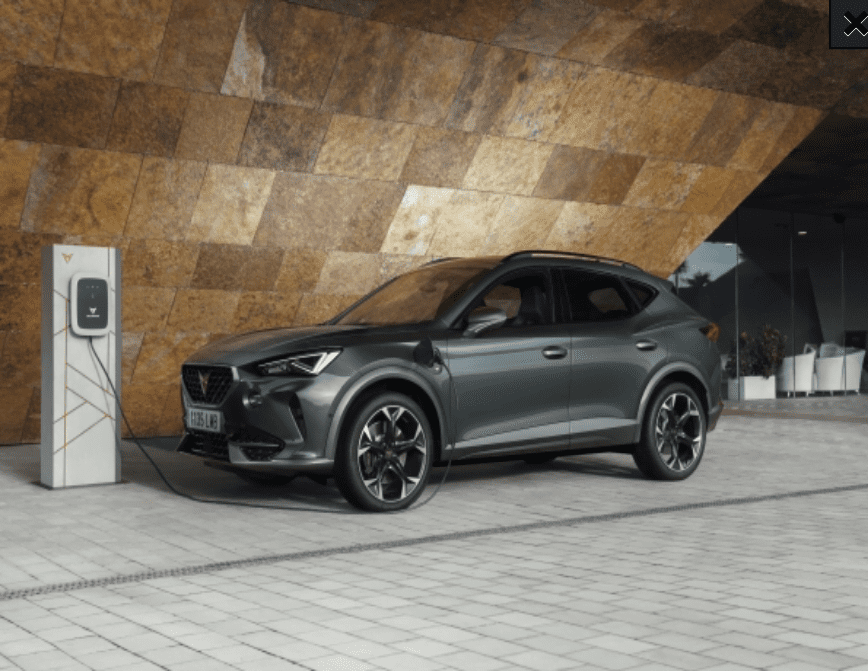
CUPRA has today started production of the new Formentor e-HYBRID, ahead of its arrival in the UK in March.
CUPRA, which is introducing two variants of the plug-in hybrid Formentor SUV coupe – the first car uniquely developed and designed for the brand will reach a daily production of 100 units within the first few weeks.
Order books are open for the high-powered e-HYBRID 245PS, starting from £38,625 OTR RRP, while the 204PS version will be available to order in the coming weeks.
2021 sees CUPRA add Formentor to its plug-in hybrid line-up, alongside CUPRA Leon (and Leon Estate) e-HYBRID, which will be joined later in the year by el-Born, the brand’s first all-electric model.
CUPRA and SEAT President, Wayne Griffiths commented: “The CUPRA Formentor e-HYBRID represents the essence of the brand and will be key to doubling sales volume compared to 2020. Our goal is for the Formentor to represent 50% of CUPRA sales in 2021, half of which will be plug-in hybrid versions.
“Electric hybrid sales in Europe amounted to 11.9% of total sales in 2020, up from 5.7% in 2019. The market will continue to grow and enable the transition to electrification.”
The high-performance CUPRA Formentor e-HYBRID plug-in hybrid mates a 1.4-litre TSI petrol engine with a 116PS (85kW) electric motor and 13kWh lithium-ion battery pack, producing a combined output of 245PS (150kW) of power, 400Nm of peak torque and an electric range of up to 36 miles.
Mixing performance with efficiency, the 245PS Formentor e-HYBRID accelerates from 0-62mph in only 7.0 seconds and has a top speed of 130mph. It produces CO2 emissions (WLTP) from as low as 33g/km while acheiving up to 188.3mpg (WLTP).
The incoming 204PS version of the Formentor e-HYBRID offers a maximum torque of 350Nm and can reach 62mph in 7.8 seconds from a standing start.
Line two at Martorell builds the new Leon and Formentor, with all e-HYBRID models built on a specially-designed adjacent line within the facility.
With a range of petrol engines, including two plug-in hybrids, the CUPRA Formentor is the brand’s entry into the CUV (SUV coupe) segment, which is set to double its market share in Europe in the next five years. This high-performance crossover, which is shortlisted as a finalist for the 2021 European Car of the Year awards, combines the brand’s unique DNA with cutting-edge technology, a captivating exterior design and high-quality interior detailing.
by gaukcars.com | Oct 2, 2024 | Blog
- ŠKODA adds SportLine variant to its new all-electric Enyaq iV SUV range
- Lowered sports chassis, striking 20 inch wheels and black detailing to exterior and interior
- Choice of two powertrains with ranges of up to more than 323 miles (520 km)
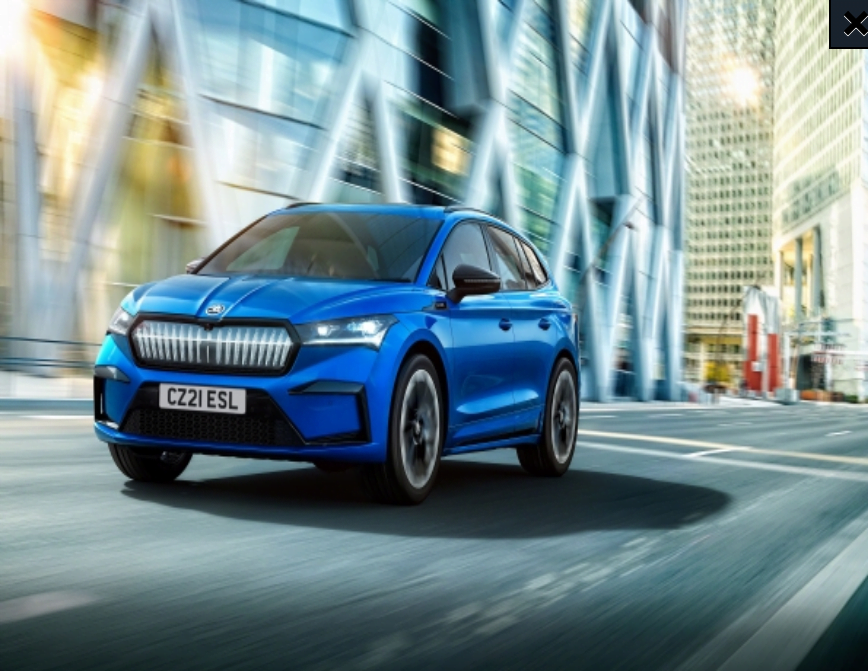
ŠKODA is giving its customers a sporting chance this year with the addition of a SportLine trim to its new all-electric SUV range, the Enyaq SportLine iV.
Black exterior detailing, large alloy wheels and a lowered sports chassis provide a sporting edge to the line-up. Inside, the Enyaq SportLine iV boasts sports seats with integrated headrests, a three-spoke multifunction leather sports steering wheel and carbon-effect trims. There will be a choice of two powertrains; the Enyaq iV 80 (150 kW offering a range of more than 323 miles (520 km) in the WLTP cycle) and the Enyaq iV 80x (195 kW), featuring two electric motors and is all-wheel drive. Both will arrive in the UK later this year.
The SportLine version of this new all-electric SUV has been created to appeal to drivers who like the dynamic look of ŠKODA’s performance models but with the added practicality of a full-size SUV. Customers will be able to choose from two powertrain options. The Enyaq SportLine iV 80 is equipped with a 82-kWh battery (77 kWh net) and can cover more than 323 miles (520 km) in the WLTP cycle. Its rear motor produces 150 kW. This battery is also fitted in the Enyaq SportLine iV 80x. Together with a second electric motor, this SUV features all-wheel drive, has a power output of 195 kW and delivers a maximum torque of 425 Nm. This version has a maximum range of 311 miles (500 km) in the WLTP cycle.
Excellent driving dynamics with rear- or all-wheel drive and a sports chassis
Regardless of whether it is fitted with rear- or all-wheel drive, the ŠKODA Enyaq iV boasts a high maximum torque and offers excellent driving dynamics. This is particularly noticeable in the Enyaq SportLine iV thanks to its trim-specific sports chassis, which comes as standard. It has been lowered by 15 mm at the front and 10 mm at the rear. The top speed for both powertrains is 99 mp/h (160 km/h). High-quality design details emphasise the sporty look of the Enyaq SportLine iV – both inside and out. The SportLine iV variant will roll off the production line at ŠKODA’s main plant in Mladá Boleslav. It is the only model series in Europe based on Volkswagen Group’s MEB platform to be built outside Germany.
Sporty black body detailing and full LED Matrix headlights
The SportLine iV’s striking grille, window frames, roof rails and rear bumper diffuser are detailed in black, as well as the model’s ŠKODA block lettering and tailgate badges. The robust side skirts are body-coloured and the SportLine iV comes with a model-specific front apron and badges on the front wings. 20-inch Vega Anthracite alloy wheels enhance the SUV’s appearance, both with exclusive Enyaq SportLine iV design.
The Enyaq SportLine iV comes with full LED Matrix headlights as standard. Each Matrix high‑beam module features 24 LEDs, which can be controlled individually and enable the driver to have the high beam on at all times without dazzling other road users. This intelligent technology automatically turns off individual segments of the light beam when the camera on the windscreen detects vehicles, as well as people and objects, reflecting the light.
SportLine-specific Design Selection option
As with the rest of the Enyaq iV models, ŠKODA has introduced a new interior concept – the Design Selections. The interior designers have created a model-specific Design Selection for the Enyaq SportLine iV. The upholstery and the roof lining are predominantly black. The dashboard is upholstered in a black synthetic leather with grey contrasting stitching and features carbon-effect trims, which provide visual highlights and can also be found on the door panels.
This SportLine Design Selection also includes trim-exclusive black sports seats with integrated headrests. These are upholstered in Suedia microfibre and feature grey piping. The three-spoke multifunction leather sports steering wheel comes as standard and allows numerous vehicle functions to be controlled from its user-friendly buttons and knurled wheels. The leather-covered steering wheel rim features grey contrast stitching, while the lower spoke has a badge bearing the SportLine lettering. The pedal covers come in an aluminium look and further enhance the Enyaq SportLine iV Design Selection.
UK pricing and specification details for the Enyaq SportLine iV will be announced in due course.
by gaukcars.com | Oct 2, 2024 | Blog
- Design study reveals electric race car for 2030
- E-R9 is “partly driven like a car and partly flown like a fighter jet” – Richard Hill, chief aerodynamicist, Lotus
- Active aero package includes ‘morphing’ body panels and aerodynamic control surfaces
- EV powertrain with torque-vectoring from Lotus Evija further developed to be driver-adaptable on the move
- Name, year and colour scheme all carefully chosen in tribute to Lotus’ racing heritage
- Find out more about the exciting future of Lotus Engineering on the US LOT Blog
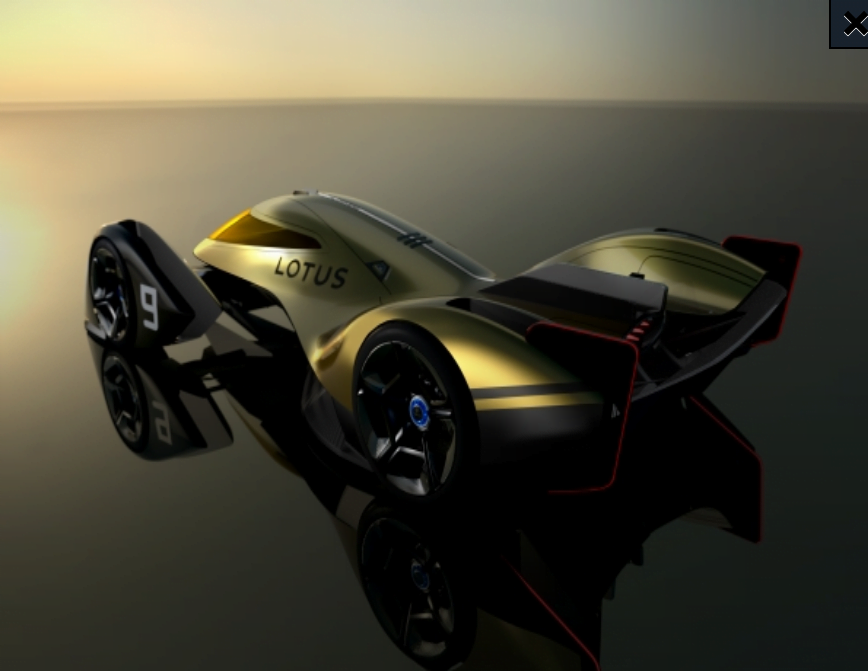
Lotus has unveiled the E-R9, a dramatic new design study for a next-generation pure electric endurance racer that could be on the starting grid of circuits around the world for the 2030 season.
Finished in striking black and gold – a clear nod to Lotus’ pioneering motorsport heritage that led to 13 Formula 1 championship titles – the EV features a sleek fighter jet-style canopy centrally mounted in a delta-wing upper body. Innovations include advanced active aerodynamics with ‘morphing’ body panels and vertically mounted control surfaces to assist with high-speed cornering.
The E-R9 has been developed by Lotus Engineering, the globally renowned consultancy division of the business which delivers projects for external clients. The car has been created as a technology showcase of its philosophy, capability and innovative spirit in the fields of advanced electrified powertrains and aerodynamics.
E-R stands for Endurance Racer, while 9 is the car’s competition number carefully chosen in tribute to Lotus’ racing past. It was in a Lotus Mark IX that the race team made its debut appearance at the Le Mans 24 Hours, with company founder Colin Chapman among the drivers competing. The year was 1955, meaning the E-R9 race car concept – if raced in 2030 – would be in celebration of the Mark IX’s 75th anniversary.
The E-R9 was developed by the engineering team of Richard Hill, chief aerodynamicist at Lotus, and Louis Kerr, principal platform engineer on the Lotus Evija pure electric hypercar as well as technical director, GT, Geely Group Motorsports International. Visually it was brought to life by the Lotus Design team, led by Russell Carr, Design Director for Lotus.
Richard Hill commented: “What we’ve tried to do is to push the boundaries of where we are technically today and extrapolate into the future. The Lotus E-R9 incorporates technologies which we fully expect to develop and be practical. Lotus has an amazing history of developing unique solutions, and we’ve done it many times in motorsport and with our road cars.”
Chief among the car’s aero innovations are its ‘morphing’ body panels. Located across the delta-wing profile, this adaptability – where active surfaces can change their shape and attitude to the air flow either at the press of a button by the driver or automatically according to performance sensor inputs – would deliver minimum drag on the straights and maximum downforce in the corners. Vertical control surfaces at the rear would generate aerodynamic forces to help the car change direction, without the limitations of grip at the tyre contact patch. The result is a racer that’s partly driven like a car and partly flown like a fighter jet.
The Lotus E-R9 features an advanced electric drivetrain powering each wheel independently, a system enhanced with torque-vectoring. It builds on technology already integrated on the Lotus Evija pure electric hypercar, though for the E-R9 would be fully adjustable by the driver on the move.
Louis Kerr commented: “Battery energy density and power density are developing significantly year on year. Before 2030, we’ll have mixed cell chemistry batteries that give the best of both worlds, as well as the ability to ‘hot-swap’ batteries during pitstops.”
Further details and more images of the Lotus E-R9 can be found in the March issue of evo magazine. On sale from today, it includes a 32-page supplement dedicated to the past, present and exciting future stories of the Lotus Engineering consultancy.
From the pioneering work of Colin Chapman in the early 1950s, via countless projects which the team has worked on in the decades since – some never revealed before – it’s a fascinating glimpse into a business which has done more than most to shape the automotive industry today.
For more on the exciting future of Lotus Engineering, read this post on the US LOT Blog by Dan Burge, Commercial Director of the business.
by gaukcars.com | Oct 2, 2024 | Blog
- Ducati Smart Jacket uses the latest evolution of Dainese’s D-air® airbag technology and guarantees protection for the rider in the event of an accident or fall
- The vest is smart, safe, versatile and can be worn over or under any motorcycle jacket
- Extremely ventilated and practical, Ducati Smart Jacket is easily foldable and can be stored in a backpack or motorcycle bags
Ducati is continuing its commitment to the safety of motorcyclists, which is reflected in the adoption of the best devices available on the market.
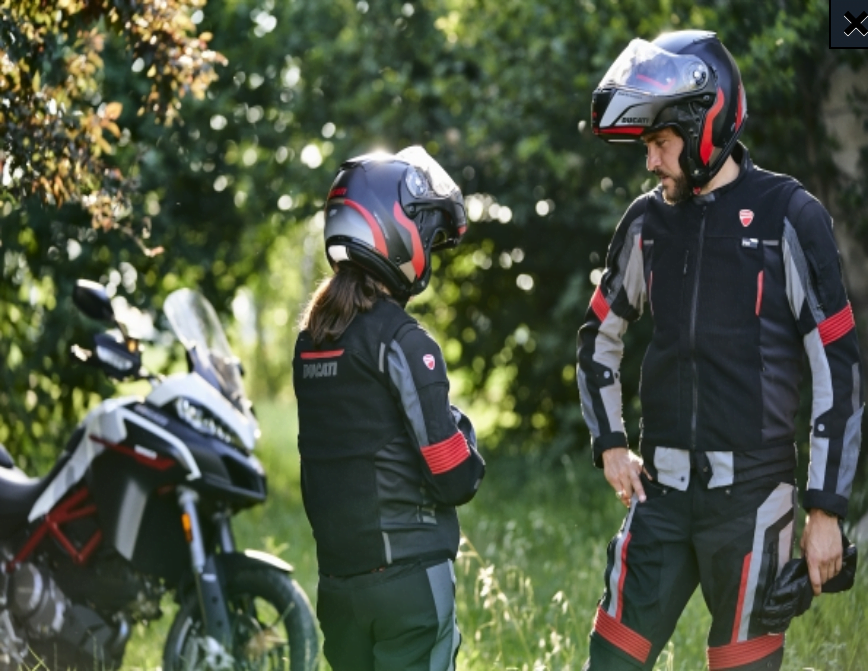
In addition to the development of active safety systems on its motorcycles and the promotion of responsible riding courses, the Bologna-based company is also paying great attention to the clothing offered and, in collaboration with Dainese, now presents Ducati Smart Jacket: an innovative and revolutionary sleeveless vest which uses the well-known D-air® airbag technology of Dainese in a version with graphics made specifically for Ducati.
Ducati Smart Jacket guarantees a high level of safety compared to the applicable standards, thanks to the research and technology used in the racing leathers of MotoGP riders. The result is a versatile vest, suitable for every motorcyclist and for all types of road use, available in both men’s and women’s versions and which can be worn over or under any motorcycle jacket, without requiring any type of connection with the motorcycle.
The operation of the vest is regulated by the electronic control unit which analyses the data 1,000 times per second. In cases of intended engagement*, the electronic control unit detects autonomously dangerous situations such as sliding, high-siding of a rider, rear-end collision, impact with another object or stopped-vehicle impact, and activates the rider’s protection system.
Thanks to the vest structure with internal micro-filaments patented by Dainese, the airbag bag inflates in a uniform and controlled way along the entire surface, creating a shield that wraps around the body and guarantees the protection of the declared protective areas. The bag offers protection equal to that of seven level 1 back protectors, without having any rigid protector inside.
Ducati Smart Jacket is an extremely light and practical garment, which, once you get off the bike, can be easily folded and stored in a side bag or backpack. It has a 26-hour battery life and, when discharged, can be conveniently recharged via any USB socket. In addition, another technological innovation introduced by Dainese allows the protective bag on the chest to be folded, to occupy a smaller area and thus allow the passage of air through the fabric of the vest.
Ducati Smart Jacket can be purchased, together with the entire 2021 Ducati Apparel collection, in dealers around the world. Before using the device it is necessary to register it and activate the system. The procedure can be completed at the dealer where the garment is purchased, or online at the following address: www.ducati.com/ww/en/smartjacket.
Further information on the Ducati Smart Jacket is available on the Ducati.com website. On the YouTube channel of the Borgo Panigale company there is also a video showing the features and practicality of the new vest.
* Warning: before purchasing and using Ducati Smart Jacket, carefully read the instructions and warnings indicated in the user manual, its operating characteristics and protective performance.
#DucatiSmartJacket #Ducati #Apparel
by gaukcars.com | Oct 2, 2024 | Blog
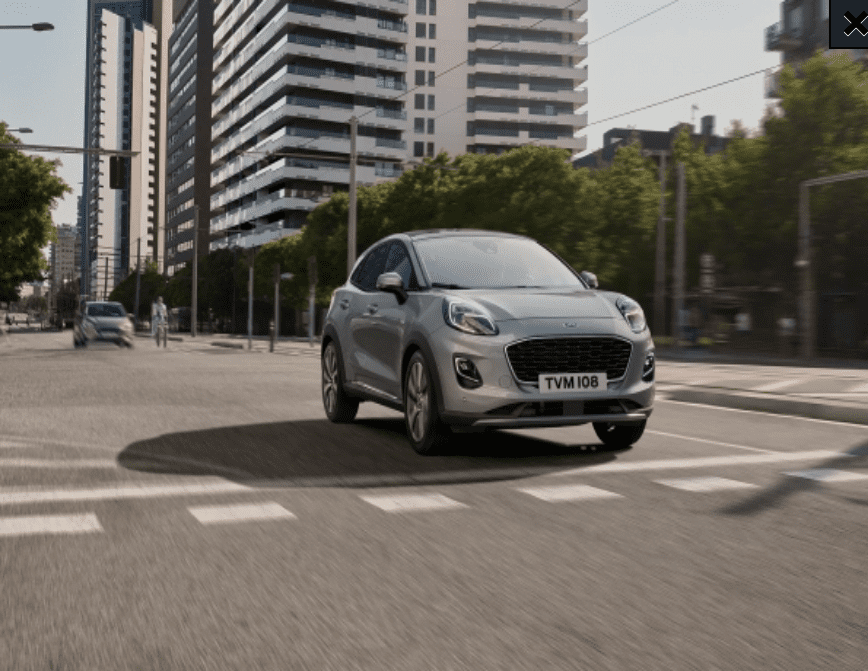
Ford is introducing a new seven-speed automatic transmission option for electrified EcoBoost Hybrid powertrains that will for the first time enable drivers who want an automatic gearbox to reduce their CO2 emissions and save money using Ford’s 48-volt mild hybrid technology.1
Available on Puma and Fiesta 1.0-litre EcoBoost Hybrid, the seven-speed automatic can make driving less demanding – particularly in city driving and stop-start traffic. In addition, fast, seamless gearchanges complement the hybrid powertrain’s electrically-boosted performance to further enhance the fun to drive experience.
Ford’s EcoBoost Hybrid technology uses a belt-driven integrated starter/generator (BISG) to recover energy usually lost during braking and coasting and charge a 48‑volt lithium-ion battery pack. The BISG also acts as a motor, integrating with the engine to provide torque assistance that can enhance fuel efficiency or performance, depending on the driving scenario.
Torque supplementation
Torque supplementation uses the BISG to increase the total torque available from the powertrain by up to 20 Nm, for more responsive in-gear acceleration.
- In-gear acceleration for Puma 1.0-litre EcoBoost Hybrid 125 PS seven-speed automatic is improved by up to almost 4 per cent compared with than the non-hybrid variant
- Puma 1.0-litre EcoBoost Hybrid 155 PS seven-speed automatic accelerates from 0-100 km/h in 8.7 seconds
- In Sport Drive Mode, the Puma EcoBoost Hybrid automatic gearbox holds lower gears for sportier responses
- Triple-downshifts enable faster overtaking when drivers request maximum acceleration
- The seven-speed automatic gearbox offers manual gear selection, with sporty paddle-shifters for Puma ST-Line X and ST-Line Vignale models
Torque substitution
Torque substitution uses the BISG to provide up to 24 Nm of extra torque – reducing the amount of work required by the engine for improved fuel efficiency. The seven-speed automatic EcoBoost Hybrid combination is particularly well-suited to city driving, where frequent stop-start driving allows regular capturing and re-deployment of energy.
- Puma EcoBoost Hybrid and Fiesta EcoBoost Hybrid seven-speed automatic models are anticipated to improve CO2 emissions by up to more than 5 per cent compared with the 1.0-litre EcoBoost petrol equivalents (WLTP).
- The seven-speed automatic transmission can help keep the hybrid engine at the optimum rpm for efficiency
Shifting to automatic
Pairing the dual-clutch transmission with a hybrid powertrain brings the advantages of both technologies to the customer, as well as increasing the availability of fuel-saving hybrid powertrains to people who want an automatic transmission.
Automatic appeal:
- The seven-speed automatic transmission’s dual-clutch architecture delivers seamless acceleration with smooth gear changes
- Automatic transmissions can be particularly beneficial for drivers with restricted mobility
- Two pedal operation requires fewer driver inputs, particularly in city driving scenarios
Electrifying line-up
The Ford Puma EcoBoost Hybrid and Fiesta EcoBoost Hybrid are two of 17 electrified vehicles Ford is introducing in Europe before the end of this year.
Enhanced driver assistance tech
The seven-speed automatic transmission enables additional technology in combination with EcoBoost Hybrid efficiency for the first time, including:
- Stop & Go functionality for Adaptive Cruise control, 2 which can bring the vehicle to a complete halt in stop-start traffic and automatically pull away if the stopping duration is less than 3 seconds
- Remote Start, via the FordPass app 3
Quote
“Adding the option of our seven-speed automatic transmission for EcoBoost Hybrid is another step in our mission to make electrification accessible to all our customers.”
Roelant de Waard, general manager, Passenger Vehicles, Ford of Europe.
Footnotes
1 Fiesta 1.0-litre EcoBoost Hybrid 125 PS seven-speed automatic anticipated CO2 emissions from 118-128 g/km and anticipated fuel efficiency from 5.2-5.6 l/100 km WLTP with standard equipment tyre specification.
Puma 1.0-litre EcoBoost Hybrid 125 PS seven-speed automatic anticipated CO2 emissions from 129-131 g/km and anticipated fuel efficiency from 5.7-5.8 l/100 km WLTP with standard equipment tyre specification.
Puma 1.0-litre EcoBoost Hybrid 155 PS seven-speed automatic anticipated CO2 emissions from 131-134 g/km and anticipated fuel efficiency from 5.8-5.9 l/100 km WLTP with standard equipment tyre specification.
Officially homologated fuel efficiency and CO2 emissions figures will be published closer to on-sale date. The declared fuel/energy consumptions, CO2-emissions and electric range are determined according to the technical requirements and specifications of the European Regulations (EC) 715/2007 and (EU) 2017/1151 as last amended. The applied standard test procedures enable comparison between different vehicle types and different manufacturers.
2 Driver-assist features are supplemental to and do not replace the driver’s attention, judgment and the need to control the vehicle.
3 In regions where permitted by law.
