Motorhome Qualification Scheme will give customers confidence in safety and quality of motorhome and camper conversions
Converters will have to meet a series of strict criteria to be certified
Volkswagen Commercial Vehicles is committed to driving standards in the growing sector
More than 200,000 customers started configuring their dream California and Grand California campers in 2020
Volkswagen Commercial Vehicles has launched a Motorhome Qualification Scheme to give customers confidence when buying a converted Volkswagen campervan, with the market soaring in 2020.
With more families opting for remote staycations due to COVID-19 travel rules, Volkswagen Commercial Vehicles recorded a 36 per cent year-on-year increase on its campervan web pages in 2020, and more than 200,000 customers started configuring their dream California and Grand California vans. Similarly, Google search terms for campervans and motorhomes in 2020 were up 53 per cent and 41 per cent, respectively.
Volkswagen Commercial Vehicles, the only OEM to offer a true factory-built camper with the California and Grand California, has created the Motorhome Qualification Scheme to ensure high standards are followed by aftermarket converters.
The scheme represents the highest standards in the industry, with criteria for inclusion requiring converters to meet National or European Type Approval, pass the stringent National Caravan Council standards, have a three-year trading history, register on the Body Builder Database, and provide a minimum of £5 million liability insurance.
In addition, converters are committed to offering the same warranty to match the base vehicle, giving customers clarity on one term to cover maintenance of the entire vehicle. Converters who meet all the standards required by the scheme will receive official certification to use on their website and products, giving customers confidence when purchasing.
Nick Axtell, Specialist Sales Manager for Volkswagen Commercial Vehicles, said: “As the number one manufacturer of campervans, we have a duty of care to our customers to drive better industry standards across the sector, especially at a time of huge growth. The scheme recognises the converters who have made an investment in developing and selling conversions based on our products, while giving customers peace of mind when it comes to the safety and quality of any product with a Volkswagen badge on the front.”
For more details on Volkswagen Commercial Vehicles’ award-winning range of products and services, or to find your nearest Van Centre, please visit www.volkswagen-vans.co.uk.
Flying Spur’s luxury and sports capabilities recognized with Drivers’ Choice Award by long-running American automotive TV series
Technological tour de force of innovation, connectivity and comfort
Driver engagement sets the bar for modern luxury Grand Touring sedans
Driver-focused cabin blends the best of cutting-edge technology and modern craftsmanship
“World’s best luxury four-door grand tourer” now available with hugely popular Bentley V8 powertrain alongside iconic W12.
The Flying Spur W12 has been recognized in MotorWeek’s 2021 Drivers’ Choice Awards as the Best Dream Machine.
Since 1981, MotorWeek judges the best in the automotive industry, looking at the buyer’s point of view and considering industry trends while looking towards the most innovative cars in the industry.
Now, with more than 40,000 examples sold since its launch in 2005, the Flying Spur continues to set the bar as the most successful luxury sports sedan in the world. Sporting details including industry-first three-dimensional leather, cutting edge Bentley Rotating Display, and a retractable, illuminated “Flying B”, each detail continues to be carefully created.
The bold exterior design of the Flying Spur is based on a new and modern vision that is unmistakably Bentley, utilizing the latest technologies in aluminium extrusions and castings. Longtime Creator, Host and Senior Executive Producer of MotorWeek, John Davis, comments:
“The Bentley Flying Spur is a car that fully lives up to our lofty automotive dreams when it comes to luxury, and then far exceeds them when it comes to performance. It effortlessly races to 60 miles per hour in well under 4.0-seconds, which is truly not enough time to enjoy the meticulously hand-crafted embrace that is the Flying Spur’s cabin.”
Bentley Americas CEO and President, Christophe Georges, comments: “The Flying Spur has been part of Bentley since 2005 and since then has set the bar for the best of both worlds, combining limousine luxury and sports car performance, resulting in the ultimate Dream Machine. Our entire team is honoured that MotorWeek has also recognized the Flying Spur as a leader in the industry.”
Effortless Luxury Seamlessly integrating the very best in British craftsmanship with cutting-edge, innovative technology, the third-generation Flying Spur has become the new Bentley flagship.
The bold exterior design of the Flying Spur is based on a new and modern vision that is unmistakably Bentley. The latest generation Flying Spur has increased road presence from stronger, more muscular styling, which is evident the full length of the car.
The interior of the Flying Spur showcases Bentley’s expertise in creating a modern cabin of unrivalled luxury and innovation. Stylish and unique, featuring supremely comfortable seats with Bentley’s ‘Wing’ theme across the lower console and fascia.
Sweeping horizontal veneer flows across the dashboard and into the doors, emphasising the spacious width of the cabin. Crown Cut Walnut is offered as standard, which uses a straight cut process to provide a contemporary finish.
The Flying Spur incorporates a class-leading portfolio of intelligent and intuitive equipment tailored to the driver and passengers. An embedded SIM is provided, meaning My Bentley connected car features no longer require customers to provide their own data connection.
Other features include Apple CarPlay®, photorealistic landscapes through satellite maps and advance warning of changing road or traffic conditions via the local hazard information service displayed on the vehicles infotainment system.
Through a range of optional equipment including Rear Seat Entertainment tablets, audio options up to the industry-leading Naim for Bentley system and even the luxury of an onboard two-bottle drinks cooler, the rear cabin of the Flying Spur is the ultimate place to work or relax while on the road.
All Flying Spurs are produced at Bentley’s home in Crewe – the world’s first carbon-neutral factory for luxury car production. Bentley’s unique application of cutting-edge and modern technology, seamlessly integrating the latest British craftsmanship with innovative features, pushes the existing boundaries of refinement and attention to detail to create the finest super-luxury sports sedan ever built.
The plug-in hybrid pioneer – the Mitsubishi Outlander PHEV – has closed out 2020 as Europe’s best selling plug-in hybrid SUV and the second best-selling PHEV across all segments
A total of 26,673 examples of the Mitsubishi Outlander PHEV were sold across Europe in 2020, with 3,736 of those sold in the UK
As part of Mitsubishi Motors’ Winter Sales Event, a new Outlander PHEV is available in the UK from £31,890 OTR with three years’ free servicing
The Mitsubishi Outlander PHEV has closed out 2020 as the top-selling plug-in hybrid SUV in Europe with sales topping 26,673 (Source: JATO).
The pioneering Outlander PHEV also remains the second-best seller across all segments despite a huge number of competitors entering the market in 2020.
In the UK, sales of the Mitsubishi Outlander PHEV since 2014 have now topped 53,000 with Outlander topping the SUV PHEV charts in 2020 with 3,736 sales including 320 Commercial versions.
The popularity of PHEVs is growing across Europe with many governments now incentivising the technology to encourage customers to take their first steps towards electrified transportation. Recent studies carried out on behalf of Mitsubishi Motors in the UK show that PHEVs are accelerating an attitudinal shift for the future with 70% of PHEV owners now considering a fully electric vehicle for the next purchase compared to just 27% of ICE drivers.
As part of Mitsubishi Motors’ Winter Sales Event, a new Outlander PHEV is available in the UK from £31,890 OTR, including a customer saving of up to £4,500 and three years’ free servicing. A variety of competitive finance packages are also available.
The Winter Sales offer is available through the Mitsubishi Motors dealer network or using Mitsubishi Motors’ own convenient online shopping service and vehicles can either be safely collected directly from a local dealership or delivered directly to the customer’s door.
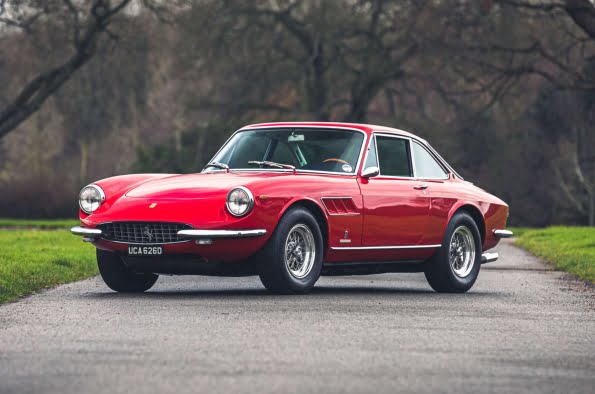
Classically finished in gleaming coat of Rosso Corsa with a Nero interior
Silverstone Auctions lot list is rapidly growing full with a range of classic cars, competition cars and automobilia for The Race Retro Live Online Auction, taking place on Saturday 27th March.
One of the star cars recently confirmed for the sale is this 1968 Ferrari 330 GT Coupé by Pininfarina which has been fully inspected for official Ferrari ‘Classiche Certification’ and the £8,400 account has been paid with the glorious ‘Red Box’ expected any day now.
This simply lovely example of one of the best-looking cars in history is classically finished in a gleaming coat of Rosso Corsa, with a Nero interior with long-term ownership between 2005 and 2017 with over £30,000 spent during this period with JDR, TDH Classics and Hoyle-Fox. The car has been fully retrimmed with a new boot carpet and a new headlining fitted, all interior woof finishes, door capping’s and the dashboard, the Borranis were rebuilt and the spinners re-chromed, the carburettors were rebuilt, a new stainless-steel exhaust fitted, the brakes rebuilt and the distributors were adjusted to suit the new electronic ignition.
Beneath the 330 GTC’s stylish and elegant bonnet nestled the 4.0 litre, 300bhp version Ferrari’s familiar, twin-cam, 60-degree V12, as used in the 330GT 2+2 enabling 0-60 in less than 7 seconds and over 150mph in true V12 GT style. The rear suspension incorporated the five-speed gearbox in a transaxle, an arrangement that created more even weight distribution and a delightful handling balance.
Gary Dunne, Silverstone Auctions Sales Controller, commented, “We are once again thrilled with the growing lot list we have consigned for our first sale of 2021. The 1968 Ferrari 330 GT Coupé really is a credit and privilege to offer in our tenth year as the official auction partner for Race Retro!”
In light of government restrictions, Silverstone Auctions date for this auction is Saturday 27th March. Pre-sale viewings are important for their customers; therefore, with this revised date they can hopefully provide this service in due course where interested bidders can come and see this classic sixties outstanding GT Ferrari.
Silverstone Auctions are still inviting entries to join the superb lot list for their live online auction. The UK market leading classic car auction house can be contacted on 01926 691141, by email enquiries@silverstoneauctions.com or via their website.
2021 AUCTIONS The Race Retro Live Online Auction: 27th March The May Sale: 22nd May A Sale of Ferraris in association with Ferrari Owner’s Club GB: 5th June The Classic Sale at Silverstone: 30th July – 1st August The NEC Classic Motor Show Sale: 12th – 14th November
ABOUT SILVERSTONE AUCTIONS Formed in 2011, Silverstone Auctions is a world-class, specialist auction house for the sale of classic cars, modern supercars, all types of competition cars, modern and historic motorcycles as well as automotive memorabilia.
We hold the exclusive automotive auction rights for Silverstone circuit and host sales as stand-alone events as well as an integrated element of some of Europe’s biggest motorsport events such as the Silverstone Classic Festival.
In addition to our sales at the circuit, we also host a number of auctions each year at other major classic car events including the NEC Classic Motor Show and Race Retro.
At Silverstone Auctions we take pride in selecting the very best of breed vehicles for our sales which not only attracts buyers from around the world, but has already helped us achieve a number of record-breaking auction prices on behalf of our vendors.
We are committed to providing the best possible service for both buyers and vendors alike, so if you’d like to know more about buying or selling a classic vehicle with Silverstone Auctions, call us today on +44(0)1926 691141.
New reinterpretations of the grand tourer theme offering up to 646PS are ready to further Audi ambitions to shape the future of premium sustainable mobility
e-tron GT quattro and RS e-tron GT set for simultaneous introduction in spring 2021
Ultra-high specification e-tron GT quattro Vorsprung also available, RS e-tron GT also offered in Carbon Black and Carbon Vorsprung forms
e-tron GT quattro from £79,900 OTR, RS e-tron GT from £110,950 OTR
Peak power equivalent to 476PS (e-tron GT quattro) and 598PS (RS e-tron GT) – 530PS and 646PS respectively available in boost mode
0-62mph in as little as 3.3 seconds aided by standard electric quattro all-wheel-drive
800-volt, 93kWh battery, superfast DC charging capability at up to 270kW
Predicted WLTP driving range in excess of 295 miles (e-tron GT quattro) and 280 miles (RS e-tron GT)
Adaptive air suspension, all-wheel-steering and locking rear differential among dynamic highlights
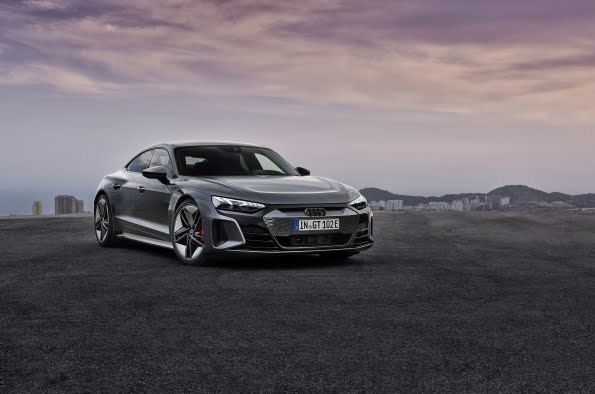
Emotionally charged design and lightning fast response, with 0-62mph acceleration in as little as 3.3 seconds – the new Audi e-tron GT quattro and RS e-tron GT are about to conduct electricity in an exciting new direction for the Vorsprung durch Technik brand. Launching simultaneously this spring, the new GT sports cars combine breathtaking and instantly accessible accelerative force and zero local emissions with compellingly incisive handling, exceptional trans-continental cruising comfort and ultra-sophisticated infotainment and driver assistance technology.
“Audi has signalled its intent to play a pivotal role in the evolution of sustainable mobility in the premium sector, and after opening our account with the e-tron SUV, which is notable as the best-selling German premium BEV globally, we are stepping up the pace again to further that aim,” says Andrew Doyle, Director of Audi UK.
“The new e-tron GT quattro and RS e-tron GT are products of the same assiduous Vorsprung durch Technik approach to electrified driving, but embody it in a highly emotive and exciting new Grand Tourer format that exploits the technology’s incredible performance potential even more fully and will be invaluable as a means of hastening its wider acceptance.”
Exterior design: dynamic sculpture with perfect proportions The exterior of the e-tron GT is a dynamic work of art. It is the embodiment of an expressive design language that emphasises the longstanding positioning of Audi as an innovator in this field and will be evident in the more fluid lines of the brand’s forthcoming electrified models. The long wheelbase, wide track, large wheels and low-lying silhouette provide the foundations for beautifully balanced proportions that are also highly effective from an aerodynamic perspective. This equates to a low drag coefficient of 0.24 which favours efficiency and therefore driving range.
Standing just 1.41-metres high, and with a width of 1.96 metres and a length of 4.99 metres stretched over a 2.90-metre wheelbase, the Audi e-tron GT has the dimensions of a classic grand tourer. At its front, the inverted colour scheme of the Singleframe bearing the Audi rings provides a clue to the unorthodox powertrain at its heart. The radiator grille, which reinterprets the classic honeycomb pattern, is optionally available in body colour for the first time in an Audi model. In RS versions the grille and lateral air inlets are framed by a black mask.
While the main purpose of the Singleframe in models with a combustion engine is to cool the engine, in the e-tron GT it conceals the majority of the sensors, with only the sections in the lower of the six corners remaining open for air supply. Behind these sections, and the large ribs under the headlights, are controllable cooling air inlets which provide active aerodynamics. In the interest of optimal air flow, these inlets remain closed as often as possible, opening only during more sporting driving, when Y-shaped channels direct air to the coolers and into the front wheel arches in order to cool the brakes. The air inlets in the frontal lower section also play an important role. The upright air curtains on their outer edges ingest cooling air in such a way that it flows close to the wheels and then laterally.
As is customary for Audi in the UK, this captivating new take on the classic grand tourer theme will also be available in conjunction with a particularly lavish Vorsprung specification option in the case of the e-tron GT quattro, and in the RS e-tron GT can be enhanced by Carbon Black and Carbon Vorsprung equipment lines.
Where the important and brand-defining aspect of lighting is concerned, UK versions of the e-tron GT will be equipped with LED headlamps with striking 3D-look signature daytime running lights and dynamic front and rear indicators as standard. Even more sophisticated Matrix LED headlights with segmented clusters that enable ultra-precise targeting of their continuous high beams will also be available for this model as part of an optional Comfort and Sound pack. Vorsprung versions, and all RS e-tron GT models, upgrade to Matrix LED units with Audi laser light, incorporating an additional laser spot active at speeds of 43mph and above to double the beam’s range.
Side view: a flow of lines The flow of the e-tron GT design is particularly evident in profile. The elongated bonnet and flat windscreen merge elegantly into a rapidly sloping roof line, and the glass house extends tautly over the powerful body, drawing in particularly sharply towards the rear, where the gently inclined C-pillars blend beautifully with the body’s muscular shoulders.
Sharp edges give particular definition to the large wheel arches, forming ‘quattro blisters’ which visually reference the presence of a new generation of electric quattro all-wheel drive. They are a stylistic feature of many Audi models, but nowhere else they are as strongly pronounced as in the e-tron GT.
At the rear, a visually offset diffuser creates a look which is unmistakable within the Audi product portfolio, while a sculptural full-width light strip with graduated light segments makes the e-tron GT appear even more powerful. A spoiler with integrated spoiler lip runs parallel to this and extends electrically into two different positions depending on the driving situation as another active contribution to aerodynamics. It works closely with the smooth underbody that culminates in the wide diffuser, allowing the air to flow cleanly off the rear end, and compensating to a significant extent for the lift that occurs at the rear axle at high speeds.
The design of the e-tron GT is also exceptionally well resolved where aeroacoustics is concerned. Its windscreen is made of noise-insulating glass as standard, as are the side and rear windows in e-tron quattro Vorsprung and RS e-tron Carbon Vorsprung models. Components made of hot-shaped and therefore ultra-high strength steel form the strong backbone of the passenger cell, helping to maximise rigidity and noise suppression in combination with targeted insulation measures throughout the entire body.
In the e-tron GT quattro imposing 20 inch wheels with low rolling resistance tyres accentuate the four-door coupé’s powerful stance, while 21-inch designs in either platinum grey or gloss black (depending on version) give the various RS e-tron GT models even greater presence. A new production process used for the aluminium from which these wheels are made reduces net CO2 emissions considerably.
To complement the stylish wheel designs, nine available paint finishes are available, including the new colour tactical green, and in the RS e-tron GT these are combined with a black styling package. In addition to this, the RS e-tron GT Carbon Black and Carbon Vorsprung models not only add a gloss carbon styling package, but also a full carbon fibre-reinforced polymer (CFRP) roof and CFRP exterior mirror housings.
Interior design and interior In the cabin, the strong focus on the driver, inspired by the “monoposto” idea, is a characteristic of Audi performance models and of the e-tron GT in particular. The upper section of the light, lean instrument panel with its pronounced three-dimensional look forms an elegant arc, and the display of the standard Audi virtual cockpit plus stands freely within it, while the MMI touch monitor surrounded by a black piano finish bezel appears to float in the central space. In e-tron GT Vorsprung versions and above a lasered and backlit “e-tron” badge in the right-hand section augments the high-tech atmosphere as part of the ambient lighting package.
A strong contour bisects the upper and lower sections of the dashboard, the latter housing the control panel for the standard three-zone automatic air conditioning system with its physical buttons. The flat lateral air vents with their aluminium-faced edges underline the width of the interior, as does the long arc below the windscreen which sweeps around to meet the front door trims, creating a wraparound effect.
The driver and front passenger sit low in the cockpit separated by a wide centre console which houses the gear selector switch, its compact design emphasising the sense of space and providing a highly precise haptic control experience. In the e-tron GT quattro they are gripped by sport seats with integrated head restraints and electric eight-way adjustment upholstered in a combination of leather and synthetic leather. Travellers in the e-tron GT Vorsprung and RS e-tron GT models enjoy an upgrade to Front Sport Seats Pro with 18-way adjustment, ventilation and massage capability and full perforated fine Nappa leather upholstery.
The rear seats offer sufficient space even for adults, who are able to sit lower and position their feet in what is known as a ‘foot garage’ thanks to a recess incorporated in the design of the battery pack running beneath the passenger compartment which effectively compensates for the tapering roof line. Their luggage can be stowed in the rear load area, providing a volume of up to 405 litres (14.3 cu ft) depending on version, and in a second luggage compartment beneath the bonnet offering a further 81 litres (2.9 cu ft) of space.
Sustainability is the new premium: materials, colours, and equipment The concept of premium sustainable mobility as defined by Audi naturally extends beyond the powertrain to features such as the optional leather-free design package for the e-tron GT and RS e-tron GT. It includes upholstery in a combination of artificial leather and the new material Cascade, which is produced using a proportion of recycled materials such as polyester fibres made from old plastic bottles, textiles, or residual fibres from selvages. The microfibre material Dinamica, which has similar properties to Alcantara and comprises recycled fibres, is also incorporated in elements such as the centre console, the upper sections of the door inserts and the upper part of the instrument cluster.
A leather package in various colours is also available as an alternative. It combines similar enhancements to upper and lower elements in either Fine Nappa leather or Dinamica microfibre. Regardless of the model chosen the floor carpet and floor mats are made from Econyl, a material consisting of 100-percent recycled nylon fibres from production waste, fabric and carpet remnants, or old fishing nets.
Controls and displays In terms of controls and displays, the e-tron GT quattro and RS e-tron GT follow the current Audi concept: All information appears on two large displays. The driver operates the Audi virtual cockpit plus (12.3 inches) via the multifunction steering wheel and controls the central MMI touch display (10.1 inches) via touch. Behind the control and display functions in the e-tron GT quattro and RS e-tron GT is the state-of-the-art third generation modular infotainment platform (MIB 3).
The freestanding high resolution Audi virtual cockpit plus behind the flat-bottomed steering wheel allows the driver to switch between three screens: classic, sport, and e-tron. In the e-tron view, the focus is on the large powermeter that displays the status of the drive train and all important information on electric driving. The driver can access the infotainment, navigation and comfort functions, and input text, via the MMI touch display, which provides acoustic feedback. A natural voice control function, which understands many expressions from everyday language and can draw on both onboard information and knowledge from the cloud, can also be used.
Infotainment and Audi connect Eleven antennas, all of them invisibly integrated into the car, connect the e-tron GT with the outside world, and the information they receive can be accessed by the driver via the MMI navigation plus media centre which features as standard in all models and also via the free myAudi smartphone app.
MMI navigation plus supports the fast LTE Advanced transmission standard and uses real-time data from the prevailing traffic situation as well as destination suggestions based on previously driven routes to guide the driver. Audi connect online services are also included and are split into two packages: Audi connect emergency call & service with Audi connect remote & control enables the remote control of the locking system, charging, and climate control, while the Audi connect navigation & infotainment package includes services such as traffic information online, navigation with Google Earth™, and Car-to-X communication. It also grants access to the e-tron route planner, which uses traffic data and the driver’s driving profile to calculate the fastest route to a destination with the shortest possible charging stops at powerful DC charging stations.
Naturally, the infotainment portfolio also includes features such as the Audi smartphone interface, which transfers smartphone content directly to the MMI monitor via USB or wirelessly if a compatible handset is on board, and the Audi phone box, which links smartphones to the vehicle’s antenna and charges them inductively, as well as audio systems of exceptional quality. In the e-tron GT Vorsprung and RS e-tron GT models a Bang & Olufsen Premium Sound System delivers an output of 710 watts from 16 loudspeakers.
Drive and recuperation The fully electric gran turismo from Audi promises exhilaration regardless of version: The e-tron GT accelerates from rest to 62mph in 4.1 seconds, while the RS model needs 3.3 seconds (in boost mode in each case). Top speeds are governed at 152mph and 155mph respectively.
The front electric motor in the e-tron GT delivers 175 kW (238 PS), to which the rear motor is able to contribute a further 320 kW (435 PS), however both keep reserves available for extreme driving situations, meaning that the sum of their individual outputs exceeds the drive system’s total output of 350 kW (476 PS) by some margin. Up to 390 kW (530 PS) can be made available for 2.5 seconds in boost mode via launch control. The total torque is 630 Nm (464.7 lb-ft). In the RS e-tron GT, the electric motor on the front axle shares the e-tron GT’s 175 kW (238 PS) output, while the motor in the rear provides 335 kW (456 PS). The total output is 440 kW (598 PS), and the total torque is 830 Nm (612.2 lb-ft). In boost mode, the output briefly increases to 475 kW (646 PS).
The PSM motors (permanently excited synchronous motors) in the e-tron GT work with great efficiency. The electric motor, its power electronics, and the transmission form a compact block on both axles. The rear electric motor transfers its torque to a two-speed transmission. The short-ratio first gear enables stunning acceleration when the launch control function is deployed. When it isn’t, the e-tron GT starts off in second gear. Generally speaking, the long-ratio second gear improves efficiency and also provides large amounts of reserve power.
e-tron sport sound To further enrich the driving experience, a unique ‘soundscape’ is also available for all e-tron GT models. The e-tron sport sound, which is standard equipment for RS e-tron models and optionally available for the e-tron GT quattro variants, comprises two control units and amplifiers in the luggage compartment. These generate separate exterior and interior sounds and transmit them via two loudspeakers each outside and inside the vehicle. Data about the rotational speed of the electric motors, the load, the vehicle speed, and other parameters serves as the basis for the synthesised digital sound, the nuances of which vary depending on the work performed by the drive system.
Drivers can also modulate the sound via Audi drive select. In the “efficiency” profile, only the AVAS (Acoustic Vehicle Alerting System) is active, which already generates a broader sound than is legally required. In “comfort” mode the exterior sound is fuller, and it becomes even more powerful in the “dynamic” profile, when the interior sound is also added.
quattro reloaded: electric all-wheel drive The e-tron GT and RS e-tron GT usually travel with electric all-wheel drive engaged, except when “efficiency” mode is activated via the Audi drive select dynamic handling system, in which case front-wheel-drive is prioritised. On slippery road surfaces, or when high power requirements or fast cornering demand it, the electric motor for rear-wheel drive is also activated in this mode around five times faster than with a mechanical quattro drivetrain. The electric all-wheel drive regulates the drive torque distribution between the axles continuously, fully variably, and within a few thousandths of a second. The quattro principle with which Audi revolutionised road car dynamics more than 40 years ago has fully evolved in order to make the leap into the new era of electrification.
When the driver releases the accelerator pedal, the drive system usually switches to sailing mode, allowing the grand tourer to glide relaxedly and with impeccable refinement. The only exception occurs when ‘dynamic’ is the defined setting in Audi drive select, in which case the car recuperates in overrun mode. In both situations, the driver can use the paddles on the steering wheel to adjust two manual recuperation levels or select an automatic level in the MMI system. In this case, the predictive efficiency assist regulates sailing and recuperation on the basis of data from the navigation route and the on-board sensors.
While braking, the electric motors perform decelerations alone up to around 0.3 g, i.e. the vast majority of all brake applications in everyday driving. This allows them to recuperate up to 265 kW. The hydraulic wheel brakes are activated only when the driver brakes very heavily, with recuperation remaining active almost until the vehicle comes to a standstill.
Battery and thermal management The lithium-ion battery system at the heart of the Audi e-tron GT and RS e-tron GT is located between the axles, at the car’s lowest point. This provides a low centre of gravity appropriate for a sports car and a weight distribution between the front and rear axles that is very close to the ideal value of 50:50.
The high-voltage battery can store 86 kWh of energy net (93 kWh gross) in both models. It integrates 33 cell modules, each comprising twelve pouch cells with flexible outer skin. 30 modules form the lower level that features a wide recess in the rear section which creates space for the rear passengers’ feet. The upper “floor” of the battery contains three further modules situated below the rear seats. The connections, fuses, and the main control unit are located under the centre console. The system voltage of 800 volts enables a high continuous output and shortens the charging duration; in addition, it reduces the weight of, and space required by, the wiring.
The inner structure of the battery containing the modules, the frame surrounding it, and the cover plates are made of lightweight aluminium. The battery system contributes significantly to the rigidity and crash safety of the body to which it is attached via 28 screws. Beneath its cell space there is a compound structure of flat extruded sections through which coolant flows that circulates in its own low-temperature circuit.
High-tech thermal management: four separate coolant circuits Four separate coolant circuits regulate the temperature in the high-voltage components and the interior, each at its own temperature level. They can be interconnected flexibly when required. If the driver demands a high output several times in a row, valves couple the coolant circuit of the battery with the refrigerant circuit of the air conditioning system – the intensive cooling helps to maintain performance at a consistently high level. The refrigerant circuit also helps with cooling during fast DC charging, which can heat the battery up to 50 degrees Celsius.
A heat pump that heats the interior with the waste heat of the high-voltage components is a standard feature of the e-tron GT. It can reduce the loss of range caused by climate control significantly, especially in winter when it replaces the thermoelectric heating element. Customers can manage pre-entry climate control of the interior and charging via their smartphones using the myAudi app. The e-tron GT is optionally equipped with a deluxe thermal conditioning system that also includes the exterior mirrors and the rear window.
From 11 to 270 kW: AC and DC charging Charging ports can be found behind both front wheels in the e-tron GT models. Both sides feature connections for alternating current (AC) and there is also a connection for direct current (DC) on the right-hand side. Two charging cables are included as standard: one Type 2, Mode 3 for use at AC charging points including a home wallbox, and the compact e-tron charging system, consisting of a control unit and Type 2, Mode 2 cable with a domestic and industrial plug. The intelligent charging system “connect” will also be available as an option, and enables both charging control via the myAudi app and function updates. In conjunction with a suitable home energy management system, it can also facilitate cost-optimised charging, activating the system when electricity is less expensive under a variable electricity rate.
The e-tron GT can charge with up to 11 kW AC as standard, meaning an empty battery can be replenished overnight. An optional onboard charger which increases charging capability to up to 22 kW will be available shortly after launch. At a sufficiently powerful DC terminal, the electric coupé can achieve a peak charging capacity of up to 270 kW, allowing it to take on board enough charge for a journey of up to 62 miles in just over five minutes. Charging from 5 to 80 percent SoC (state of charge) takes less than 23 minutes in ideal conditions.
Accessing and paying for electricity while on the road can be easily taken care of using the e-tron Charging Service, which provides UK subscribers with one RFID payment card that is accepted at a vast number of charge points operated by 18 suppliers across the UK and Europe, and offers a choice of two attractive fixed price charging tariffs.
In the NEDC cycle, the Audi e-tron GT quattro consumes 19.6–18.8 kWh of energy per 62 miles travelled on average; the RS model consumes 20.2–19.3 kWh. This results in anticipated average ranges of in excess of 295 miles and 280 miles respectively (predicted WLTP data for UK specification models).
Suspension One of the key features defining the character of the new e-tron GT models is their suspension, which has been designed to ensure that they live up to the dynamic expectations instilled by their design while always remaining relaxed and refined under pressure to fulfil their brief as ‘touring’ specialists.
The standard suspension, which is forged or cast largely from aluminium, is reserved for the lead-in e-tron GT quattro model, and features a double wishbone configuration and electronic adaptive damping. The e-tron GT Vorsprung and all variants of the RS e-tron GT build on these sophisticated foundations with adaptive air suspension, which is also optionally available for the e-tron GT as part of a package. Its three-chamber system can lower the body from its standard setting by up to 22 millimetres and raise it by up to 20 millimetres.
In “efficiency” mode, the body is positioned at the low level in the interest of air flow and the top speed is limited to 87mph. In “dynamic” mode, the suspension is primed for optimal composure, taking full advantage of the fact that the chambers in each spring can be activated and deactivated individually to suit the driving situation, and the electric all-wheel drive system operates with a rear bias. The air springs are closely networked with the controlled dampers, and both systems are managed by a central control unit, the electronic chassis platform (ECP).
For dynamic handling: rear-axle differential lock, high performance braking The Audi e-tron GT is equipped as standard with a self-locking centre differential which further optimises traction and stability, reduces load change reactions and enhances precision by way of minor brake and steering interventions on the wheels. RS e-tron GT models also feature a regulated rear-axle differential lock based on a multi-plate clutch which can be actuated fully variably and has a locking range that extends from zero to 100 percent. Its scope is particularly perceptible on slippery road surfaces and during maximum full-stop braking, when the lock opens up completely to allow the Electronic Stabilisation Control (ESC) to brake each wheel with great precision.
The operating characteristics of the rear-axle differential lock can be defined by the driver using the standard Audi drive select dynamic handling system, which can also influence the performance of the air springs and adaptive dampers, the electric motors and the two-speed transmission. The driver can switch between the modes “comfort,” “efficiency,” “dynamic,” and “individual” via a switch.
As a further aid to low-speed manoeuvrability and maximum stability during higher speed work all-wheel steering is fitted as standard to the e-tron GT Vorsprung and to all RS e-tron GT models. At speeds of up to 31mph a spindle drive turns the rear wheels in the opposite direction to travel by a maximum of 2.8 degrees, and above this turns them slightly in the same direction.
There are also differences between brakes in the two models. Steel discs regulate speed in the e-tron GT and e-tron GT Vorsprung, while the RS models are fitted with cast iron discs with a tungsten carbide coating that increase braking performance and reduce wear and therefore brake dust. Ten-piston fixed calipers grip the carbide disks at the front axle. Carbon fibre ceramic brake discs which are especially lightweight, powerful, and durable, will be available as an option for RS models..
Driver assist systems Numerous driver assistance systems are either standard or optionally available for the Audi e-tron GT and RS e-tron GT. The Audi pre sense front and Audi pre sense basic safety systems are standard, as is the lane departure warning system, while other key technologies, including adaptive cruise assist, intersection assist and surround view cameras, are bundled into “Tour,” “City Assist,” and “Parking Assistance” packages. The assist package plus comprises all three and is standard for the e-tron GT Vorsprung and RS e-tron GT Carbon Vorsprung, which also add a night vision assistant and a head-up display.
A new driver assistance highlight is the remote park assist plus feature that forms part of the parking assistance package. It enables the driver to manoeuvre the Audi e-tron GT into and out of a parallel or bay parking space by simply pushing a button, and without needing to be seated in the vehicle. From outside, the process can be activated and supervised via the myAudi app on a smartphone. By keeping the corresponding button pressed, the car will roll into the space, making multiple manoeuvres if necessary, and once in position will switch off the drive system, activate the parking lock and lock the doors. Naturally the driver retains ultimate control of, and remains responsible for, the manoeuvre at all times.
Craftsmanship meets smart factory The e-tron GT is the first fully electric car from Audi to be built in Germany, and more specifically at the Audi Böllinger Höfe site in Neckarsulm. The small-series production facility has been expanded and converted for its new role to enable the skilled craftsmanship characterising the original facility to be retained and supplemented with digital processes and smart technologies. During the expansion, production planners made use of new virtual methods. The production for the e-tron GT was designed without any physical prototypes – an innovation at Audi.
The e-tron GT shares the assembly line with the Audi R8 high-performance sports car – this integration of two technically completely different cars is unique in the Volkswagen Group. Production of the Audi e-tron GT and the RS e-tron GT at Böllinger Höfe has a net zero carbon footprint, and in common with the entire Neckarsulm site is carried out using 100 per cent eco-electricity, with a combined heat and power plant fired with biogas providing the necessary heat for the Böllinger Höfe.
In addition, Audi also relies on resource-conserving vehicle manufacturing. For example, the production at the Böllinger Höfe avoids the use of paper and packaging and uses closed-loop systems. The aluminum sheet waste that accumulates in the press shop, for example, is returned to the supplier, where it is reconditioned and then reused at Audi. Audi has also launched a pilot project for plastic recycling. Plastic waste is processed into fibres, and these filaments are then used in 3D printers to manufacture technical aids for the production process.
The Audi e-tron GT and RS e-tron GT – UK OTR Pricing
Audi e-tron GT quattro Audi e-tron GT quattro Vorsprung Audi RS e-tron GT Audi RS e-tron GT Carbon Black Audi RS e-tron GT Carbon Vorsprung