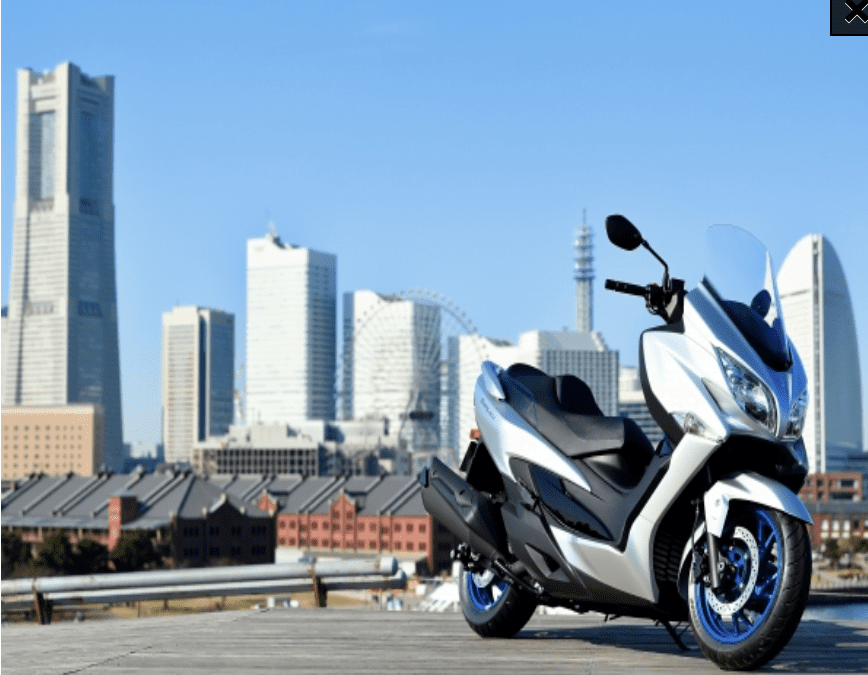
Suzuki has announced details of an updated Burgman 400, with the now Euro 5 compliant version of the original maxi-scooter boasting traction control, Suzuki’s Easy Start System, and updated instrument cluster, plus changes to its 400cc single-cylinder engine including a new twin-plug cylinder head, piston, and injectors.
Launched in 1998, the Burgman 400 carved out a new market for large displacement scooters, combining comfort, power, style, and practicality. Updated for the 2006 and 2018 model years, the latest iteration further improves on the proven and solid platform.
A revised engine produces well balanced low-midrange torque with improved throttle control, courtesy of a number of changes.
A new twin-plug cylinder head – with simultaneous ignition timing – provides strong power delivery, increases combustion efficiency, and aids fuel consumption. As an added bonus, adjusted ignition timing also results in easier engine startup and a more stable idle. The change additionally contributes to high combustion speed and reduces the possibility of engine knocking in the upper speed range. Consequently, ignition timing can be set to a timing at which power is produced more easily, thereby increasing top speed. A new secondary air pathway helps meet Euro 5 emissions standards.
There are revised cam profiles, and the injectors have changed from 16-hole to 10-hole injectors, resulting in more miniscule fuel droplets and increased air agitation, improving fuel consumption. A new catalytic converter increases the number of catalysts from one to two, further purifying exhaust gases.
One of the biggest changes to the updated Burgman 400 comes in the form of a traction control system, which benefits riding in slippery conditions and pulling away briskly from a complete stop. Meanwhile stopping is helped with a new ABS unit, which is also 36g lighter than the previous unit.
Practicality is maintained through 42 litres of underseat storage, plus an additional 6.3 litres of storage thanks to compartments upfront, the right hand side of which also houses a 12V socket for charging electronic devices.
The addition of Suzuki’s Easy Start System requires just one brush of the starter button to fire the engine, removing the need to hold the button down.
Cutaway footboards make it easier to get feet flat on the floor, and a plush seat with adjustable lumbar support makes for a comfortable ride. LED running lights, headlights, and taillights provide excellent nighttime visibility, while also enhancing the maxi-scooter’s stylish design.
Security features come in the form of Suzuki’s Advanced Immobiliser System (SAIS) and a magnetic cover that protects the ignition barrel and opens only for the owner’s key. A chain gate allows the rider to pass a chain lock through the bodywork, around the frame, and then around a pole or other immovable object.
The updated Burgman 400 will be available from authorised Suzuki dealerships in the summer, and will come in matte silver, matte black, and iron grey, all complete with blue rims.
Volkswagen offers a first glimpse of its new sporty SUV coupé set to launch at the end of the year
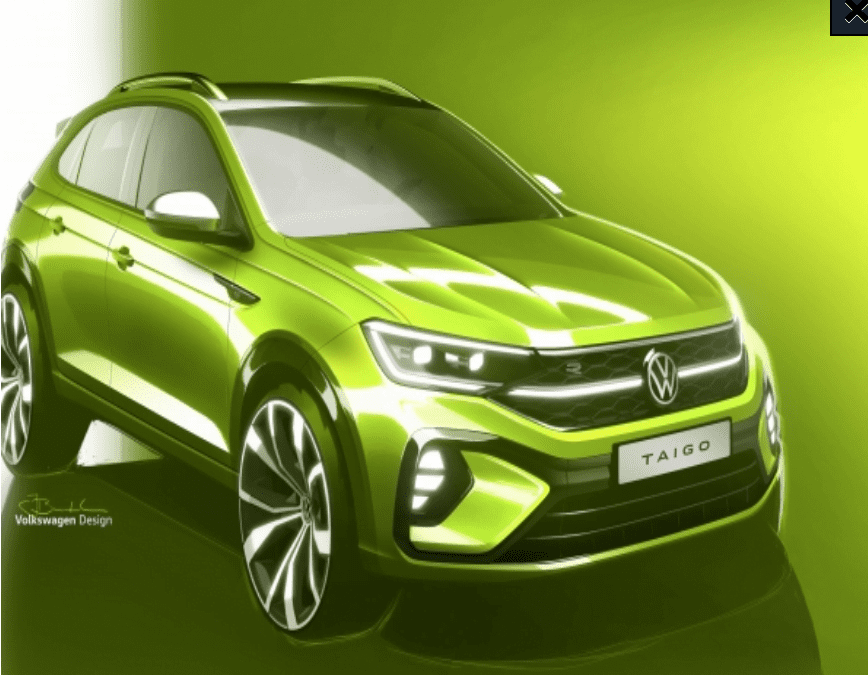
The Taigo01 sees a sporty crossover model added to Volkswagen’s range of SUVs in the small vehicle segment
New model boasts a charismatic design, modern operating concept and a multitude of assistance systems
The new Taigo is raring to go! Ahead of the model’s official European première, Volkswagen has revealed the name of its upcoming crossover model.
The Taigo is a new addition to Volkswagen’s range of SUVs in the small vehicle segment. It impresses with a dynamic and emotional design. The new model also comes with a multitude of assistance systems and state-of-the-art connectivity.
The wait is over for those who have been looking for a CUV (Crossover Utility Vehicle) that combines an elevated seating position with a sporty coupé silhouette. The new Taigo will be launched on the market with economical TSI engines, LED headlights as standard, a modern operating concept, a fully digital cockpit and a multitude of assist systems.
The Taigo is based on the successful Nivus model from Brazil, and will be manufactured for the European market in Pamplona, Spain. The new CUV will make its début this summer and will be launched on the market at the end of 2021.
1The vehicle is a near-production concept car and not yet available for sale in Europe.
The Volkswagen Passenger Cars brand is present in more than 150 markets worldwide and produces vehicles at more than 30 locations in 13 countries. Volkswagen delivered around 5.3 million vehicles in 2020. These include bestsellers such as the Golf, Tiguan, Jetta or Passat as well as the fully electric successful models ID.3 and ID.4. Around 184,000 people currently work at Volkswagen worldwide. In addition, there are more than 10,000 trading companies and service partners with 86,000 employees. With its ACCELERATE strategy, Volkswagen is consistently advancing its further development into a software-oriented mobility provider.
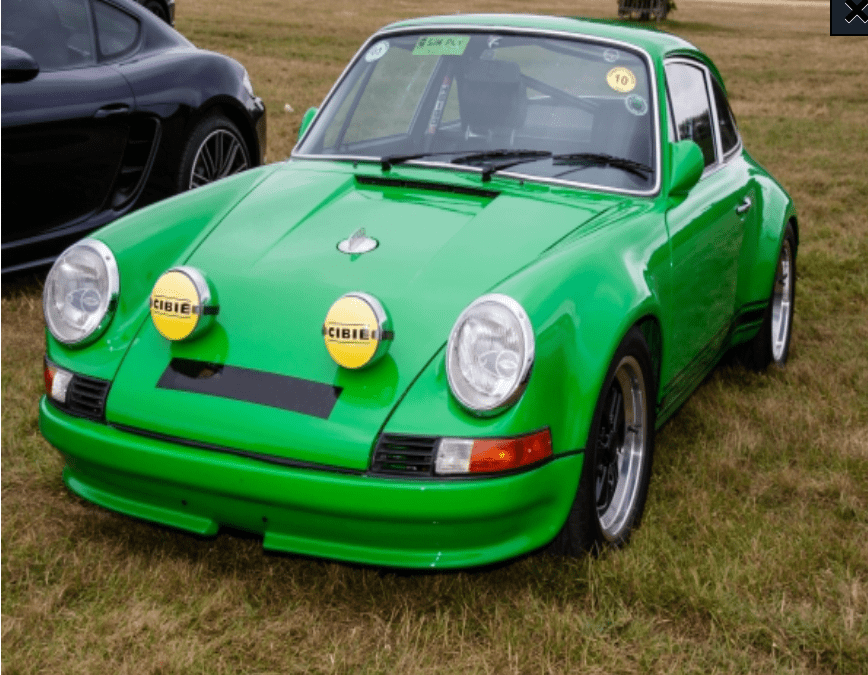
Tickets are selling fast for Beaulieu’s Simply Porsche on Sunday 6th June, as Porsche owners and enthusiasts look forward to an enjoyable New Forest day out, following the easing of current restrictions.
Porsches of every age and model are welcome to park up in the grounds of the National Motor Museum, as the much-loved event returns for 2021 with a socially-distanced display that owners, enthusiasts and families will all enjoy. Held in association with The Independent Porsche Enthusiasts’ Club (TIPEC), Simply Porsche is the second of Beaulieu’s 15 Covid-secure Simply rallies planned to take place this year.
With Beaulieu’s beautiful grounds and gardens open to visitors once again, followed by the planned reopening of the attraction’s indoor spaces on 17th May, there is plenty for event-goers to explore for a packed New Forest day out.
Last year’s rally saw all manner of Porsches join the display, as their owners compared cars and enjoyed the motoring themed day, spanning from early examples of the 1950s and 1960s, through to the legendary 911, right up to the latest models. At opposite extremes were a cutting-edge electric Taycan and a classic Porsche tractor! Simply Porsche 2021 is sure to be just as colourful and diverse a line-up.
All tickets must be bought in advance, with carefully-managed capacity limits in place. Rally participants, planning to take part in the show with their Porsche, can book their tickets with confidence thanks to Beaulieu’s Covid-19 refund policy*. Visit www.beaulieu.co.uk/events/simply-porsche for further details and to buy your participant tickets.
All other visitors should purchase normal visitor admission tickets, which will available to book at www.beaulieu.co.uk from May.
With plenty for all the family to do at Beaulieu, together, Simply Porsche is just one of the exciting Simply rallies planned for 2021. Rescheduled are Simply Vauxhall on 17th July, Simply Audi on 1st August and Simply Aston Martin on 21st August, while coming soon are Simply VW on 19th June, Simply Jaguar on 27th June and Simply Land Rover on 11th July.
Visitor and participant tickets include entrance to all that Beaulieu has to offer, including the National Motor Museum, Little Beaulieu, World of Top Gear, On Screen Cars, the ancestral Montagu home Palace House, Secret Army exhibition, 13th century Beaulieu Abbey and the stunning grounds and gardens. Visit www.beaulieu.co.uk for more information.
* Book with confidence, knowing that we’ve got you covered with our Covid-19 refund policy. If the event is unable to take place due to Government guidance, we will happily transfer your ticket to a future event or issue you with a full refund.
Internationally renowned as the enthusiastic mechanical virtuoso on the spanners in Wheeler Dealers, Edd China is back with his own weekly show, Edd China’s Workshop Diaries, broadcast on YouTube later this week.
The series will focus on the practical aspects of Edd’s workshop life, revelling in the detail of the fixes and exploring old and new technologies; covering a wide range of projects from classic cars to amphibious vehicles, tractors and bikes to planes – whatever takes their fancy.
China relishes the upcoming project, which invites viewers into his personal workshop facility in Buckinghamshire.
“I’m really excited to finally be able to bring this project to our fans as it is something they repeatedly have been asking for,” said China. “Workshop Diaries will let viewers really get stuck into the project and the detail of the fixes, and also provide a platform for instant feedback and interaction. It’s an exciting prospect and it’s great to finally get going!”
The show’s format is as flexible as the content, promising the ability to surprise every week. Episode one airs on Good Friday (April 2nd).
The MINI Electric Pacesetter inspired by JCW is the new Safety Car for the ABB FIA Formula E World Championship race series.
As such, it connects the brand’s electrified future with the rich racing history of John Cooper Works. The car was created out of the new MINI Electric as part of an unprecedented collaboration between MINI Design, BMW Motorsport, the FIA and the Formula E.
Electric drive meets John Cooper Works. “We have already shown how well driving fun and electric mobility go together with the MINI Electric,” says Bernd Körber, Head of MINI. “However, the MINI Electric Pacesetter inspired by JCW goes at least a step further and blends the performance character of the John Cooper Works brand with electric mobility. This extreme version of the MINI Electric has been developed as the Safety Car in the Formula E, so is clearly not intended for use on public roads. But it does reveal one of the directions we could take with the electrification of the JCW brand. For me, the message is clear: electrification and John Cooper Works are a good fit.”
Dynamism maximised – the exterior design. The exterior of the MINI Electric Pacesetter inspired by JCW has been purpose-built for life on the track and represents the most dynamic interpretation yet of a MINI with all-electric power. “The design is an exciting symbiosis of technical precision and emotion,” explains Oliver Heilmer, Head of MINI Design. “Here, function dictates form, and many design elements have been shaped by technical considerations.
For example, we worked closely with our colleagues at BMW Motorsport to develop the form of the wheel arches and front and rear aprons, and the optimisation programme for them included weight-saving measures. This visually striking, technically precise design language gives the car its pervasive sense of emotional engagement and excitement.”
At the front of the car, classic MINI icons such as the circular headlights and hexagonal radiator grille create the familiar, easily recognisable MINI face. At the same time, signature John Cooper Works elements, such as wheel arches adapted to the car’s track width and the deep front apron with additional front splitters to the left and right, enhance the sporting visuals of the front end. The blanked off “radiator grille” and MINI Electric logo point to the electric “heart” of the Safety Car.
As virtually no drive system cooling is required through the upper area of the grille, the front end is largely enclosed to aid aerodynamics. The only exceptions are the area below the grille and the eye-catching, almost squared-off apertures for brake cooling. The Safety Car’s white flashing lights are integrated harmoniously into the bonnet. Characteristic MINI bonnet stripes extend over the roof to the rear end.
Showcasing MINI’s racing genes – the flanks. The MINI Electric Pacesetter inspired by JCW also cuts an extremely dynamic figure from the side. The interplay of geometrically accentuated spats (with carefully placed aero edges) and sporty side skirts gives the car the appearance of powering forward even before it turns a wheel. Together with the increased-diameter wheels, which almost fill the wheel arches, these elements strengthen the time-honoured MINI “stance on the wheels”. The spats and spoilers are made – or more precisely 3D printed from recycled carbon fibre – in Oxford.
Yellow accent lines and surfaces on the aero elements (e.g. the spats, skirts and rear wing) provide a nod to the airflow optimisation taking place in these areas and add a visual flourish to the air deflectors and aero edges. The lightweight 18-inch forged wheels in bi-colour black-neon/orange design bring significant visual depth and added intricacy to the four-spoke items from the MINI John Cooper Works GP.
The respective colour worlds of the MINI Electric and John Cooper Works brand merge into a single statement here. The main body colour is a matt silver which extends back beyond the centre-point of the car. A high-gloss wrap with a two-stage colour gradient – from Highspeed Orange to Curbside Red metallic – then covers the rest of the body to the rear.
The contrast between matt and gloss surfaces brings extra smoothness to the silhouette, while the clear, diagonal separation lines between the different colours injects further dynamism. On the flanks, a chequered flag-inspired pattern shares the stage with a large MINI Electric logo, which can also be found in the radiator grille, on the roof and at the rear end. The Safety Car brief also brings regulations-specific and sponsor-related graphics, which add further visual intensity to the car’s racing character.
Broad and eye-catching – the rear. The rear end in black and Curbside Red metallic uses yellow accent surfaces to extend the eye-catching design language from the front end and flanks, and makes an extremely modern and dynamic statement. The prominent roof-mounted rear wing with air through-flow and yellow accent lines also integrates the signal light unit and was 3D printed at Plant Oxford. The flared wheel arches accentuate the car’s wide track and transition seamlessly into the pronounced rear apron. The rear apron has cut-outs around the wheels, clearing the view to the higher-grip racing tyres. Between the wheels sits an unadorned diffuser. When the car is viewed from this angle, the accents in Energetic Yellow and lack of exhaust tailpipes identify this as a car powered by an electric drive system.
Reduced to the max – the interior. The interior is stripped back to the absolute essentials; only the front seats remain. The driver’s area consists of a certified seat with six-point belt approved for both racing and road use, a steering wheel with minimalist-design carbon fibre impact absorber and a digital instrument cluster. The central information display makes way for a carbon fibre cover here to further reduce weight. The centre console houses the gearshift lever, handbrake and controls for the necessary signal lights – all in exposed carbon fibre.
The likewise pared-back carbon-fibre door panels with window and door openers contain cloth straps to make closing the doors easier. Another central feature of the interior is the welded-in roll cage, which maximises safety. And the remainder of the stripped-out interior structure is also painted in typical racing white (for functional reasons).
Bespoke 3D-printed parts for the interior. The steering wheel’s minimalist impact absorber and the boost panel on the right-hand side of the wheel are high-quality, custom-made components, likewise the centre console cowling and door panelling on the driver’s side. Another highlight are the removable pads on the sport seat, which are likewise 3D-printed and whose innovative structure combines comfort, robustness and modularity. The thickness, hardness and colour of the pads can be adapted as required according to the physiognomy, weight and personal taste of the driver at hand.
Ready for the race track, helped by knowhow from BMW Motorsport. Behind the visually powerful design of the MINI Electric Pacesetter inspired by JCW lies the expertise of BMW Motorsport. Rigorous adherence to lightweight design principles gives the Safety Car a kerb weight of approx. 1,230 kg – which makes it approx. 130 kg lighter than the standard MINI Electric.
The drive system – also based on that found in the MINI Electric – produces 135 kW and 280 Nm (206 lb-ft), which enables the MINI Electric Pacesetter inspired by JCW to sprint from 0-62 mph in 6.7 seconds (standard model: 7.3 s) and from 0-37 mph in 3.6 seconds (standard model: 3.9 s). Even more important for a Safety Car, though, are the mid-range figures. Here, the MINI Electric Pacesetter inspired by JCW showcases all the talents of its torque-rich electric drive system with single-speed transmission, enabling a 75 mph time of 4.3 seconds (standard model: 4.6 s).
The drive system teams up with racing coilover suspension (three-way adjustable for rebound, compression, height and camber) to deliver maximum go-kart feeling. Race-spec suspension control arm mountings, a 10 mm increase in track width, plus the four-piston brakes and wheels from the MINI John Cooper Works GP with Michelin Pilot Sport tyres (size 245/40 R18) round off the overall package.
Premiere at the Rome E-Prix on 10.04.2021 The MINI Electric Pacesetter inspired by JCW will come into use in Rome on 10 April 2021 at the second event (Race 3) of Formula E’s 2021 season. At the wheel will be official Formula E Safety Car driver Bruno Correia, as BMW i Andretti Motorsport drivers Maximilian Guenther (GER) and Jake Dennis (GBR) battle it out for victory in their BMW iFE.21 racers.
“Agility, performance and a cool looking car. The MINI Electric Pacesetter Safety Car of FIA Formula E World Championship has got it all. Very fun to drive, it feels like karting”, said Correia.
EV6 is the symbol of Kia’s new brand and the first BEV built on new dedicated EV platform
Choice of multiple zero-emissions powertrain configurations; over 510 kilometres from a single charge
800V ultra-fast charging from 10 to 80 per cent in just 18 minutes; 100 kilometres in less than 4.5 minutes
EV6 GT accelerates from 0-to-100km/h in 3.5 seconds with top speed of 260km/h
New EV architecture delivers spacious interior and high-tech features for an intuitive user experience
Advanced Driver Assistance System includes Highway Driving Assist 2 and Remote Smart Parking Assist
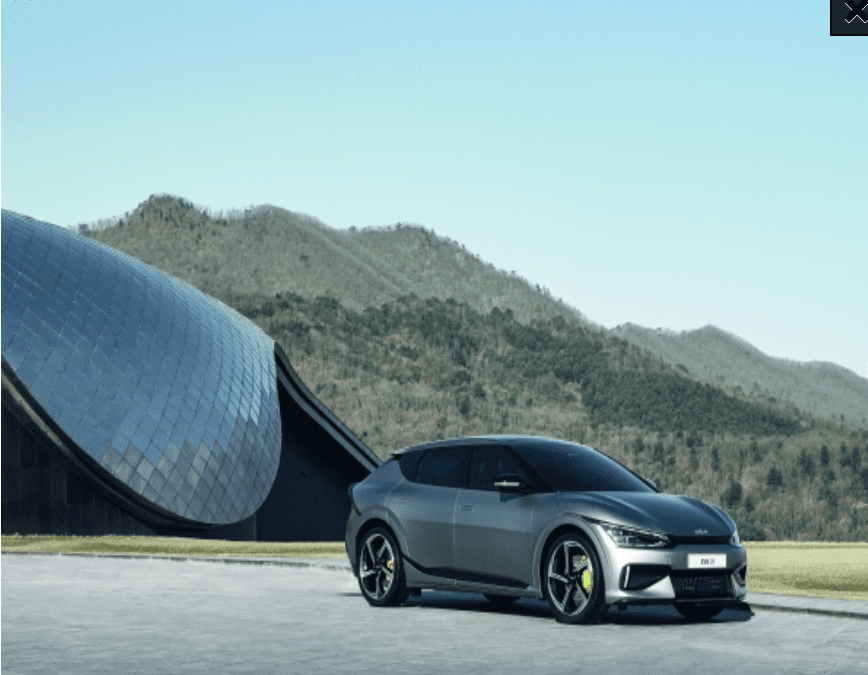
The new Kia EV6 brings long-range, zero-emissions power, 800V ultra-fast charging and distinctive styling to the crossover SUV market.
The EV6 is Kia’s first car to be based on the company’s dedicated new platform for battery electric vehicles (BEVs).
This pioneering crossover – the first dedicated BEV launched under the new Kia design philosophy ‘Opposites United’ – displays a future-oriented EV design characterised by high-tech details. It is powered exclusively by electric energy, with a choice of multiple long-range, zero-emissions powertrain configurations. The 800V charging capability means EV6 can go from 10 to 80 per cent battery charge in just 18 minutes, while the GT version, engineered to inspire consumers with exciting driving performance, can accelerate from 0-to-100km/h in 3.5 seconds with a top speed of 260km/h.
The EV6 is the first dedicated BEV produced by Kia using the all-new Electric-Global Modular Platform (E-GMP), and forms the first part of Kia’s transition to the new era of electrification under the new brand slogan, ‘Movement that inspires’. It also begins the mid-to-long term strategy for BEVs, plug-in hybrid (PHEV) and hybrid electric (HEV) vehicles to make up 40 per cent of Kia’s total sales by 2030, with an annual sales target of 1.6 million units for these eco-friendly models. As part of this, Kia aims to grow its BEV sales to 880,000 units in 2030 and become a top global seller. EV6 is the first of 11 new BEV models from Kia by 2026 – seven built on E-GMP architecture, and four derivative EVs based on existing models.
“EV6 is the embodiment of the new Kia. It is born to inspire every journey, through bold design, progressive engineering, innovative technologies, and exciting electric performance,” Ho Sung Song, Kia’s President and CEO said. “EV6 also represents the beginning of Kia’s long-term commitment to sustainable mobility, accelerating the transition not only to clean transportation, but also products, materials and manufacturing.”
The EV6 will be produced in South Korea. It will go on-sale in select global markets starting from the second half of 2021, with online reservations beginning from 30 March in some markets.
New Kia design direction New design language strikes a balance between contrasting forces The EV6 was designed under the brand’s new design philosophy ‘Opposites United’, which takes inspiration from the contrasts found in nature and humanity. At the centre of the design philosophy is a new visual identity evoking positive forces and natural energy, with contrasting combinations of sharp stylistic elements and sculptural shapes.
Karim Habib, Senior Vice President and Head of Kia Global Design Centre, elaborated: “EV6, as the first dedicated Kia EV, is a showcase of human-centred, progressive design and electrified power. We strongly believe EV6 is a compelling and relevant model for the new EV era. With EV6 we aimed to create a distinctive, impactful design by using a combination of sophisticated, high-tech features on pure and rich volumes while providing a dedicated EV aiming to define our future.”
Designed to deliver something different in the crossover class, the GT version of the EV6 offers a distinctive, impactful exterior with high-tech features, as well as unprecedented levels of performance from a Kia electric vehicle.
At the front, Kia’s ‘tiger face’ has been re-interpreted for the digital era. Forming part of this ‘Digital Tiger Face’, daytime running lights display a sleek, modern appearance and include a ‘sequential’ dynamic light pattern. Below this, a low air intake visually widens the front of the car, accentuating its high-tech image.
The side profile displays a crossover-inspired silhouette, which is modern, sleek and aerodynamic. A character line runs along the bottom of the doors, curving upwards towards the rear wheel arches to visually elongate the profile of the car. Designed in part to realise ultimate aerodynamic performance, the rear displays a sloping C-pillar with an integrated black glossy insert which appears to extend the window glass. Above this sits a prominent wing-type roof spoiler that channels air downwards towards a raised lower spoiler, which sits atop the car’s unique rear light cluster.
Inspiring space Versatile and spacious inside thanks to the flat battery under the floor A distinct product of the EV era, the interior design benefits greatly from the application of Kia’s dedicated E-GMP platform. Despite the EV6’s compact exterior dimensions, its 2,900mm wheelbase results in a cabin space similar to many mid-size SUVs.
Jochen Paesen, Vice President for Interior Design, commented: “People are first attracted by the exterior of cars, but they eventually fall in love with the interior – where they spend most of their time. So, designing an inspiring space for the EV6 was the most important thing for us. We believe EV6 can inspire customers by boosting their creativity.”
One of the most striking elements is a seamless high-tech curved infotainment screen. The simple form language of the wide screen and dashboard give the interior an open feel.
Relaxation seats are slim, lightweight and contemporary, and clad in modern, visually interesting and robust fabrics created using recycled plastics – equivalent to 111 plastic water bottles.
The EV6 offers intelligent and flexible interior packaging and an abundance of cabin storage areas, including 520 litres (VDA) of boot space with the second-row seats in place. With the second-row seats folded down, stowage capacity increases to approximately 1,300 litres. The car also features a front trunk which provides up to an additional 52 litres of stowage space for 2WD models and 20 litres for AWD models.
Electric Power Long-range, all-wheel drive and zero-emissions The EV6 offers buyers a choice of multiple fully-electric, zero-emission powertrain configurations, including long-range (77.4kWh) and standard-range (58.0kWh) high-voltage battery packs. EV6 GT-line is available with both long-range and standard-range battery packs, while EV6 GT features the long-range battery pack only. This is Kia’s first electric vehicle to be available with two-wheel (2WD) or all-wheel drive (AWD) options – the latter offering enhanced dynamic capability in even the most challenging conditions.
The 2WD 77.4kWh EV6 can travel over 510 kilometres (316 miles) on a single charge on the WLTP combined cycle. With a maximum 605Nm torque available on the AWD version, the EV6 can accelerate from 0-to-100km/h in just 5.2 seconds. The 77.4kWh battery pack is paired with a 168kW (229ps) electric motor powering the rear wheels, and for AWD models two electric motors, powering the front and rear axles, produce a total of 239kW (325ps).
The 58.0kWh EV6 can accelerate from 0-to-100 km/h in 6.2 seconds, with a maximum 605Nm torque available on the AWD version. The 58.0kWh battery pack is paired with a 125kW electric motor powering the rear wheels; AWD models feature two electric motors, powering the front and rear axles and producing a combined 173kW (235ps).
Platform flexibility for electric performance Kia’s new dedicated E-GMP reduces complexity through modularisation and standardisation, allowing rapid and flexible development of products with varied attributes. This flexible development can satisfy various customer needs for vehicle performance within a single model line like EV6.
Equipped with 430kW dual motors, the EV6 GT takes electric performance to another level. With a maximum 740Nm torque, the AWD GT version accelerates from 0-to-100km/h in an eye-watering 3.5 seconds and can reach a top speed of 260km/h (preliminary development targets). With the addition of electronic-Limited Slip Differential software to the EV6 GT version only, drivers will enjoy confident control and dynamic ride and handling in all conditions.
“The GT version of EV6 demonstrates our technological leadership through its combination of outstanding high-speed charging and acceleration performance like a super sports car. With our dedicated EV platform, there is no need for compromise between inspiring spaciousness and performance,” said Albert Biermann, President and Head of R&D Division for Hyundai Motor Group.
800V Ultra-Fast Charging 80 per cent charge in just 18 minutes; new vehicle-to-load (V2L) function The EV6 offers 800V and 400V charging capabilities, without the need for additional components or adapters. The car is capable of a high-speed charge from 10 to 80 per cent in just 18 minutes on all variations or a top-up charge of 100km of driving range in less than four and a half minutes when pairing 2WD with the 77.4kWh battery option.
The car’s charging system is more flexible than previous generation BEVs thanks to an Integrated Charging Control Unit (ICCU). The ICCU enables a new vehicle-to-load (V2L) function, which is capable of discharging energy from the vehicle battery. The V2L function can supply up to 3.6kW of power and is capable, as an example, of operating a 55-inch television and air conditioner simultaneously for more than 24 hours. The system is also able to charge another EV, if needed.
With more than 35 per cent charge left in the battery, the EV6 can tow items weighing up to 1,600 kg. Together with the V2L function, EV6 owners can take everything they need on an outdoor adventure with friends and family and do it all with zero emissions.
Energy recuperation Maximising driving range and efficiency The EV6 is fitted with energy-recuperation technologies to maximise driving range. This includes Kia’s latest-generation energy-efficient heat pump, which scavenges waste heat from the car’s coolant system. This ensures that at minus seven degrees Celsius the car can achieve 80 per cent of the range that would be possible at 25 degrees Celsius.
Also featured is the latest generation of Kia’s smart regenerative braking system, which is operated by paddle shifters behind the steering wheel so drivers can quickly and easily slow the car and recuperate kinetic energy to maximise driving range and efficiency. Drivers can choose from six regenerative braking levels (none, 1 to 3, ‘i-PEDAL’, or auto mode), depending on the desired level of energy recuperation. The system’s ‘i-PEDAL’ driving mode also allows the car to harvest the maximum amount of energy from its brakes, and enables the driver to bring the car to a gentle halt without needing to push the brake pedal.
Technology New connectivity and infotainment features for the EV age EV6 introduces a suite of technologies that enhance safety, connectivity and infotainment. They are designed to make travelling safer, easier and less stressful.
The high-tech infotainment system includes 12-inch dual screens. Curved displays applied to EV6 have thin film panels that utilise new structure and advanced technology for reducing impact of light. The cluster and infotainment system are connected as if they were wrapped around one body with a reinforced glass. Extending from the steering wheel to the centre of the car, it displays a digital cluster in front of the driver, and infotainment system above the centre console.
The EV6 also features an augmented reality (AR) head-up display system, which projects driving information onto the base of the windscreen in the driver’s line of sight. The system displays alerts from the car’s Advanced Driver Assistance System, details of vehicle speed, and turn-by-turn navigation instructions.
A powerful 14-speaker Meridian® surround audio system is also available, a first for a Kia BEV and delivering a truly immersive sound experience. The 14-speaker audio system has been engineered by the experts at Meridian and features several of the British audio pioneer’s proprietary digital signal processing (DSP) technologies. Meridian’s core sound philosophy has been integrated into the EV6 allowing customers to enjoy natural, lifelike and authentic audio on the move.
The speaker system also offers Active Sound Design (ASD), a newly-developed feature by Kia which provides drivers with audible feedback to the speed that the car is travelling and controlled via a user interface.
Safety and Convenience Advanced Driver Assistance system with Remote Smart Parking Assist The EV6 offers class-leading levels of safety and convenience thanks to its enhanced suite of driver assistance systems (ADAS). They help to reduce many of the inherent hazards and stresses of driving, protecting occupants and other road users on every journey.
Safe Exit Assist (SEA) helps people avoid collisions with a rear side vehicle when exiting EV6. When the occupant opens the door to exit the vehicle after a stop, the system provides a warning if an approaching vehicle from the rear side is detected. SEA also helps keep the rear door closed through operation of the electronic child lock.
Lane Following Assist (LFA) helps centre the vehicle in the lane. When driving, LFA can be switched on and off with the press of a button.
Highway Driving Assist 2 (HDA 2) helps maintain a set distance and speed from the vehicle ahead when driving on a highway and also helps centre the vehicle in the lane, even through a curve. In case of an adjacent vehicle driving in close proximity, HDA 2 assists to adjust the EV6’s path, so to avoid any possible risk of collision. Also, with the driver’s hands on the steering wheel and above a certain speed, a click of the indicator stalk will move the car into the corresponding lane.
Remote Smart Parking Assist (RSPA) helps remotely park or exit a parking spot with the driver operating EV6 from outside the vehicle.
EV6 Specifications:
Dimensions
(Europe model)
EV6
EV6 GT-line
EV6 GT
Wheelbase
2,900 mm
2,900 mm
2,900 mm
Length
4,680 mm
4,695 mm
4,695 mm
Width
1,880 mm
1,890 mm
1,890 mm
Height
1,550 mm
1,550 mm
1,545 mm
Cargo
Boot/trunk space *EV6 / EV6 GT-line
520 L 1300 L (*when second-row seats are fully folded)
Front trunk
Non-NA model: 52 L (2WD) or 20 L (AWD) *North America model: 20 L (both AWD & 2WD)
Performance
Platform
Electric-Global Modular Platform
EV6 EV6 GT-line
Long Range 77.4-kWh Battery
AWD
Power
239-kW (Front & Rear combined)
Torque
605-Nm (Front & Rear combined)
2WD
Power
168-kW Rear
Torque
350-Nm Rear
Standard Range 58.0-kWh Battery
AWD
Power
173 kW (Front & Rear combined)
Torque
605 Nm (Front & Rear combined)
2WD
Power
125 kW Rear
Torque
350 Nm Rear
EV6 GT
Long Range 77.4-kWh Battery
AWD
Power
430 Kw (Front & Rear combined)
Torque
740 Nm (Front & Rear combined)
Features
Supported Charging Infrastructure
400 V and 800 V (No need for additional adapters)
Ultra-fast Charging (800V)
10 % to 80 % in 18 minutes of charge 100 km of range (WLTP) in 4.5 minutes of charge
The vehicle specifications and features in this press release may vary depending on country/region.