
by gaukcars.com | Oct 2, 2024 | Blog
- Front-mounted camera which detects speed limit signs enables vehicle to automatically adjust its speed
- Nearly 10% of drivers admit to getting caught speeding annually
- More than three quarters of drivers say they don’t always know what speed they are travelling at
- SEAT offers Dynamic Road Sign Display technology to help drivers adjust and reduce speeds
- Around 40% of drivers would ask to have the technology on their car if it was available
Technology which can read road signs could save drivers £327 million* in speeding fines according to new research by SEAT.
The study of 2,000 UK motorists found that nearly 10% admitted to being caught speeding annually, resulting in potentially millions of pounds in fines every year.
Analysis by the Spanish car brand, which also found that over three quarters (76%) of drivers don’t always know what speed they are travelling at, comes as the all-new SEAT Leon – featuring the Dynamic Road Sign Display technology – continues to be a sales hit in the UK.
The innovation developed by SEAT helps drivers stick to the speed limit – especially useful in areas with changeable limits.
Using a front-mounted camera which detects speed limit signs, the latest SEAT models can automatically adjust their speed according to the limit in that area. It will also scan school zones and other road signs.
Statistics compiled by the Department for Transport (DfT) show over 50%** of cars exceeded the speed limit on 30mph roads; while 47% of cars broke the limit on motorways in 2020.
With SEAT’s own research revealing the high number of motorists caught every year, around 40% of drivers said they would want a similar technology to SEAT’s Dynamic Road Sign Display technology on their car if it was available.
As motorists return to the roads as lockdown eases, the lack of recent experience behind the wheel could be making drivers less confident, making the technology even more important in helping reduce speeds according to local limits, as well as minimizing potential fines.
Richard Harrison, Managing Director of SEAT UK, commented: “It’s certainly eye opening to see that significant numbers of motorists aren’t necessarily always aware of their own speeds, but thankfully there is in-car technology – like our Dynamic Road Sign Display – already on the market to make drivers safer on the road.”
The SEAT Leon has a strong track record since its introduction in 1998, selling 2.3 million vehicles worldwide, with each generation proving more popular than the last. The latest model has introduced efficient plug-in hybrid variants that continue to earn plaudits for their driving dynamics, practicality and economy.
To find out more about the SEAT Leon, please visit: https://www.seat.co.uk/new-cars/leon/overview.html
by gaukcars.com | Oct 2, 2024 | Blog
- 18 liquefied natural gas (LNG) lorries transporting parts to MINI Plant Oxford from across the UK
- More than 20 per cent reduction in CO² and NOX emissions achieved
- Up to 90 per cent C0² reduction forecast with the use of bio-LNG
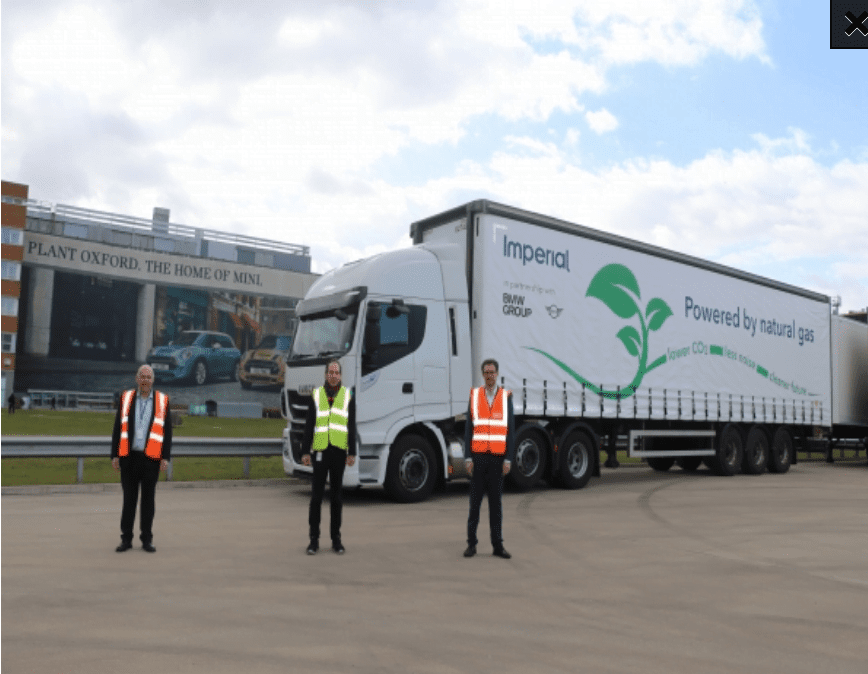
A new fleet of lorries powered by liquefied natural gas (LNG) is helping to drive sustainable logistics at MINI Plant Oxford.
18 LNG lorries from Imperial have now hit the road, transporting parts and components from suppliers on 15 different routes across the UK to the home of the MINI brand.
LNG lorries have lower fuel consumption, produce fewer harmful emissions and are quieter on the roads. The new fleet has already delivered a reduction of approximately 20 per cent in CO² and NOX emissions, compared to diesel alternatives. In future, a total CO² reduction of up to 90 per cent is expected by using bio-LNG.
Thomas Frank, Director of Logistics, MINI Plant Oxford said: “We are really excited to be working with Imperial on this project as part of our wider efforts to improve sustainability throughout all areas of the BMW Group. With environmental benefits, lower emissions and quieter engines, these LNG-powered lorries will deliver components from across the UK to the heart and home of MINI in Oxford. The fleet will travel from more than a dozen key suppliers, including BMW Plant Hams Hall, and it means that around 20 per cent of all lorries now coming to MINI Plant Oxford will be powered by LNG fuel. This is a great example of how two companies can work together to achieve their sustainability goals.”
Imperial has successfully trialled LNG lorries in both the UK and Germany over the past 12 months. The company has installed its own LNG facility close to MINI Plant Oxford, which means vehicles on routes with limited refuelling opportunities can leave Oxford with a full tank before continuing their onward journey.
Mark Miles, Managing Director, Imperial UK, said: “At Imperial we don’t just focus on our profitability; our people and the environment are a very important consideration. We consider it our duty as part of the worldwide population to invest in Environmental, Social and Governance (ESG) and integrate respective practices whenever possible in the daily course of business; and so the opportunity to reduce our UK haulage operation’s environmental impact was compelling. We’re delighted to be working with the BMW Group and MINI Plant Oxford as part of a joint effort to improve sustainability in logistics, reconciling business efficiency with environmental protection.”
MINI Plant Oxford has already adapted to a 360-degree sustainability strategy involving heat regeneration, environmentally friendly production, the harvesting of rainwater and one of Britain’s largest solar energy facilities. The next step is to increase sustainability in all areas of its supply chain and logistics operations.
Transport logistics has a key role to play in achieving the BMW Group’s supply chain sustainability target, by reducing CO² emissions per vehicle by 20 per cent by 2030 (base year: 2019). CO²-minimizing ‘Green Logistics’ concepts are also being developed.
The BMW Group is working with service providers to use natural gas-powered and electric lorries worldwide in order to reduce emissions in logistics. Several battery-electric lorries are already in use at the BMW Group Plants Munich and Landshut for transport trips within the plant gates and over short distances. The extended use of such lorries is undergoing continuous testing, while the possibility of using hydrogen-power is also under consideration.
by gaukcars.com | Oct 2, 2024 | Blog
- With lockdown restrictions gradually easing from today and 12 April and many cars having sat idle for months, Fixter, the UK’s first end-to-end online car maintenance service provider, offers 10 top post-lockdown car care tips
- Advice from Fixter, which has a UK network of over 400 independent garages, includes checking car’s fluid levels, battery and brakes, and packing essentials should the car break down on one of its initial journeys
- A simple visual health check or diagnostic check at a local garage can avoid expensive future repairs
For the past year, many British cars have seen very little use as lockdown restrictions have drastically reduced commuting and leisure travel.
Now, with restrictions beginning to ease from today, it is predicted that many people will be using their cars as safe, private transport as life slowly returns to normal. Before setting off to see loved ones or engage in some much-needed retail therapy, leading UK online car maintenance provider Fixter has provided 10 top tips for checking your car is in good working order before you travel.
From today, people are allowed to meet outside, consisting of either two households or within the rule of six, in public spaces and private gardens. Small wedding groups are also re-starting, as is outdoor sport. The phased return to normal is set to move on again from 12 April with the re-opening of many areas of the retail and hospitality sectors, as well as self-contained holidays for people living in the same household.
The gradual easing of restrictions is not just good news for Brits, as well as the economy, it is also welcome news for cars. Having sat idle, or done short journeys in many cases, for several months, as Spring arrives many vehicles will no doubt benefit from being used again on a more regular basis.
Commenting on their latest advice, Limvirak Chea, CEO at Fixter said, “Understandably, there is a lot of pent up demand to hit the roads to see friends and family and start enjoying many aspects of life again. We know that not everyone is fully clued up when it comes to car maintenance, so we’re here to help car owners with keeping their cars in good condition at all times. We hope that by sharing our knowledge, we can ensure that British drivers and their occupants get to their destination safely, securely and with minimal fuss when the time is right.”
While a simple visual health check at a local garage will avoid expensive repairs and problems in the long run, in the meantime, Fixter has provided 10 top tips to act as a checklist before heading out on the roads:
- Check your oil level
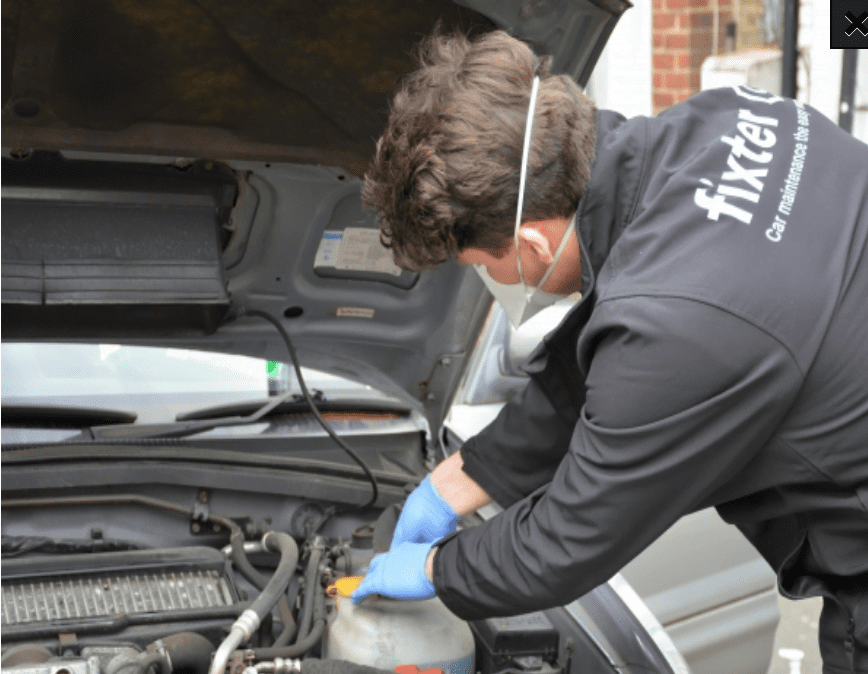
Your car’s oil and coolant play a vital role in keeping your engine running smoothly. Checking and topping up your engine oil is quick and straightforward. Lift your bonnet and locate the dipstick. Pull the dipstick out and wipe off all the oil with a cloth. You should notice two marks or grooves on the dipstick, which indicate the minimum and maximum oil levels. When it’s clean, reinsert the dipstick back into its tube, then remove it again. If the oil level is halfway between the minimum and maximum markers you don’t need to add any oil. If it’s below halfway, you should add some engine oil. If it’s below the minimum level mark, you will definitely need to top-up your oil.
- Check our coolant level
With restrictions due to be lifted in time for summer, it’s important that you check your engine coolant levels. Coolant prevents your engine from overheating in hot weather and freezing in colder weather. It’s stored in a clear plastic container usually located near the radiator. There will be a mark or sticker on the container to indicate the correct fluid level. Top-up the fluid to ensure it remains at the correct level.
- Top up your windscreen washer fluid
This is a simple DIY check. The reserve is usually close to the top of the engine and is often marked with a windscreen wiper icon. If you can see that the fluid level is low, top it up, based on the manufacturer’s recommended dilution where applicable.
4. Check your battery health
If over lockdown you’ve only been doing very short trips in your car, or haven’t driven at all for several weeks, your battery may have gone flat as it won’t have been able to recharge over longer trips. As soon as it is safe to do so, we recommend going for a longer drive, at least 30 minutes, to make sure the battery has a chance to recharge. If you’re having trouble starting your car for the first time in a while, you may need to jump start the vehicle to get it going so that you can drive and recharge the battery. If possible, trickle charge the car’s battery overnight.
It’s also a good idea to visually inspect the battery terminals, making sure they’re secure and corrosion-free. If your car has been sat idle, particularly in damp conditions, the terminals may have rusted which could affect the power supply to and from your car’s battery.
5. Check your tyres
Due to less use, your tyres could have deflated or even developed cracks. Before you set off, check your tyres (including the spare) for any splits, holes or tears. Look for any glass or nails that could cause a puncture or tear in the future.
Next, check the depth of tread on each tyre. In the UK and Europe, the legal minimum tread depth for cars is 1.6mm. The tread must meet this minimum across its entire circumference. The easiest way to verify whether your tyres have a deep enough tread is to use a 20p coin. Place the coin in the main tread grooves of your tyre. If you can see the outer band of the coin face at any point this is an indication that the tyre is likely to be below the legal limit so you should arrange a professional inspection by a mechanic.
- Check your tyre pressures
Ensure that your tyres are inflated to the recommended pressures by checking the guidelines in your car’s handbook or on the panel inside the driver’s door. You can check tyre pressure using a handheld tyre pressure gauge, or if you don’t have one of those handy you can check and top up your pressure at most petrol stations.
7. Check your brakes
It’s important to always keep your brakes in tip-top condition, as they are arguably the most important safety feature in your car. When a car has been left standing for long periods, as it may have been during lockdown, issues can arise with your brakes.
Sticking brakes are a common problem if a car has not been used for a while. Most cars use disc brakes, which include brake pads, rotors, and calipers. Over time, particularly if your car has seen little usage recently, parts of your brakes can become rusty. As the surfaces will be covered in a light coating of corrosion, you’ll notice a sticky sensation in your brakes and a grinding or squealing noise.
This soon clears away as you drive, but remember that your brakes won’t be fully effective until the surface corrosion has worn away, so drive cautiously until your brakes return to normal. If the noises and sticking sensation continues your brake pads or discs may need replacing, so should be inspected by a mechanic.
- Check your fuel level
Cars parked for an extended period of time can suffer from moisture gathering in an empty fuel tank. This can cause rust to build up inside it. To get round this, simply fill up the tank completely, or even add a stabiliser fluid to keep it fresh.
- Check your car’s exterior
While sitting on a driveway or on the road, it is likely that leaves or debris might have gotten stuck on the outside of your car. Before setting off, it is worth checking air intakes on the front bumper, as well as the lower part of the windscreen to remove anything getting in the way.
10. Try the car’s doors and handles
While many cars won’t have been used much at all, others might have just had one user in the form of a keyworker. Either way, you should check all of your car’s doors, including the boot, and lubricate locks and moving parts where necessary.
Lastly, in case your car lets you down on one of your initial journeys, it is a good idea to pack a fully charged mobile phone, phone charger, jacket, blanket, snacks, breakdown cover details, torch, and ideally a high-vis vest and warning triangle.
Fixter’s tech-led approach makes car maintenance as easy as ordering a takeaway, allowing car owners to book MOTs, servicing and repairs within minutes, as well as get an instant quote, using a laptop or smartphone. They also offer a contact-free service, with convenient thirty-minute time slots for delivery and collection and live text updates.
Taking the hassle out of car ownership, the award-winning firm employs in-house technicians who liaise directly with its high-quality garage network for service and repair quotes and approvals, so that there are no nasty surprises. At the same time, in these uncertain economic times, Fixter offers the potential to save up to 30% compared to typical franchised dealer costs. Their approach is clearly working, given the company’s very positive 4.6 out of five stars on Google Reviews and 4.4 out of five stars on Trustpilot. Customers can get an instant quote by visiting www.fixter.co.uk or calling 0330 808 9527.
NOTES TO EDITOR
About Fixter
Fixter is revolutionising the car maintenance industry, one repair at a time. Digital, transparent and stress-free, with world-class customer service, the company was founded to make car maintenance as easy as booking a taxi. Since launching in Manchester in 2017, Fixter has expanded to more than 100 towns and cities across the UK and provided thousands of car owners with honest, convenient and affordable car services.
by gaukcars.com | Oct 2, 2024 | Blog
- 90% of cars sold in CCA’s first sale of the year
- £1.7million worth of cars sold on Friday 26th March
- Auction world record achieved for 1990 Audi Quattro 20V
- 100% of The Warwickshire Collection Part 3 sold
Classic Car Auctions hosted their first sale of the year on Friday 26th March and with superb results! A phenomenal 90% of the cars offered were sold, with 100% of the Warwickshire Collection Part 3 also selling.
Over 130 classics from across the decades crossed the block, including a rare 1990 Audi Quattro 20V in Lago Blue and just over 48,300 miles covered. The recommissioned example achieved a new auction world record price of £85,470 following a significant amount of interest and bidding.
The sale mirrored the same live online format that was practised to perfection last year, with bidding taking place from home; whether that was online, by phone or via commission. Due to the current restrictions, pre-sale viewing took place virtually with the CCA team, they were also able to accommodate experts carrying out professional inspections.
Another sublime example was the 2000 Rover Mini Cooper Sport with just 117 miles covered since new! The remarkable little car achieved £33,000 on the day. Lot 108, the 1971 Daimler 4.2 Sovereign sold to a telephone bidder and after the hammer went down, informed CCA that his father had sold the car when it was brand new all those years before! This fabulous example with a lovely reunion story sold for £11,988.
The smooth and sophisticated 2008 Mercedes-Benz CL500 (C126) was offered directly from British actor Nigel Havers and sold for £16,095, whilst the 1985 Porsche Carrera 3.2 Convertible which was offered from The 1975 band member, George Daniel, sold for £33,000.
Gary Dunne, CCA’s Sales Manager commented: “These kind of results are testament to the cars offered, our customers and of course the team. Last year the Silverstone Auctions Group (which includes Classic Car Auctions) were recognised as the UK market leaders in the classic car auction industry and this latest sales rate demonstrates why and how we achieved this accolade.”
Gary continued, “We would like to thank our vendors and buyers, old and new, for their continued support – especially with the current restrictions in place. We will be announcing details of our next auction in the coming days so do keep an eye out for the information to ensure you don’t miss out!”
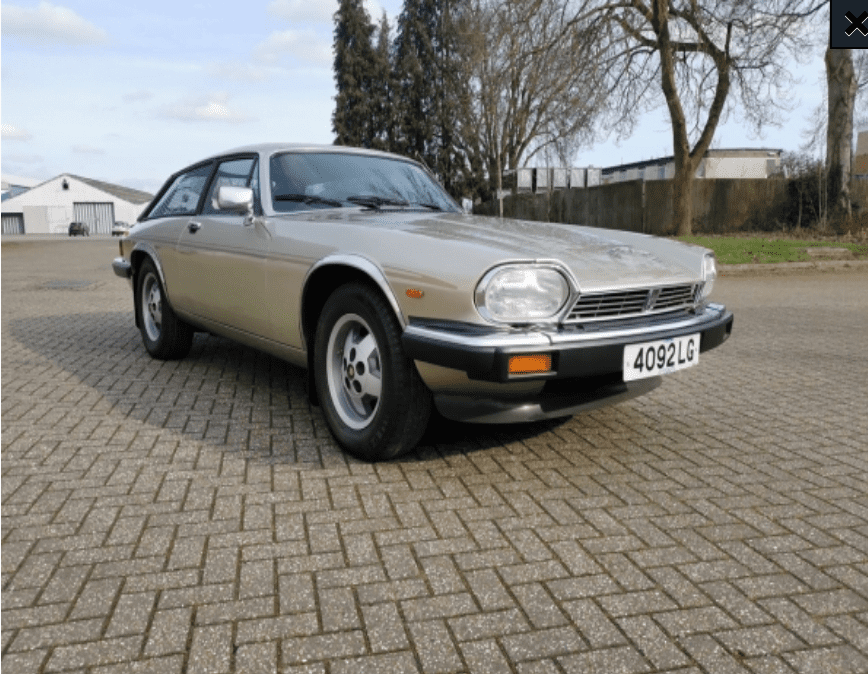
The second half of the auction was dedicated to The Warwickshire Collection Part 3, a series of 40 Jaguars and Daimlers, with many of them offered without reserve. 100% of the collection sold, with many of the cars exceeding any presale estimates and others seeing 20+ registered telephone bidders per lot! One of those was lot 204, the 1996 Jaguar XJS 4.0 Auto which sold for £27,195, whilst the 1983 Jaguar XJ-S HE 5.3 Lynx Eventer sold for an amazing £47,730.
CCA will formerly announcing their next auction later this week which will be a two-day sale. Everyman classics are now invited and those interested can contact the team on 01926 640888 to speak to an expert about the value of their car.
Images
1990 Audi Quattro 20V
2000 Rover Mini Cooper Sport
2008 Mercedes-Benz CL500 (C126)
1983 Jaguar XJ-S HE 5.3 Lynx Eventer
Forthcoming Auctions
Friday 25th – Sunday 27th June – The London Classic Car Show Auction
Saturday 25th September – The Autumn Sale
Saturday 11th December – The December Sale
Links
Website: http://www.classiccarauctions.co.uk
Twitter: www.twitter.com/classiccarauc
Facebook: www.facebook.com/classiccarauc

by gaukcars.com | Oct 2, 2024 | Blog
JBXE Racing is delighted to announce Lotus Engineering as the latest addition to its family of partners.
The world-renowned British engineering consultancy, part of Group Lotus, joins as Technical Partner, supporting Jenson Button’s Extreme E team in this radical new electric off-roading series.
Highly respected for its dedication to cutting-edge technologies and motor racing pedigree, Lotus Engineering is internationally recognised for driving innovation in the automotive industry and beyond. JBXE Racing looks forward to working together with Lotus Engineering to promote electrification and highlight the importance of sustainable solutions to help protect and preserve the planet.
JBXE Racing team founder and 2009 FIA Formula 1 Drivers’ World Champion, Jenson Button, and multiple Scandinavian Touring Car race-winner, Mikaela Åhlin-Kottulinsky, are preparing to compete in the opening race of the 2021 Extreme E Championship later this week – the Desert X Prix takes place from 03 – 04 April in AlUla, Saudi Arabia.
Jenson Button said: “Lotus is a great British brand that is inextricably linked to motorsport, so we are delighted to welcome Lotus Engineering to JBXE. Extreme E is a unique and exciting formula, full of “world firsts” and challenges, and to announce that a brand such as Lotus Engineering is coming on this journey with us is a proud moment for myself and the team. We are very excited about our new technical partnership and can’t wait to show what we can do in the first race this weekend.”
Matt Windle, Managing Director, Lotus Cars, commented: “We are on the cusp of an exciting new era of electrified motorsport, and we’re delighted to support the JBXE team as Technical Partner. The complex technicalities of EV racing present a fascinating challenge, and using our learnings from more than a decade of electrifying sports cars – most recently with the Lotus Evija hypercar – we can bring valuable knowledge to the team.”
He added: “As the consultancy arm of our business, Lotus Engineering is growing from strength to strength with multiple major projects underway and a new home at the Lotus Advanced Technical Centre in Warwickshire. Supporting the JBXE team is another valuable demonstration of Lotus Engineering’s wide portfolio of interests – in this case, electrified motorsport. We look forward to sharing the journey together and experiencing the next phase of electric racing with an equally admirable sustainability agenda.”
Alejandro Agag, Founder and CEO of Extreme E said: “It’s fantastic that Lotus Engineering is entering Extreme E alongside Jenson Button’s JBXE team. The long-term success of our series relies on bringing in top automotive manufacturers to utilise our extreme racing platform as a testbed for accelerating electric mobility innovation for the wider industry. Lotus Engineering brings a wealth of experience in electrification and will no doubt prove a huge asset to the JBXE team. Welcome to the Extreme E family Lotus!”
by gaukcars.com | Oct 2, 2024 | Blog
- Festival of the Unexceptional celebrates cars that were once a common sight but are now a rarity on UK roads
- 2021 marks the 7th Concours de l’Ordinaire organised by Hagerty
- Exceptional new venue for unexceptional cars as Festival of the Unexceptional moves to Grimsthorpe Castle in Lincolnshire
- Details of ticket sales and concours entries for vehicles announced soon
- 2021 Festival will see many new elements and attractions
- 1000’s of unexceptional cars will be on display
- 2019 Festival of the Unexceptional winner was a 1977 Morris Marina Deluxe Estate
Dust off your Datsuns, polish your Peugeots, and rev up those Reliants! Hagerty is delighted to announce that the world-famous Festival of the Unexceptional will return in 2021.
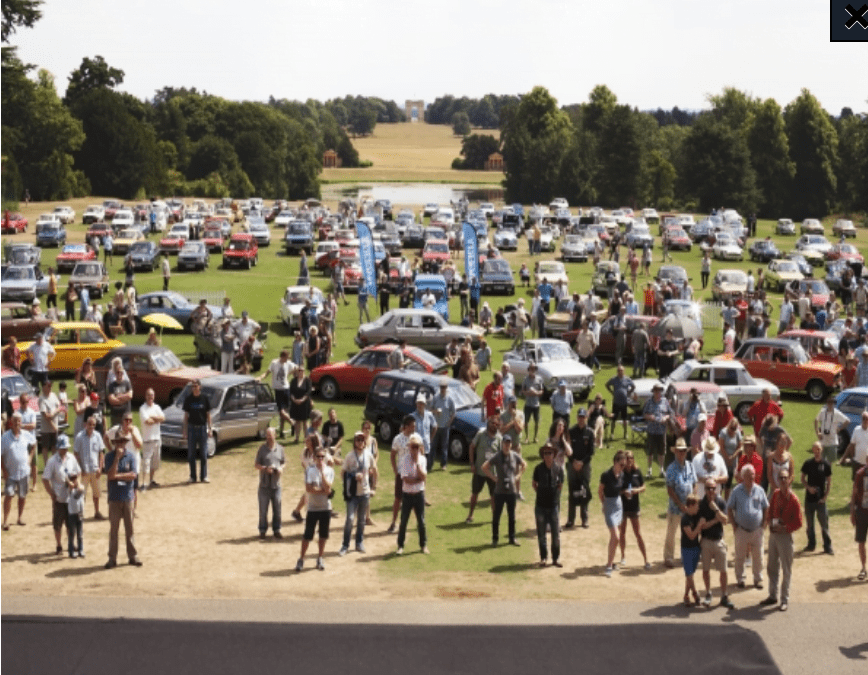
The Concours de l’Ordinaire – quite literally, a show dedicated to sharing some of the greatest everyday classic cars on our roads –is confirmed for Saturday, 31 July.
Originally staged by Hagerty in 2014, the Festival of the Unexceptional has earned its place in the automotive calendar as an attainable concours event offering a mix of rare cars and a prestigious location in an informal and friendly approach. The unique event celebrates cherished everyday classic cars and acknowledges this growing movement among owners and enthusiasts alike.
Showcasing much maligned and long forgotten ‘ordinary’ classic cars and commercial vehicles of the late 1960s, 70s, 80s and 90s, Festival of the Unexceptional remains the only concours that applauds an Applause, believes in basic, makes a case for a Cavalier and fawns over an FSO. In keeping with the spirit of the event, guests are welcome to arrive in the latest supercar but are forewarned that an Ambassador will gain more privileges than an Aventador when it comes to being offered forward parking.
Regarded as one of the automotive highlights of the year, a larger show space was needed to allow for more concours cars and more visitors, as every previous event has been a sell-out success.
The chosen location for 2021 is Grimsthorpe Castle in Lincolnshire, a 1516 architectural masterpiece, showcasing a mix of Tudor and Baroque splendour, originally given as a wedding gift by Henry VIII to William, 11th Lord Willoughby de Eresby. In addition to providing space for a greater number of unexceptional cars, Grimsthorpe also offers expansive grounds to enjoy with lakeside walks, formal gardens, and a children’s play area, ensuring the 2021 Festival of the Unexceptional will be a great day out for all the family.
2021 will also welcome improved show facilities with a wide range of food and beverage outlets, more display cars, comfortable seating areas, increased interaction, and entertainment as well as entertaining judging and award ceremonies.
Once again, Hagerty’s annual Concours de l’Ordinaire will be free to attend and open to classic cars and light commercial vehicles built between 1966 and 1996. The 2019 panel of automotive expert judges deemed a gloriously original 1977 Morris Marina Deluxe Estate as overall winner, with a 1978 Vauxhall Chevette Deluxe E saloon as notable runner up.
Hagerty had to postpone the 2020 Festival of the Unexceptional due to restrictions in place for Coronavirus.
For tips on how to win the 2021 Festival of the Unexceptional, watch Hagerty’s helpful video on preparing a marvellously mundane motor car.
Ticket information and details on entering a car for the concours will be announced soon.
About the Festival of the Unexceptional
Hagerty’s Festival of the Unexceptional is a classic car show concept utterly unique in the UK that for the past seven years has successfully showcased the best examples of some of the most mundane cars ever built.
About Hagerty
Hagerty is an automotive lifestyle brand. Our mission is keep driving alive for car lovers and drive positive change in the world. Hagerty is home to Hagerty Drivers Club, Hagerty DriveShare, Hagerty Valuation Tools, Hagerty Drivers Club magazine, Hagerty Media, MotorsportReg, Hagerty Garage + Social and more. Hagerty is the world’s largest provider of specialty insurance for enthusiast vehicles and supports keeping car culture alive through youth programs, the Historic Vehicle Association (HVA), the RPM Foundation and more.
For more information, call 0333 323 0989 or visit www.hagerty.co.uk
