by gaukcars.com | Oct 2, 2024 | Blog
- Despite 52% of Brits surveyed predicting their next car will be a hybrid, 68% of petrol and diesel drivers believe they do not know enough to purchase one
- Hybrid drivers are more likely to be adopters of new technology, enjoy driving, feel more responsibility for climate change and take more pride in their cars
- Honda has launched the What’s Your Gap? quiz to help UK motorists understand why and when they are likely to switch to a hybrid
Over half (52%) of Brits believe their next car is likely to be a hybrid vehicle but despite this strong intention to go greener, 68% of petrol and diesel drivers feel like they do not know enough to buy one.
New research from Honda indicates that this knowledge gap is one of the contributing factors to Brits taking over a year (13 months) on average to purchase a hybrid vehicle – highlighting a gap between people’s green goals and car purchases.
To help UK motorists who may be considering a switch to a lower emission vehicle, the What’s Your Gap? quiz has been developed. Based on a series of questions relating to personal habits such as technology adoption, views on the environment and driving styles, the quiz helps drivers understand why they haven’t yet made the switch to hybrid and how long it will take them to do so.
Let’s get technical
When it comes to technology, the research revealed that hybrid drivers consider themselves to be early adopters. A third (33%) say that they are likely to try new technology before friends and family, in comparison to 18% of fossil fuel drivers.
This attitude also influences whether they update other items of personal tech, with only 15% of diesel and petrol drivers likely to upgrade their mobile phones before others, in comparison to 27% of hybrid drivers. This contrast is consistent when it comes to vehicles too. Petrol and diesel drivers tend to favour the familiar, with 57% agreeing that purchasing a hybrid would be a “leap in the dark”.
It is perhaps understandable then that those looking for a little more tech in their lives prefer hybrid cars. Hybrids offer a great combination of petrol and electric virtues, enabling quiet, zero-emission running at lower city speeds with the power of a petrol engine available at higher speeds, along with quick, conventional refuelling for longer journeys. Some combine this innovation under the bonnet with the latest in-car gadgets too; the all-new Honda Jazz e:HEV offers WiFi hotspot capability, an AI-powered personal assistant and a My Honda+ app to keep owners connected to their car remotely.
Going green
The research indicates that this gap between positive perceptions of hybrids and car buying decisions can create tension between our views and the products we use every day.
When it comes to the environment, the majority (80%) of UK drivers are concerned about climate change, with the research finding that hybrid drivers are much more likely to feel a strong sense of responsibility towards the environment (27% vs. 18%) and to consider themselves an environmentalist (50% vs. 37%).
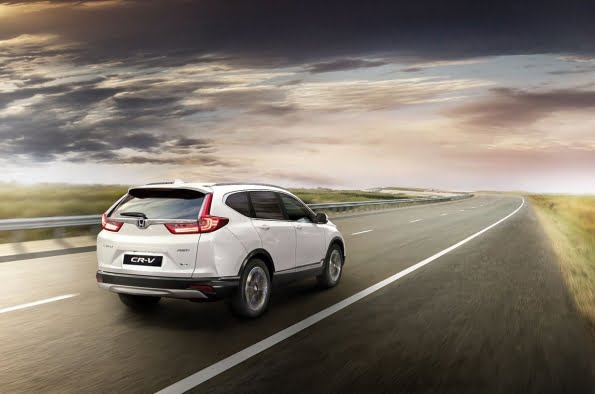
The Jazz and CR-V e:HEV advanced, fuel-efficient hybrid powertrain enables drivers to save money as well as reduce their environmental footprint[1] – which could be why over half (57%) of hybrid owners are likely to feel a sense of pride when complimented on their car, in comparison to 38% of fossil fuel drivers.
To explore these findings further, Honda has partnered with behavioural scientist Professor Ivo Vlaev, Warwick Business School, to understand what is driving the gap and explain how certain characteristics could predict the likelihood of your next car being a hybrid.
Professor Ivo Vlaev, Warwick Business School, commented “While 68% of petrol and diesel drivers say that they do not feel they know enough to purchase a hybrid vehicle, this is unlikely to be because there is a lack of information. Rather, it is because information can be overwhelming. We are all bombarded with much more information than we can possibly consciously pay attention to. When we have a natural desire to know everything before making a big decision – such as with a car purchase – this is difficult to achieve and so we ‘tune out’ and instead go with an easy, familiar decision. The familiar decision in this case is another petrol or diesel car because we have purchased one of those before.”
“This research helps us understand why some people who are convinced of the benefits of a hybrid make the switch, whereas others do not. Some of us are generally more open to try new things than are others; or have a strong sense of identity as someone who is knowledgeable about cars and enjoys driving. Those characteristics of being open to try new things and cars being part of our sense of identity are associated with making the switch to a hybrid. Indeed, most current hybrid owners (61%) say that they find joy in driving”.
Debunking range anxiety
The research also indicates that misconceptions surrounding the range of hybrids continue to be a cause for hesitation amongst petrol and diesel drivers, with 79% citing this as a concern. Significantly, this no longer becomes a consideration once the vehicle is bought, with over half (52%) of hybrid owners being only vaguely aware of their range when driving.
This is because range is simply not an issue. – Honda’s hybrid CR-V has a range of almost 493-539 miles, around 92 miles more than a CR-V petrol variant.
Rebecca Stead, Head of Automobiles for Honda UK, says: “As we all work towards wider environmental goals, changing the way we get around will be key to reducing carbon emissions. This is why the CR-V and all-new Jazz hybrids play a key role in Honda’s commitment that 100% of our mainstream European models will feature electrified powertrains by 2022.
“It is particularly good to see that range is not an issue for hybrid drivers, which should provide reassurance to those petrol and diesel drivers who may still have a question mark over this. There are many benefits to owning a hybrid vehicle, and we’re pleased to see that people are particularly proud of their car when driving one.”
Find out What’s Your Gap? and get more information here: https://www.honda.co.uk/engineroom/cars/what-is-your-gap
by gaukcars.com | Oct 1, 2024 | Blog
Love it or hate it, it’s the Austin Allegro
Now I can see your pitchforks already, and please put them down. As we all probably know the Austin Allegro is a terrible car made by the Austin company of the British Leyland Corporation. It was made as a horrible attempt to get the European public to buy this car. That way British Leyland wouldn’t go out of business, as it had been struggling for some time. This car of had the opposite effect and is considered one of the most pivotal mistakes of British Leyland.
History
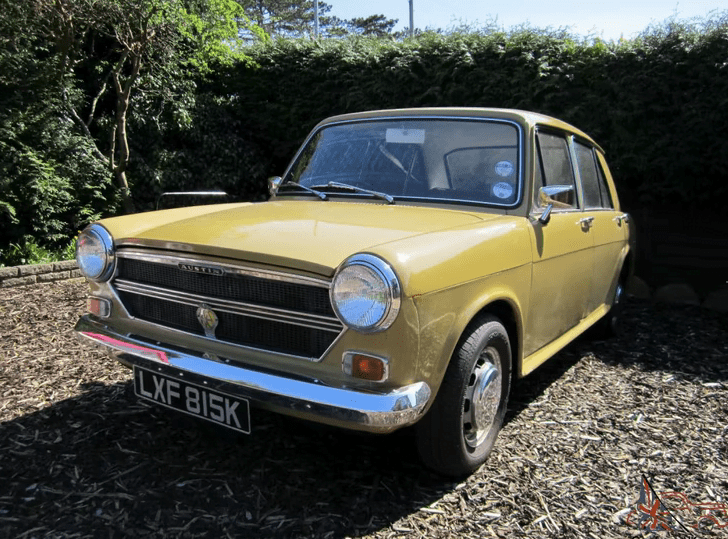
The Austin Allegro came out in 1973 as the replacement for the Austin 1100/1300. Which was a very popular and well-selling car for the British Motor Company, the precursor to British Leyland. In 1968, Leyland, a truck and bus company, merged with the British Motor Company. And British Leyland, as it was now called, was surprised to find that there was no planned replacement to the Austin 1100/1300.
1971 Austin 1100 (credit: car-from-uk.com)
So, British Leyland decided to produce a new, cutting-edge car. With revolutionary features like front-wheel drive, and advanced technology. Unfortunately, this advanced technology didn’t work very much of the time. And the car was hardly built due to all the issues that British Leyland had with strikes during the 1970s.
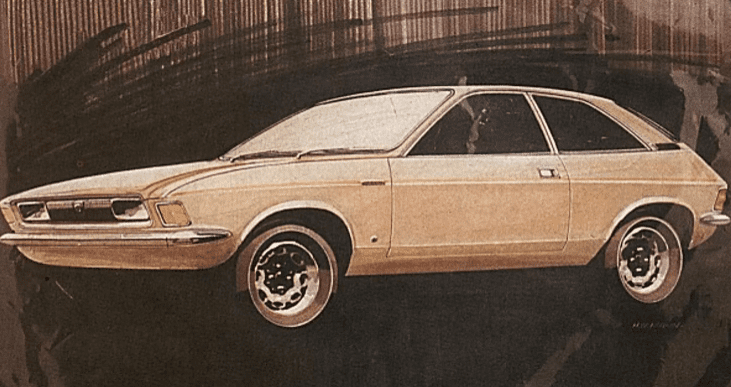
An Austin Allegro concept (credit: aronline.co.uk)
However, the Austin Allegro wasn’t intended to be so bad. The original concepts for the Allegro looked far better than how the car actually turned out. The reasons for the ruination of the good concepts were primarily due to the engine, and gearbox, which were all recycled from previous cars in the British Leyland parts bin. Along with advanced electrical systems and a heater system, which was rare in most cars during the time. Adding more random things to the car, for reasons known only to British Leyland engineers, the Allegro featured a “quadratic” steering wheel. Which is just a steering wheel that’s been made a square and rounded at the ends. All of this advanced engineering destroyed the looks of the Allegro and changed it to the monstrosity we know it as today.
Downfall
Trade in Britian was opening up to the foreign car makers during this time. And Britian was also known for its exports regarding cars during this time. So, with trade opening up, British Leyland thought they could sell the Allegro to foreign markets and make enough money to keep the British car industry running.
British Leyland was wrong, very wrong. With the British car industry now completely open to foreign markets, German and Japanese imports began taking over the British car market. The British consumer wanted a far more reliable and quality-built car than the Allegro. And British Leyland never recovered from this, and afterwards it would go completely bust in 1986, 3 years after the Allegro was pulled from production.
So, is it the worst car?
The Allegro does have quite a bit of downsides to it, and it can be partially blamed for the fall of British Leyland, and along with it, the entire British car industry. Also, the car just looks terrible and has an utterly stupid design. But I’ll let y’all decide, is it the worst car ever made? Please let me know in the comments.
Sources: Austin Allegro – the full story of the car that defined its maker’s failure (aronline.co.uk) and Austin Allegro | Autopedia | Fandom and Austin Allegro – the worst cars ever | Auto Express and The Decline of the British Car Industry (drivetribe.com)
by gaukcars.com | Oct 1, 2024 | Blog
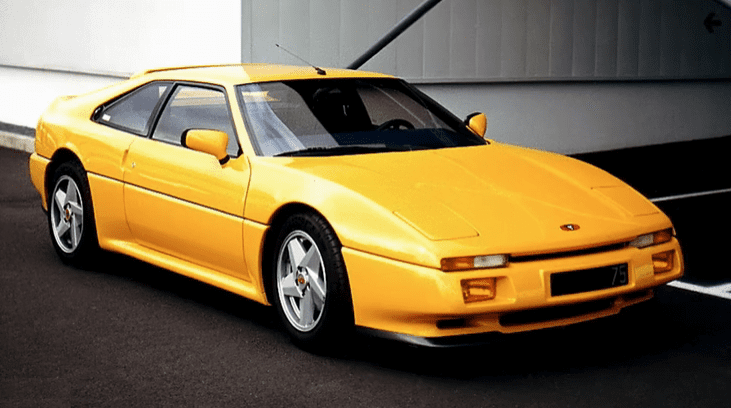
Venturi Automobiles is a lesser known brand that has made exciting and engaging GT cars over the years. Here’s a few of them and how they came to be.
The French car brand Venturi was founded in 1984 by Claude Poiraud AND Gérard Godfroy in France. The brand focused on producing grand tourers that can take on their Goliath rivals such as Aston Martins and Ferraris from the date they were found to Early 2000’s and they’ve been involved in their series of ‘’Global Challenges’’ that aims to demonstrate the durability of electric cars. Let’s take a look at the cars they’ve made to make the market notice the brand as a competent one, and see what the French brand is up to recently.
Venturi Coupé 260 SPC.
Venturi produced grand-touring coupés like the 260 SPC from the late 1980’s to mid-1990’s using Renault transmissions mated to turbocharged engines. The 260 SPC was one of their first models that settled Venturi’s design language for the next models. Its marvellous sleek design combined with pop-ups certainly take inspirations from its rivals such as the Ferrari 348, but garnishing it with smoother edges and a rear end that bears resemblance to another 90’s rival of Venturi, De Tomaso Guara. The 260 SPC wasn’t just a pretty face though, the rear-wheel drive 260 SPC had a 2.6L V6 producing 260 HP that can do 0 to 60 in 5.3 seconds to a top speed of 270 km/h (167 mph). Despite being less powerful than a 348, the 260 SPC was much lighter than the Ferrari as it weighed just 1255 kg (2766 lbs), which is 241 kg (531 lbs) lighter than the 348. This immense weight diet is achieved through the usage of composites, making the car much more nimble and engaging than its heavy rivals through its double wishbone suspension as well. The 260 SPC laid down the foundations of the future Venturi models through the priority of pursuit of lightness and agility over sheer power.
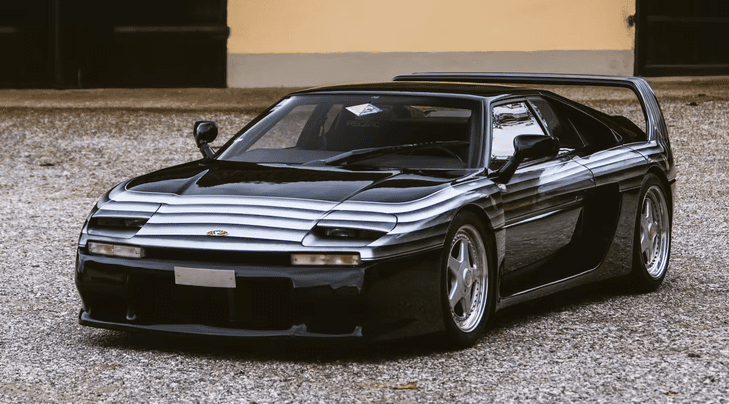
The Venturi 400 GT (GT Trophy in the pic) in its full glory.
Venturi stepped up their game with the introduction of the 400 GT. Only a total of 25 produced in total between 1994-1997 with three different versions; 400 GT, 400 GT Challenge which is a track-focused hardcore version and the GT Trophy, a road-going version of the racer with the same name. What set the 400 GT apart from the other models was its carbon brakes equipped as standard and its 3.0L twin-turbo V6 engine producing 400 mad French horsepowers and 520 nm of torque. This allowed the mid-engined 400 GT to finally catch up with the power figures of the Ferraris of its era, but remember, Venturi cars were designed to be as light as possible, and the 400 GT was basically a cloud as it only weighed 1,000 kg (2204 lbs), this lightweight body combined with a 400 HP powerhouse that can do 0 to 60 in 4.7 seconds and a top speed of 275 km/h (171 mph) made the 400 GT one of the fastest French cars ever made, giving its rivals shivers. The styling of the car was just as mad as its power figures as it had a large rear spoiler giving it a massive downforce and huge side vents providing cooling for the roaring V6.
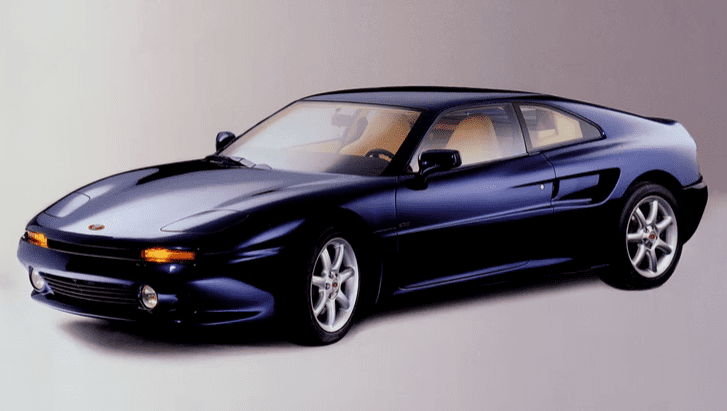
The Venturi 300 Atlantique.
The Venturi 300 Atlantique, produced between 1996-1998, sits in the perfect medium between a lightweight sports car and a two seater grand tourer. The Atlantique, compared to former Venturi cars, has a more refined curvy styling while still featuring the iconic pop-up headlights. The Atlantique also featured a 3.0L V6 engine albeit with a single turbocharger to maintain efficiency, but the results were still impressive as it produces 282 HP and 420 nm of torque and can do 0 to 60 in 5.2 seconds. Despite producing less than the hardcore 400 GT, the Atlantique actually has a higher top speed of 280 km/h (173 km/h). Atlantique made up for its lack of power compared to Aston V8 Coupé with its paper weight through the usage of fiberglass body and with a kerb weight of just 1250 kg (2755 lbs). Despite these impressive figures and big praises from Jeremy Clarkson, however, the Atlantique never caught on, always overshadowed by more popular models of its segment like the Aston DB7 or Ferrari 550. It was a flop, but it surely showed that the French could also make just as good grand tourers as the rival big brands.
Since the early 2000’s, Venturi focuses on a series of challenges to demonstrate the capabilities of electric engines. Such challenges include breaking the speed record on the Bonneville Salt Flats with their Buckeye Bullet record car (548 km/h, 341 mph) and a trip from Kilimanjaro to Okavango, named ”Mission 04”, with a Venturi powered electric Citroen Berlingo. Venturi also introduced a series of concept cars that include the inconveniently named Fetish concept, the America model mostly based on the Fetish concept design, the 2008 Volage concept and the Astrolab. The America and Volage models featured electric powertrains, supporting Venturi’s pursuit of glorifying electric powertrains, while Astrolab was an experimental two seater solar-electric hybrid car. Venturi’s achievements for the last two decade illustrate their enthusiasm towards the electric powertrains and who knows, Venturi might join the growing EV grand tourer market and rival Polestar and Porsche Taycan, what’s certain is that Venturi started their journey with a great sense of vision, and they’ve kept their forward thinking to this day.
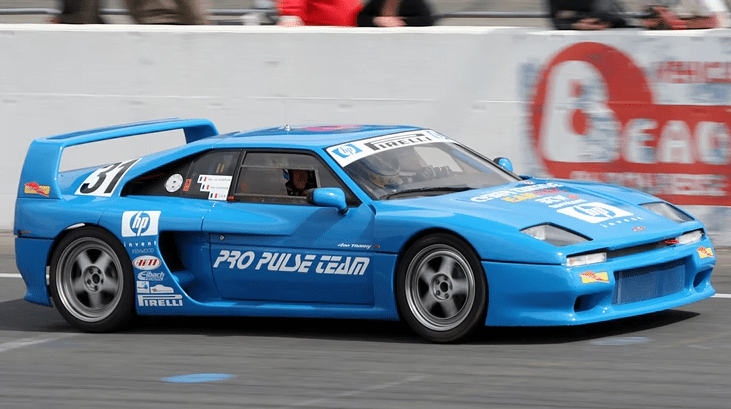
Venturi 400 LM.
What do you think about Venturi’s cars or challenges? Do you like their car designs? Share your thoughts and opinions with us on the comments! Until next one!
by gaukcars.com | Oct 1, 2024 | Blog
- Ducati ends 2021 with record sales, growing globally by + 24% over 2020 and + 12% over 2019
- Double-digit growth in all major countries including the United States, which regains the place of top market, and Australia which records + 50% compared to 2020
- The Multistrada V4 is the best-selling and most popular motorcycle for Ducatisti in 2021 with 9,957 motorcycles delivered to customers
- The 2022 range is already enjoying praise from enthusiasts as demonstrated by the highest order portfolio ever at the beginning of the year
Ducati concluded 2021 with a record figure of 59,447 motorcycles delivered to customers all over the world and achieving an increase in sales of + 24% over 2020 (48,042) and + 12% over 2019 (53,183).
Claudio Domenicali, Ducati CEO: “2021 was a magical year for Ducati. We delivered over 59,000 motorcycles, a number never achieved before in 95 years of the company’s history. We also won the title of MotoGP Constructors’ World Champion for the second consecutive year, and we started the electric era of our company with the V21L prototype, which foresees the bike that will race in the MotoE championship from 2023. The pandemic, which is still underway, in addition to generating so much suffering, has also made activities more complex, forcing us to conduct a continuous internal reorganization. Supply chains created delivery delays for which I want to apologize to all Ducatisti, thanking them for their patience. Despite all these difficulties, the desire to excel of our employees here in Borgo Panigale and in our subsidiaries around the world helped us to achieve these record results. We are investing in an extremely ambitious growth path that will lead the company to improve even further, by entering new market segments. With the DesertX we will have from this year on an extremely attractive proposal for adventure fans, and other ambitious projects are currently in development. The core values of the brand – Style, Sophistication, Performance and Trust – are more current than ever. Future growth will take place in compliance with these values, offering our enthusiastic customers products that are increasingly representative with a unique mix of beauty, technology and distinctiveness, such as the best of Made in Italy.”
In 2021 Ducati’s growth came in all the main countries, starting with the United States, which regained the place of leading market for Ducati with 9,007 units which corresponds to an increase of 32% on 2020, followed by Italy with 8,707 bikes (+ 23% on 2020) and by Germany with 6,107 units (+ 11% on 2020). The Chinese market also grew with 4,901 motorcycles (+ 21%), as well as the French one with 4,352 (+ 12%) and the UK one with 2,941 units (+ 30%).
Francesco Milicia, Ducati VP Global Sales and After Sales: “With 59,447 motorcycles delivered to customers, Ducati notches up a historic result and once again underlines its solidity, despite the difficulties encountered across all sectors due to the supplies crisis. Sales grew double-digit in all major countries, from the United States to Australia, where the new subsidiary achieved an increase of 50%. These results are also the outcome of extraordinary work aimed at the continuous improvement of the global sales network both in quantitative terms, with 84 new dealerships, and in qualitative terms, focusing on the digitization of processes and omnichannel to guarantee our Ducatisti an “unforgettable” experience, which fully reflects the company’s values. Now we are starting 2022 with an even more complete range, which is already receiving high praise as demonstrated by the best order portfolio ever at the beginning of the year.”
The enormous success obtained during the year is confirmed for the Multistrada V4, which was by far the biggest-selling and most-loved bike for Ducatisti in 2021 with 9,957 motorcycles delivered to customers. The Ducati Scrambler 800 family followed with 9,059 units and the Monster with 8,734 motorcycles sold.
These results were achieved despite the unpredictable situation generated by the supply crisis that has been on-going for some time. It is still a very volatile situation and is destined to continue further.
For 2022, Ducati presented nine new models to the public during the Ducati World Première web series, helping to create an even more complete range ready to satisfy the desires of every type of motorcyclist. Expectations are particularly high for the DesertX, the Ducati bike designed to tackle the most demanding off-roads with 21″ front and 18″ rear wheels, long suspension travel and ample ground clearance. A motorcycle that takes Ducati into a whole new world, a symbol of how the brand can widen its horizons without losing its roots and its sporting identity, as proven by the Panigale V4 which, in its latest evolutionary step, becomes the closest vehicle to a MotoGP bike that a motorcyclist can ride.
To discover the Ducati 2022 range, a dedicated section is available on the Ducati.com website.
by gaukcars.com | Oct 1, 2024 | Blog
- Global study ran across 8 countries and 1,900 automotive consumers, to unveil consumer trends driving EV purchases
- Environmental consciousness is the top driver to purchase an electric vehicle in EMEA, whereas North American consumers are primarily motivated by fuel savings.
- 52% of first time EV buyers said a brand’s website had increased in importance during the pandemic for researching their purchasing decision.
- Additional survey showed that an incredible 89% of automotive intenders are aware of chip shortages and their impact on purchase
Teads, The Global Media Platform, today released the results of its comprehensive automotive research in partnership with Kantar.
The global study unveiled that only a few brands are already strongly associated with electric vehicles (EVs) and that there is still education needed as 42% of all respondents aren’t aware of the full benefits of an EV car. Connecting with the consumer and educating them further on EVs is key for brands to stay relevant and to build for the EV future.
A supplementary survey on the Teads platform amongst auto-intenders, specifically about impact of chip shortage on consumer purchase, showed that supply issues are seriously affecting purchase decisions. 89% of consumers looking to buy a car in the next two years, as well as those looking to buy a car in the next 6 months, are aware of the existence of a chip shortage. 31% say the chip shortage will affect their plans to buy a car, specifically 14% of immediate auto intenders globally will consider used cars, 9% will choose from available brands and 8% will delay their car buy, that number being 5% among Europeans. Customers also expect price reductions for longer waiting time, with 31% of global customers expecting such price reductions if they hold off on their new car purchase, increasing to 34% among European auto intenders.
When it comes to advertising for automotive brands, historically TV has been the dominant media choice. However, Teads’ latest research shows that consumers are increasingly relying on digital across their purchase journey and this is even more true for EV intenders. Half of EV consumers would consider going through the entire purchasing process online (vs 35% for fuel intenders), and 74% of them will continue this trend post-covid. Given the importance of digital within the consumer journey it’s interesting to note that, when looking at online channels that influence the consumer EV journey online, news sites were 1.6x more influential than social media, and consumers wanted to see video ads that were short, relevant, and skippable.
Digital ads are very powerful at driving action in the automotive market, as 90% of consumers interested in purchasing an Electric Vehicle, and 85% of overall car buyers, took action as a result of online advertising. The research from Teads found that visiting an automotive brands website was the most likely action (40%) a consumer took after seeing an online auto ad with a further 21% stating they would click on the ad.
A brand’s website is also a key touchpoint in the purchase journey as 49 % of EV intenders in EMEA start their research by visiting the brand’s website, compared to only 28% that visit a dealer. Brand websites are also the most influential sources of purchase decisions with 80% of EV intenders saying that the website has an impact on their final decision.
Auto intenders can be reached in a variety of contexts, with news and tech being the two most popular types of content before automotive. Furthermore, technological advances should feature highly in EV campaigns as those interested in EV’s value the latest technology (76%) more compared to those looking for standard fuel cars (56%).
Ioanna Stagia, VP International Insights, Teads, comments: “Our research shows a significant consumer shift towards more eco-conscious attitudes when it comes to car buying. What is also clear is that online channels are becoming increasingly important in driving the consumer journey, from awareness through to purchase. In order to maximise success, from the difficult times automakers have had, they must plan their 2022 campaigns accordingly to leverage these two key insights.”
Henner Bloemer, Global Senior Industry Director Teads, comments: “It is important to further build out the brand’s EV profile as brand reputation is key for EV intenders. Established brands have to stay attractive for highly profitable customers in order to grow in an evolving market with new competitor entries, as 57% of EV intenders are willing to pay more for an EV car.”
by gaukcars.com | Oct 1, 2024 | Blog
UK deliveries up by 9% and the company recorded its best results ever, with 8,405 cars delivered worldwide
Automobili Lamborghini ended 2021 with a remarkable all-time record: 8,405 cars were delivered worldwide, making it the company’s best year ever. Global sales were up by 13% on 2020 due to a targeted and monitored growth strategy. In the United Kingdom 564 cars were delivered in 2021, up 9% on the previous year.
Stephan Winkelmann, Chairman and CEO of Automobili Lamborghini, commented: “This record has provided confirmation of four factors for us: the solidity of our strategic plan, our brand’s outstanding international reputation, the competence and passion of our people and the exceptional professionalism and dynamism shown by our 173 dealers in 52 markets, who have continued to invest alongside us at a challenging, uncertain time.”
There was double-digit growth in all three of the macro-regions where Lamborghini is established: America (+14%), Asia Pacific (+14%) and EMEA (Europe, Middle East and Africa) +12%. The company maintains a fairly balanced split between them in global volumes, which stand at 35%, 27% and 39% respectively. In terms of individual markets, the USA held on to top spot (2,472 units, +11%), while China leaped into second place (935, +55%). They were followed by Germany (706, +16%) and the United Kingdom (564, +9%). There was also an increase in the figures for Lamborghini’s home market of Italy, where 359 cars were delivered in total (+3%).
In terms of models, there was ongoing success for the Urus Super SUV with 5,021 units delivered. It was followed by the V10-powered Huracán, which saw a strong increase in sales up to 2,586 thanks to the strong impetus provided by the Huracán STO. In addition, there were 798 Aventadors (V12 model) delivered all over the world.
The sales outlook continues positively into the new year, thanks to a substantial order portfolio that already covers almost the entire production planned in 2022. Lamborghini’s strategic plan for the year ahead includes four new products to be unveiled over the next 12 months.
Winkelmann added: “We are stronger than ever as we prepare to embark on a period of profound transformation and move towards an even more sustainable future. In 2022 we’ll be doing our utmost to consolidate the current results and get ready for the arrival of our future hybrid range from 2023 onwards.”
In 2021 three new products were launched: the Huracán STO – Super Trofeo Omologata, a road-legal model that was inspired by the Huracán Super Trofeo EVO and GT3 EVO racing cars; the Aventador Ultimae, final series of the Aventador model; and the Countach LPI 800-4, an unorthodox icon featuring ground-breaking design and technology that celebrates the 50th anniversary of the Countach.
In addition to these models, in 2021 Lamborghini also presented its future electrification strategy. “Direzione Cor Tauri” (“Toward Cor Tauri”) is the name of the path that will lead the company through the decarbonization of its future models and the Sant’Agata Bolognese site, in accordance with the holistic approach of its environmental sustainability strategy. Throughout the product electrification process, there will be a constant focus on identifying technologies and solutions that can guarantee top performance and driving dynamics. More than €1.5 billion will be spent over the course of four years, in an epoch-defining investment that will see Lamborghini launch its first hybrid production model in 2023 and electrify its entire range by the end of 2024, with the aim of cutting CO2 emissions by 50% from 2025 onwards. Subsequently, a fourth fully electric model is due to be added to the range in the second half of the decade.
