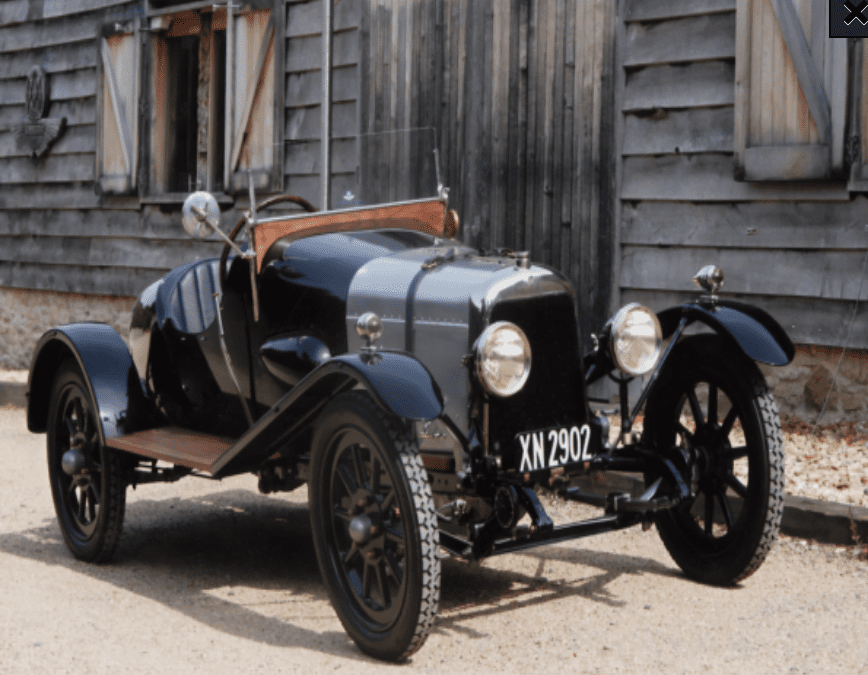
The Concours of Elegance, presented by A. Lange & Söhne, will host the oldest surviving Aston Martin during its 2021 event at Hampton Court Palace this September.
Aston Martin ‘A3’ was the third car ever built by Lionel Martin and Robert Bamford, and was extensively driven by the founders. This year, it celebrates its centenary.
The Concours of Elegance was first established in 2012 to mark Her Majesty The Queen’s Diamond Jubilee, with a collection of 60 of the rarest cars in the world in the Quadrangle at Windsor Castle. Since then the Concours of Elegance has evolved into a world-renowned celebration of craftsmanship, design and innovation, hosted since 2017 at Hampton Court Palace, but always with spectacular cars like the Aston Martin ‘A3’at its heart.
Given its name because it is built on chassis no.3 and uses a Type A engine, ‘A3’ produces just 11hp from its four-cylinder side-valve engine. Nevertheless, it was raced in period, and proved capable of setting speed records, achieving an average of more than 86mph over 100 miles at the Brooklands circuit.
By 1923, the car’s life as a factory prototype was complete and it was sold to a customer. It changed hands a number of times until history shows it under the ownership of R.W. Mallabar in 1927. Following a con-rod failure, the car returned to Aston Martin for an engine rebuild, at which time the car was refinished in pale grey (rather than its original black) with red wheels.
The next time ‘A3’ reappears in the history books is 2002 when it was identified at auction as the third Aston Martin ever produced. In 2003 a generous donation enabled ‘A3’ to be purchased by the Aston Martin Heritage Trust, who entrusted it to Ecurie Bertelli for a full restoration to as close as original specification.
A new body was designed and hand-beaten into shape to replace the later green body that had been added at some point in A3’s life, a new ash bodyframe was built, the engine was rebuilt, the radiator was refurbished and the chromium finish removed. The car is presented today in full working order, with its factory specification black paintwork, preserving an extremely important part of Aston Martin history.
The display of Aston Martin ‘A3’ is just the latest in a spectacular partnership between Aston Martin, particularly the Aston Martin Owner’s Club (AMOC), and the Concours of Elegance. At the inaugural event in 2012, Mark Donoghue of the AMOC arranged for sixty Aston Martins – one from each year of Her Majesty The Queen’s reign – to be lined up along Windsor Castle’s Long Walk. Then, in 2019, Donoghue was responsible for arranging AMOC’s show-stopping display of one example of every single Aston Martin Zagato model produced, many of which are one-offs.
The ‘A3’ will form part of the Main Concours display at Concours of Elegance 2021, a line-up of the world’s rarest cars set to go on display at Concours of Elegance 2021, taking in some of the finest European coachbuilt cars ever built, a collection of Gulf and Martini-liveried motorsport heroes and the very latest bespoke hypercars. The event will also welcome a number of special features and displays, including a celebration of Her Majesty The Queen’s 95th birthday, bringing with it a British car from each year of Her Majesty’s life. In total, over 1,000 rare and exotic cars will be on display across the weekend.
Outside of the automotive displays, Concours of Elegance remains an occasion of pure luxury, with champagne provided by Charles Heidsieck, picnics by Fortnum & Mason, live stage interviews with Chubb Insurance, hosted by Jodie Kidd, and a collection of art, jewellery and fashion displays. Presenting Partner, A. Lange & Söhne, recently confirmed to support the event for a further three years, will continue to showcase some of its most intricate timepieces.
Tickets to the Concours of Elegance 2021 are available now from just £30 for half-day entry, with full three-course hospitality packages from £288. Tickets can be bought from concoursofelegance.co.uk/tickets.
About the annual Concours of Elegance: Established in 2012, the inaugural Concours of Elegance was held within Windsor Castle to mark the diamond jubilee of Her Majesty The Queen’s reign. Organised by Thorough Events, the first Concours of Elegance set a new global benchmark for a classic car concours; winning prestigious awards in the process; unheard of for a ‘start-up’ event in its first year. The second Concours of Elegance was held in 2013 to equal fanfare at the historic Royal Palace of St James in London, with the widely acclaimed third Concours set in the stunning grounds of Hampton Court Palace in September 2014, before heading to the Palace of Holyroodhouse in 2015. Only cars of the highest calibre are invited to the Concours of Elegance, from all over the world, painstakingly selected by the Concours Steering Committee; a respected team of authoritative historic car experts. A key objective of the annual Concours of Elegance is to raise significant sums for charity. www.concoursofelegance.co.uk
Historic Royal Palaces Hampton Court Palace is cared for by Historic Royal Palaces, the independent charity that also looks after the Tower of London, the Banqueting House, Kensington Palace, Kew Palace and Hillsborough Castle in Northern Ireland. We help everyone explore the story of how monarchs and people have shaped society, in some of the greatest palaces ever built. We raise all our own funds and depend on the support of our visitors, members, donors, sponsors and volunteers. With the exception of Hillsborough Castle, these palaces are owned by The Queen on behalf of the nation, and we manage them for the Secretary of State for Culture, Media and Sport. Registered charity number 1068852. For more information, visit www.hrp.org.uk.
The Castle Combe Circuit team are delighted to announce that TV star and acclaimed racing driver, Tiff Needell, will be the special guest on the venue’s upcoming Combe TV one-year anniversary show, set to air at 7pm on Thursday, 25 March.
Needell will speak to commentator Chris Dawes and Sales & Marketing Director, Tom Davis, about his colourful motorsport and media careers so far, as the popular lockdown-conceived live show celebrates its first anniversary with 45 episodes already under its belt.
2021 is a particularly poignant time for Needell to be interviewed by Castle Combe as it marks the 50th anniversary of his first competitive appearance at the venue in the 1971 Formula Ford championship.
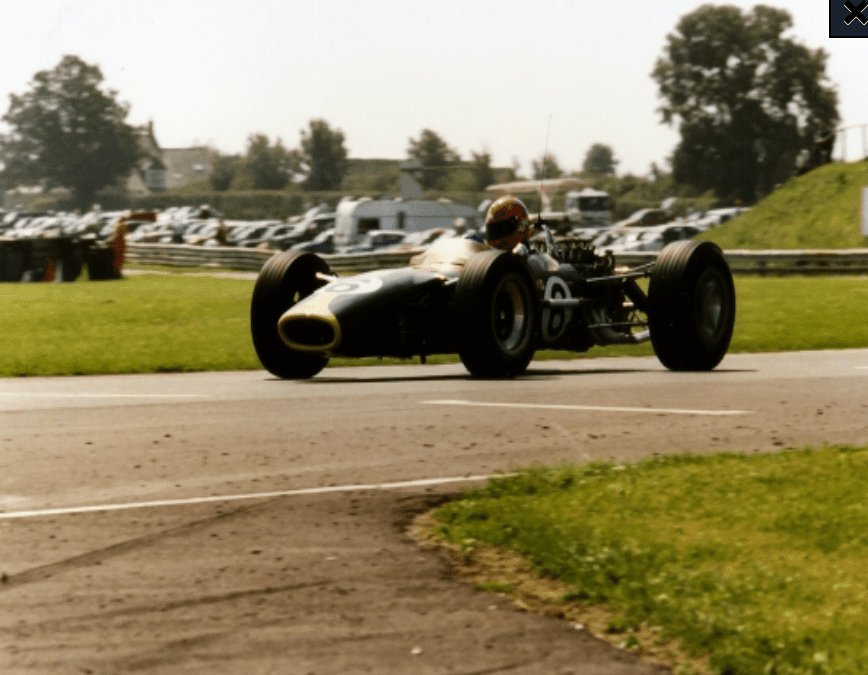
He’s raced in Formula Fords at Combe on a number of occasions since too, with his most recent appearance being in 2019, as well as briefly dabbling in F1. Another highlight was his visit to the 1997 National Motor Museum Raceday where he demonstrated the 1967 ex-Graham Hill Lotus 49 Cosworth DFV F1 car on the 1.85-mile track.
More recently, the circuit has provided Needell the backdrop to a number of Top Gear, Fifth Gear and Love Cars episodes that he’s presented, meaning he’s very familiar with the venue and is sure to have a number of memories from his time spent there.
About Combe TV Combe TV was launched on 25 March 2020, aiming to offer some light entertainment to motorsport fans around the world who were under Covid-19 lockdown restrictions.
Averaging almost one episode per week ever since and attracting hundreds of thousands of views in the process, it’s now become a staple of many Castle Combe fans’ weekly schedules.
To mark exactly one year since the first show aired, presenters Tom Davis and Chris Dawes will reflect on the successes of the series so far before they introduce Tiff Needell to the show.
How to Watch Tune in to episode 46 of Combe TV at 7pm on Thursday, 25 March to watch Tiff Needell live using the below links. These links will also allow you to watch-back the episode any time after it’s been streamed.
The company’s ambition is Martorell to produce more than 500,000 electric vehicles per annum
New urban electric vehicle will be priced between €20,000-€25,000
The CUPRA Tavascan will join the brand’s range in 2024
Facelifted SEAT Ibiza and SEAT Arona to arrive in the UK during 2021
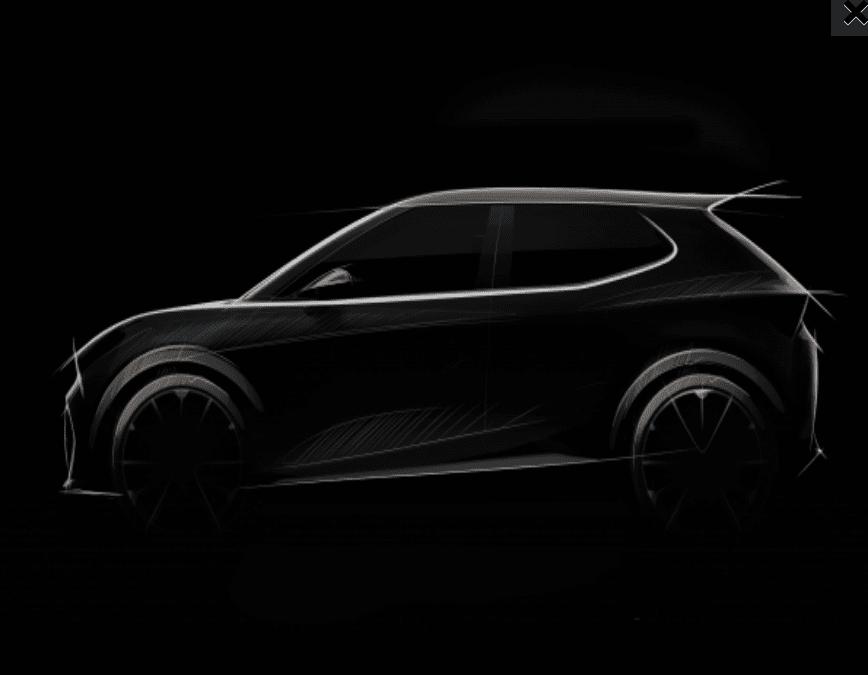
The SEAT S.A. company, under which the SEAT and CUPRA brands operate, today announced that it will launch an urban electric vehicle to market in 2025, priced between €20,000-€25,000.
With this vehicle, the company will enter a segment essential to making electromobility accessible and an important milestone on the road to sustainability, fighting climate change.
Additionally, it was confirmed CUPRA will launch the Tavascan in 2024. The CUPRA Tavascan will be the brand’s second 100 per cent electric model, following the CUPRA Born launched later in 2021.
At the company’s Annual Press Conference, the Spanish company presented an ambitious plan, called Future Fast Forward, with a key pillar the production of urban electric vehicles in Spain from 2025.
SEAT S.A. President, Wayne Griffiths commented:“We want to manufacture electric cars in Spain starting in 2025. Our ambition is to produce more than 500,000 urban electric cars per year in Martorell also for the Volkswagen Group but we need a clear commitment by the European Commission.”
SEAT S.A. aims not only to produce electric vehicles but also to lead the development of the entire project for the Volkswagen Group. “Our plan is to transform our Technical Center, the only one of its kind in southern Europe and an essential R&D asset for the region”, continued Griffiths. “We believe that it’s part of our responsibility to electrify Spain. 70 years ago, we put this country on wheels. Our aim, now, is to put Spain on electric wheels.”
“We’ve drawn up the plan, we have the right partners on-board and we’re generally ready to invest. This project is intended to become the driver for the transformation of the Spanish automotive industry. The support of the Spanish Government and the EU Commission for this cross-sectorial and nation-wide plan is needed for the Volkswagen Group to be able to take the final decision on its execution”,added Griffiths.
As the second largest car production industry in Europe, Spain has a major responsibility to reach the European Green Deal targets by 2030. To this end, the project includes the creation of an electric vehicle ecosystem, stimulating demand and developing public charging infrastructure. The next step would be to focus on localising the electric vehicle value chain, starting with the electric battery ecosystem.
The Future Fast Forward would serve as a driving force to generate employment, especially for young people. The project includes SEAT S.A. as well as governments, technological centres and large, medium and small companies. A set of 15 participating entities from at least 6 sectors support the plan: Aeorum, Antolín, Asti Mobile Robotics, CaixaBank, Delta Vigo, Ficosa, Fisas Navarro, Gestamp, Iberdrola, Lithium Iberia, Mind Caps, Sayer Technologies, SEAT S.A., Sesé and Telefónica.
CUPRA Tavascan, a dream come true “Our dream will come true: the CUPRA Tavascan will be a reality. Based on the MEB platform of the Volkswagen Group, it will be designed and developed in Barcelona and will reach Europe and overseas markets in 2024”, explained Griffiths.
This year, CUPRA will play an important role in boosting the company’s financial results. CUPRA’s forecast is to double its sales and more than double turnover, which in 2020 amounted to around 900 million euros. The CUPRA mix will increase the company’s total volume by five to 10 per cent.
In 2022, CUPRA will open operations in Australia as part of the brand’s expansion in the Asia-Pacific region.
Target: return to profitability in 2021 COVID-19 temporarily halted SEAT S.A.’s positive trend of recent years and significantly influenced the financial results in 2020*. The company generated an operating result of -418 million euros (2019: 352 million euros) and a profit after tax of -194 million euros (2019: 346 million euros).
These results were expected given that its most important markets, such as Spain, the United Kingdom and Italy, have been some of the most affected countries in the world during the pandemic. The company’s sales followed the trend of the overall car market. Despite efforts and positive sales results when restrictions eased, it sold 427,000 units, 25.6 per cent fewer than the previous year (2019: 574,100 cars).
The slowdown in sales volumes translated into lower turnover, which decelerated to 8,784 million euros, down 21 per cent compared with the previous year (2019: 11,157 million euros). Operating result was further negatively impacted by emissions-related expenses of over 260 million euros.
SEAT S.A. President Wayne Griffiths said:“Our goal is to increase sales and recover our volumes to pre-COVID levels. In 2021 we must return to profitability. This is our financial target. We’re working hard to be in black as soon as possible.
“Key levers to achieve profitability in 2021 will be an increase in the PHEV (plug in hybrid electric vehicle) mix and the launch of the fully electric CUPRA Born, which will enable us to achieve our CO2 targets. On top of this, we will put our attention on reducing overheads and on revenue management, by focusing on the most important markets and channels”.
CUPRA’s performance was remarkable with 27,400 cars sold in 2020, reaching double-digit growth of 11 per cent versus 2019, and being one of the very few brands to grow in Europe during the COVID-19 crisis. Since the creation of the brand in 2018, CUPRA has sold more than 70,000 cars, exceeding all expectations.
2020 also yielded positive results. EBITDA (Earnings before Interests, Taxes, Depreciation and Amortisation) amounted to 157 million euros with a ratio of 1.8 per cent of sales. “This is an indicator that our business is robust despite the bad results in 2020. We have the foundations to go back to the positive figures of the past years”, commented SEAT S.A. Executive Vice-President for Finance & IT, Carsten Isensee.
SEAT S.A. maintained its investment level of recent years, dedicating more than one billion euros to investments and R&D expenses in 2020. This is the third year in a row with more than one billion euros has been invested. This level will be maintained in the near future with the investment plan of 5 billion euros until 2025 announced in July 2020.
Operating cash flow was positive in 2020, with 466 million euros generated. “This figure represents an achievement in the context of the economic and health crisis caused by the pandemic and is a cornerstone to realise our ambitious strategic plans. We continue to prepare for the challenges set by the automotive sector’s technological transformation, for which we must maintain the investment momentum carried out over the last years”, emphasised Isensee.
A strong company with two well-defined brands With SEAT and CUPRA, the company is stronger and has its best product line-up ever to recover the sales figures and return to profitability. During 2021, the Formentor will be key to doubling CUPRA’s sales volume and will account for 50 per cent of CUPRA sales, with half of Formentor sales predicted to be plug-in hybrid models. The facelifted SEAT Ibiza and Arona will arrive also to the UK this year, two models which embrace SEAT’s spirit as a young, creative brand from Barcelona.
SEAT and CUPRA’s PHEV range now stands at six models: SEAT Leon, SEAT Leon Sportstourer, SEAT Tarraco, CUPRA Leon, CUPRA Leon Sportstourer and CUPRA Formentor. And by the end of year, CUPRA will launch the first brand’s 100% electric car: the CUPRA Born.
ŠKODA AUTO’s entry into the Volkswagen Group – a milestone in Czech-German economic relations after 1989
30 years of ŠKODA AUTO’s dynamic development: vehicle deliveries increased more than six-fold, workforce grew from 17,000 to more than 42,000 worldwide, and billions invested in development, production and training
NEXT LEVEL ŠKODA programme for the future: Further growth in the volume segment, conquering new markets and making further progress in sustainability and diversity
This month marks the 30th anniversary of the union between ‘ŠKODA, automobilová akciová společnost’ and the Volkswagen Group, which was contractually sealed on 28th March 1991.
Since then, the car manufacturer from Mladá Boleslav has developed from a regional market leader into a dynamic global brand that is active in more than 100 markets worldwide.
ŠKODA AUTO currently offers ten model series and delivered more than one million vehicles to customers last year for the seventh year in a row.
Thomas Schäfer, Chairman of the Board of Management of ŠKODA AUTO, emphasises: “The integration of ŠKODA AUTO into the Volkswagen Group is a great example of a successful transformation in the Czech Republic and the European Union as a whole. With determination, foresight and courage, the people involved at that time set the right course for ŠKODA AUTO’s impressive development. Today, the company accounts for 5% of the Czech Republic’s gross domestic product and 9% of exports. The brand is also a real asset in the Volkswagen Group and has taken on a number of responsibilities, for example, for the growth regions of India, Russia and North Africa as well as for developing the next generation of the ŠKODA Superb and Volkswagen Passat. With our NEXT LEVEL ŠKODA programme for the future, we are taking the next steps to lead the company successfully through the new decade. We are focusing on three priorities: Expanding our model portfolio towards entry-level segments, opening up new markets for further growth in the volume segment and engaging with diversity and sustainability in every aspect of our work.”
Innovative compact model Favorit attracts Volkswagen’s interest The first contacts between ŠKODA and the Volkswagen Group date back to the 1970s. The informal cooperation between the two companies continued with the launch of the new ŠKODA Favorit. ŠKODA had designed the vehicle with a hatchback body and front-wheel drive entirely in-house, making the Favorit a notable exception in the Eastern Bloc. At that time, vehicles were almost exclusively produced under licence from Western European car manufacturers. In Wolfsburg, Volkswagen tested a prototype ready for series production and considered equipping the model with Volkswagen engines as well as alternative brake linings and other modified components.
These plans were scrapped, however, due to financial reasons. Nevertheless, after the collapse of the communist regime in November 1989, the positive impressions of the ŠKODA Favorit and the recently established contacts between Wolfsburg and Mladá Boleslav led to wide-ranging talks about the possibility of collaboration, and the negotiations soon gained momentum. The initial situation was clear: without a strong strategic partner, ŠKODA would have no chance on the world market. Annual production capacity at the time was barely 200,000 vehicles and the portfolio consisted of outdated rear-engine models alongside a single contemporary model family – the Favorit and the Forman estate. The brand’s future lay in the privatisation of the hitherto state-owned company. In addition to the Favorit model series, the car manufacturer’s greatest assets included its skilled and highly motivated workforce and the strong tradition of vehicle manufacturing at the Mladá Boleslav site.
Initially, 24 companies were considered as potential partners before talks with eight selected car manufacturers from Europe and overseas took place in the summer of 1990 under the leadership of Prime Minister Petr Pithart. Four of these manufacturers submitted a specific offer. However, in August 1990, two of these competitors dropped out, leaving the Renault/Volvo alliance and the Volkswagen Group in the running. Further exploratory talks were held on 9 and 10 December 1990 and finally, on 21 December 1990, the government signed a contract with the Volkswagen Group, who had proposed a more attractive concept with a view to ŠKODA AUTO’s future development. Long and extensive negotiations followed between various teams of experts as well as management representatives from the Volkswagen Group and Czech partners. The talks were led by Deputy Prime Minister František Vlasák and, most notably, Minister of Industry Jan Vrba. Hanuš Holzer, who later became a consul in Basel, was also involved as an informal mediator.
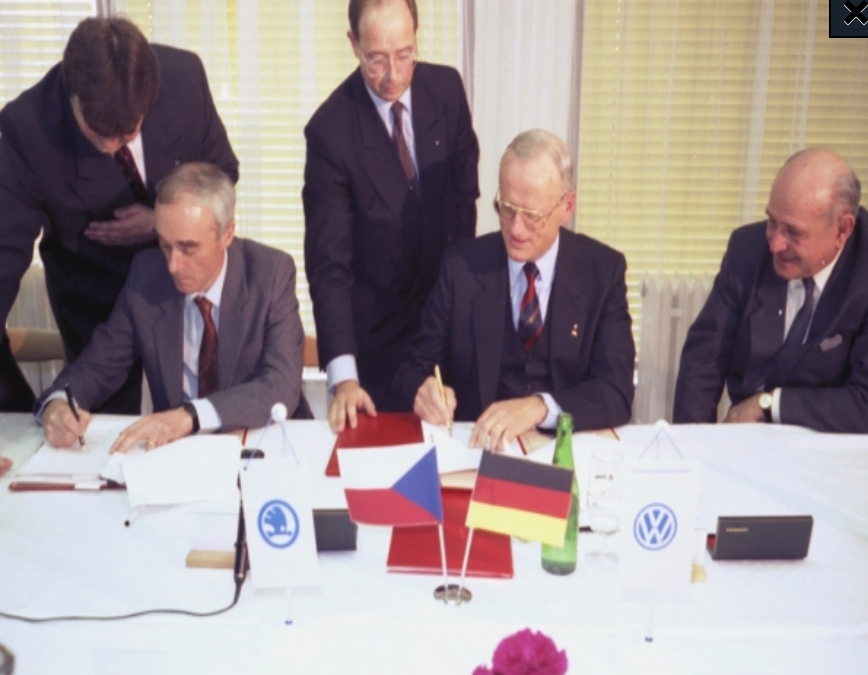
On 28 March 1991, the Minister of Industry, Jan Vrba, on behalf of the Czech Republic, and Carl H. Hahn, as Chairman of the Board of Management of the Volkswagen Group, signed the main agreement on the establishment of a joint venture for the production of ŠKODA vehicles. After the Volkswagen Group had fulfilled its contractually agreed commitments, it received 31 per cent of the shares in ŠKODA AUTO on 16 April 1991 for a contribution of 620 million marks. Subsequently, the new shareholder gradually increased its stake until it held 100 per cent of the company shares as the sole shareholder on 30 May 2000.
Comprehensive investment programme lays the foundation for impressive development The basis for ŠKODA AUTO’s dynamic development in the following three decades was a comprehensive investment programme. Several hundred billion Czech crowns were spent on research and development, the expansion of production facilities and the consistent development of ŠKODA AUTO’s sales and customer service network in the Czech Republic. The number of employees in the development department has grown from around 600 in 1991 to more than 2,000 highly qualified personnel today. To provide its employees with the best possible training and prepare junior staff for their careers at the company, ŠKODA AUTO now has its own vocational school and offers several dual courses of study at the ŠKODA AUTO University of Applied Sciences.
In terms of products, ŠKODA AUTO initially expanded the Favorit /Forman model range under the umbrella of the Volkswagen Group to include the Pick-Up light commercial vehicle. This model range was in great demand thanks to its excellent price-performance ratio, enhanced technology and high quality. In 1994, ŠKODA presented the Felicia, the successor to the Favorit. With this model, innovative features such as ABS, airbags, air conditioning, power steering and the Group engines 1.6 MPI and 1.9 D made their way into the ŠKODA portfolio.
The first model that ŠKODA AUTO developed entirely under the umbrella of the Volkswagen Group debuted in September 1996 with the first generation of the modern Octavia based on the A4 platform: the compact model marked the beginning of a new chapter for ŠKODA: the Octavia was produced at one of the most advanced car plants in Europe and quickly rose to become the brand’s bestseller. In autumn 1999, the new ŠKODA Fabia small car replaced the Felicia model series. Since then, both the Octavia and the Fabia have become ŠKODA’s most sought-after model series: the Octavia, now in its fourth generation, is winning over customers worldwide, and the fourth-generation Fabia is already in the starting blocks.
ŠKODA added the Superb to its model portfolio in 2001, bringing back one of the most sonorous and traditional model designations in the company’s history for its new flagship. The current third generation also runs off the production line as the Superb iV with plug-in hybrid drive. In September 2016, ŠKODA launched its SUV campaign with the premiere of its large SUV model ŠKODA Kodiaq, opening up a new, dynamically growing vehicle segment for the Czech car manufacturer. Today, besides the Kodiaq, the SUV range also includes the Karoq and Kamiq model series as well as the all-electric Enyaq iV. In addition, the ŠKODA Kushaq, developed exclusively for the Indian market, recently celebrated its world premiere.
Based in the Czech Republic, but at home all over the world In the 30 years under the umbrella of the Volkswagen Group, SKODA AUTO has expanded its workforce from 17,000 employees in 1991 to around 42,000 employees worldwide today. The company currently produces ten attractive, state-of-the-art model ranges and delivers them to customers in over 100 markets. ŠKODA AUTO’s dynamic development is also reflected in its global deliveries: while the manufacturer produced 172,000 vehicles in 1991, the number has since increased sixfold. In 2020, the carmaker delivered more than one million vehicles worldwide for the seventh year in a row. In addition to the three original Czech production sites, the company now also manufactures in China, Russia, Slovakia and India, mainly through Group affiliations, as well as in Ukraine in cooperation with a local partner.
In addition to cars, ŠKODA AUTO designs and produces components and assemblies, such as engines and gearboxes within the Volkswagen Group. Also, the company has overall responsibility for the activities of the entire Volkswagen Group in India as part of the INDIA 2.0 project and has assumed this role for the regions of Russia, including the CIS states, and North Africa as of 1 January 2021.
With the NEXT LEVEL ŠKODA programme for the future, the car manufacturer is now taking the next steps to successfully lead the company through the new decade, focusing on three priorities: Expanding the model portfolio towards the entry-level segments, opening up new markets for further growth in the volume segment, and engaging with diversity and sustainability in every aspect of its work.
A timeline of success: an overview of the cooperation between ŠKODA AUTO and the Volkswagen Group
Background (1978 – 1988)
1978
Volkswagen applies to the Czechoslovak authorities for permission to test vehicles made by the German brand on Czechoslovak roads.
3 – 5/1979
Exploratory talks on the possible purchase of brake pads and Volkswagen EA 801 series engines for ŠKODA vehicles.
8/1985
Resumption of talks following the launch of the ŠKODA Type 781 project (future Favorit). Meeting of the Foreign Ministers of the ČSSR and the Federal Republic of Germany at the Volkswagen headquarters in Wolfsburg.
9/1986
Submission of a specific offer to build EA 111 engines under licence.
8/1987
Production of the ŠKODA Favorit is launched in Mladá Boleslav.
9 – 11/1987
Volkswagen conducts a test series with a prototype of the future ŠKODA Favorit with VW engines of the EA 827 and EA 111 series.
03 – 10/ 1988
The planned cooperation in the production of EA 111 (1.05; 1.3-litre) and EA 827 (1.4; 1.6; 1.8-litre) licensed engines is shelved, mainly for financial reasons. However, the management of the Volkswagen Group is now familiar with the details of the new Czech vehicle.
Negotiations on privatisation and integration into the Volkswagen Group (1989 – 2000)
11/1989
The non-violent ‘velvet’ revolution in Czechoslovakia brings an end to the communist dictatorship. The country prepares for free elections and paves the way for a democratically elected government.
1/1990
Petr Hrdlička, head of R&D at the AZNP car plant in Mladá Boleslav, contacts Volkhard Köhler, the Volkswagen Group’s Director of Foreign Cooperation. He suggests that Volkswagen get involved in the proposed privatisation of ŠKODA.
2/1990
On 4 February 1990, the first informal meeting between the Chairman of the Board of Management of the Volkswagen Group, Carl H. Hahn and Volkhard Köhler with the Czechoslovak Foreign Trade Minister Slavomír Stračár takes place at Prague-Ruzyně Airport.
3/1990
Resumption of talks between the Czechoslovakian representatives and the management of the Volkswagen Group. On 22 March, Carl H. Hahn and Volkhard Köhler come to Mladá Boleslav for the first time with a delegation from Wolfsburg.
6/1990
The search for a strategic partner officially begins: The Czech government writes to eight of the original 24 potential candidates, and four well-known car manufacturers then submit an offer.
8/1990
The choice of a strategic partner is narrowed down to the Renault/Volvo alliance and the Volkswagen Group as the largest car manufacturer in Europe. The German company respects the Czech side’s wish to promote the traditional ŠKODA brand, to keep its own development in the Czech Republic and to continue production of the Favorit/Forman model series. Volkswagen submits a comprehensive investment plan.
12/1990
At a special meeting of the Czech government on 9 and 10 December, the Volkswagen Group is awarded the contract. In addition to the government’s economic council, the trade union at the ŠKODA plants and an external consulting and auditing firm also supports this decision. On 21 December 1990, the partners sign the cooperation agreement.
12/1990
The collapse of the centralized economy and significant declines in important export markets hit ŠKODA hard. The domestic market, which is very important for the company, collapses almost completely. In 1990, the company delivered only around 27.000 units instead of the expected 126.000 vehicles. In total, 187,181 vehicles are produced in Mladá Boleslav, Vrchlabí and Kvasiny in 1990.
28 March 1991
On Thursday, 28 March 1991, the Czech Minister of Industry, Jan Vrba, and Carl H. Hahn, Chairman of the Board of Management of the Volkswagen Group, sign the contract establishing a joint venture for the production of ŠKODA vehicles
16 April 1991
Once the contractual agreements are fulfilled, ŠKODA will become the fourth brand in the Volkswagen Group alongside VW, Audi and SEAT.
10/1991
On 8 October, German President Richard von Weizsäcker visits the town of Mladá Boleslav. He had been campaigning for the privatisation of the car manufacturer since spring 1990.
11/1992
The Supervisory Board of the Volkswagen Group approves the investment plan for ŠKODA AUTO. It provides for investments of DM 3.749 billion by the year 2000.
6/1994
On 16 June 1994, ŠKODA produces its one-millionth front-wheel-drive vehicle.
10/1994
Debut of the new ŠKODA Felicia, the first ŠKODA model with components from the Volkswagen Group.
9/1996
One of the most modern car plants in Europe is opened in Mladá Boleslav. The first product is a hatchback saloon in the lower mid-class – the first generation of the modern Octavia. It is the first ŠKODA model to be based on a Volkswagen Group platform.
05/2000
Volkswagen becomes the sole owner of ŠKODA AUTO.
12/2014
ŠKODA AUTO delivers more than one million vehicles worldwide for the first time
Jeep® Magneto: Jeep Wrangler BEV concept is a sustainable, stealthy, rock-climbing force
Jeepster Beach: Update of a 1968 Jeepster Commando (C-101) is a totally tubular showpiece that blends a vintage body with a modern drivetrain
Jeep Red Bare: No bones about it, this fully-custom Gladiator Rubicon concept pairs legendary 4×4 capability with ultimate performance with a 91:1 crawl ratio, EcoDiesel fuel efficiency and driving range
Jeep Orange Peelz: Pays tribute to the long-standing, open-air, fun-and-freedom lifestyle that makes the Jeep Wrangler a global icon
Three Jeep and Mopar concepts introduced in 2020 will head to Moab for the first time, including the go-anywhere overlanding Jeep Gladiator Farout concept, the powerful, high-performance Jeep Wrangler Rubicon 392 concept and the Jeep Gladiator Top Dog concept aimed at hard-core mountain bike enthusiasts
Electrified power and the electrifying performance of today’s internal combustion engines combine with off-road capability and fun-to-drive freedom to take center stage during this year’s Easter Jeep Safari.
The Jeep® brand and Jeep Performance Parts teams again join forces to create a lineup of custom-built concept vehicles to conquer the iconic trails in Moab, Utah. Enthusiasts from all over the world will gather March 27 to April 4 in Moab for an extended holiday week of trail rides and technical off-roading on some of the most challenging and picturesque terrain.
“The Moab Easter Jeep Safari has long been our testing ground for both our newest Jeep 4x4s and for showcasing new Jeep brand concepts, Jeep Performance Parts and ideas that truly resonate with our most passionate customers—the die-hard off-road enthusiasts who attend this event every year,” said Jim Morrison, Vice President, Jeep Brand North America. “This year’s Safari shines a spotlight on what makes Jeep vehicles unmistakably distinctive and undeniably capable—a variety of powertrains that deliver superior power, performance, torque and, above all, fun. Moab’s demanding trails are a worthy opponent for our Jeep Wrangler and Jeep Gladiator concept vehicles. Each is certain to prove that Jeep’s legendary 4×4 capability reigns supreme on any terrain.”
This year, seven distinctive Jeep brand and Jeep Performance Parts concept vehicles are equipped with an array of advanced and potent powertrains – highlighted by the first battery electric vehicle (BEV) from Jeep, another milepost on the brand’s “Road Ahead” to becoming the greenest SUV brand. Additionally, the concepts feature production and prototype Jeep Performance Parts (JPP) from Mopar, developed with rigorous specifications and legendary 4×4 capability in mind.
“Moab is the perfect place to showcase the latest selection of authentic, quality-tested Jeep Performance Parts from Mopar,” said Mark Bosanac, North America Vice President, Mopar Service, Parts & Customer Care. “Unlike any other aftermarket offering, our factory-backed Jeep Performance Parts are specifically designed and engineered to deliver exact fit, form and function for Jeep vehicles.”
The 2021 Easter Jeep Safari concept vehicles include:
Jeep Magneto The Jeep Wrangler Magneto concept is a fully capable BEV that is stealthy, quiet, quick and an unmistakable rock-climbing force. Jeep brand engineers and designers have created a zero-emission vehicle with Jeep 4×4 capability that provides new levels of efficiency, environmental responsibility, and performance on- and off-road.
Based on a two-door 2020 Jeep Wrangler Rubicon, the Jeep Magneto uses a custom-built axial flux electric motor that operates up to 6,000 rpm. The e-motor is connected to a six-speed manual transmission, creating a unique manual-electric powertrain with a clutch that operates as it would with an internal combustion engine. In quick-shift scenarios, the e-motor engages regen upon clutch engagement to prevent rev-hang.
Comparable to the 3.6-liter Pentastar V-6, the compact e-motor is tuned to deliver up to 273 lb.-ft. of torque and 285 horsepower. Intentional calibrations developed during testing help the Magneto’s powertrain emulate the driving experience of the V-6, matching not only torque but also horsepower. During moderate driving, the performance difference between the V-6 and the Magneto’s unique manual-electric powertrain is negligible except for near-silent operation.
When greater acceleration is needed, the e-motor delivers all 273 lb.-ft. of torque without the need to build up revolutions per minute. The Magneto concept runs 0-60 mph in 6.8 seconds.
Powering the Jeep Magneto’s e-motor are four battery packs with a combined power of 70 kW/h, running an 800-volt system. The lithium-ion batteries are distributed around the Wrangler to balance weight on the four wheels. One pack replaces the Wrangler’s mid-ship fuel tank, another is mounted opposite the fuel tank location, the third pack sits atop the e-motor under the hood and the fourth pack mounts in the space normally used for a rear storage compartment, also using space typically occupied by the exhaust muffler.
An inverter derived from race cars converts DC power to AC for the high-tech motor. The batteries, a vehicle interface box and the battery control module all reside in waterproof enclosures to maintain the Wrangler’s 30-inch water-traversing capability. A 12-volt battery powers existing systems, such as the radio and lighting. A second 12-volt battery serves as an auxiliary power unit (APU) for accessories, such as the winch. A DC-to-DC converter charges both 12-volt batteries, allowing long-term operation of accessories to power a campsite or an unexpectedly long winch operation. Unique mounts secure the battery packs for harsh driving and custom skid plates protect the packs from potential strikes to the undercarriage while traversing harsh terrain.
A 10-kw high-voltage heater keeps the fully open-air passenger compartment comfortable.
The exterior of the Magneto features a Bright White color with Surf Blue accents, along with a heavy-duty performance hood with center scoop and custom decal, redesigned rear gate and dramatic full-width forward lighting. Custom Royal Blue and Black leather seats with Sapphire-colored inserts and straps, Surf Blue truck bed liner and Mopar slush mats give the Magneto’s interior design an electrified appearance.
The Jeep Magneto comes equipped with a JPP 2-inch lift kit, 17-inch Lights Out black metallic wheels with 35-inch mud-terrain tires, custom roll cage, Mopar Rock Rails, steel bumpers with a Warn winch and a steel belly pan for added off-road capability.
Jeepster Beach Easter Jeep Safari wouldn’t be complete without paying homage to Jeep off-road vehicles of the past. This year’s “Resto-Mod” is a throwback to the second-generation Jeepster.
Originally designed around the growing interest in leisure time use of 4×4 vehicles, the Jeepster Commando was the first compact four-wheel-drive vehicle with an automatic transmission and, unlike the Jeep CJs of its day, it boasted modern amenities, such as doors, roll-up side glass, a heater and roof, as standard equipment.
The Jeepster Beach concept started as a 1968 Jeepster Commando (C-101) and was seamlessly blended with a 2020 Jeep Wrangler Rubicon. Jeepster Commandos were made for fun in the sun, and this ultimate beach-themed cruiser continues that tradition by embodying a spirited, carefree attitude.
The body was modified and the exterior fuses original chrome trim with an updated, brightly colored two-tone paint scheme of Hazy IPA and Zinc Oxide. While the Jeepster Beach maintains the outward appearance of a vintage Jeepster, it commands peak performance both on- and off-road delivered by the modern-day Jeep Wrangler.
Under the hood, it uses a high-tech 2.0-liter turbocharged four-cylinder engine rated at 270 horsepower and 295 lb.-ft. of torque. The direct-injection engine uses a twin-scroll, low-inertia turbocharger mounted directly to the cylinder head, along with a dedicated cooling circuit for the turbocharger, intake air and throttle body for exceptional responsiveness, performance and fuel efficiency. An eight-speed automatic transmission mated to a 4:1 transfer case delivers power to 35-inch tires.
Jeepster Beach’s custom interior features low-back bucket seats trimmed in red leather. The rear seat was replaced with a chrome, four-point safety cage and the carpets were removed to make cleaning out sand a breeze.
Jeep Red Bare Tough terrain calls for an equally tough powertrain. The Jeep Red Bare Gladiator Rubicon concept builds upon a long-standing heritage of hard-working trucks, paired with legendary Jeep 4×4 capability to deliver ultimate performance, fuel efficiency and driving range.
Powering the Red Bare concept is the turbocharged 3.0-liter EcoDiesel V-6 engine, rated at 260 horsepower and 442 lb.-ft. of torque, with engine stop-start (ESS) technology standard. To handle greater torque loads, the EcoDiesel V-6 connects to a TorqueFlite 8HP75 eight-speed automatic transmission, calibrated for low RPM shifts and to easily maneuver rigorous ground.
The Red Bare features Dana 44 front and rear heavy-duty axles that have been upgraded with 4.88 axle ratios for optimum performance.
The Red Bare Gladiator delivers an impressive 91:1 crawl ratio to tackle the toughest trails that Moab has.
The overall design inspiration behind the Red Bare concept builds on the passion and enthusiasm of Jeep SUV owners who spend countless hours creating customized looks and modifications to express the unique personality of their trusty off-roading vehicle.
Gladiator Red Bare boasts a Fire Cracker Red exterior with custom Matte Black graphics and gold accents, along with the Mojave hood and cowl pieces, custom hood graphic and Matte Black signature seven-slot grille insert. Adding to its rugged appearance is a black factory soft top and half doors for ultimate open-air freedom.
The interior incorporates custom Katzkin Black leather seats with red stitching and custom red flannel inserts. The instrument panel has been wrapped in the same red flannel material, giving the interior a bold, rustic finish. Rounding out the interior accents are body-color matched truck-bed lined floors with Mopar slush mats.
The Gladiator Red Bare concept also comes equipped with a JPP 2-inch lift kit, 17-inch Matte Black wheels with 37-inch BFG mud-terrain tires, cargo bed-mounted sport bar, JPP Sand Slider rock rails, bed cover and rack system, factory steel bumpers with a Warn winch and front bumper grille guard for added off-road protection.
Jeep Orange Peelz Based on a two-door Wrangler, the Jeep Orange Peelz concept pays tribute to the long-standing, open-air, fun-and-freedom lifestyle that makes the Jeep Wrangler a global icon.
Mopar designers have vastly enhanced the Wrangler’s open-air heritage by removing side and rear windows, installing prototype JPP half doors and a custom removable one-piece Freedom Top glass sunroof.
Off-road performance comes from the proven JPP 2-inch lift kit with FOX shocks that increases ground clearance. Just below the concept steel “high-top” fender flares are 17-inch JPP beadlock-capable aluminum wheels riding on 37-inch BF Goodrich KM3 mud-terrain tires with Mopar valve stem caps carrying the Jeep logo.
Enhancing the look is a Satin Black 360-degree custom beltline graphic and Satin Black vintage Jeep fender badges, which further highlight the eye-catching Orange Peelz exterior color.
The concept hood features custom black Mopar hood latches with the Jeep Willys logo and is flanked by JPP 5-inch off-road LED lights mounted at the base of the A-pillars, each providing 4,800 lumens of power to help light the trail ahead. For additional protection against windshield chips and cracks while driving on- or off-road, the Jeep Orange Peelz concept is equipped with a factory-backed Mopar windshield made with Corning Gorilla Glass.
A custom JPP Rubicon steel bumper includes a prototype 2-inch steel grille guard and the exclusive JPP 8,000-lb capacity Rubicon Warn winch. Custom rock rails provide superior protection and durability for serious off-roading.
On the rear of the vehicle, the JPP Swing Gate Hinge Reinforcement allows for a larger spare tire. The reinforcement is powder-coated black and works with the production hinge for easy installation. A JPP CHMSL (Center High-Mount Stop Lamp) Relocation Kit mounts the third brake light in the center of the spare tire. Body-color tow hooks on the rear and front complete the exterior.
Entry to the lifted Orange Peelz concept is made easy by JPP grab handles. On the inside of the cabin, plaid armrests, upper and lower seat inserts and the mid-instrument panels match the Orange Peelz exterior. Accent-orange stitching completes the steering wheel, shifter boots and the parking-brake handle.
Mopar stainless steel pedal covers add a bold statement and feature rubber pads to provide plenty of positive traction for drivers. Door sills are protected by black sill guards that feature the vehicle’s logo.
Standard Mopar all-weather floor mats are injection molded and designed with deep rigid sidewalls and advanced reservoir systems that contain liquids from leaking onto the floor. Front mats feature a patented drain plug that covers floor drain holes, which allow draining without mat removal for easy cleaning.
The Jeep Orange Peelz concept is powered by the 3.6-liter Pentastar V-6 with 285 horsepower and 260 lb.-ft. of torque, mated to a TorqueFlite eight-speed automatic transmission. The proven powertrain is upgraded with a JPP cold-air intake and JPP cat-back exhaust system.
Jeep Farout This go-anywhere, do-anything Jeep concept takes off-road exploration to the next level. An encore to 2019’s Wayout concept, the Jeep Farout concept is a true overlanding vehicle that leverages the 2021 Jeep Gladiator’s class-leading payload and fuel-efficient, long-range-capable 3.0-liter EcoDiesel V-6 engine to lead adventure-seekers further off the beaten path.
The main feature of this fully functional concept is a neatly contained, customized deployable AT Overland Equipment Habitat™ Truck Topper. The spacious 16-foot long and 7.5-foot tall recreational residence opens and retracts in a matter of seconds. Once unpacked, it comfortably sleeps up to four.
Long gone is the cold, monochromatic look and feel of a traditional overlanding vehicle. The Farout’s warm, inviting wood-lined interior features soft ambient lighting, a fully functional refrigerator and stove, plus hanging storage racks, built-in seats and table space. Inside the Farout’s customized cab, outdoorsy fashion and style are celebrated with dark smoke blue leather, orange stitching and plaid flannel seat inserts.
Farout’s exterior features a new Earl body color with Chartreuse accents on the hood, rear tailgate tow hooks, springs, badging and shocks. Its rugged stature is emphasized with a JPP 2-inch lift kit, 17-inch matte charcoal rims, 37-inch mud-terrain tires, a modified Gladiator Rubicon steel bumper equipped with a 12,000-lb. Warn winch, custom front and rear rock rails and FOX™ performance shocks to easily overcome obstacles. Its integrated roof-rack system allows hauling additional gear topside.
The third-generation turbocharged 3.0-liter EcoDiesel V-6 engine, available in the production Jeep Wrangler and Gladiator, delivers increased torque and horsepower, along with superb fuel economy and minimal levels of noise, vibration and harshness (NVH). In the production Jeep Gladiator, the EcoDiesel powertrain delivers well in excess of 425 miles of driving range.
Jeep Wrangler Rubicon 392 The Jeep Wrangler Rubicon 392 is making its way to production, but it was first conceived as this V-8 powered Wrangler Rubicon concept. A warrior at heart, this high-performance Jeep Wrangler concept dares to be different with its performance V-8 engine, stunning interior and customized exterior.
Designed for unequivocal power and performance, the heart of the Jeep Wrangler Rubicon 392 is its 6.4-liter (392-cubic-inch) V-8 engine, generating 485 horsepower and 475 lb.-ft. of torque. Nearly 75 percent of this naturally aspirated engine’s peak torque is available just above engine idle speed, enhancing its prowess off-road and on.
The boisterous persona of this modified four-door 2020 Wrangler Rubicon is signaled by an active dual-mode performance exhaust that switches between wild and outrageous, a performance hood with center scoop, custom-built half doors and Sky One-touch powertop with removable side panels for open-air freedom.
The concept’s Granite Crystal exterior is adorned with bronze-accentuated tow hooks, badging, springs and shocks. The interior is just as bold with its durable truck bedliner and custom, Oxblood Red leather seats with gold stitching.
For additional capability, a JPP 2-inch lift kit, custom 17-inch beadlock wheels with 37-inch mud-terrain tires, Mopar Rock Rails, steel bumpers with Warn winch and steel belly pan were added to help navigate treacherous terrain and challenging off-road conditions.
Jeep Top Dog Using exclusive JPP and custom accessories, Mopar designers transformed a 2020 Jeep Gladiator into a fun concept vehicle for serious mountain bikers.
Painted K-9 Blue, the Jeep Top Dog concept expands the cargo-carrying abilities of the most capable Jeep truck ever by removing the standard cargo box and replacing it with a custom PCOR flatbed storage system.
On the passenger side of the storage system, pull-out drawers securely store tools and supplies that mountain bikers need when out on the trails. Vast interior storage shelves, exterior lighting switches and extra power supplies are within easy reach.
On the driver’s side of the storage system, a battery-powered refrigerator and electric hot dog roller grill stand ready to refuel riders for the next section of challenging trails.
Above the cab area, two Rhino rack structures provide additional storage space for tools and equipment. Dual concept exterior task lights are mounted on each side and a set of traction mats for vehicle recovery and extraction are also attached to the storage racks. On top of the rack structure, a dual-bike rack provides a safe way to transport the Trek mountain bikes to the trails. Just above the rear-facing winch, a roll-out storage drawer carries a foldable ladder used for access to the dual-bike rack.
For outstanding off-road capability, the Jeep Top Dog concept features a JPP 2-inch lift kit with FOX shocks that provides increased ground clearance, augmented by 17-inch JPP beadlock-capable aluminum wheels and 37-inch BF Goodrich KM3 mud-terrain tires. Concept steel “high-top” fender flares provide additional clearance at all four corners.
Powering the Jeep Top Dog concept is the proven 3.6-liter Pentastar V-6 with 285 horsepower and 260 lb.-ft. of torque mated to a TorqueFlite eight-speed automatic transmission.
Defending the front end of the Jeep Top Dog concept is a JPP Rubicon bumper. The bumper holds a concept 2-inch steel grille guard, inspired by the Jeep J6 concept and the exclusive JPP 8,000-lb-capacity Rubicon Warn winch that includes 100 feet of Spydura synthetic rope. A second JPP Warn winch is installed at the rear of the Jeep Gladiator Top Dog concept.
The concept hood is accented with custom black Mopar hood latches that feature the Jeep Willys logo. A JPP snorkel helps direct cool air into the engine when off-road conditions threaten normal air inlets. A pair of JPP 5-inch, off-road, LED lights installed at the base of the A-pillars help illuminate the trail.
Body sides are protected by JPP rock rails, customized with welded 2-inch steel tubes, similar to the front grille guard design. Black door sill guards feature a raised Gladiator logo and help protect interior sills from scratches and scuffs.
The cabin of the Top Dog concept features a healthy dose of K-9 Blue accents. The black interior picks up the K-9 Blue interior bezels and tasteful K-9 Blue stitching on the black Katzkin leather seats, armrests, shifter boots, steering wheel, as well as the parking brake handle. Other notable accessories are the Mopar stainless-steel pedal covers with black rubber pads that add a bold flare and plenty of traction to the accelerator and brake pedals. Just below the pedals are Mopar all-weather floor mats installed throughout the cabin area.
Jeep Brand Built on 80 years of legendary heritage, Jeep is the authentic SUV with capability, craftsmanship and versatility for people who seek extraordinary journeys. The Jeep brand delivers an open invitation to live life to the fullest by offering a full line of vehicles that continue to provide owners with a sense of security to handle any journey with confidence. Jeep Wave®, a premium owner loyalty and customer care program that is available to the entire Jeep lineup, is filled with benefits and exclusive perks to deliver Jeep owners the utmost care and dedicated 24/7 support.
The Jeep vehicle lineup consists of the Cherokee, Compass, Gladiator, Grand Cherokee, Renegade and Wrangler. To meet consumer demand around the world, all Jeep models sold outside North America are available in both left- and right-hand drive configurations and with gasoline and diesel powertrain options. Jeep is part of the portfolio of brands offered by leading global automaker and mobility provider Stellantis. For more information regarding Stellantis (NYSE: STLA), please visit www.stellantis.com.
Mopar Mopar (a simple contraction of the words MOtor and PARts) offers exceptional service, parts and customer-care. Born in 1937 as the name of a line of antifreeze products, the Mopar brand has evolved over more than 80 years to represent both complete vehicle care and authentic performance for owners and enthusiasts worldwide.
Mopar made its mark in the 1960s during the muscle-car era with performance parts to enhance speed and handling for both on-road and racing use. Later, the brand expanded to include technical service and customer support. Today, Mopar integrates service, parts and customer-care operations in order to enhance customer and dealer support worldwide.
Complete information on the Mopar brand is available at www.mopar.com. Mopar is part of the portfolio of brands offered by leading global automaker and mobility provider Stellantis. For more information regarding Stellantis (NYSE: STLA), please visit www.stellantis.com.
Jeep Performance Parts Created in 2012 and offered by Mopar for the Jeep brand, Jeep Performance Parts (JPP) provide off-road enthusiasts with high-end, hard-core quality aftermarket accessories and performance parts. The portfolio of factory-backed, quality-tested parts includes axles, lift kits, bumpers, winches, skid plates, suspension components, and more. The products are created in close conjunction with the Jeep brand, engineering and product design-office teams for development, testing and validation. Strict standards and factory-exclusive data — information not available to the aftermarket — are used to seamlessly integrate performance parts and accessories in order to deliver proper fit, finish and quality right down to the color, grain, and appearance of each product. To see the full line of Jeep Performance Parts, visit mopar.com/jpp
Easter Jeep Safari Easter Jeep Safari, hosted by Moab’s Red Rock 4-Wheelers four wheel drive club, consists of trail rides, mostly daylong trips, departing from Moab, Utah, throughout the nine-day event. The Jeep Safari was started in 1967 by the Moab Chamber of Commerce as a one-day trail ride. Over the years, as participation grew, the Safari expanded until it finally reached the current nine-day event. “Big Saturday” remains the culmination of the event on the Saturday of Easter weekend.
New R Performance Torque Vectoring creates a more dynamic and fun driving experience
Driving modes “Special” and “Drift” offered in optional R Performance Package
The new Golf R outperforms all previous Golf R models, boasting 235 kW / 320 PS and a torque of 420 newton metres.
To make sure that the power is brought to the road as effectively as possible, Volkswagen’s engineers have developed a new 4MOTION all-wheel drive system with torque vectoring on the rear axle. It forms the basis for the improved vehicle handling of the Golf R, which is setting the standard in its vehicle class.
The Golf R has traditionally been the most powerful model of the bestselling car.
Featuring all-wheel drive and the most exclusive design and equipment, this highly dynamic car always represents the gold standard of technology within its class – the Golf class. And it’s no different this time around: the Golf R is the first Volkswagen to be launched with a new all-wheel drive system: 4MOTION with R-
Performance Torque Vectoring. This system, intelligently networked via the vehicle dynamics settings, enables a new dimension of sportiness.
“Our goal with the Golf R was to make its driving characteristics as neutral as possible. In other words, we want to ensure that the vehicle does not under- or oversteer – it should be as straightforward as possible to control at all times”, explains Jonas Thielebein, the engineer in charge of the Golf R. As a Volkswagen R developer, he takes particular pride in the torque vectoring system. Here, a new rear axle drive distributes the drive power not just between the front and rear axles, but also between the two rear wheels. This makes it possible to significantly increase the agility of the Golf R, particularly when cornering. “The selective wheel torque control allows you to take the car to new limits. Even at high speeds, the vehicle handling remains as neutral as possible”, Thielebein adds.
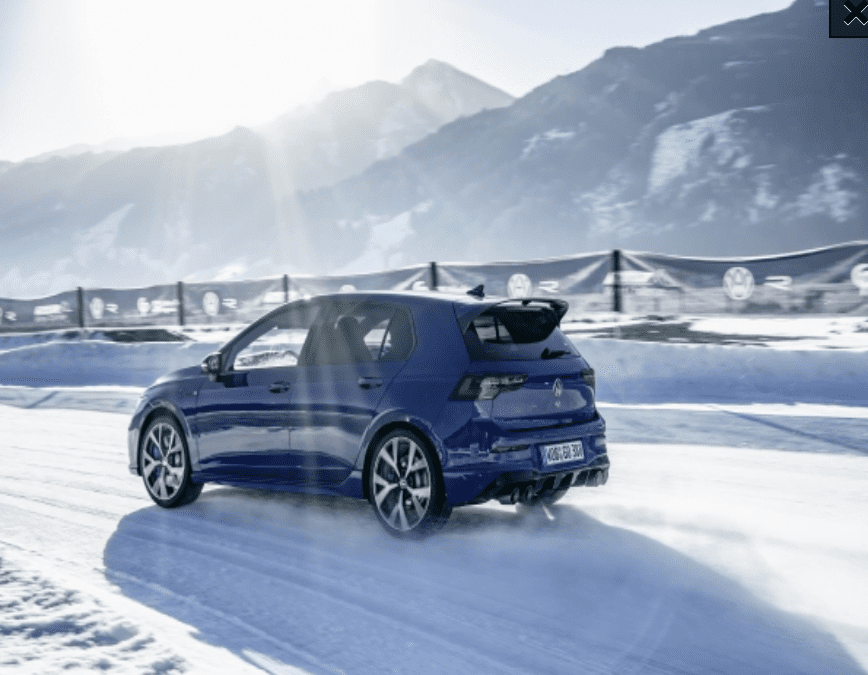
The R Performance Package The Golf R can also be ordered with an optional R Performance Package, which increases the top speed to 270 km/h in this case. The R Performance Package also includes a larger, prominent rear spoiler for extra downforce on the rear axle, 19-inch wheels in the Estoril design and two additional driving profiles, “Special” (Nürburgring mode) and “Drift”. The driving profile selection can be rapidly accessed by lightly pressing the R button on the steering wheel.
Two driving profiles for maximum performance Away from public roads, Drift mode opens up a whole new level of driving dynamics and further exploits the potential of torque vectoring by provoking oversteer instead of neutral vehicle handling: the maximum possible torque in this mode is available on the wheel located on the outside of the bend. The ESC in Drift mode is set to “Sport” as standard, meaning that the Golf R’s control electronics kick in at a very late stage. However, real drifts are also possible: the ESC just needs to be switched to OFF.
More control for drivers In both modes of the R Performance Package, an accelerator pedal characteristic has been sensitively crafted in order to create an unfiltered sense of performance. This high degree of control is an advantage when it comes to perfect drifts on snow and ice, or on asphalt. In both Special and Drift mode, the gearbox calibration of the 420 Nm drive has been optimised in order to keep the rpm consistently high. In automatic mode, the dual clutch gearbox (DSG) thus switches up as late as possible and down as early as possible, which aids power development.
For the first time since the introduction of the DSG, the gearbox will stay in manual mode in both modes if the driver has selected this. Unintentionally slipping back into automatic mode is now a thing of the past. This is something that pros like Benjamin Leuchter have been waiting for a long time. As a brand ambassador and a test and development driver at Volkswagen, Leuchter has had significant input into the development and fine-tuning of the Golf R. “My verdict is clear: the Golf R is the stand-out model in the product line! With the new all-wheel drive, which distributes the power perfectly across the wheels, and the two new driving modes, the Golf R offers a hugely fun driving experience.”
Football news, tables, and latest scores are shown on the infotainment display
The “text-to-speech” function reads out the information during the journey
The app can be downloaded free of charge via the In-Car Shop, for all Golf from model year 2020 onwards
Wouldn’t it be great to never again miss a goal scored by your beloved football team – even when you’re driving?
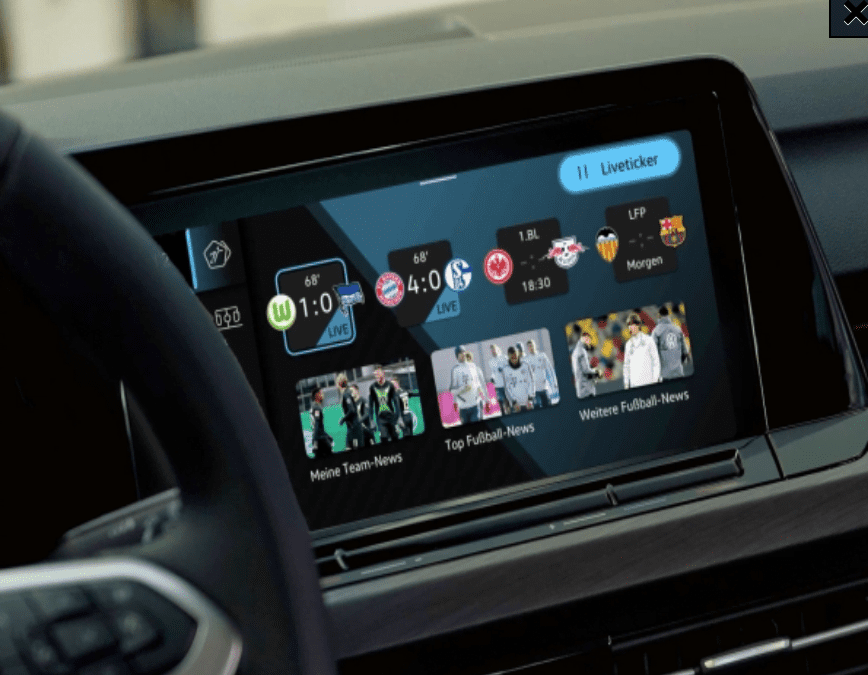
This dream scenario for many football fans is now a reality in all new Golf from the 2020 model year onwards: The free “We Score” app delivers live football updates into the vehicle’s cockpit! Users can pre-set three clubs and one national team, and follow their favourites in all competitions. Along with live scores – which football fans will recognise from smartphone apps – standings and football news are also displayed in the app. All this information can also be read out using the “text-to- speech” function.
The new “We Score” In-Car app is the latest addition to the Volkswagen digital family in the new Golf: Customers can now enjoy news, tables, and the latest scores from the footballing world, even while they are at the wheel. Users can set three clubs and one national team as favourites. A live ticker is also available during matches. What’s more, customers need never miss another goal while on the road, thanks to push notifications of their favourite teams’ live results; these are displayed in such a way that they do not distract the driver from the road ahead. A live ticker gives real-time match updates, and the table can be easily brought up to show the latest standings.
The new “We Score” app covers the top two divisions and the main cup competition of the relevant country. In Germany the 3. Liga is also available, while in the UK the Premier League and EFL Championship are included. The Europa League and Champions League are supported, in addition of course to the European Championships which have been postponed to this summer – with Volkswagen’s commitment to football reaffirmed as a mobility partner for UEFA EURO 2020.
In-Car Shop “We Score” is easy to access via the infotainment system in the Golf. After a single registration the vehicle app can be downloaded. The “We Score” app is supported by the “Discover Pro” and “Discover Media” infotainment systems. Alongside the “We Score” and “Amazon Alexa” services, customers can also use the In-Car Shop to subscribe to data plans which allow them to use streaming services or a Wi-Fi hotspot. The “We Connect Plus” extension is also easy to order in the In-Car Shop. Further products are in the pipeline.
Volkswagen as an official mobility partner of the DFB Volkswagen demonstrates its commitment to football in a variety of ways, not least as an official mobility partner to the German Football Association (DFB). True to its motto, “Football means all of us”, the company supports Germany’s favourite sport from the grassroots to the elite: it is not only about focusing on the national teams, but on football itself as the connecting link between Volkswagen and popular sport.
At an international level, Volkswagen is a mobility partner of UEFA national team tournaments, including the European Championships which will take place this summer. Volkswagen is also supporting seven teams which have qualified for the tournament: Germany, France, Switzerland, Austria, Denmark, Finland, and Russia.
About the Volkswagen brand: The Volkswagen Passenger Cars brand is present in more than 150 markets throughout the world and produces vehicles at over 50 locations in 14 countries. In 2020, Volkswagen delivered 5.3 million vehicles including bestselling models such as the Golf, Tiguan, Jetta or Passat. Currently, 195,878 people work for Volkswagen across the globe. The brand also has over 10,000 dealerships with 86,000 employees. Volkswagen is forging ahead consistently with the further development of automobile production. E-mobility, smart mobility and the digital transformation of the brand are the key strategic topics for the future.
Vantage F1® Edition is the most track-focused production Vantage to-date
Based on the Vantage as an Official Safety Car of Formula 1®
Project objective to significantly improve lap time performance
Vantage F1® Edition benefits from package of engine, chassis and aerodynamic upgrades
Power output increases by 25PS to 535PS
Deliveries scheduled to begin May 2021
The new Vantage F1® Edition is a new breed of Aston Martin.
One that celebrates the marques return to Formula 1® for the first time in over 60 years and establishes the Vantage as a true sports car. It is also the first core model to benefit from direct input from Aston Martin’s recently appointed Chief Executive Officer, Tobias Moers.
A core production offering, the new Vantage F1® Edition sits at the top of the Vantage model line. Motivated by an exciting return to Formula 1® and as a direct result of the engineering that went into the development of the Vantage as an Official Safety Car of Formula 1®, which makes its debut at the Formula 1® Gulf Air Bahrain Grand Prix 2021 this week, the Vantage F1® Edition is the ultimate expression of performance and dynamism; it is the fastest and most focused of the already sporting Vantage .
Not only is it the most powerful, but the Vantage F1® Edition benefits from unique and significant chassis and aerodynamic improvements developed by Aston Martin’s hugely experienced engineering team. While the luxury brand’s Aston Martin Cognizant Formula OneTM team was busy preparing a return to the grid, the engineering team behind the infamous road cars were too, creating the ultimate Aston Martin Vantage which could take on the role of an Official Safety Car of Formula 1®. Set to work by Chief Executive Officer, Tobias Moers, the task was to develop significant performance enhancements, driven by improved lap time performance in order to successfully carry out its role on the F1® track, but without compromising its on-road capabilities. Notably, it would do so without the fitment of aggressively track-optimised tyres. Following the success of these enhancements, Moers instructed the integration of these into the production car, ultimately developing the new Vantage F1® Edition. The most sporting Vantage in the production range and in essence, a replica of the Vantage Official Safety Car of Formula 1®. An exciting proposition for Aston Martin customers.
The engineering team targeted intelligent, incremental improvements across multiple areas of the Vantage F1® Edition’s auto-only powertrain, chassis and aerodynamics to bring out more character, increase tactility and expand its outright capabilities.
Starting with the 4.0-litre twin-turbo V8 engine, power is up by 25PS to a new maximum of 535PS. Peak torque remains unchanged at 685Nm, but that peak is sustained for longer to further increase tractability and in-gear urgency. This relentless, muscular performance has been further enhanced by work to the 8-speed automatic transmission, with an optimised torque cut during upshifts that reduces shift times and increases the feeling of directness and precision. This torque management also enhances the driver’s sense of control and connection during downshifts specifically under heavy braking and allows for finer control when the driver is balancing the car at its limit of traction. While noticeable in all circumstances and conditions, these improvements are especially beneficial when driving on track.
Moving to the chassis, the team’s focus centered on the suspension and steering, with further detailed underbody modifications to increase front structural stiffness for a further improvement in steering feel and response. Reworked damper internals have increased the dampers’ effective force range. This increase in bandwidth brings a noticeable improvement in vertical body control – both through high speed compressions and over crests – without any deterioration in low-speed compliance.
To compliment changes to the dampers, the chassis also benefits from increased rear spring rate and lateral stiffness to help sharpen turn-in, increase traction (especially over bumps) and ensure the rear-end is tuned to compliment the front-end’s rate of response. Further improvements to response and – crucially – to what the driver feels have been made to the steering system, allowing feedback from the road to be transmitted more clearly, which in turn helps build a detailed sense of available grip.
With the chassis hardware optimised, attention turned to the wheels and tyres, increasing from 20” on the regular Vantage to 21” as standard for the Vantage F1® Edition. Developed specifically for the F1® Edition with Pirelli, it is the first time Vantage has been fitted with 21” tyres. Much like the other dynamic changes, the switch to a lower profile tyre provides greater feedback to the driver to ensure progressive on-limit handling to give maximum confidence in even the most extreme track driving scenarios.
Completing the Vantage F1® Edition’s performance enhancements is a comprehensive aero kit, bringing improvements that can be felt from the driver’s seat and measured against the clock. Designed to deliver positive front and rear downforce, totaling 200kg more downforce than Vantage at top speed – as well as optimising the overall balance of the car, the aerodynamic changes comprise a full-width front splitter, front dive planes, underbody turning vanes, and – most obviously – the new rear wing. The rear diffuser remains unchanged but is still a core feature in the delivery of the aerodynamic performance working in tandem with the new aerodynamic features
The Vantage F1® Edition expresses its intensified performance with limited, yet distinctive colour palettes and trim options, including one that celebrates Aston Martin’s return to Formula 1® with an Aston Martin Racing Green colour scheme, mimicking that of the Aston Martin Cognizant Formula OneTM Team car, as well as the Official Safety Car of Formula 1®. Exterior paint colours are available in both a Satin or Gloss finish, and other colour options include Jet Black and Lunar White, all of which are complimented by a Solid Matte Dark Grey racing graphic. Inside the Vantage F1® Edition features new Obsidian Black Leather and Phantom Grey Alcantara upholstery and trim, with a choice of Lime Green, Obsidian Black, Wolf Grey or Spicy Red contrast stripe and stitching.
The Vantage F1® Edition – available as Coupe and Roadster – is further distinguished by its vaned grille as standard, 2×2 Twill Carbon Fibre exterior detailing, unique graphics, quad exhausts and a new design of Satin Black Diamond Turned 21” alloy wheel.
Aston Martin Chief Executive Officer, Tobias Moers said: “Performance is at the heart of every Aston Martin, but when it wears an F1® badge it has to be a truly exceptional car. Vantage was already the most focused sports car in our range but in the development of our Official Safety Car of Formula 1®, it had to be a true athlete: more powerful; more agile; more immediate and more exciting to drive. And – of course – quicker and more capable in a race-track environment. I set the engineering team a tough target, as I was insistent that gains in performance came via genuine improvements in the car’s dynamics, and not by fitting track-optimised tyres. The results speak for themselves. A Vantage to appeal to the most discerning drivers and a new model that marks an exciting moment in Aston Martin’s history”.
The new Vantage F1® Edition is on sale now with a recommended retail price from £142,000 in the UK and €162,000 in Germany with deliveries scheduled to begin in May 2021.
Research by Citroën UK has shown that comfortable seating and a smooth ride are among the most important factors helping passengers catch ‘forty winks’ on car journeys.
37% of those surveyed said they struggled to fall asleep as a passenger in a car.
Citroën’s research reveals the optimum conditions needed for an in-car nap.
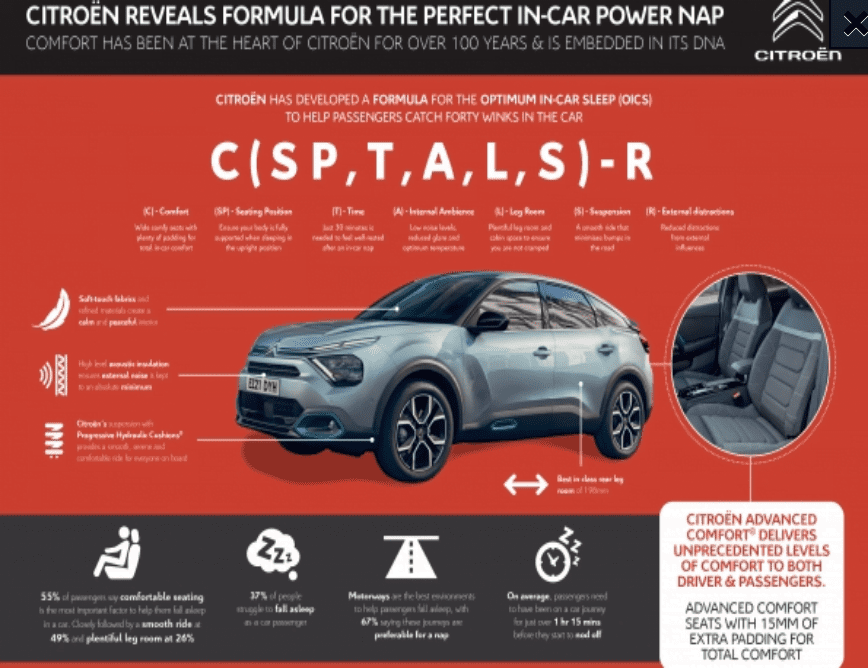
The perfect in-car power nap formula: Optimum In-Car Sleep = C (SP, T, A, L, S) – R
Study carried out in time for World Sleep Day – today, Friday 19 March – with the support of sleep behaviour and environment expert James Wilson, known as ‘The Sleep Geek’.
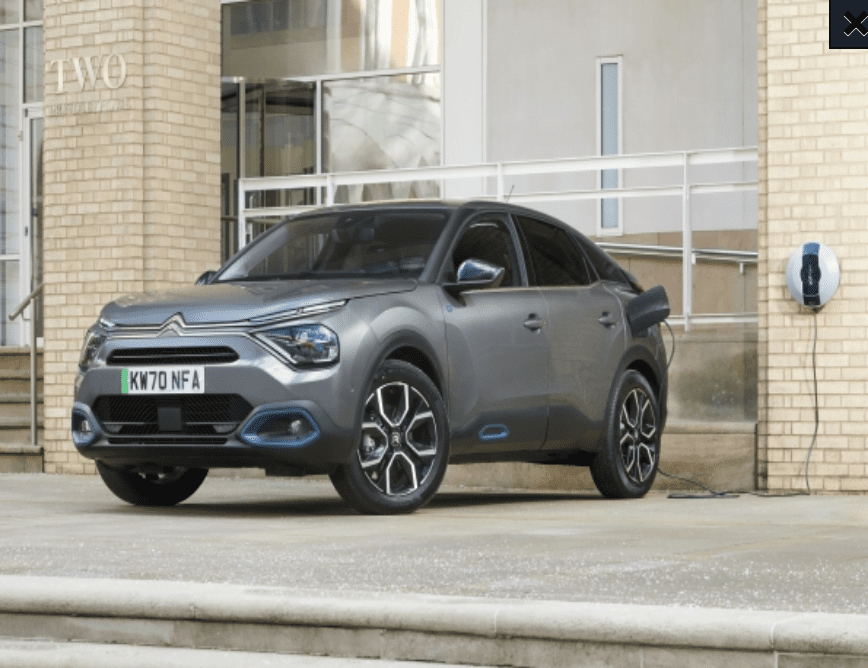
Citroën models like the 100% electric New ë-C4 and New C4 are designed to provide maximum comfort and well-being for drivers and passengers alike through Citroën Advanced Comfort® programme.
Customers can order a new Citroën from the comfort of their home using the Citroën Store online service.
We all know someone who can fall asleep within minutes as a passenger in a car, yet others find it much harder to nod off, even on longer journeys.
In fact, more than a third of passengers say they struggle to sleep in a car, according to the latest research by Citroën UK. As part of a study of 2,000 UK motorists* carried out ahead of World Sleep Day (Friday 19 March), Citroën has come up with a formula that reveals the optimum conditions to help passengers catch ‘forty winks’ in a car.
The study, carried out with leading sleep behaviour and environment expert, James Wilson – a co-founder of Beingwell** – found 37% of passengers said they struggled to fall asleep in a car, while 14% said they never sleep on the move.
Citroën UK also studied which aspects of the vehicle and the driving environment are most conducive to helping passengers relax and nap in comfort. More than half of all respondents (55%) said comfortable seats make it easier to fall asleep, while a smooth ride and ample leg room were highlighted by 49% and 26% of respondents respectively. Neck and head support, as well as optimum interior temperature and ambiance, were highlighted by 24% of all surveyed.
All full-electric New ë-C4, New C4 and C5 Aircross SUV models, plus selected New C3 versions, feature Citroën’s Advanced Comfort seats as standard. With broad base cushions and seat backs, they combine high-density foam at the heart of each seat and a thick 15mm layer of extra textured foam on the surface, to keep drivers and passengers comfortable and relaxed when on the road.
James Wilson has been in the sleep industry all of his working life and has collaborated with organisations such as the NHS, various sports teams and governments across the world. His approach is based around helping people understand the simple science behind sleep, how to apply that science to themselves, and the tools and tactics that will lead to better sleep.
Using the findings from the survey, as well as Wilson’s own research, Citroën came up with a formula for the Optimum In-Car Sleep (OICS), to help deliver a better in-car power nap:
Optimum In-Car Sleep = C (SP, T, A, L, S) – R Comfort (C) is a function of Seating Position (SP), Time (T), internal Ambiance (A), Legroom (L) and Suspension (S), while external distractions such as road noise and bumps are characterised by the function (R).
James Wilson, The Sleep Geek, said: “The research provided us with interesting findings, particularly in regards to how difficult some people find it to nap as a passenger in a car, equally something I have come across throughout my work. Ensuring one’s comfort when sleeping is key and working with Citroën to put together a formula that gets people to think about their in-car sleep comfort is something that lots of people will find useful.
“We can often struggle to find time for a powernap, so the car can be an ideal place. Being able to catch a 30-minute power nap during the day, when it’s possible, is really beneficial and can certainly help people to feel reinvigorated.”
In-car comfort for both driver and passengers is at the forefront of Citroën’s Advanced Comfort® programme, including enhanced suspension and seating technology for a smoother ride.
New ë-C4, New C4 and C5 Aircross SUV are specified with Citroën’s Progressive Hydraulic Cushion® technology as standard, which integrates hydraulic bump stops into the suspension for better control of compression and rebound. This helps the car reduce the effect of bumps and vibrations from poor road surfaces, and as part of the Optimum In-Car Sleep formula, reduces the function R for a more relaxed in-car environment.
Unsurprisingly, motorways and dual carriageways were found to be the most tranquil setting for passengers, with 67% of respondents falling asleep on those types of roads.
While the length of a nap depends very much on the journey, Wilson advises that passengers should sleep for no longer than 30 minutes at a time on a car journey in order to feel the full benefit and to be well rested. The research by Citroën found that, on average, passengers need just over 1hr 15 minutes on the road before they can nod off.
Eurig Druce, Managing Director of Citroën UK, said: “With more than a third of passengers struggling to fall asleep in a car, comfort plays a key role in creating an environment where passengers can doze off for a quick power nap. Our research shows some of the optimal conditions to achieve a comfortable sleep environment, with our cars designed for maximum comfort and well-being.”
While some drivers may get disgruntled when their passengers nod off, Citroën’s research found that two thirds (66%) are not really that bothered if their travelling companions fall asleep during a journey. For those drivers who prefer passengers to remain awake, the main causes of annoyance were being left without anybody to talk to and the distraction of snoring!
To aid passengers looking to achieve the most comfortable in-car power nap, James Wilson has provided his five top tips:
Perfect timing: When napping, whether it is in a car or elsewhere, we should try to do it before 2.00pm.
Optimum duration: When napping in a car or somewhere else, we need to be trying to sleep for no more than 30 minutes. Napping for longer than this is more likely to make us feel less sleepy at night and also for us to wake up feeling groggy.
Seat comfort: The biggest complaint for many of us when waking from a nap on a journey is that we have a stiff neck or back. A comfortable, well-padded seat, the correct seating position and a supportive headrest helps to keep our neck in a neutral position and allows us to avoid aches and pains.
Set the tone: To fall asleep we need a drop in heart rate and a relaxing environment. Travelling in a vehicle with a smooth ride and listening to something soothing in the car is a great way to let our minds wander. Try a podcast, a spoken book or music of less than 60 beats per minute. Using headphones also allows us to retreat into our own little world.
Stretch out: Having plenty of legroom will make sure our bodies are comfortable and will ensure we don’t wake from a nap feeling physically cramped and uncomfortable.
Citroën UK is pleased to announce that all versions of New ë-C4 will continue to benefit from the Government’s Plug in Car Grant (PICG) of £2,500 across all versions in the range.
To continue with the PICG eligibility, Citroën UK have also introduced a £550 pricing reduction on the most popular ‘Shine Plus’ trim level, in line with the brand’s previously announced ‘Fair Pricing’ policy, to allow it to continue to benefit from the grant.
‘Fair Pricing’ remains a key part of the far-reaching and impactful three-year ‘Citroën Advance UK’ plan, first announced in October 2020.
On the road New ë-C4 pricing including PICG ranges from £30,895 to £32,495.
In line with other selected Citroën models, retail orders for New ë-C4 currently attract a five year warranty*, with buyers also receiving a free Pod Point 7kW home charger.*
Citroën UK’s ‘Virtual Showroom’ is now showcasing New C4, allowing customers to engage in live product walk-around presentations and Q&A’s, in the comfort of their own home.
New Citroën C4 and ë-C4 are available to configure and order online now via Citroën Store.
Citroën UK has announced the all new ë-C4 models in the UK will continue to attract the Government’s Plug In Car Grant of £2,500 and in addition Citroën UK has also announced a £550 pricing reduction on the best-selling ‘Shine Plus’ specification to allow customers to continue to benefit from the Government grant, in line with the brand’s ‘Fair Pricing’ strategy.
‘Fair Pricing’, one of the key initiatives behind the ‘Citroën Advance UK’ strategy, saw the long-term and fundamental move to reduced list prices for greater customer transparency. As a brand inspired by its customers with the tagline ‘Inspired By You’, the rationale behind Fair Pricing simple, it is about putting customer front and centre, a trend we see continuing with new ë-C4.
As a further added benefit to the above offers and to make the transition to a 100% electric ë-C4 as seamless as possible, retail customers ordering from the Citroën Store, or from selected retailers, will benefit from a free five year transferable warranty and a free Pod Point 7kW home charger, saving the customer a further £509.
Citroën Store offers customers the opportunity to complete their entire, new ë-C4 purchase, exclusively and simply, from the comfort of their own home – from browsing the website and using the car configurator, to personalising their finance options, valuing their part exchange, selecting their preferred retailer, and placing an order online.
Working hand in hand with Citroën Store is the Virtual Showroom – online service that offers customers the ability to book live walk-around tours of vehicles, including new C4 via the web portal, during which an expert Product Presenter will use the latest video technology to introduce the vehicle and answer any questions over a secure video link.
Eurig Druce, Citroën UK’s Managing Director, said: “We were disappointed to hear the news that the support for consumers to make the switch to a low emission vehicle had been reduced. For this period of transition to be a success and for electrification targets to be met, both the industry and consumers need clearer long-term guidance and support on how we will get there. That said, I am proud that Citroën UK’s policy of ‘Fair Pricing’ ensures that consumers will continue to be able to benefit from the full Government Plug in Car Grant when purchasing their new ë-C4.”
On the road New ë-C4 pricing including PICG ranges from £30,895 to £32,495. In addition to the Fair Pricing, all new Citroën ë-C4 models come very well appointed, with the following equipment as standard; LED headlights, 18-inch alloy wheels, 10-inch high-resolution touchscreen with Apple CarPlay™ and Android Auto, Citroën Connect Nav with TomTom Live Services, Active Safety Brake, Lane Keeping Assist, electric parking brake, rear parking sensors, rear parking camera, electrically folding door mirrors, dual-zone climate control and Citroën Connect Box Emergency and Assistance System. For improved comfort, all models come with Citroën’s Progressive Hydraulic Cushions® suspension system and Advanced Comfort seats.
Available with a choice of three trim levels, ‘Sense Plus’, ‘Shine’ and ‘Shine Plus’, with all models coming-in under the £35,000 threshold to qualify for the PICG. All new ë-C4 models feature a 50kWh lithium-ion battery pack and a 100kW (136hp) electric motor. With a WLTP-approved range of up to 217 miles on a single charge, new ë-C4 will exceed the daily range requirements of most private and fleet drivers. Supporting CCS rapid charging as standard on all models, an 80% charge will take just 30 minutes on a 100 kW rapid charger. For regular home charging a Type 2 charging cable is included as standard, allowing a regular 7.4kW charger to reach a 100% charge in seven hours and 30 minutes.