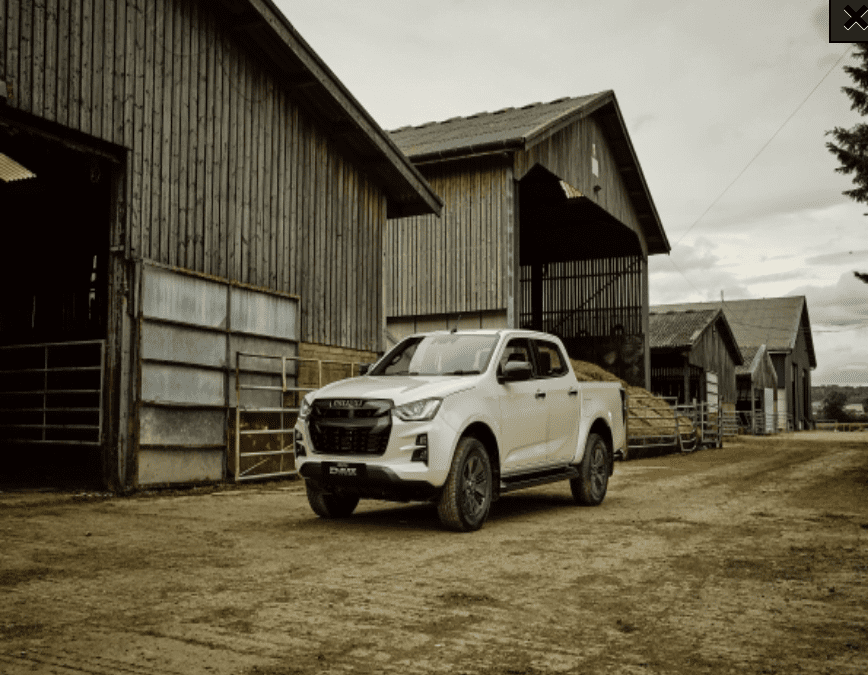
All-New Isuzu D-Max available in four new trim levels: Utility, DL20, DL40 & V-Cross.
Smarter: Assertive exterior design, premium yet practical interior and smart new audio systems.
Stronger: Stronger chassis, faster engaging shift-on-the-fly 4WD system and rear diff-lock is now standard on All-Purpose and Adventure models.
Safer: Comprehensive Advanced Driver Assist Systems (ADAS) package standard on all variants
True to its workhorse pedigree, the All-New Isuzu D-Max is still capable of towing up to 3.5t and carrying a payload of over a tonne.
The All-New Isuzu D-Max combines smart new styling and improved off-road performance with impressive safety technology.
Not only does it deliver the capability and durability you’d expect from an Isuzu pick-up truck, this tough workhorse now adds superior levels of comfort and refinement.
The D-Max appeals to a wide variety of drivers, from fleet operators to families, and the model range is structured into three segments: Business, All-Purpose and Adventure. A new line-up of trucks sit within each range to suit every customer’s requirements.
The Business range features the Utility trim and this base specification workhorse is offered in a choice of 4×2 or 4×4 and in three different cab types: single, extended and double cab. Developed with work in mind, the Utility features a wide range of practical and safety features to ensure drivers are as productive, safe and comfortable as possible.
The All-New Isuzu D-Max has an incredible amount of additional equipment on all variants so the Utility model is anything but basic. Comfort and convenience are assured in this versatile pick-up thanks to automatic headlights with high beam assist, automatic windscreen wipers, speed-sensitive power steering, DAB radio and a stop & start system.
Advanced Driver Assist Systems (ADAS) are now standard on all models. Autonomous Emergency Braking, Traffic Sign Recognition, Intelligent Speed Limiter and Lane Departure Warning & Prevention are fitted on every model and, for the first time in the pick-up segment, Rear Cross Traffic Alert, Blind Spot Monitor and Emergency Lane Keeping are fitted on all double cabs.
Utility models are ideally suited to working environments with features like an easily-cleanable vinyl flooring and durable steel wheels, while the bumpers, door mirrors and door handles are made from a hard-wearing black plastic.
The All-Purpose range consists of the DL20 and DL40, with ‘DL’ signifying that the rear diff-lock becomes a standard feature and the ‘20’ and ‘40’ demonstrating the model hierarchy. All-Purpose models are also available with an automatic transmission, which come with the additional ADAS functionality of Adaptive Cruise Control and Lane Keep Assist.
The DL20 features heated front seats, rear parking sensors, front fog lights and a front centre armrest for increased comfort and practicality, while body-coloured front and rear bumpers, silver door handles, a medium grey radiator grille and 18” alloy wheels provide a more premium appearance.
DL40 adds a variety of sophisticated enhancements like distinctive Bi-LED headlights, LED front fog lights, daytime running lights and rear lights, a chrome radiator grille, silver side steps and two-tone 18” alloy wheels. DL40 models also include front and rear parking sensors and a reversing camera.
Keyless entry, introduced from DL40, works on both the driver and passenger side and is accompanied by a push-button start system and welcome light. The interior benefits from leather upholstery, a leather steering wheel and an 8-way electrically adjustable driver’s seat. The 7” multifunction colour touchscreen is compatible with Apple CarPlay and Android Auto and there’s also a dual-zone climate control system, which allows the driver and passenger to set different temperatures.
Topping off the new model line-up is V-Cross which sits within the Adventure range. It features distinguishing ‘Gun Metal’ exterior styling on the radiator grille, side steps, door mirrors, door handles and 18” alloy wheels. The premium interior is practical and fuss-free: entertainment is provided by a 9” multifunction colour touchscreen with a CD player and eight speakers, there is an auto-dimming rear-view mirror and automatic headlight levelling, and the smart leather interior is complemented with V-Cross branded carpet mats.
There are up to eight colours to choose from on the All-New Isuzu D-Max. Utility models are available in four colours (Splash White, Mercury Silver, Obsidian Grey and Onyx Black), DL20 models also come with the option of Spinel Red, the vibrant new Valencia Orange is offered from DL40 and the stylish Pearl White is exclusive to V-Cross models.
Priced from £20,999 CVOTR, the Stronger, Smarter and Safer All-New Isuzu D-Max combines attractive new styling, impressive safety technology and superior levels of comfort. The new model has already won the coveted 2021 Pick-Up of the Year award from 4×4 Magazine and, thanks to its even stronger chassis and intelligent new ADAS safety systems, it has become the first pick-up to achieve the maximum 5-star rating in the latest Euro NCAP tests.
The All-New Isuzu D-Max offers the same workhorse practicalities that Isuzu customers have become accustomed to, with a one-tonne payload and up to 3.5 tonnes towing capacity. Backed by Isuzu’s 125,000 mile / 5 Year warranty, the new model arrives into UK showrooms in March 2021 and customers are encouraged to register their interest now.
KiaCharge provides the most comprehensive access to the UK public charging network
Convenient public charging access for Kia BEV and PHEV drivers
Access to more than 13,900 UK charging points from one account
178,000 connectors accessible across 28 other European countries
Two flexible tariffs, ‘Easy’ and ‘Plus’, with a single monthly invoice
Charging accessed via KiaCharge smartphone app or RFID card
Sign up through the KiaCharge app or at www.kiacharge.com from 13:00 on 23 February 2021
Kia Motors (UK) Limited today launches KiaCharge, a UK-wide integrated public charging service, designed to give drivers easier access to public vehicle charging.
From launch, KiaCharge provides more comprehensive access to the UK public charging network than any equivalent service. KiaCharge goes live and the app is available to download from 13:00 GMT today.
KiaCharge gives owners of the brand’s BEVs (battery electric vehicle) and PHEVs (plug-in hybrid electric vehicle) access to more than 13,900 charge points across the UK – around 68 per cent of the public charging network – from a single account*.
From launch, KiaCharge provides access to several major charging networks, including bp pulse, Pod Point, IONITY, Source London, Chargepoint, NewMotion, Char-gy, and ESB. Several other networks, including certain regional services, are also available. There are plans to further expand KiaCharge coverage throughout 2021. Being able to access these networks via a single platform negates the need for drivers to sign up to separate accounts with multiple charging point operators.
The service provides access to more than 1,300 ‘rapid’ connections, providing charging speeds above 50kW. Located in urban hubs and along major travel arteries, such chargers let Kia e-Niro and Soul EV drivers make the most of each vehicle’s rapid-charging capabilities.
Created in partnership with Digital Charging Solutions (DCS), the service also enables zero-emission continental travel. Thanks to eRoaming, drivers can access more than 178,000 additional charging points across 28 other European countries without the need for additional contracts.
Kia BEV and PHEV owners can access KiaCharge via a smartphone app or radio-frequency identification (RFID) card. Instead of numerous individual transactions, payments are made via a single itemised monthly invoice.
Paul Philpott, President & CEO of Kia Motors (UK) Limited, commented: “The availability and suitability of public charge points remains a perceived hurdle for many would-be electric car buyers. KiaCharge seeks to remedy this by providing a comprehensive, easy-to-use public charging service for our customers, accessible from a single account. This is a major step for Kia as we look for new ways to make EV ownership a more viable and stress-free option for many more drivers.”
Two flexible tariffs – ‘Easy’ and ‘Plus’ The service offers a choice of two fully flexible tariffs for all customers, tailored to fit individual charging preferences: ‘Easy’ and ‘Plus’. Both tariffs are designed to make charging convenient, efficient and simple, offering easy payment and a single, straightforward monthly bill.
The ‘Easy’ tariff is ideal for light users, with a one-off £1.99 charge to access the service and obtain their KiaCharge RFID card. With no monthly subscription fees, most charging stations instead require a £0.49 ‘session fee’ when users plug in (except chargers on the bp pulse and Pod Point networks), with users paying per kWh of electricity.
The ‘Plus’ tariff is the ideal option for those who rely more heavily on public charging. They simply pay a £2.99 monthly tariff, with no up-front charge or session fees. Like the ‘Easy’ tariff, users also pay per kWh, but earn an additional 15 per cent discount per kWh from most networks (except bp pulse, Pod Point and IONITY).
Every user can also add a new or existing bp pulse bolt-on subscription to their KiaCharge account, costing an additional £7.85 per month. This subscription provides users with a discount of up to 40 per cent when charging within the bp pulse network of nearly 7,000 chargers, compared to the ‘instant’ charging rate.
An IONITY bolt-on tariff will also be launched later in 2021 to coincide with the launch of Kia’s next-generation battery EV. This new vehicle will be able to accommodate the high-speed charging capabilities of the IONITY network thanks to its 800V maximum charging capacity.
KiaCharge tariffs are fully flexible, and users can switch between them with only one month’s notice. They receive a single monthly invoice for using the service, rather than individual bills for each charge, giving them full oversight of their charging activity in one place.
Real-time charging point information and routing functionality KiaCharge users access the network via RFID card or through the KiaCharge smartphone app, compatible with iOS and Android devices. Through the app, users can see real-time information for individual networks or charging points, including pricing, availability, and technical information (such as the type of plug available). Users can also apply filters to locate the ideal station for them, by charging point operator, charging speeds, times of operation, socket type, or access method (via app or RFID card). They can also dial the relevant charging point operator’s helpline directly from the app, in case they need assistance.
In addition, the KiaCharge app enables route planning to help users easily find charging stations at their final destination or along a route. Customers can use it to initiate navigation, which integrates with the Android Auto and Apple CarPlay systems offered as standard in every Kia BEV and PHEV.
Users can sign-up to KiaCharge, order an RFID card, and manage their account via the app or online at www.kiacharge.com. The website also provides users with relevant information relating to the service, including product details, tariffs, and charging network maps.
KiaCharge is available to all owners of existing and future Kia BEV and PHEV models, including the 64kWh Kia e-Niro, which is capable of driving up to 282 miles on a single charge, and the new Sorento PHEV.
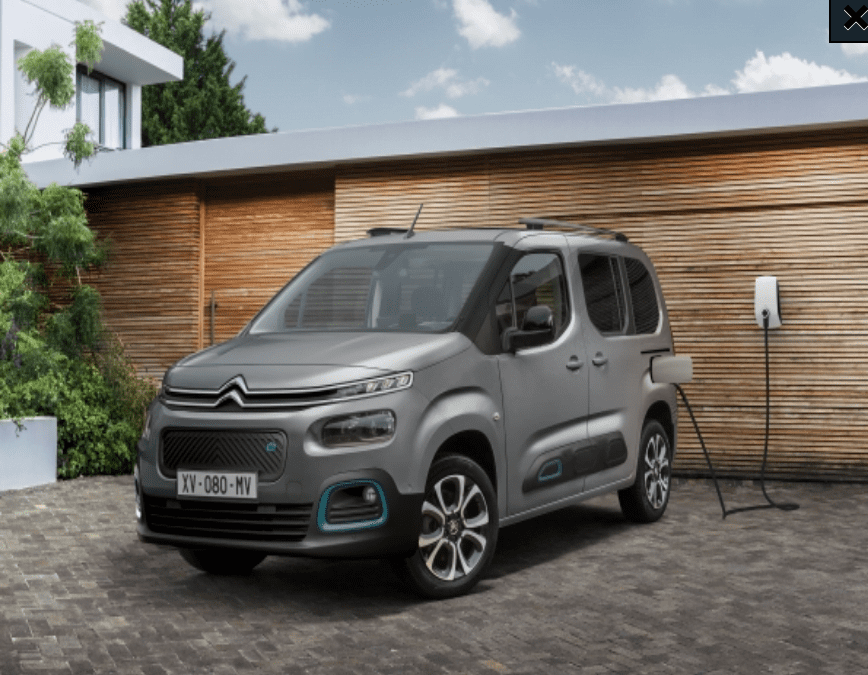
Citroën has unveiled ë-Berlingo, the brand’s new 100% electric MPV capable of up to 174 miles (WLTP).
New Citroën ë-Berlingo is available in two lengths – ‘Medium’ & ‘XL’ – and is capable of seating up to seven people, depending on the version.
With hugely practical and versatile interior space, ë-Berlingo is ideal for both families and business users.
New Citroën ë-Berlingo is the latest model from the brand as it works towards providing an electrified variants across each model in the range by 2025.
New Citroën ë-Berlingo will be available from Q4 2021.
Citroën has unveiled ë-Berlingo, the latest version of its multi-award winning MPV that was first introduced in 1996.
New ë-Berlingo features a 100kw (136hp) electric motor with up to 260Nm of torque. Connected to a 50kWh battery, ë-Berlingo can achieve up to 174 miles of range from a single charge under WLTP testing. The new model comes with three drive modes: Normal, Eco and Power, accessible via a special ë-Toggle control that allows the driver to choose the power output that best suits their needs.
To optimise range, ë-Berlingo features a regenerative braking system that is designed to recover energy during braking and deceleration. To enhance energy recovery, the driver simply activates the ‘B’ button on the central console. The battery warranty is eight years or 100,000 miles (for 70% of battery capacity).
Laurence Hansen, Citroën’s Product and Strategy Director, commented: “The electrification of Berlingo responds to two issues, offering sufficient range and making no compromises on practicality, so that our customers can enjoy their activities in all their diversity. New ë-Berlingo brings them an extra dose of serenity in their everyday lives with a seamless and silent drive, the satisfaction of preserving air quality, and a controlled motoring budget.
“These are strong expectations of this type of customer and highly strategic in this segment, as high-volume body types are particularly limited in terms of CO2 emissions and fuel consumption. We are proud that Berlingo, the first leisure activity vehicle, ranks among the first to offer this alternative.”
DRIVE MODES
The new model comes with three drive modes: Normal, Eco and Power, accessible through the special ë-Toggle control that allows the driver to choose the power output to suit their needs.
Normal– 80kW/210Nm: ensures the best compromise between operating range and dynamic performance.
Eco– 60kW/180Nm: optimises energy consumption by reducing the output of the heating and air-conditioning without shutting them off completely and by limiting engine torque and power.
Power– 100kW/260Nm: provides enhanced driveability and vehicle performance when carrying a maximum load.
CHARGING AND CONTROLLED COSTS
New ë-Berlingo comes as standard with a 7.4kW single-phase on-board charger and, as an option, an 11kW three-phase charger. Supporting a variety of charging methods, ë-Berlingo can be charged using anything from a three-pin plug to 100kW rapid charging. A full charge from a 7kW Wallbox will take 7.5 hours, or 5 hours using a 22kW unit using three-phase power. Supporting up to 100kW DC fast charging, an 80% charge can be completed in just 30 minutes. New ë-Berlingo ranks among the best in its segment in terms of fast-charging times.
In addition, ë-Berlingo is equipped with functionality for deferred charging, for consuming electricity in off-peak hours, and for thermal pre-conditioning, enabling motorists to set the cabin temperature when the vehicle is plugged in and thus reducing battery consumption in the first few miles of their journey. These features can be accessed via the vehicle touchscreen (on selected versions) and via the MyCitroën app.
VERSATILE AND PRACTICAL
The new model is available in ‘Medium’ or ‘XL’ variants, with Medium models measuring 4.40m long and XL variants at 4.75m long. All variants are 1.90m tall and, thanks to a specially adapted power steering system, have an agile turning circle of just 10.8m.
New Citroën ë-Berlingo has been designed with segment-leading roominess and functionality, for an easy and pleasant drive experience.
Fully aligned with the Citroën Advanced Comfort® programme, this new model places the emphasis on spaciousness, modularity, comfort, and a bright and airy cabin, providing an enhanced experience for five or seven occupants (depending on the version).
STORAGE COMPARTMENTS
New ë-Berlingo boasts optimum storage capacity with up to 167-litres of storage space and up to 26 storage compartments within the cabin. The ingeniously designed, optional, Modutop® offers 92-litres of practical storage space on its own – which is easily accessible from the seats in row two and via the boot through the opening rear window.
DESIGN
New ë-Berlingo is distinguishable by the use of a subtle ‘ë’ monogram on the front grille and tailgate, as well as in touches of ‘Anodised Blue’ trim on the bumpers and side Airbumps®.
Inside, the central console is home to the ë-Toggle switch, which allows the driver to control the gearbox via the Park, Reverse, Neutral, Drive and Regenerative Brake functions, together with the three driving modes: Eco, Normal and Power.
New ë-Berlingo’s 8-inch touchscreen includes an ‘Energy’ section in the menu, which provides access to energy flow information, consumption statistics and the activation of deferred charging or pre-set cabin temperature. A 10-inch high-definition digital instrument panel is also available (depending on the version), for optimal display quality and useful driving and navigation information. Drivers can configure the digital instrument panel display to suit their needs, highlighting the navigation system, energy-flow information or the driver-assistance systems.
TECHNOLOGY FOR PEACE OF MIND
New ë-Berlingo boasts up to 18 driver assistance technologies (depending on the version), including:
Keyless entry and start
Colour head-up display, a first in the segment
Hill-start assist
Reversing camera with Top Rear Vision
Intelligent beam headlights
Electric parking brake
Cruise control and speed limiter
Park Assist
For greater safety, ë-Berlingo (depending on the version) also benefits from Active Safety Brake, an active lane departure warning system, driver attention alert, distance alert, Coffee Break Alert, Grip Control® with Hill Descent Assist, extended traffic sign recognition and recommendation, and a blind spot monitoring system.
CONNECTED TECHNOLOGY
New Citroën ë-Berlingo is available with three connected packages for enhanced safety and comfort. These packages are an integral part of the Citroën Advanced Comfort® programme and were developed to simplify access to connected services.
Connect Assist
For the safety of the driver and passengers, Citroën ë-Berlingo comes with Assistance & SOS. The occupants can press the ‘Assistance’ button to be put in contact with a dedicated call centre. Alternatively, the system can activate automatically in the event of an incident.
Connect Assist can be used to obtain access to vehicle data such as state of charge, range, delayed charging, thermal pre-conditioning, parking location, mileage and next service. Connection and viewing of information are possible via the My Citroën app.
Connect Nav
Citroën Connect Nav includes a three-year subscription to Connected Navigation services with real-time traffic updates. The location and prices at service stations and car parks, weather information and local searches for points of interest are also available.
Connect Play
Apple CarPlay™ and Android Auto let the driver safely connect a smartphone and duplicate its screen on the vehicle’s touchscreen. Multimedia content can be accessed and compatible applications can also be controlled directly, safely and easily from the vehicle’s touchscreen.
An outstanding, user-friendly vehicle for families and business users alike, ë-Berlingo is fully equipped to support and enhance active lifestyles. New Citroën ë-Berlingo will be arriving in UK showrooms in Q4 2021.
Published by Porter Press International Publication date: Out now!
● ISBN 978-1-913089-22-1 ● RRP £30 ● Jacketed hardback ● 270mm x 210mm ● 160 pages ● Over 220 images
‘A Timeless Legacy’
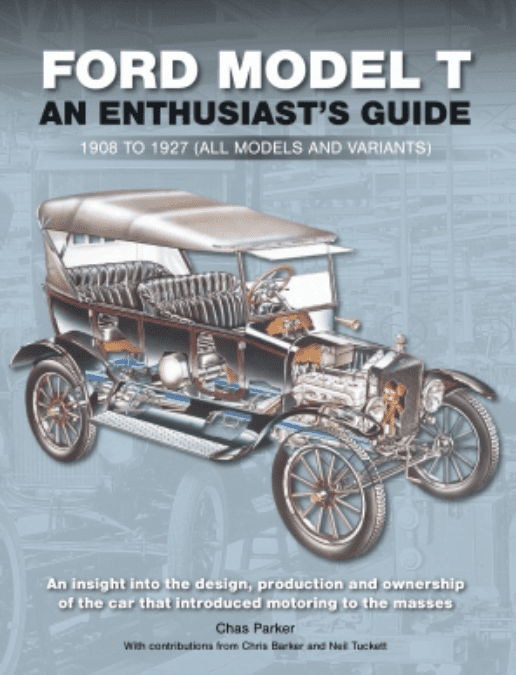
‘I will build a car for the great multitude’ stated Henry Ford, and so he did. The Ford Model T, or the ‘Tin Lizzie’ and the ‘Flivver’ as it was also known, transformed American society, bringing mobility through car ownership to millions of middle-class Americans at a time when the horse and the railroad were the only real viable means of transport.
Using moving assembly lines and the best possible materials, between 1 October 1908 and 26 May 1927, Ford built around 16.5 million examples of this extraordinary car. By 1918, half of all cars built in America were Model Ts and by 1925 around 8,000 a day were being produced, making Henry Ford one of the world’s best-known manufacturers of automobiles.
The selection of body styles varied from two- and four-seat open and closed models – tourers, town cars, runabouts, landaulettes and cabriolets – to vans and pick-up trucks, and customers could also have colours other than black!
This guide provides an insight into the design and construction of the Model T and many of its numerous variants, and the uses to which they were put, along with details of the background to Henry Ford himself and the car.
Highlights of the book include:
The Ford Model T story – the background of Henry Ford and his Ford Motor Company and the development of the Model T
Anatomy of a Ford Model T – detailed insight with photographs and diagrams
The engineer’s view – an insight from two leading experts, Chris Barker and Neil Tuckett
The driver’s view – description of the controls and driving technique for the Model T
The owner’s view – first-hand accounts from five Model T owners about why the car appeals to them
Competition history – including Indianapolis 500, Le Mans 24-hours and ‘Pig ‘n Ford’ races in America
Endless varieties – including trucks, ambulances, fire engines, army patrol cars and even rail cars
Restoration – Three UK-based specialists talk about their projects
Adventures – a trip across the North Island of New Zealand and a drive to the top of Ben Nevis in Scotland
The author
Chas Parker is a long-time motor racing enthusiast who has written many books about motor sport and historic racing cars, including comprehensive histories of Brand Hatch and Silverstone and Haynes Owners’ Workshop Manuals for the D-type Jaguar, Bugatti Type 35 and Lola T70. He has also written a number of books for Porter Press International, including The Michael Turner Collection and was shortlisted, together with co-author Philip Porter, for the 2017 RAC Motoring Book of the Year Award for his work on the 1953 Le Mans-winning C-type Jaguar, XKC 051. He lives in East Sussex with his partner, Diane.
Starting from Maserati’s roots to plan its future: the values of exclusivity, unique design and 100% Italian DNA of cars of the past are renewed today in the models that mark the Brand’s New Era.
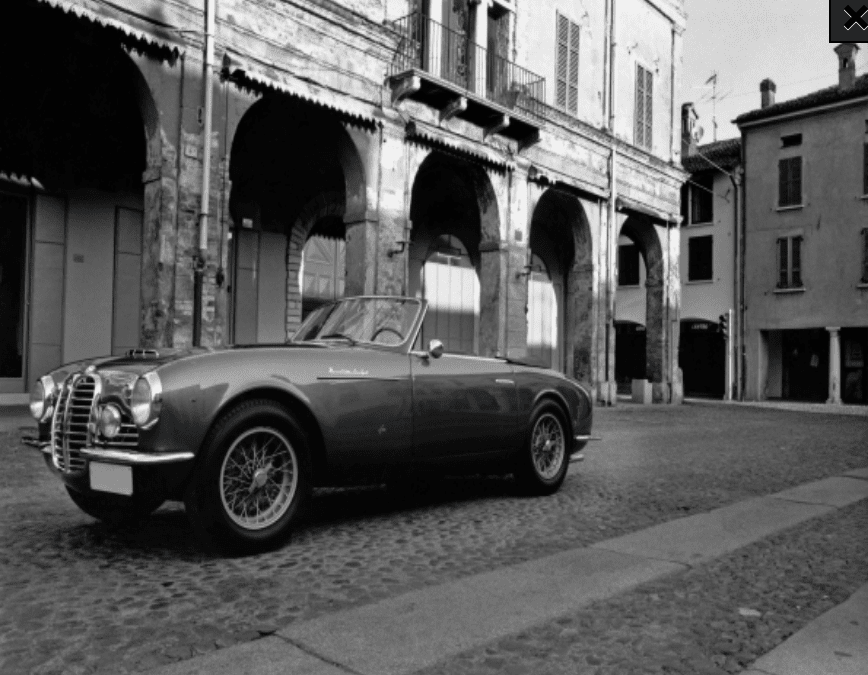
It is in this spirit that Maserati celebrates the 70th anniversary of the A6G 2000.
The first A6G 2000, a car representative of the A6 series, built by Maserati from 1947 to 1956 and named in homage to Alfieri Maserati (hence the letter A) with a 6 indicating the engine type (straight 6) was delivered exactly 70 years ago, in February 1951.
The new model was the replacement for the A6 1500 series sports car, and its name referenced the cast iron (or “ghisa”) of its crankcase (“G”) and its engine displacement of 2,000 cc.
The need to increase power output in response to the general trend in the Italian market of demanding higher-performing cars, partly as a result of the country’s improving economic conditions, led Maserati to convert the A6GCS two-litre engine to fully exploit the potential of the A6’s chassis.
The increase in displacement compared to the previous A6 model was achieved through precision engineering work on the bore and stroke of the straight 6. The upgraded engine, with displacement of 1,954.3 cc, achieved a power output of 90 to 100 horsepower depending on the final setup, enabling a top speed of 180 km/h, a clear manifesto of Maserati cars’ quality sports spirit.
The 1950 Turin Motor Show provided the backdrop for the impressive launch of the A6G 2000, which Maserati presented in two versions: a 4-seater, 2-door sedan by Pininfarina, and a convertible designed by Pietro Frua.
Sixteen of these cars were assembled in 1950 and 1951: nine with bodywork by Pininfarina, and five convertibles and a coupé by Pietro Frua. Alfredo Vignale produced just one car, a two-tone A6G 2000 coupé, with his signature sporty stylistic features.
Rear-wheel drive, a gearbox with four speeds plus reverse and a dry-mounted single disc clutch completed the characteristics of the new A6G 2000, together with the independent wheel front suspensions and rear suspensions comprising rigid axle with leaf springs. Hydraulically operated drum brakes on all four wheels and solid steel or spoked wheels completed the carefully chosen blend of craftsmanship and technological innovation, which made this car, built for the few, an icon on the motoring scene of the time.
Uniqueness, sportiness and Italian construction are all central to Maserati’s DNA and are still visible today in the new models that will characterise the coming years, with state-of-the-art technological solutions.
Innovative by nature, Maserati plans its future by keeping faith with its past.
Maserati S.p.A. Maserati produces a complete range of unique cars with an amazing personality, immediately recognisable anywhere. With their style, technology and innately exclusive character, they delight the most discerning, demanding tastes and have always been a global automotive industry benchmark. A tradition of successful cars, each of them redefining what makes an Italian sports car in terms of design, performance, comfort, elegance and safety, currently available on more than seventy markets internationally. Ambassadors of this heritage are the Quattroporte flagship, the Ghibli sports sedan, now also available in hybrid version, the Trident Brand’s first electrified car, and the Levante, the first made by Maserati SUV, all models denoted by use of the choicest materials and technical solutions of superlative excellence. A complete range, including V6 and V8 petrol, 4 cylinder hybrid and V6 diesel powerplants, with rear-wheel and four-wheel drive. The range’s prestige was recently even further enhanced by the introduction of the new Trofeo Collection, comprising Ghibli, Quattroporte and Levante, equipped with the powerful 580 hp V8 engine. The top-of-the-range is the new MC20 supercar, powered by the ground-breaking Nettuno V6 engine, incorporating F1-derived technologies now made available in the power unit of a standard production car for the first time. Today, the Maserati range is produced at three plants: Ghibli and Quattroporte are built at Grugliasco (Turin) at the Avvocato Giovanni Agnelli Plant (AGAP), and Levante at the Mirafiori Plant in Turin. The new MC20 supercar is produced in Modena, at the historic Viale Ciro Menotti plant.
New Mulliner Visualiser enables bespoke requests to be commissioned virtually via new retailer digital application
Interior and exterior features and optional content can be configured and viewed with specialists remotely
Mulliner Visualiser now includes extended Mulliner paint palette
Exclusive colours extend Bentley paint palette by 26 colours, showcasing solids, metallics, pearlescents and satins
Piano painted veneers bring exterior colours inside the cabin
With the introduction of the Bentley Mulliner Visualiser, it is now easier for customers to work with their retailer remotely to fulfil their personal commissioning requirements.
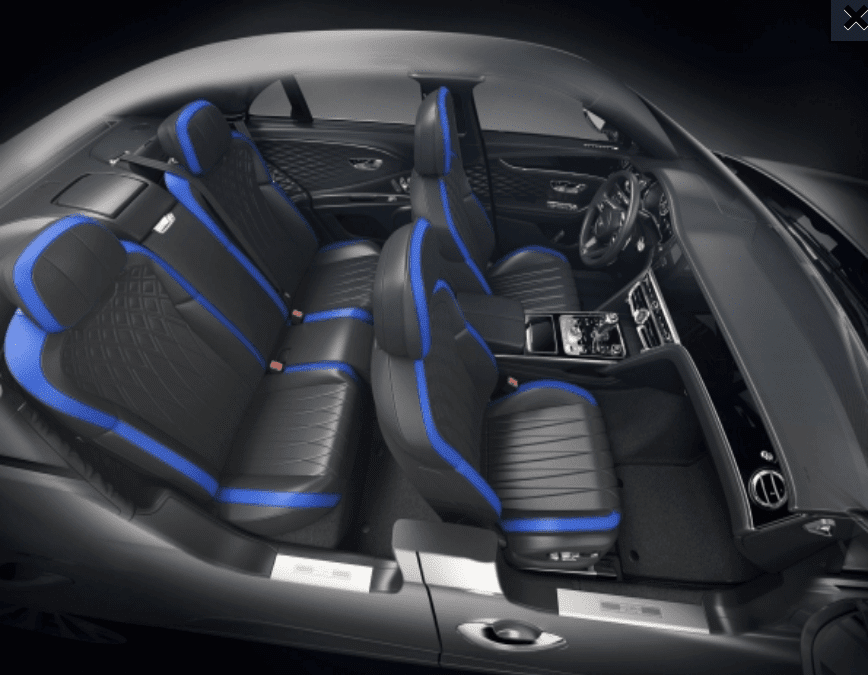
The Bentley Mulliner Visualiser is a digital application that allows customers to view images of bespoke hide, veneer and stitching options tailored by them – and ultimately to envision their own bespoke Bentley. Working with the retailer or Bentley’s own Mulliner designers, customers are able to configure up to three different colours to create their own interior design.
The digital application guides the customer, via their retailer, through the process and produces images of the final design in real time, providing feedback and confidence that their personalised design matches their vision and is part of the same on-screen experience.
The Mulliner Visualiser also allows customers to create or match a bespoke main hide colour and provides a reference code that can be sent directly to the craftspeople of Bentley Mulliner.
Bespoke choices do not finish on the inside of the car. Beyond the standard palette of Bentley paints, Mulliner has carefully curated their own exquisite range of paint colours; giving customers an additional 26 colours to choose from.
The additional palette contains a mixture of fifteen solid and metallic options, four satin finishes, and seven complex pearlescent three-layer paints. Hand spraying expertise, complemented by the latest robotic technology, delivers the best possible finish on each vehicle. Combining the art of colour with the science of paint, Bentley offers one of the largest ‘stock’ colour palettes of any luxury automotive manufacturer.
For the ultimate in exclusivity, the craftspeople at Bentley’s personal commissioning division can colour-match virtually any sample provided, using innovative colour recognition software to analyse the composition of the sample provided and reproducing it to perfection. The only limit is the customer’s imagination.
In addition, for those customers wanting to bring their exterior colour choice into the cabin of their grand tourer, Bentley now offers the luxury of choice through painted veneers – with the fascias and waistrails painted to the same piano-finish standard as the exterior, in any one of the scores of colours on offer.
Via the Bentley configurator, customers can visualise the new choices the extended palette offers. By selecting the different paints, the information panel will display the story and history behind the chosen colour.
Extending the Palette The extended palette includes solid, metallic, satin and pearlescent paints. The Mulliner colours complement the previous palette of 62 and are evenly spread over the colour spectrum. The following are some examples of the colours now available:
First created in the 1960s, Oxford Blue is a stunning solid paint and one of the darkest blues in the Bentley palette. This mesmerising Mulliner paint recalls the power and elegance of the Oxford and Cambridge Boat Race.
Viridian is the latest metallic paint to be introduced and is a modern take on the traditional British racing green. This mysterious dark emerald is inspired by the EXP 10 Speed 6 concept car shown at the Geneva International Motor Show in 2015. The deep green with light green and blue undertones creates depth and a sporting dimension, while flecks of amber and gold embody the character of luxury.
Snow Quartz is a modern white three layer pearlescent paint, which creates a simple and fresh silhouette. The finely layered pearl effect creates a beautiful shimmering and lustrous whiteness, providing an infinite amount of opportunities to complement interior colour combinations.
The glimmering surface of Extreme Silver has been given a striking new finish to create Extreme Silver Satin. This distinctive Mulliner Paint alters the character of this warm silver almost beyond recognition, replacing the metallic gleam with a subtle satiny sheen that brings the sharp Bentley design lines to the fore.
Blending the Exterior to the Interior Those customers wishing to add a splash of colour to their interior veneers are able to select Piano painted veneers by Bentley Mulliner, offering an ultra-modern look that perfectly complements the wide range of interior hide options available.
The same quality of veneer is carefully selected by Bentley’s master craftspeople, regardless if lacquered or painted veneer is chosen, to ensure the same flawless surface finish. The veneer is hand sanded before it is lacquered, then paint is then carefully applied by hand to ensure a perfect finish. After painting, the veneer receives a polish with lamb’s wool to achieve a mirror like finish.
Bentley Mulliner can paint match to any of Bentley’s 86 different exterior shades, and also to any colour in Bentley’s range of leathers.
The Suite of Mulliner Paints The complete list of Mulliner paints is as follows:
Pearlescent
Ghost White – The unique, three-layer pearlescent finish, refracts light to create subtle glints of colour. Originally created as a one-off bespoke commission, it is now available to all Bentley customers.
Radium – A Mischievous sporty and youthful colour, with a superfine metallic effect, invoking the feeling of confidence.
Silver Frost – A colour created following a request from a long-standing Bentley customer who insisted that all his cars were painted the exact same shade of metallic silver.
James Red (Pearlescent) – St James’ Red Pearlescent provide both colour and sparkle due to its rich, deep finish, which reveals both the bright, vibrant tones of the red pigment and the iridescent sheen of the pearlescent layer.
Special Magnolia (Pearlescent) – Special Magnolia with a unique pearlescent finish developed as the result of a customer’s request. It consists of three pale white layers built up to create the lustre and sheen expected of a pearlescent finish.
Julep – A diverse combination of colours has been blended together to create the warm green gold of Julep. The metallic gold tempered by subtle undertones of green adds a distinctive edge to this eye-catching Mulliner Paint
Snow Quartz – This is a three stage pearlescent white with a fine Mica flake creating a crystalline sparkle and the ice effect of a snowflake.
Satins
Anthracite Satin – Introduced in 2011 as a Satin version of an original Bentley Arnage colour. By adding the Satin finish, the light reflection is absorbed, giving the colour a more sporty stealth like appearance.
Extreme Silver Satin – This Satin version of the original Extreme Silver was created for the launch of the Continental GT in 2010. The Satin finish accentuated the contrast of the golden pearlescent elements with the cool highlights of this warm Silver colour.
Light Grey Satin – Created for the launch of GT Supersports at Geneva in 2010. It is one of the richest and warmest hues in this section of the colour palette thanks to its rich lustre effect with a distinctive finish.
White Satin – introduced with the Continental Supersports Convertible at the Paris Motorshow 2010. A contemporary colour choice thanks to its distinctive matt finish and subtle metallic undertone. It offers strong contrast to darker grill and wheel finishes.
Solids and Metallics
Arctica (Solid) – developed for the Arnage range in 1998. Its name stems from its distinctive blend of cool white and slightest hint of blue.
Amber – Originally developed for the Arnage range in 1998, Amber is a select colour choice that was developed to match the tones of the leather hide Autumn.
Breeze – A bespoke paint developed specifically for the Continental GTC. It is described as a flip-effect metallic that reveals a whisper of green, but retains an element of silver.
Candy Red – A new sporting red with an incredible depth of colour. This hot red has a complex combination of ingredients that creates a molten almost liquid effect that looks like it has been poured over the body. A discerning twist on the traditional candy finish.
Claret – Created specifically for use on Her Majesty Queen Elizabeth II’s Golden Jubilee Bentley, Claret is a rich duo-tone colour. This unique shade was inspired by Royal Claret, the colour used on all Royal Bentleys since the 1940s.
Khamun – A suave and striking gold, with undercurrents of green and red that merge together to add depths of complexity, beneath a gleaming metallic finish.
Viridian – This mysterious dark emerald is inspired by the EXP. 10 Speed 6. Viridian is a dark shade of spring green situated between cyan and green on the colour wheel. With flecks of amber and gold this colour embodies a sense of luxury. The deep agate green with light green and blue undertones creates depth and a sporty dimension.
Light Gazelle – developed as one of Bentley’s recommended duotone colours to work in harmony with Gazelle.
Light Sapphire – developed to complement Pale Sapphire as a duo-tone. The Mulsanne revealed at the 2009 Frankfurt Motor Show made its debut in Light Sapphire
Light Windsor Blue – A new addition to the Bentley palette, Light Windsor has been developed as an alternative to the standard Windsor Blue.
Old English White (Solid) – Old English White is a Bentley Heritage colour that dates back to the 1950s. A solid white finish, it lends a timeless air to any car.
Oxford Blue – One of the darkest blues in the palette, Oxford Blue is a solid colour first created in the 1960s and then re-launched as part of the Diamond Series in 1998.
White Sand Porcelain – White Sand was the launch colour for the Continental Flying Spur. A silky, creamy colour, it is created by blending two hues to a warm finish.
Royal Ebony – Introduced in the 1990s, Royal Ebony is a modern interpretation of one of Bentley’s classic black paint finishes.
Storm Grey – Storm Grey has appeared on several Bentley models since its introduction in the 1990s. It blends hints of blue into a strong grey base to create a powerful and eye-catching finish.
François Leboine, Director of Design for Concept and Show Cars at Renault, details the Renault 5 Prototype’s design
Second story in the series focuses on how to successfully create a modern-yet-classic concept
Distinctive headlights embody the approach taken to the project with a blend of heritage-inspired and all-new elements
Reaction to the Renault 5 Prototype signifies Renault’s DNA has been respected while also looking to the future
Watch François Leboine describe how to build a bridge between the past and present in the full video https://bit.ly/3kcr3GW
Following the first episode in a series about the creation of the Renault 5 Prototype, a second chapter takes a look behind the scenes at Renault Design.
For this instalment, François Leboine, Director of Design for Concept and Show Cars, explores how to succeed in building a bridge between the past and present and how it was put into practice with the Renault 5 Prototype.
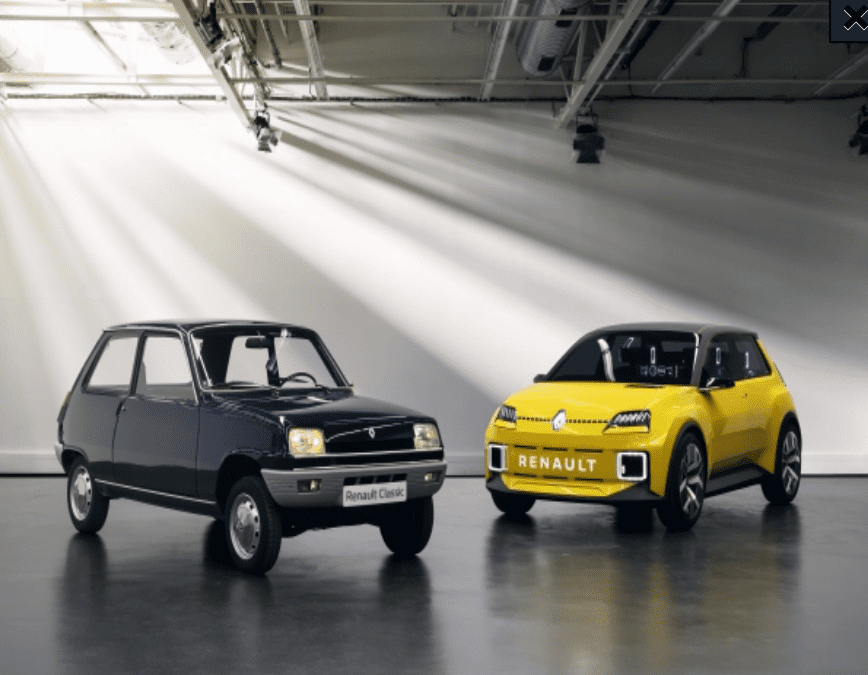
For the Renault 5 Prototype, François Leboine wanted to “provoke a smile” and revive good memories, with the development of the concept’s distinctive headlights embodying the overall approach.
Inspired by the original R5 The first task in creating the Renault 5 Prototype was to step back and gather archive material to analyse, understand and deconstruct the original vehicle and grasp what it was about. Access to sketches by the original designer Michel Boué, as well as photos, magazines and brochures made it possible to study the original from all angles. A vehicle from Renault Classic also helped to understand more detailed elements such as the famous headlights.
From here, the first sketches were made. “The sketches captured the fundamental elements that needed to be retained to reproduce the mischievous look of the original R5,” explains François Leboine. Then, the designers moved on to define proportions, contours and the distance between the headlights, to find the expression and characterful look of the 1970s model.
Transforming classic features into futuristic details After analysing the graphic characteristics and working on the proportions, designers transformed it. For the Renault 5 Prototype, they were inspired by aeronautics, architecture, product design and electronics. “It was really important that the Renault 5 Prototype was not just a slavish copy of the past, but that it really was a vehicle that contained the elements of the future”, said François Leboine.
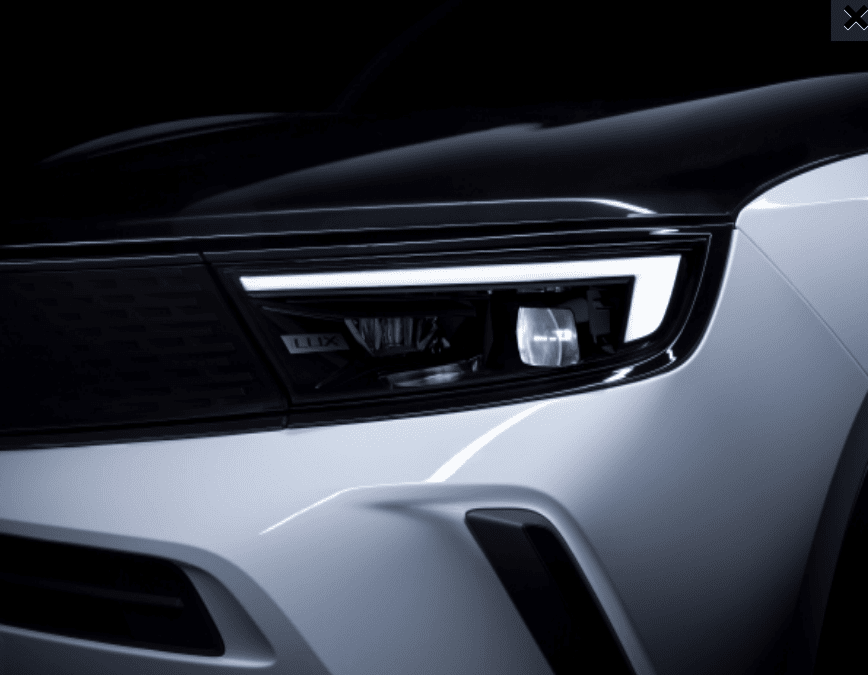
As a result, the prototype’s headlights have become a real technological, futuristic element. Where the optional fog lights once were on the original R5, there are now unique daytime running lights fully integrated into the front bumper.
A successful reimagination of an icon The final element is the ultimate step for designers, the one that lets them know if their work has been successful. “The reaction of the people around us determines if we’ve hit the bull’s eye, if we’ve brought the R5 back to life or if it was a failure”, explains François Leboine. “In the end it exceeded our expectations.”
With the Renault 5 Prototype, the emblematic model of Renault’s heritage now has a worthy successor – a modern car, full of charm and in tune with the times. It represents a successful projection into the future while fully respecting Renault’s DNA.
… in the last decade, the C-Class was the highest-volume Mercedes-Benz model? Since the introduction of the still current generation in 2014, over 2.5 million Saloon and Estate models have been sold. All in all, over 10.5 million Mercedes-Benz cars in this category have been delivered to customers since 1982.
… China has been the largest sales market for the C-Class Saloon since 2016? In addition, the USA, Germany and Great Britain have been the largest sales markets for the C-Class Saloon and Estate models in the last ten years. Two out of every three C-Class cars sold in Germany are the Estate variant.
… both the front and rear passengers benefit from the moderately increased exterior dimensions of the new model generation? Elbow-room has been increased by 22 mm in the front and 15 mm in the rear over the previous model. Headroom in the rear has increased by 13 mm (Estate: 11 mm). Thanks to up to 35 mm more kneeroom in the rear, journeys are even more pleasant for passengers in the rear.
… the C-Class has taken another major step forward with respect to digitisation and high quality? The interior now has highlights such as the display and operating concept adopted from the new S-Class, with a sporty interpretation. This is accentuated by another design feature: the dashboard and central display are slightly tilted towards the driver.
… domestic equipment and household appliances can be controlled using the “Hey Mercedes” voice assistant of MBUX? Thanks to the Smart Home function, they can be networked with the vehicle and controlled remotely.
… the light in each DIGITAL LIGHT headlamp is refracted and directed by means of 1.3 million micro-mirrors? The resolution is therefore more than 2.6 million pixels per vehicle. DIGITAL LIGHT with projection function[1] is available as an option. This system can make driving safer by projecting guide lines, symbols and animations onto the road.
… the turning circle is reduced by over 40 centimetres to under eleven metres with rear-axle steering? With this optional feature, the steering angle at the rear axle is 2.5 degrees.
Mercedes-Benz management about the new C-Class
“The C-Class is our bestseller at the heart of the global market”
“The letters C and S sit at opposite ends of the alphabet. However, in our portfolio they’re now moving closer together. The C-Class is already our best-selling saloon. Still, I’m certain our new C-Class will excite even more customers with a wide range of high-tech features derived from our flagship S-Class. With the latest generation MBUX, rear-axle steering and comprehensive electrification, our most successful model range will once again raise the bar as the most sophisticated offering in its segment.” Ola Källenius, CEO of Daimler AG and Mercedes-Benz AG
“Our customers have always loved the C-Class, because it has always been top with regard to comfort and technology as well as to spaciousness and design. That is substantiated by over 10.5 million units sold since 1982. With the latest edition, we are taking the next logical step on our road to the digital and sustainable future with a host of innovations and cutting-edge digital elements. Be it the Saloon or the Estate model – our customers have the possibility to customise the C-Class in order to turn it into a personal comfort zone“. Britta Seeger, Member of the Daimler AG and Mercedes-Benz AG Boards of Management, Marketing & Sales
“Driving on electric power in everyday life and using the hybrid powertrain on long distances: The new C-Class is flexible, saves resources and as a plug-in hybrid runs for more than 100 kilometres on electric power – a clear benchmark. This too is part of our Ambition 2039 on the road to climate-neutrality.“ Markus Schäfer, Member of the Board of Management of Daimler AG and Mercedes-Benz AG; Daimler Group Research and COO Mercedes-Benz Cars
“After its introduction in the S-Class, the second generation of MBUX already débuts in new C-Class. All the possibilities for intuitive operation and personalisation have been adopted, plus driver-orientation as a new feature specific to the model series: the dashboard and central display are slightly tilted towards the driver, underlining the sportiness of the C-Class as a first in a Mercedes-Benz passenger car”. Georges Massing, Senior Manager Digital Vehicle and Mobility, Mercedes-Benz AG
“We have created the most stylish and exclusive C-Class ever applying our company’s style of ‘Sensual Purity’. We create desire through the aesthetic beauty of sensuous surfaces, perfect sporty proportions, and an extraordinary ambience in the interior“. Gorden Wagener, Chief Design Officer of Daimler Group
“The new C-Class redefines its segment in several respects at once: the comfortable spaciousness in the rear, the interior ambience and the high-quality workmanship. Plus there are equipment and comfort features from higher categories such as, for example. the rear-axle steering or DIGITAL LIGHT. “ Prof Dr Uwe Ernstberger, Head of S-Class and C-Class Product Group
Brief interview with Christian Früh, Chief Engineer for the Mercedes-Benz C-Class
“Superb innovations in every area”
Christian Früh has been the Chief Engineer for the C-Class since April 2009. A native of Heidelberg, he previously headed the development of the assistance systems and was project manager for the Mercedes-Benz SLR McLaren. Früh holds a degree in mechanical engineering after studying at the universities of Karlsruhe and Darmstadt.
Mr Früh, what’s your personal highlight of the new C-Class?
Christian Früh: For me, the highlights include the new plug-in hybrid generation with an electric range of around 100 kilometres (WLTP[2]), nimble handling, and a user-friendly boot. We also pushed the limits with respect to driving dynamics and active safety: the new rear-axle steering opens up new dimensions in driving pleasure. But this is only the tip of the iceberg. If we go through the vehicle in detail, we find superb innovations and features for every taste wherever we look. And in the end, that’s what distinguishes the C-Class – you don’t (really) need any more car than this.
What was the main development focus?
And the new plug-in hybrids are a great step forward in sustainability?
Früh: Yes, because at around 100 kilometres, the electric range will be twice that of the preceding model. The additional electric output is 95 kW. The battery can be charged to 100 percent capacity in 30 minutes. For many of their journeys, our customers will never use the combustion engine. Depending on customer behaviour and route profile, the carbon footprint can be as good as that of a BEV – depending on the electricity mix, of course. Not forgetting the considerably improved daily practicality: Despite the higher nominal battery capacity of 25.4 kWh, the luggage compartment floor is level and offers more space than in the preceding model. However, not only the plug-in hybrids, but also the other engines are in line with our “Electric First” strategy. Because each model of the C-Class has an electrified hybrid powertrain.
You have a passion for skiing. After your active career on the German national freestyle team, you were approached by the German Skiing Association and nearly became a coach. This suggests that an Estate model would be the ideal C-Class for you?
Früh: (laughs) Yes, in 1990 I reached a point where I had to decide whether to make sport my profession or base my career on my university degree. Looking at it today – as Chief Engineer for the C-Class – there are certainly some parallels with being a coach: you have to lead and motivate the team, you are always measuring yourself against the best in the world, and you’re pleased when you achieve success, break records, arouse public interest and receive awards. And if you’re at the high level we’ve reached with the C-Class, you fight particularly hard for the last few percentage points of progress, like a competitive athlete. But to answer your question: yes, I’m a fan of the versatile Estate model, especially in combination with 4MATIC. And we may have a surprise in store for fans of sporty estate cars with striking looks and dynamic handling …
The new C-Class: Saloon and Estate
This is how inspiring the comfort zone can be
Stuttgart. Welcome to a new, even more digital and efficient world, and welcome home: the new C-Class stands for both, and in all respects creates a future-proof comfort zone in a time of worldwide transformation. As the first classic model series from Mercedes-Benz, the new C-Class is electrified throughout thanks to plug-in hybrids and mild hybrids with 48-volt technology and integrated starter-generator. Due to a high-efficiency battery system, it achieves an electric range of about 100 kilometres (WLTP[3]) as a plug-in hybrid. That is unprecedented in this category to date. It also sets standards with respect to sustainability. And because the C-Class is one of the company’s highest-volume model series, this systematic electrification has a correspondingly strong effect on our carbon footprint. Other technical refinements include optional features such as DIGITAL LIGHT and rear-axle steering. The Saloon and Estate models première together, can be ordered from 30 March and will arrive in dealer showrooms in summer 2021.
Design: Sensual purity with a sporty and elegant touch
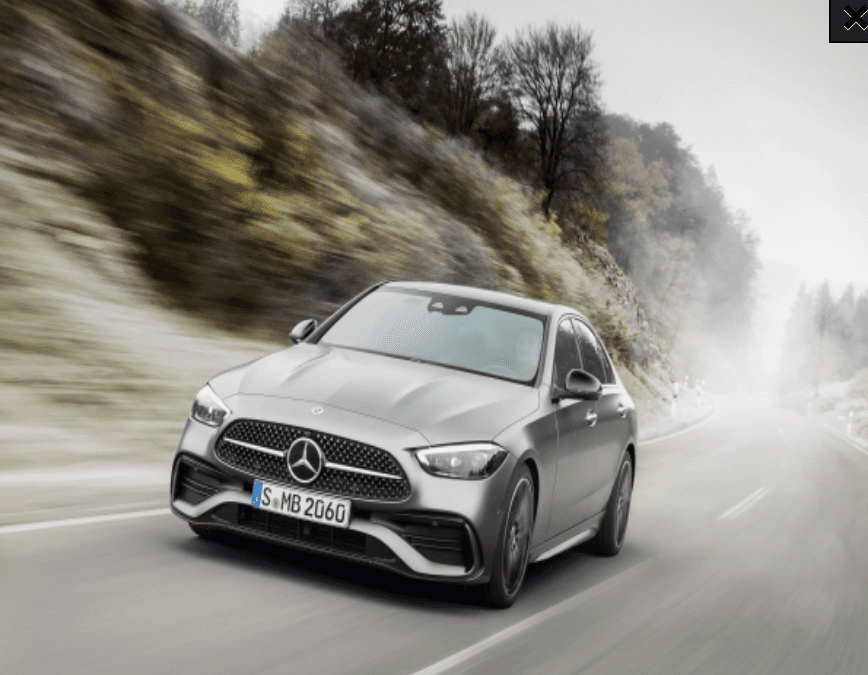
The new C-Class already looks to be in motion at a standstill with its dynamic proportions, thanks to the combination of short front overhang, long wheelbase and rear overhang. The sporty bonnet with power domes accentuates this urge of forward motion. The windscreen and passenger cell have been moved to the rear for these classic proportions known in the industry as “cab-backward design”. The preceding model was already a great step forward in terms of a high-value appeal in the interior, and the new C-Class goes even further with respect to modern luxury. The interior adopts highlights from the new S-Class, adding a sporty touch.
Exterior design: Profile with attractive light effects
When viewed from the side, elaborately sculptured surfaces create unique light effects. Conversely, the designers have reduced lines to a minimum, which accentuates the so-called catwalk line or shoulder line even more. In the Estate model, the progressive roof line in combination with the inclined rear window adds a sporty touch without functional compromises. Other features producing the sporty, superior appearance include the wide track and the flush 17- to 19-inch wheels in modern designs.
The brand’s hallmark radiator grille characterises the front. All models feature a central star, with the design and character of the radiator grille differing in the details. The base model has a central star and louvres. In the AVANTGARDE line, there are additional decorative elements in the louvres, while the radiator grille and front apron feature chrome surrounds. The distinguishing feature of the AMG Line is the diamond grille with the star design in chrome.
The rear-end design is typical of a Mercedes-Benz saloon. The high-quality design of the tail lamps fascinates with an unmistakable day and night appearance. In the Saloon, the lamps for the first time have a two-piece design in the C-Class, with the light functions divided between the side wall and boot lid lamps. Their precisely configured interiors also showcase the standard of particularly high quality in detail. Optional or line-specific trim in the rear bumper attractively rounds off the rear view. Three new paint finishes – spectral blue, high-tech silver and opalite white – have been added to the colour range.
Interior design: sporty touches thanks to the driver-centred design
The dashboard is divided into an upper and a lower section: into a wing-like section with new, flattened round vents reminiscent of aircraft engine nacelles, and into an opulent expanse of trim. The latter flows from the centre console to the dashboard without interruption. Driver-focus adds to the sportiness: the dashboard and central display are slightly tilted towards the driver by six degrees.
The driver area features a high-resolution LCD screen. It is free-standing, and appears to float in front of the wing profile and the expanse of trim. This sets the driver display apart from traditional cockpits with classic round dials. Customers have a choice between a 10.25-inch (26.0 cm) or a 12.3-inch (31.2 cm) version.
The paradigm change to digitisation is also obvious in the central display: the vehicle functions can be controlled using the high-quality touchscreen. Its portrait orientation is particularly advantageous for navigation. The touchscreen likewise appears to float above the expanse of trim. Like the dashboard, the screen is slightly tilted towards the driver. The central display has a screen diagonal of 9.5 inches (24.1 cm) as standard. A larger version measuring 11.9 inches or 30.2 cm is optionally available.
A high-quality chrome insert divides the centre console into a rear, padded section for the armrest and a front section in lustrous jet black. The seemingly free-floating central display rises smoothly and seamlessly from this three-dimensional surface.
The modern, highly reduced design of door panels frames both ends of the dashboard. The door centre panel with integrated armrest evolves from a vertical surface into a horizontal orientation. Reflecting the design of the centre console, the front section takes the form of a metallic high-tech element. It can be used as a grab or closing handle, and houses the power window controls. Another highlight is the floating control cluster, into which the door opener and seat adjustment controls are integrated.
The special design of the optional AVANTGARDE or sport seats of the new C-Class uses layers and enveloping surfaces to create a visual impression of lightness. The head restraints are a completely new design and are attached to the backrest with a sealed piece of trim under which the adjustment mechanism is located.
A dashboard covered with man-made leather and featuring nappa-look beltlines is available for the C-Class (optional equipment, standard with AMG Line). The range of available trim showcases innovative surfaces. These include new interpretations of open-pored veneers in brown tones and a black, open-pored wood veneer featuring fine inlays of genuine aluminium that follow the dashboard’s contours.
The driver display and media display offer a holistic, aesthetic experience. The look of the screens can be individualised with three display styles (Discreet, Sporty, Classic) and three modes (Navigation, Assistance, Service). In “Sporty”, for example, the colour red is predominant and the central rev counter has a dynamic design. If any of the lines are selected, the new C-Class is equipped with ambient lighting featuring optical fibres as standard.
Latest generation of MBUX: intuitively operated and learning
Like the new S-Class, the new C-Class is equipped with the second generation of MBUX (Mercedes-Benz User Experience). The vehicle interior becomes even more digital and intelligent, as both the hardware and software have made great strides: Brilliant images on the LCD screens make it easy to control vehicle and comfort functions.
The driver display and media display offer a holistic, aesthetic experience. The information is presented in a clearly structured way. Mercedes-Benz developed a new display aesthetic for the S-Class, which now is systematically used as the basis for other models.
The look of the screens can be individualised with three display styles (Discreet, Sporty, Classic) and three modes (Navigation, Assistance, Service).
In “Classic” style, the driver is welcomed with a familiar display environment. The proven display with two tubes and changing content between them provides all the information relevant to the driver.
“Sporty” is dominated by the colour red, with dynamic design of the central rev counter.
In “Discreet” style, the content is reduced to what is essential. In addition, both screens can be shown in seven colour schemes with the ambient lighting. This makes for an impressive colour experience in the interior.
In the new “Assistance Mode”, the traffic situation is shown in real time and supplemented with important displayed information.
The full-screen navigation was adopted from the S-Class, and gives the driver the best possible guidance on a journey.
Hey Mercedes: the increasingly sharp voice assistant
The voice assistant “Hey Mercedes” becomes more interactive and capable of learning by activating online services in the Mercedes me App. Moreover, certain actions can be performed even without the activation keyword “Hey Mercedes”. These include taking a telephone call. “Hey Mercedes” also explains vehicle functions, and, for example, can help when asked how to connect a smartphone by Bluetooth or where the first-aid kit can be found. “Hey Mercedes” is also able to recognise the vehicle occupants by their voices.
Smart Home: Mobile intelligence for maximum operating convenience from a distance
With the MBUX Smart Home function, the C-Class now becomes a mobile control centre for the home of many people. Because Smart Home refers to WLAN, sensors and actuators make the home increasingly intelligent and communicative: temperature and lights, shutters and electrical appliances can be remotely monitored and controlled. Motion detectors and window contacts inform the user of welcome or unwelcome visitors.
“Hey Mercedes, is there anybody in my home right now?” “I checked. The last movement detected was in the kitchen one hour ago.” This is how future conversations between the driver or passenger and the user’s smart home might go using the MBUX (Mercedes-Benz User Experience) voice assistant. At the market launch, the MBUX Smart Home function will support numerous devices offered by important smart home providers – corresponding contracts have already been concluded with Bosch Smart Home and Samsung SmartThings. Further providers will follow, and be announced at a later stage. Right from the start, Hey Mercedes understands queries and commands in four languages (German, Chinese, American and British English). One can address lamps, sockets, thermostats, shutters and blinds, motion detectors and door or window contacts, as well as temperature sensors. So the system can also answer this question: “Did I remember to turn the heating down?” Depending on the response and the thermostats installed in the home, it is possible to change the setting: “Set the temperature to 18 degrees in the whole house!” In this way, Smart Home integration into MBUX helps to reduce home energy consumption. It also enhances comfort, because the heating can also be remotely turned up again in good time.
Music streaming: millions of songs to choose from
With the “Online Music” service, Mercedes-Benz has now fully integrated the major music streaming services into the MBUX infotainment system. MBUX enables seamless access to the personal user profile at the linked music provider. This not only gives customers convenient access to their favourite songs and personal playlists, but also the opportunity to discover millions of songs and curated playlists. Operation is intuitive, using the MBUX voice assistant “Hey Mercedes” or touch controls on the steering wheel, or directly on the central display.
Other highlights
Augmented Video is available as optional equipment. A camera registers the surroundings in front of the vehicle. The moving images are shown on the central display. In addition, virtual objects, information and markers are superimposed on the video image. These include, e.g. traffic signs, directional arrows, lane-change recommendations and house numbers. This can make navigation much easier, especially in urban areas.
A colour head-up display can be ordered as optional equipment. The driver sees a virtual image measuring 9 x 3 inches (approx. 23 x 8 cm) floating above the bonnet at a distance of about 4.5 m.
A fingerprint scanner is located in an ergonomic position below the central display. This allows users to log into MBUX quickly, conveniently and securely. The reason being that personal settings and data such as favourites, most recent destinations, behaviour-based predictions, business calendar entries or emails are protected. Payment processes via Mercedes me are also reserved to authenticated users.
“Over-the-air” (OTA) updates: The software is always kept up-to-date
As soon as a new update from Mercedes-Benz becomes available, a message appears in MBUX. The update is downloaded and installed in the background. The user then has to agree explicitly to its activation again. In this way the vehicle is always up-to-date. Features which have not even been invented yet can also be installed by means of OTA updates in vehicles already sold. To transfer the data, Mercedes-Benz relies on mobile communications technology and the communication module installed in the vehicle due to the high security standard.
Another way to ensure an up-to-date and improved user experience is to book new functions in the Mercedes me Store, e.g. music streaming services or In-Car Office. Subscription services can also be renewed or newly added directly online via the Mercedes me Store.
Powertrain: systematic electrification of the modern four-cylinder engines
Thanks to systematic electrification and intelligent downsizing, the new C-Class sets new standards in efficiency. The engine range has only four-cylinder units from the current modular FAME (Family of Modular Engines) Mercedes-Benz engine family. Accordingly, the engine range plays a major role in the flexibility of the international production network, with needs-based electrification.
In addition to turbocharging, both the diesel and the petrol engines now have an integrated starter-generator (ISG) for intelligent assistance at low engine speeds as a mild hybrid of the second generation. This ensures outstanding power delivery. The ISG uses a 48 volt on-board electrical system that ensures functions such as gliding, boosting or energy recovery, and makes significant fuel savings possible. The engines also start very rapidly and comfortably as a result, so that the start/stop function is almost as imperceptible to the driver as the transition from gliding with the engine switched off to strong acceleration under engine power. When idling, the intelligent interaction between the ISG and the combustion engine ensures outstandingly smooth running.
First diesel with an integrated starter-generator
Spearhead of the efficiency improvement measures is the new OM 654 M with an integrated second-generation starter-generator (ISG). It has a 48-volt partial on-board electrical system. An energy recovery function and the ability to “glide” with the engine switched off make the engine even more efficient. Along with electrification, which also includes the use of an electric refrigerant compressor for the air conditioning system, the most important modifications that make an output of up to 195 kW plus an additional 15 kW from the EQ Boost system possible are:
A new crankshaft increases the stroke to 94.3 mm and the displacement to 1992 cc (previously: 92.3 and 1950).
The injection pressure is increased to 2700 bar (previously 2500)
Particularly fast response times and uniform power delivery thanks to two water-cooled turbochargers, both now featuring variable turbine geometry.
A sodium-filled cooling duct in each of the steel pistons. This helps to dissipate temperature peaks in the combustion cavity of the pistons.
In terms of exhaust gas aftertreatment, this most powerful of the four-cylinder diesel engines also takes things one step further. Its components include:
a close-coupled NOx storage catalytic converter for reducing nitrogen oxides
a DPF (diesel particulate filter with special coating for reducing also the amount of nitrogen oxides)
an SCR catalytic converter (selective catalytic reduction with metered injected quantity of AdBlue®) and
an additional SCR catalytic converter in the vehicle’s underbody, with a separately metered injected quantity of AdBlue®
Four-cylinder petrol engine also with a second-generation ISG
The four-cylinder M 254 petrol engine with a second-generation starter-generator with an additional output of up to 15 kW and 200 Nm more torque is also celebrating its première in the C-Class. Thanks to energy recovery and the ability to “glide” with the engine switched off, the petrol engine is highly efficient. In the M 254, Mercedes-Benz has for the first time combined all the innovations of the modular engine family of four and six-cylinder petrol and diesel units in a single engine. They include NANOSLIDE® cylinder coating, CONICSHAPE® cylinder honing (trumpet honing) and the exhaust aftertreatment system positioned directly at the engine.
A completely new feature is the segment charger with flow connection, an advancement of the twin-scroll technology for even more instantaneous response of the forced induction system. The completely newly developed segment turbocharger is a result of cooperation between Mercedes-Benz turbocharger developers and the Mercedes-AMG Petronas Formula 1 team. The technology transfer to series production sets new standards with respect to power combined with maximum efficiency. For short periods, the output of the C 300 (combined fuel consumption: 7.0-6.6 l/100 km, combined CO2 emissions: 159-150 g/km)2 can additionally be increased by up to 20 kW overboost.
Transmission: Automatic now standard across the board
The 9G-TRONIC transmission was developed further for adapting the ISG, and is installed in all C-Class models. The electric motor, power electronics and transmission cooler have now moved into or to the transmission. Previously required lines are eliminated, which offers advantages with regard to installation space and weight. In addition, the efficiency of the transmission has been increased. Amongst other things, the optimised interplay with the electric auxiliary oil pump reduces the delivery rate of the mechanical pump by 30 percent compared with the predecessor – good for efficiency. Furthermore, it uses a new generation of the fully integrated transmission control with multi-core processor and new design and connectivity technology. In addition to the increased computing power, the number of electric interfaces has been drastically reduced, and the weight of the transmission controls have been cut by 30 percent compared with the predecessor.
The 4MATIC drive system of the all-wheel drive models has been advanced. The new front-axle drive allows higher torque levels to be transferred with an ideal axle load distribution for driving dynamics. Moreover, this has a significant weight advantage compared to the corresponding component in the preceding series – a contribution to CO2 reduction. The technicians were also able to reduce the friction losses in the new transfer case. In addition, it also a closed oil circuit, and requires no additional cooling measures.
Overview of Saloon and Estate models[4] (petrol engines):
Plug-in hybrids with an electric range of around 100 kilometres (WLTP)[8][9]
Fourth-generation plug-in hybrids will follow soon after the launch. Electrification is taking a great step forward while using the same base engines. With an electric output of 95 kW (129 hp) and an all-electric range of around 100 kilometres (WLTP), the plug-in hybrid C-Class will operate in all-electric mode in many cases – and on many days without using the combustion engine at all. This is the two-litre variant of the ultra-modern M 254 four-cylinder engine. The complete package is not only very efficient, but also decidedly sporty. Diesel plug-in hybrid Saloon and Estate models will follow.
The new high-voltage system is more compact and more powerful, while the number of high-voltage interfaces has been significantly reduced. The integration of the power electronics into the transmission housing reduces the installation space required, while also simplifying the assembly processes at the production plant. Increasing the system voltage also increases the output, without the need for larger cable cross-sections.
The high energy density of the hybrid traction head is achieved using a permanently excited synchronous motor with internal rotor. The 440 Nm peak torque of the electric motor is available right from the start, resulting in high agility when moving off, along with dynamic driving performance. The full electric power is available up to 140 km/h, at which point it is softly capped.
The high-voltage (HV) battery has been developed in-house by Mercedes-Benz AG. It is part of a fourth-generation family of batteries and represents a logical evolution of the previous generation. It consists of 96 cells in a so-called pouch configuration. The battery has a total capacity of 25.4 kWh, thereby bringing about a significant increase in electrical range to around 100 kilometres. To account for the high energy density, the HV battery has an internal cooling system. The thermal management system can therefore control the operating temperature irrespective of the climate control in the vehicle interior. In addition to continuous operation in hot and cold regions, this also allows quick charging with direct current. Even when the battery is completely discharged, it can be fully charged in around 30 minutes with the optional 55 kW DC charger. A standard-fit 11 kW charger (depending on the market) is available for three-phase charging at a Wallbox connected to the domestic AC mains.
The positioning of the battery in the vehicle brings advantages on a day-to-day basis compared with the previous model: there is no longer a step in the boot, and through-loading is now possible. This improvement is particularly noticeable in the Estate model: the length of the luggage compartment floor has increased by 63 mm to 1043 mm. Tall crates or cases of bottles can be loaded under the cassettes of the retractable luggage cover and dividing net without problems, as the height of the luggage compartment has increased by 150 mm to 732 mm. Compared to the previous model, the luggage capacity has increased by 45 litres to 360 litres, while with the rear seats folded down the Estate model can even accommodate 1375 litres (40 l more). Air suspension and level control at the rear are standard for both the Saloon and Estate models.
The driving experience: considerably more electric
All in all, the driving experience is significantly more electric. In view of the increase in electric range to around 100 kilometres, drivers will be able to cover most everyday journeys under electric power alone. The energy recovery function allows kinetic energy to be recuperated during deceleration or downhill driving, a process that has now also been improved in interaction with the hydraulic brake. The energy recovery output is now over 100 kW. The intelligent, route-based operating strategy activates the electric driving mode where this is most appropriate for the route. It takes into account such factors as navigation data, topography, speed limits and the traffic conditions for the entire planned route. A driver wishing to influence the energy recovery rate can do so directly in three stages controlled by rocker switches behind the steering wheel. This is possible in all driving modes except SPORT. In the driving mode D-, for example, the driver can experience the “one-pedal feeling”: When the driver takes his foot off the accelerator the vehicle slows down, purely by electric means, to such an extent that the hydraulic foot brake is often not needed.
The operating strategy communicates with the sensors of the assistance systems and thus efficiently supports the driver in many driving situations. Over longer distances in urban areas, for instance, the car will prioritise electric driving. Two additional driving modes enable the driver to make particularly advantageous use of the plug-in powertrain:
BATTERY HOLD: Maintaining the charge state of the high-voltage battery is given priority, e.g. when intending to drive in a city centre or green zone later on; selection of the most suitable drive configuration by the hybrid powertrain system, depending on the driving situation and route.
ELECTRIC: Electric driving up to 140 km/h, adjustable energy recovery rate in overrun mode, adaptation of Active Distance Assist DISTRONIC for electric driving, activation of the combustion engine using a pressure point of the accelerator pedal (kick-down)
The plug-in hybrids in the new C-Class have a haptic accelerator pedal module with a pressure point at an accelerator pedal angle of 9.7°. In ELECTRIC mode, this power surge is activated and allows all-electric vehicle operation up to the additional pressure point. If the pressure point is overridden, the combustion engine starts and delivers additional torque. The Power Nap function of ENERGIZING COMFORT is likewise reserved for the plug-in hybrids.
Suspension: comfort and agility
The key components of the new, dynamically configured suspension are a new four-link axle at the front and a multi-link axle at the rear mounted to a subframe. The new suspension provides the basis for a high level of suspension, ride and noise comfort, agile handling and driving fun. The new C-Class is optionally also available with continuously adjustable damping and a sport suspension. Air suspension at the rear is standard for both the Saloon and Estate models of the plug-in hybrids.
Rear-axle steering: more agile and dynamic
The new C-Class is especially agile and stable with the optional rear-axle steering and the accompanying, more direct steering ratio at the front axle. The steering angle at the rear axle is 2.5 degrees. This reduces the turning circle by 43 centimetres to 10.64 metres.
The driver also needs fewer turns of the steering wheel for full lock. With rear-axle steering, and depending on the drive concept, this requires 2.1 instead of 2.35 turns (rear-wheel drive with comfort steering) or 2.3 turns (4MATIC versions with comfort steering).
At speeds below 60 km/h, the rear wheels steer in the opposite direction to the front wheels – and by up to 2.5° opposite to the front-axle angle during parking. Depending on the situation, this virtually shortens the wheelbase, and the vehicle is more manoeuvrable, light-footed and agile as a result. At speeds above 60 km/h, the rear wheels steer up to 2.5° in the same direction as the front wheels. This virtual increase in wheelbase has noticeable advantages in the form of improved handling stability and safety at high speeds, during fast lane-changes or sudden evasive manoeuvres.
Moreover, considerably less steering input is required during dynamic manoeuvres, e.g. when driving on country roads – and the vehicle responds to steering movements in a more sporty manner. This is supported by the integrated dynamic control function of the ESP®.
Driving assistance systems: stress-relief and support in hazardous situations
Compared to the previous C-Class series, the latest generation of the Driving Assistance Package has additional and advanced functions. These reduce driver workload in day-to-day situations, for more comfortable and safe driving. When danger threatens, the assistance systems are able to respond to impending collisions as the situation demands. The operating principle of the systems is visualised on the driver display by a new display concept.
Advancement of the assistance systems: three examples
On all types of roads – motorways, country roads or in town – Active Distance Assist DISTRONIC can automatically maintain a preset distance from vehicles ahead. One new feature is the response to stationary vehicles on the road at speeds up to 100 km/h (previously: 60 km/h).
Active Steering Assist helps the driver to stay in lane at speeds up to 210 km/h. New features include additional lane recognition with the 360° camera, forming an emergency corridor especially at low speeds, significantly improved availability and performance in bends on country roads and improved lane centring on motorways.
In addition to conventionally posted speed limits, Traffic Sign Assist recognises signs on overhead gantries and at roadworks. Even conditional instructions (e.g. “when wet”) are recognised by evaluation of all on-board sensors. New are the stop sign and red light warning functions (as part of the Driving Assistance Package).
Intelligent parking systems support the driver when manoeuvring
Thanks to improved surround sensors, the parking systems give the driver even better support when manoeuvring at low speed. Operation is faster and more intuitive thanks to integration into MBUX. The optional rear-axle steering is integrated into the parking assistants, with the calculation of the trajectories adapted accordingly. Emergency braking functions also serve to protect other road users.
In addition to stabilising the combination when reversing, the optional trailer manoeuvring assistant for the Estate model can now also handle freely selectable cornering manoeuvres up to 90° for the first time. This allows precise and safe positioning of a trailer.
Crash safety: fit for all global requirements
Few models are sold in as many markets as the C-Class, which is currently available in over 100 countries. Around 1000 load stage variants are therefore examined during the course of development, as all engine and body variants, right and left-hand drive, hybrids or 4-MATIC models meet the same requirements. Plus there are special equipment items to meet specific rating criteria – vehicles for Europe have a centre airbag, for example. During a severe side impact, it positions itself between the driver and front passenger seat, reducing the risk of their heads making contact. It is integrated into the driver’s seat backrest in the middle of the vehicle.
Together with the familiar PRE-SAFE® protection concepts for frontal and rear collisions, PRE-SAFE® Impulse Side (available in conjunction with the Driving Assistance Package Plus) forms a kind of virtual crumple zone that extends all around the vehicle. As only a limited crumple zone is available in a side impact, PRE-SAFE® Impulse Side (availability depending on selected equipment) can move the affected driver or front passenger away from the danger even before the crash as soon as the system detects that a side collision is immediately imminent. For this purpose, air chambers in the side bolsters of the front seat backrest are inflated in fractions of a second.
All in all, the safety concept of the C-Class is based on an intelligently designed body shell with a particularly rigid passenger cell and crash structures that deform in a specific way acting together with seat belts and airbag systems. In an accident, systems such as belt tensioners and airbags can be activated to protect the occupants as the situation demands. With the help of numerous numerical simulations, the vehicle structure was configured to ensure particularly good occupant protection in the event of a crash. In all aspects of the vehicle configuration that are relevant in an accident, the legal requirements were further bolstered by internal testing requirements and test criteria derived from the findings from real-life accident scenarios.
High-tech features: impressive comfort in terms of driving at night, climate control, and seats
The new C-Class is equipped with LED High Performance headlamps as standard. The DIGITAL LIGHT system familiar from the new S-Class is available as an option. This revolutionary headlamp technology allows new functions, e.g. the projection of guide lines or warning symbols onto the road ahead. The AIR-BALANCE Package provides an individual fragrance sensation in the interior. At the touch of a button or by voice command, the holistic “Fit & Healthy” approach of ENERGIZING Comfort provides a tangible experience of the different comfort systems in the S-Class, and features programmes that group them into worlds of experience.
DIGITAL LIGHT: extremely powerful with optional projection functions
The new C-Class is equipped with LED High Performance headlamps as standard. The DIGITAL LIGHT system familiar from the new S-Class is available as an option. This revolutionary headlamp technology allows new functions, e.g. the projection of guide lines or warning symbols onto the road ahead. DIGITAL LIGHT has a light module with three extremely powerful LEDs in each headlamp, whose light that is refracted and directed by 1.3 million micro-mirrors. The resolution is therefore more than 2.6 million pixels per vehicle.
With these dynamics and precision, this intelligent system creates virtually endless possibilities for high-resolution light distribution which optimally adjusts to the surrounding conditions. However, the deciding factor is not only the technology in the headlamp, but rather the digital intelligence behind it. On-board cameras and sensor systems detect other road users, powerful computers evaluate the data plus digital navigation maps in milliseconds and give the headlamps the commands for optimally adapting the light distribution in all situations. The result: optimal vision for the driver without dazzling other road users, as well as innovative functions with added safety. “DIGITAL LIGHT” is not chasing world distance records, but rather wants to achieve excellent visibility and maximum, dazzle-free brilliance at all times through an innovative overall concept. Innovative functions for supporting the driver and enabling communication with other road users significantly improve safety when driving at night.
DIGITAL LIGHT with projection function[10] is available as an option. This system can make driving safer by projecting guide lines, symbols and animations onto the road.
For example, DIGITAL LIGHT projects two guide lines when encountering roadworks. These roughly delineate the vehicle’s width. The driver is therefore given even better guidance in the narrowed roadway.
The intelligent technology highlights pedestrians in the danger zone with a spotlight function and clarifies their position with projected direction points.
Drivers travelling against the prescribed direction on motorway slip roads or one-way streets are warned by a symbol.
The same warning symbol appears before running red lights or stop signs.
Comfort appointments: improvements in many details
The optional massage function of the front seats has been expanded to cover the entire back area: eight chambers in the backrest ensure an improved deep-tissue effect. A vibrating massage is also possible on the driver’s side, with four motors installed in the seat cushion. Seat heating in the rear is available for the first time in the Saloon and Estate models.
At the touch of a button or by voice command, the holistic “Fit & Healthy” approach of ENERGIZING Comfort provides a tangible experience of the different comfort systems in the S-Class, and features programmes that group them into worlds of experience. At the same time, the system creates a matching atmosphere in the interior – for example, invigorating in case of fatigue or relaxing in case of an elevated stress level. The ENERGIZING COACH suggests an appropriate fitness or wellness programme based on vehicle and trip data. It also factors the information about sleep quality and stress level into its intelligent algorithm if the driver has a suitable wearable. In plug-in hybrid models, it offers the “Power Nap” programme, which is useful e.g. when making a stop at a service station or to charge the battery. The programme has three phases – falling asleep, sleeping, waking – and can increase performance and provide new energy.
The AIR-BALANCE Package provides an individual fragrance in the interior – in line with personal preference and mood. Thanks to refreshing ionisation and filtering of the outside and interior air, it also helps to ensure improved air quality and a greater sense of well-being.
Dimensional concept and practical features: more space in the front and rear
With a length of 4751 mm and a width of 1820 mm, the Saloon and Estate models are considerably larger than their predecessors. The wheelbase has increased by 25 mm to 2865 mm. Both the front and rear passengers benefit from the increased exterior dimensions.
The good drag coefficient of the preceding models (Saloon: Cd 0.24, Estate: Cd 0.27) has been preserved despite the larger exterior dimensions.
The luggage compartment of the Estate model is 30 litres larger than before, with a capacity of 490 to 1510 litres. Other practical improvements: The height of the load compartment under the retractable cover, as well as the load compartment length, have been increased compared to the preceding model. The loading sill is slightly lower.
The rear seat backrest of the Estate model has a 40:20:40 folding split. Operation is by two push buttons on the left and right side of the rear seat backrest. The optional Load Compartment Comfort Package includes electric folding. It is operated by switches in the left and right sidewalls of the load compartment.
The Estate model features the EASY-PACK tailgate as standard. The tailgate opens and closes conveniently at the touch of a button: with the button on the ignition key, the switch in the driver’s door or the release handle on the tailgate. More operating convenience: the retractable luggage cover and dividing net have a two-piece design for the first time. Each has its own roller cassette. The reduced weight of the individual cassettes makes operation easier.
A success story: bestseller for many years
In the last decade, the C-Class was the highest-volume Mercedes-Benz model. Since the introduction of the still current generation in 2014, over 2.5 million Saloon and Estate models have been sold. China has been the largest sales market for the C-Class Saloon since 2016. In addition, the USA, Germany and Great Britain have been the largest sales markets for the C-Class Saloon and Estate models in the last ten years. In 2020, the C-Class Saloon and Estate were delivered to customers in more than 100 markets around the world. Two out of every three C-Class cars sold in Germany are the Estate variant.
The C-Class success story began in 1982. This was when the Mercedes-Benz 190 was launched as a mid-size model. Because it was the smallest car in the Mercedes-Benz range at the time, it soon earned the nickname ‘Baby Benz’. It was not only with combustion engines – for example the sporty 190 E 2.5-16 Evolution with a four-valve engine – that Mercedes-Benz repeatedly made its mark, but also with alternative powertrains: For example, the 190 E Elektro as an experimental car based on the 201 series was presented at the Innovation Market of the Hanover Fair in 1990, and at the Geneva Motor Show in 1991. Two electric motors excited by permanent magnets, each with 16 kW (21 hp), fed by sodium/nickel chloride batteries powered the rear wheels.
The first car under the C-Class designation was introduced in May 1993. All in all, over 10.5 million Mercedes-Benz cars in this category have been delivered to customers since 1982. For many customers, the C-Class is the entry-level model to the premium car segment. In China and South Korea, the C-Class Saloon is their first vehicle from a premium brand for around 50 percent of buyers. In many markets, the C-Class Saloon attracts a high proportion of female customers. The percentage of women is particularly high in the USA and South Korea: nearly one in every two C-Class Saloons is purchased by women.
Mercedes-Benz also broke new ground at the time, not only in terms of engineering but also because of the wider range of body shapes. The Estate model introduced by the company in 1996 was its first sporty, mid-size estate car. When Mercedes-Benz launched the next C-Class model series in 2000, it included the Sports Coupé, a completely new body variant. The market launch of the fourth C-Class generation in 2007 also saw the introduction of a new design feature. For the first time, the front-end design of a Mercedes-Benz Saloon varied according to the design and equipment line. While the ELEGANCE design and equipment line featured the three-pointed star in its traditional position on the bonnet, it was mounted in the centre of the radiator grille in the more sporty AVANTGARDE design and equipment line.
Production: in a global network with digital cutting-edge technologies
The new C-Class will be produced in the Mercedes-Benz Cars plants in Bremen (Germany), Beijing (China) and East London (South Africa). The Bremen plant, the largest private employer in the region with a workforce of more than 12,000, is the lead plant for this model series for the international C-Class production plants, e. g. by offering digital training. In this way, the new C-Class will be flexibly integrated into ongoing series production around the world. Close, digitally supported cooperation between the employees in the global C-Class production network will allow a smooth production start-up in all the plants around the world.
The worldwide production network of Mercedes-Benz Cars provides maximum flexibility. The company is therefore well-positioned in volatile times with changing parameters. The ability to breathe is a major success factor, and to this end new technologies are integrated into production. One example of smart production in Bremen is digital shop floor management, which allows production data to be monitored in real time. The QUALITY LIVE system enables the employees to check the quality of every vehicle in real time on a clearly arranged user interface. QUALITY LIVE and digital shop floor management are part of the MO360 digital production ecosystem of Mercedes-Benz Cars.
From 2022, all Mercedes-Benz Cars and Vans plants will produce on a carbon-neutral basis. Many Mercedes-Benz plants already source their electrical power from renewable energy sources today, and this also applies to Bremen.
More information from Mercedes-Benz is available at www.mercedes-benz.com. Press releases and digital services for journalists and multipliers are available on our online platform Mercedes me media at media.mercedes-benz.com and on our Daimler Global Media Site at media.daimler.com. You can also learn about current Mercedes-Benz Cars & Vans topics and events on our Twitter channel @MB_Press at www.twitter.com/MB_Press.
Mercedes-Benz AG at a glance Mercedes-Benz AG is responsible for the global business of Mercedes-Benz Cars and Mercedes-Benz Vans with over 170,000 employees worldwide. Ola Källenius is Chairman of the Board of Management of Mercedes-Benz AG. The company focuses on the development, production and sales of passenger cars, vans and vehicle-related services. Furthermore, the company aspires to be the leader in the fields of electric mobility and vehicle software. The product portfolio comprises the Mercedes-Benz brand with the sub-brands Mercedes-AMG, Mercedes-Maybach, Mercedes-EQ, G-Class as well as the smart brand. The Mercedes me brand offers access to the digital services from Mercedes-Benz. Mercedes-Benz AG is one of the world’s largest manufacturers of luxury passenger cars. In 2020, it sold around 2.1 million passenger cars and nearly 375,000 vans. In these two business areas, Mercedes-Benz AG is continually evolving its worldwide production network numbering around 35 production sites on four continents, while gearing itself to meet the requirements of electric mobility. At the same time, the company is constructing and extending its global battery production network on three continents. Sustainability is the guiding principle of the Mercedes-Benz strategy and for the company this means creating lasting value for all stakeholders: for customers, employees, investors, business partners and society as a whole. The basis for this is Daimler’s sustainable business strategy. The company thus takes responsibility for the economic, ecological and social effects of its business activities and looks at the entire value chain.
[1] All projection functions depend upon local road traffic regulations, and are available in partial scopes in the USA, the EU, China and the Gulf States.
[2] The data are preliminary; the vehicle is not on sale yet. The stated figures are the measured “WLTP CO2 figures” in accordance with Article 2 No. 3 Implementing Regulation (EU) 2017/1153. The fuel consumption figures were calculated based on these figures. Power consumption and range were determined on the basis of Commission Regulation (EU) No. 2017/1151.
[3] The data are preliminary; the vehicle is not on sale yet. The stated figures are the measured “WLTP CO2 figures” in accordance with Article 2 No. 3 Implementing Regulation (EU) 2017/1153. The fuel consumption figures were calculated based on these figures. Power consumption and range were determined on the basis of Commission Regulation (EU) No. 2017/1151.
[4] Figures for the Saloon model. Figures for the Estate model, if different, are shown in brackets
[5] The stated figures are the measured “NEDC CO2 figures in conformance with Article 2 No. 1 Implementing Regulation (EU) 2017/1153. The fuel consumption figures were calculated based on these figures. The WLTP figure is relevant for the assessment of the motor vehicle tax.
[6] The stated figures are the measured “WLTP CO2 figures” in accordance with Article 2 No. 3 Implementing Regulation (EU) 2017/1153. The fuel consumption figures were calculated based on these figures.
[7] Figures for the Saloon model. Figures for the Estate model, if different, are shown in brackets
[8] The stated figures are the measured “WLTP CO2 figures” in accordance with Article 2 No. 3 Implementing Regulation (EU) 2017/1153. The fuel consumption figures were calculated based on these figures. Power consumption and range were determined on the basis of Commission Regulation (EU) No. 2017/1151.
[9] All figures shown are provisional. The vehicle is not on sale yet.
[10] All projection functions depend upon local road traffic regulations, and are available in partial scopes in the USA, the EU, China and the Gulf States.
All-New Mokka and Mokka-e the latest models to feature IntelliLux LED Matrix lights
Matrix light technology comes with 14 individual LED lights for more powerful lighting
The glare-free headlights automatically switch to main-beam outside urban areas
They are available as standard on Ultimate Nav/LE models or as an option on SRi and Elite models
New Mokka and Mokka-e available to order now
Following in the footsteps of the new Corsa, Insignia and Crossland, the all-new Mokka and the zero emissions Mokka-e are available with Vauxhall’s leading IntelliLux LED Matrix headlight technology.
For those after the very best in lighting technology, Ultimate Nav and Launch Edition models for the Mokka and Mokka-e come standard with IntelliLux LED Matrix headlights. These feature 14 individual LEDs and offer more powerful and more precise lighting than conventional headlights or Xenon bulbs.
Housed in the new Vauxhall Vizor front end, the glare-free headlights automatically switch to main-beam outside urban areas, and continuously adapt the range and distribution of the light beam pattern to suit the road conditions and avoid dazzling oncoming traffic. The main beams are also automatically switched on at speed above 30mph.
Another benefit of LED light technology is they are more efficient than conventional bulbs, resulting in lower energy consumption from the battery – helping improve the range in the fully electric Mokka-e.
Every new Mokka comes standard with Vauxhall’s latest-generation LED headlights and taillights, not only giving the vehicles a sleek and stylish look, but also improving visibility on the road.
The new Mokka and Mokka-e are available to order now, with prices starting from £20,735 OTR for the Mokka and £30,840 OTR for the Mokka-e after the current Government Plug-in Car Grant*.
*Price has been calculated using manufacturer estimates and includes a £3,000.00 OLEV grant which has been deducted from the price of the vehicle (OLEV Grant not available in the Isle of Man). New Mokka-e is expected to be a qualifying model for this grant subject to acceptance by OLEV.
Yun San Motors Provides Sales and Aftersales Support for Singer Clients
Based in Taipei with additional locations in Taichung and Kaohsiung
California-based luxury automotive brand, Singer Group, Inc., recognized worldwide for its restorations of the air-cooled Porsche 911, announces its expansion in Asia and welcomes Taipei-based Yun San Motors into the company’s global partner network.
With current global partnerships reaching from North America, across Europe to Hong Kong, the new relationship with Yun San Motors further strengthens Singer’s brand in Asia.
New clients in Taiwan will be able to learn about Singer’s services and discuss their requirements in a sophisticated and welcoming environment, surrounded by a high level of customer support from the deeply experienced team at Yun San Motors. The announcement also means that both Singer’s existing clients and future owners in Taiwan will have access to expert, in-country servicing and maintenance from a trusted partner.
The Dropbox link below includes images of a 1991 Porsche 911 Reimagined by Singer, already on the roads of Taiwan. Named the Taiwan Commission by its owner, the car is presented in Silver Metallic with matte side stripes and Olive lettering. The interior is trimmed in Olive Green with Alabaster stitching. Lightweight carbon fibre track seats have been selected, with embossed suede inserts and brass grommets. The heart of this machine is a 3.8L, naturally aspirated, air-cooled flat-six, paired with a 5-speed transmission. The signature centre-mounted fuel-filler and external side-mounted oil filler are both specified.
Founder and Executive Chairman of Singer, Rob Dickinson is enthusiastic about the new relationship – “The Porsche 911 is of course loved all over the world and we restored our first car for Taiwan in the early years of Singer. It’s very exciting to be taking this next step in Singer’s second decade. As we complete restorations of these incredible machines for a growing number of owners in Asia, we need a remarkable partner to look after them. I’m delighted that Yun San Motors will be there to support our amazing clients in Taiwan and to represent Singer.”
Chairman of Yun San Motors, Timothy Chang noted: “I’m very pleased that we are able to welcome Singer, and the spirit of California, to Taiwan. The growth of their brand over the last ten years has been remarkable. We look forward to supporting Singer’s clients, building the brand and seeing more of these beautiful cars on the road here. Yun San Motors represents some of the most iconic automotive names in the world and I’m delighted that Singer is now part of the family.”
Singer Vehicle Design
Founded in California in 2009, Singer has become globally known and respected for its celebration of the Porsche 911. The company undertakes bespoke restorations for owners of the air-cooled cars. Singer is guided by a philosophy that encompasses:
A passionate focus on iconic design and a homage to the world’s most iconic sportscars.
Highly personalized restorations with superlative attention to detail, guided by the Singer’s mantra Everything is Important.
Modern engineering and material science combined with beautifully executed interiors and jewel-like details.
A deep connection with California and its automotive zeitgeist.
Over the past decade Singer has become a luxury brand with a global clientele and is now synonymous with the concept of Reimagining – bringing together heritage with twenty-first century engineering and material science.
The brand has been growing beyond car culture, with an award-winning Swiss watchmaking division, Singer Reimagined, launched in 2017. Singer stands for beauty, luxury, and perfect execution and is delighted to have found a new home in Taiwan with the very experienced Yun San Motors.
Singer Group quick highlights
2009 – Singer Vehicle Design launched – first Porsche 911 Reimagined by Singer presented during Monterey Car Week
2014 – First AWD restoration completed
2015 – First Targa restoration completed
2017 – Singer Reimagined watch company launched in Geneva, Switzerland
2018 – Results of Dynamics & Lightweighting Study presented at Goodwood Festival of Speed and Monterey Car Week.
2019 – TUV certification completed for European markets
2020 – Global Partner Network expands to Germany
About Singer Group, Inc.
With headquarters in Los Angeles, Calif., Singer Group was formed a decade ago to pursue the creative possibilities within the vibrant world of iconic automobiles. Air-cooled Porsche 911s, restored in a bespoke manner by Singer for their owners, have been presented with the world’s finest collectors’ cars at events including The Quail, A Motorsports Gathering and Goodwood Festival of Speed.
Singer Vehicle Design (Singer) restores and reimagines 1989 to 1994 Porsche 911s, based on the 964 chassis for its clients. Singer does not manufacture or sell automobiles. Singer’s Global Partner Network represents the brand across North America, Europe, the Middle East and Asia.
Singer is not sponsored, associated, approved, endorsed nor, in any way, affiliated with Porsche Cars North America, Inc., or Dr. Ing. h.c.F. Porsche, AG. The Porsche® name and crest and 911® are trademarks of Dr. Ing. h.c.F. Porsche AG, and any other products mentioned are the trademarks of their respective holders. Any mention of trademarked names or other marks is for purpose of reference only.
The product of Singer’s painstaking effort is a Porsche 911 restored and reimagined by Singer. Out of respect for Porsche, and to respect Porsche’s trademark rights, this incredible machine should never under any circumstances be referred to or described as a “Singer,” “Singer 911,” “Singer Porsche 911” or a “Porsche Singer 911,” or in any other manner that suggests that it is anything but a Porsche 911.
About Yun San Motors
Yun San Motors was founded in 2008 with the passion for offering the best service. There is no finish line as the company always aims for surpassing customers’ expectations and accomplishing the core value: Customer First. The team has profound experience in the High Luxury Segment automotive market with a relentless spirit offering solid, best-in-business services to luxury and high luxury segment clientele. The trust built among customers and teams has developed into the most vigorous strength of Yun San Motors.
Operating the official dealerships of Aston Martin, Bentley and McLaren across Taiwan over the past ten years, Yun San Motors has become the high luxury segment market leader of Taiwan, and thus has been invited to further develop its representation of iconic brands across the Asia Pacific region.
Yun San Motors aims to make every purchase journey and brand event an extraordinary experience to be cherished and redefined.