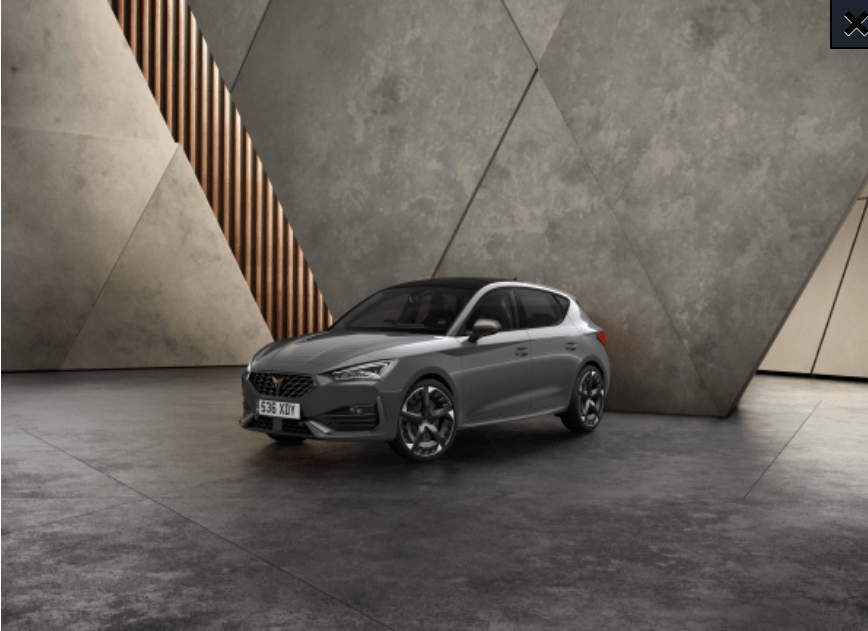
Pricing for the potent new CUPRA Leon is announced, starting from £35,660 RRP
CUPRA Leon 300PS is an evolution of two decades of performance heritage
Powerful 2.0 TSI powertrain is coupled with a DSG-auto transmission
Orders open with generously-equipped VZ2 and VZ3 trim levels
Available to configure now at www.CUPRAofficial.co.uk and orderable at one of 58 retail spaces across the country
CUPRA has opened the order books for the latest variant of its iconic Leon hatchback with the launch of the 300PS 2.0 TSI powertrain.
The brand’s flagship performance hatch is now available to order with prices starting from £35,660 RRP for the CUPRA Leon Hatch VZ2 TSI DSG-auto 300 and rising to £37,390 for VZ3 trim.
Available exclusively with the DSG-auto transmission, the latest iteration of the renowned 2.0-litre TSI four-cylinder engine develops 300PS and 400Nm of torque.
The turbocharged, direct injection petrol engine propels CUPRA Leon from 0-62mph in just 5.7 seconds and is limited to a top speed of 155mph.
As well as an increase in power output over its predecessor, the new CUPRA Leon is also more efficient, returning up to 37.2mpg on the combined WLTP cycle and CO2 emissions from 171g/km.
An exhilarating driving experience is guaranteed as standard, with CUPRA Leon featuring four driver selectable modes (with changes to throttle response and gear shifts), speed sensitive power steering and Dynamic Chassis Control.
The range kicks off with the VZ2 trim, featuring a host of performance upgrades as standard, including 19” machined black and silver alloy wheels, sports bumpers, black brake calipers, black headlining, CUPRA’s unique chrome and copper interior detailing, a CUPRA flat bottomed perforated leather steering wheel with gearshift paddles, sports bucket seats and a rear diffuser with oval quad exhaust pipes.
A comprehensive selection of technology comes as standard too, with highlights including a digital cockpit, a 10” infotainment system with navigation and Full Link smartphone integration (compatible with Mirror Link, wireless Apple CarPlay and wired Google Android Auto), four USB-C charging ports, wraparound ambient interior lighting, illuminated door sills, three-zone climate control, cruise control with speed limiter, keyless entry and start and a rear view reversing camera.
VZ3 trim adds 19” Aerodynamic machined sport black and silver alloy wheels, wireless phone charging, heated front seats, leather upholstery, a power driver seat with memory function and a heated steering wheel.
A panoramic sunroof, a choice of seven paint colours, two nappa leather colours (VZ3 only) and three levels of the Safety and Driving Pack (M, L or XL) can be additionally specified by customers.
CUPRA is an unconventional challenger brand based on stimulating style and contemporary performance that inspires the world from Barcelona with progressive cars and experiences. Launched in 2018 as a stand-alone brand, CUPRA has its own corporate headquarters and a racing car workshop in Martorell (Barcelona), in addition to a network of specialized points of sale around the world.
In 2020, the brand maintained its upward trend with an 11% growth and 27,400 vehicles sold, thanks to the strong performance of the CUPRA Ateca and the CUPRA Leon as well as the market entry of the CUPRA Formentor, the first model uniquely designed and developed for the brand. In 2021, CUPRA aims to prove that electrification and sportiness are a perfect match with the launch of the plug-in hybrid versions of the CUPRA Formentor and its first 100% electric model, the CUPRA el-Born.
CUPRA will participate this year in the off-road electric SUV’s competition Extreme E. Additionally, it is also FC Barcelona’s official automotive and mobility partner and World Padel Tour’s premium sponsor. The CUPRA Tribe is made up of a team of ambassadors who share the brand values, such as the German goalkeeper Marc ter Stegen, the Swedish driver Mattias Ekström and five of the best padel players in the world, among others.
Hyundai Motor UK launches ‘Charge myHyundai’ – a new service that offers convenience and peace-of-mind to owners of Hyundai battery electric vehicles (BEV) and plug-in hybrid electric vehicles (PHEV)
New service provides access to the largest public charging network across the UK using a single account
Charge myHyundai customers need just one app and a single card to use the service
High quality live data integration of Charge myHyundai will be available on Hyundai’s next generation battery electric cars, starting with IONIQ 5
Hyundai Motor UK has today launched Charge myHyundai – an integrated public charging service offering Hyundai electric and plug-in hybrid vehicle customers a convenient charging solution.
Owners of the brand’s BEV and PHEV models will have access to the largest charging network in the UK and can enjoy a streamlined one-payment solution via a single app or single radio-frequency identification (RFID) card. The service offers transparent tariffs for all customers, designed to fit their individual charging preferences.
Charge myHyundai gives Hyundai drivers access to over 15,000 charge points across the UK. Customers will be able to use charge points from most of the main operators via a single platform, with a flexible pay-as-you-go tariff making the use of public charging more simple and convenient.
Ashley Andrew, Hyundai Motor UK’s Managing Director, commented: “We’re excited to introduce Charge myHyundai to the UK for Hyundai electric vehicle customers as we know that public charging is one of the biggest perceived barriers for EV ownership. Charge myHyundai provides a comprehensive service where customers can easily locate and access public chargers, with a simplified payment solution giving BEV & PHEV owners peace-of-mind.
“You’ll see that as we continue to launch our next generation of electric cars, like the forthcoming IONIQ 5, Charge myHyundai will be integrated into the car’s head unit making it even more convenient and seamless.”
Charge myHyundai can be downloaded on iOS and Android devices, it enables intelligent route planning to help users find charging stations easily at their final destination or along a route. Users have real-time price information of the charging points in the app and have full price transparency of the charging service. The simple pay-as-you-go (PAYG) tariff gives the customer the freedom to charge whenever and wherever they need to with no monthly subscription fees (some network providers may offer a membership to access reduced tariffs).
Charge myHyundai customers can also access the public charging networks via a single RFID card. Upon registration, users will be sent an RFID card to use as a backup for areas with poor mobile phone reception.
The Charge myHyundai app brings together all relevant information, including the charging network map, tariffs, and customer’s Charge myHyundai account management. Overall, it offers easy access, a simple payment facility and a straightforward monthly bill – rather than individual bills from a multitude of public charging network providers.
Charge myHyundai can also be used in conjunction with Hyundai’s Bluelink® Connected Car Services. Bluelink connects drivers to their cars through their smartphones via the Bluelink app which enhances their driving experience and makes life on the road more comfortable, convenient and safe. For full-electric vehicle owners, this includes the ability to charge vehicles remotely, check battery status, set a charging schedule, and switch on the car’s climate control before setting off on a trip to heat or cool the interior.
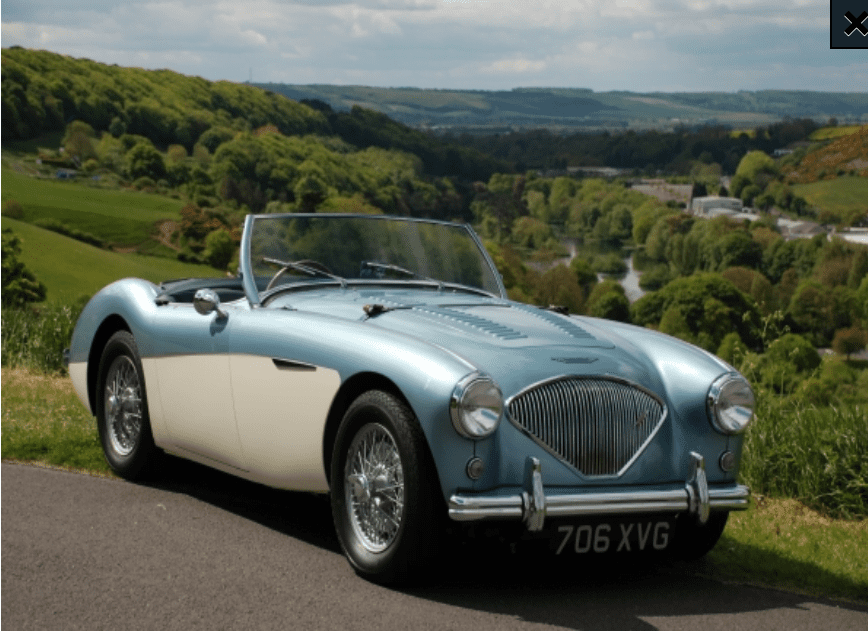
Concours Austin-Healey 100/4s uprated to works M specification are rare and highly desirable, but ‘706 XVG’ is especially so as it comes complete with eligibility and registration for the Mille Miglia, the world’s premier classic car rally.
This splendid, fully-restored example of a much-loved breed will go under the hammer at Hampson Auctions’ sale, Thornton Manor, Wirral on April 28.
It vacated the Longbridge production line in October 1955 bound for the car-friendly climate of Melbourne, Australia. Prior to its repatriation in 2019 the car was treated to an extensive rebuild by the globally-renowned Healey specialist Steve Pike of Marsh Classic Restorations. Then following its arrival on these shores it was uprated to full M specification by long-term Healey aficionados Murray Scott-Nelson of Scarborough, North Yorkshire. The notably low 63,000 miles currently displayed is believed to be genuine.
The Healey was displayed at the 2019 NEC Classic Car Show and, by invitation, at a GRRC Members’ meeting at Goodwood last summer. Superbly finished in Healey blue over white bodywork teamed with white-piped blue leather interior trim, the car is being sold complete with Brantz rally timer, FIVA ID card and Heritage Certificate, as well as the aforementioned Mille Miglia registration. Commenting on this very desirable BN2 model, Hampson’s Managing Director Zach Hamilton said: “The 100/4 will appeal to Healey lovers everywhere, but would be doubly perfect for anybody seeking an ultra cost-effective entry into the Mille Miglia.”
‘706 XVG’ carries a pre-sale estimate of £100,000-110,000. Further details on the Healey and all other cars so far consigned for the April auction can be found at www.hampsonauctions.com.
Volvo Cars and Geely Auto have agreed on a wide-ranging collaboration that will maximise the strengths of the Swedish and Chinese automotive groups, delivering synergies in powertrains, sharing of electric vehicle architecture, joint procurement, autonomous drive technologies and aftersales.
Powertrain operations to be combined in new company focused on next-generation hybrid systems and internal combustion engines
Expanded use of shared modular architectures for electric vehicles (EVs)
Enhanced collaboration in autonomous and electric-drive technologies
Joint procurement to cut purchasing costs
Lynk & Co to expand globally by utilising Volvo distribution and service network
Companies to retain independent corporate structures
Following a detailed review of combination options, Volvo Cars and Geely Auto have concluded they can secure new growth opportunities in their respective markets and meet evolving industry challenges through deeper cooperation, while preserving their existing separate corporate structures.
The deeper collaboration will enable existing stakeholders and potential new investors in Volvo Cars and Geely Auto to value their respective standalone strategies, performance, financial exposure and returns. We will also have the opportunity to explore capital market options.
The collaboration will be overseen by a new governance model, supported by Geely Holding, the lead shareholder in both companies.
Volvo Cars and Geely Auto confirmed the combination of their existing powertrain operations into a new standalone company. The company, expected to become operational this year, will provide internal combustion engines, transmissions, and next-generation dual-motor hybrid systems for use by both companies as well as other automobile manufacturers.
Through the collaboration, the two companies will focus on the development and sourcing of next-generation technologies, from connectivity and autonomous drive to car sharing and electrification. They are planning to share and jointly source batteries, electric motors and connectivity solutions that will generate valuable synergies. This will include the joint development of a world-leading autonomous driving (AD) solution under the lead of Zenseact, Volvo Cars’ AD software development company.
The two companies, which are planning to share the new SEA and SPA2 electric architectures among their brands, have launched combined efforts to drive speed and efficiencies in the development of hardware and software for the next-generation world-leading modular EV architectures. Intended sharing of platforms and architectures between the companies will drive additional synergies and allow for an expansion of product portfolios across the Volvo Cars, Geely, Lynk & Co and Polestar brands, and external partners.
Leveraging Volvo Cars’ existing distribution and service network, the two companies will also collaborate on the global expansion of the jointly owned Lynk & Co brand.
Håkan Samuelsson, President and CEO of Volvo Cars, said: “Having evaluated different options to realise value, we concluded jointly that a collaboration model between two standalone companies is the best way to secure continued growth and at the same time achieve technological synergies in many areas. We welcome the opportunity of further and deeper collaboration with Geely Auto.”
An Conghui, President and CEO of Geely Auto, said: “Geely Auto looks forward to partnering more closely with Volvo Cars, achieving significant synergies for our respective businesses. This will enable Geely Auto to accelerate its global expansion, to capitalise on our strengths in China and develop a new generation of world-class new-energy vehicles and associated mobility services.”
The collaboration agreement has been welcomed by Li Shufu, Chairman of Geely Holding, the parent company of Volvo Cars and the largest shareholder in Geely Auto.
“As shareholders and portfolio-managers of both wholly owned and listed companies, Geely Holding sees significant benefits from deeper partnerships and alliances while maintaining independence,” said Li Shufu. “We are encouraged by the potential synergies and growth opportunities created by this collaboration, which will create two even stronger globally competitive companies in the rapidly changing world of automotive technology and new mobility services.”
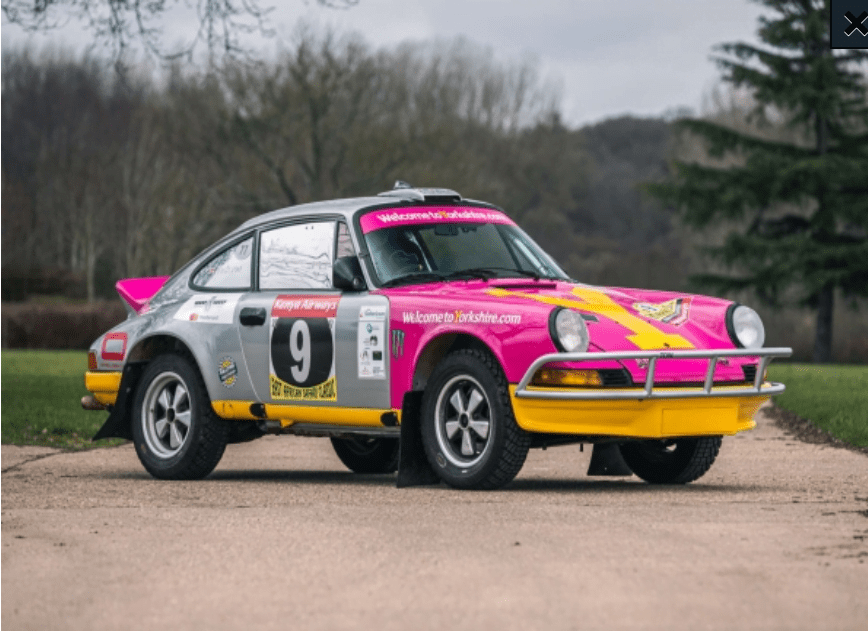
The East African safari winning Tuthill Porsche 911, started life in January 1975 as a relatively rare Porsche 911 Carrera 2.7 MFI Coupe where it was then converted into a rally car in the early 1990’s and campaigned extensively by legendary Irish tarmac rally driver, Billy Coleman.
The car was hired in 1998 for The RAC Historic rally by Silverstone Auctions Managing Director, Nick Whale. Nick realised the cars potential and decided to then own the car, going onto win the 1999 Safety Devices Rally Challenge outright. Not only this, but also The British Historic Rally Championship held in 2000 over eight rounds, four tarmac and four gravel events. Every time the car went out, it was successful.
The car was sold in May 2002 and rallied for the next decade before being converted by Tuthills, into a full house East African Safari spec rally car. Much work was then done to this superb car at the time in which it has continually benefited from Tuthills ongoing maintenance and improvements.
Nick Whale, Silverstone Auctions Managing Director, commented, “We are thrilled to offer a car with such outstanding history and one that I have previously owned and won in, for our first sale of 2021. The 1975 Porsche 911 Carrera MFI Safari Rally Car really is a credit and privilege to offer in our tenth year as the official auction partner for Race Retro!”
This striking car has completed in no less than four East African Safari events, finishing every one! Finally, in 2017 the car was taken to the very top step on the podium and won the event outright – what an achievement by Silverstone Auctions private vendor and world class rally driver, Ryan Champion. This Porsche 911 was even selected by Porsche Club GB as one of 30 specially invited cars to attend as well as participating in Porsches 50th Birthday celebrations at Brands Hatch circuit in 2018.
As well as the cars outstanding history and provenance is MSA papers and an FIA HTP. This is a great basis for another Safari project that Tuthills have indicated can be brought up to current front running specification for a spend of about £40,000. Newly built cars today are around £300,000 plus VAT, making this car with such an outstanding pedigree.
Silverstone Auctions are offering a dedicated, one-to-one, virtual viewing of cars of interest to you from 24th February through to the 26th March. Viewing the cars in person is permitted to specialists who have been instructed to inspect vehicles of interest on your behalf and members of the trade. Bookings are arranged by appointment and this should be made by calling 01926 691141.
Silverstone Auctions are closing their catalogue in just under two weeks. Entries are still invited to join the rapidly growing lot list for their live online auction. The UK market leader classic car auction house can be contacted on can be contacted on 01926 691141, by email enquiries@silverstoneauctions.com or via their website.
For high resolution copies of the images please get in touch with the PR contact below
2021 AUCTIONS
The Race Retro Live Online Auction: 27th March
The May Sale: 22nd May
A Sale of Ferraris in association with Ferrari Owner’s Club GB: 5th June
The Classic Sale at Silverstone: 30th July – 1st August
The NEC Classic Motor Show Sale: 12th – 14th November
ABOUT SILVERSTONE AUCTIONS Formed in 2011, Silverstone Auctions is a world-class, specialist auction house for the sale of classic cars, modern supercars, all types of competition cars, modern and historic motorcycles as well as automotive memorabilia.
We hold the exclusive automotive auction rights for Silverstone circuit and host sales as stand-alone events as well as an integrated element of some of Europe’s biggest motorsport events such as the Silverstone Classic Festival.
In addition to our sales at the circuit, we also host a number of auctions each year at other major classic car events including the NEC Classic Motor Show and Race Retro.
At Silverstone Auctions we take pride in selecting the very best of breed vehicles for our sales which not only attracts buyers from around the world, but has already helped us achieve a number of record-breaking auction prices on behalf of our vendors.
We are committed to providing the best possible service for both buyers and vendors alike, so if you’d like to know more about buying or selling a classic vehicle with Silverstone Auctions, call us today on +44(0)1926 691141.
Ferrari announces the start of the Le Mans Hypercar (LMH) programme that from 2023 will see the manufacturer enter the new top class of the FIA World Endurance Championship.
Following a period of study and analysis, Ferrari has kicked off the development of the new LMH car to include in recent weeks the design and simulation phases. The track testing programme, the name of the car and the drivers who will make up the official crews, will be part of future announcements.
Fifty years after its last official participation in the premier class of the World Sports Car Championship in 1973, Ferrari will take to the track in the Hypercar class of the FIA World Endurance Championship, which it proactively helped to establish. It has a respectable record in closed-wheel competition with 24 world titles (most recently in 2017) and 36 victories in the 24 Hours of Le Mans.
Ferrari President John Elkann commented: “In over 70 years of racing, on tracks all over the world, we led our closed-wheel cars to victory by exploring cutting-edge technological solutions: innovations that arise from the track and make every road car produced in Maranello extraordinary. With the new Le Mans Hypercar programme, Ferrari once again asserts its sporting commitment and determination to be a protagonist in the major global motorsport events”.
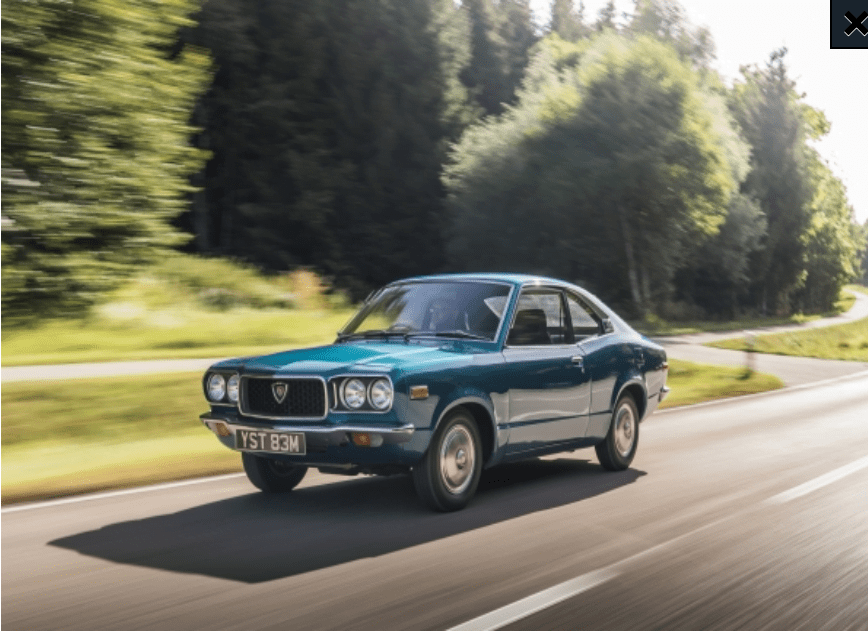
Called the Mazda Savanna in Japan, the rotary powered Mazda RX-3 was launched in 1971.
Piston engine versions were marketed as the Mazda 818, Mazda 808 and Mazda Grand Familia.
Offered in coupe, saloon and estate body styles, more than 286,757 Mazda RX-3s were produced.
After celebrating its centenary in 2020, 2021 sees the 50th Anniversary of one of Mazda’s most interesting, adaptable and successful cars.
Often overlooked when compared to the later RX-7 coupe or the earlier and far rarer Mazda Cosmo, the Mazda RX-3 was a landmark car in Mazda’s history – a car that cemented Mazda’s association with the rotary engine at home and abroad, while its export success helped put Mazda on the map as a global automotive company.
Not only that, its success on the racetrack led the way for the accomplishments of the later and more famous RX-7. By the time production came to an end in 1978, 286,757 RX-3s had been produced – making it the biggest selling Mazda rotary outside of the RX-7. Additionally, the piston engine versions, called the Mazda 808, Mazda 818 or Grand Familia depending on the market, were also popular and adding lots more vehicles to the sales tally. And while it was the two-door coupe that was the most popular and is the best remembered today, the RX-3 was offered in coupe, saloon and estate body styles – making it the first Mazda rotary estate car.
Having introduced the stunning Cosmo 110S sports car in 1967, followed by the diminutive R100 Familia Coupe in 1968 and the elegant Bertone designed R130 Luce Coupe in 1969, Mazda then introduced the RX-2 Coupe in 1970. The first year of the new decade also saw the first rotaries exported to Europe and the United States, and thanks to this line up of Wankel engine powered coupes by the end of 1970 cumulative rotary production had reached 100,000 units. The 1970 Tokyo Motor Show had also seen Mazda display the radical Mazda RX-500 concept car, unlike anything seen before, its pure futuristic design was a showcase for both the rotary engine and safety technology. A wedge shaped, mid-engine, rear-wheel drive sports car with forward opening butterfly doors its multi-coloured rear strip lights indicated whether the car was slowing down, cruising or speeding up by changing colour. The rotary 10A engine was accessed by gullwing opening engine covers and this supercar concept exemplified the technical prowess and boldness of Mazda and its rotary engine technology.
It was into this halcyon period of the rotary engine that Mazda launched the new Mazda RX-3 in September 1971. Smaller and sportier than the Mazda RX-2, the rotary RX-3 was called the Mazda Savanna in Japan but it was largely identical to the in-line four-cylinder powered Mazda Grand Familia launched alongside it. As Mazda had done with previous models, offering a choice of piston or rotary powered versions increased the range and customer choice considerably.
And to fully understand the global picture, you first have to get your head around the naming strategy of the newest car in the line-up. Simply the rotary took the Savanna name in Japan, while export versions proudly wore the RX-3 moniker. Japanese piston engine cars wore the Grand Familia badge, while exported cars were named the Mazda 808. Even more confusingly, the famous Peugeot ownership of car numbers with a central zero that turned the Porsche 901 to the Porsche 911 in 1964, saw the Mazda 808 become the Mazda 818 in Europe and the UK, while Australian and US cars retained the 808 naming, although later North America 1.3-litre versions were called the Mazda Mizer from 1976. A version of the 808 was even licenced to Kia for production as the piston engine Kia Brisa K303.
Externally, the rotary RX-3 and piston Mazda 818 were distinguished by different grilles and headlights, with the RX-3 having twin round headlamps and the 818/ Grand Familia using square lamps or single round lights. Plus, the unique rotor shaped badges on the RX-3 left no doubts to the type of power unit under the bonnet. Launched in September 1971, the RX-3 coupe, saloon and estate all featured the 982cc 10A engine, while US market cars featured the more powerful 1,146cc 12A engine. From 1972 the Savanna GT went on sale in Japan with the larger 12A engine, which was also introduced into other markets alongside the 10A versions, until the 10A was discontinued in 1974. By 1976 exports to Australia and New Zealand had stopped, but the car remained on sale in Japan and the United States through to the end of production in 1978. Small visual detail changes mark out the 1971 to 1973 Series I cars from the later 1973 to 1978 Series II and Series III versions, with the sharper nose and grille the obvious stand out feature of later models.
Arriving in the UK in 1972, the Mazda RX-3 and 818 range featured a saloon and a coupe for each model, with the £1,633 RX-3 Coupe costing £335 more than its piston engine 818 sibling. In 1973 an estate RX-3 and 818 joined the line-up, but the RX-3 estate only lasted until 1974 before being dropped from the UK line-up. Updates across the range in 1975 included improved upholstery, tinted glass and the option of metallic paint for the first time. RX-3 sales stopped in the UK in 1976, however the Mazda 818 estate stayed in the line-up until 1978, with the last saloons and coupes being sold in 1979.
Tested by Motor Magazine in 1973, the 982cc 110bhp 10A powered RX-3 coupe had a 0-60mph performance of 10.2secs and over the duration of their 1,220-mile road test they averaged 24.9mpg praising the RX-3 for its good performance, slick gear change, solid build quality and nice controls. Testing the 1,272cc 4cyl 81bhp Mazda 818 Saloon they recorded a more leisurely 15.3sec 0-60mph time, while fuel consumption of 32.7mpg highlighted the piston engine’s slightly more economical cruising ability. Yet despite the lower price, in 1973 the UK importer sold three times more RX-3s than Mazda 818s.
The other crucial chapter the RX-3 played in the Mazda story was its success in competition. Having raced the Cosmo and R100 Coupe in Europe at famous events like the Marathon de la Route and the Spa 24 Hours, Mazda focused on racing at home in Japan – taking on the Nissan Skyline in domestic racing. The new RX-3 made its mark from outset, taking its first victory at the Fuji Tourist Trophy meeting in December 1971, while equipped with the 12A engine, in May 1972 RX-3s took a historic 1-2-3 finish in the Fuji Touring Car Grand Prix. In spite of the battle for supremacy with Nissan reaching new levels of intensity, RX-3s went on to take the Fuji Grand Champion Touring Car class championship title in 1972, 1973 and 1975. After six seasons of success, at the JAF Touring Car Grand Prix of 1976 the Mazda RX-3 claimed its 100th domestic Japanese racing victory.
However, it wasn’t just at home that the RX-3 was making its mark, the RX-3 became a popular and successful race car around the world – competing in the USA, Europe and Australia. In Australia’s most famous race – The Bathurst 1000, a Mazda R100 coupe made its debut in 1969 and RX-2s appeared in 1971 before the 1973 race saw an entry of three RX-2s and three RX-3s – one RX-3 finished second in class and ninth overall. However, it was 1975 when the RX-3s racetrack success really cemented the rotary engine and Mazda into the psyche of antipodean car fans, as Don Holland and Hiroshi Fushida won their class and came 5th overall at Bathurst with only V8 Holdens ahead of them.
In the United States the RX-3 was also popular and appeared in the famous Daytona 24 Hours in the hands of privateers with one car finishing 14th overall and 3rd in class in 1975 with only Porsches and Ferraris ahead of it. In 1978 Mazda’s first factory supported entry saw two Gatorade livered RX-3s enter the Daytona 24 Hours with the lessons learnt helping Mazda’s return in 1979 with the new RX-7 where the team took victory in the GTU class – the first of more than 100 IMSA victories for the RX-7 in just 12 years.
The RX-3 was just as popular in European saloon car racing where it was campaigned by privateers in the European Touring Car Championship, including the flagship Spa 24 Hours. In the UK, an importer who assisted racing customers get hold of RX-3s, helped to make the car a very popular choice in production saloon and touring car racing, and just as it was in other parts of the world, the RX-3 was also popular in amateur rallying. The Mazda RX-3 even raced at Le Mans, as in 1975 a privately entered French RX-3 took part in the race, having failed to qualify in 1974.
Today, the Mazda RX-3 remains a popular choice for historic racers around the globe, while the car has gained cult status in the tuning, drifting and even drag racing worlds. Thanks to its success in competition the Mazda RX-3 was a car that successfully extended the Mazda brand, promoted the rotary engine and helped Mazda begin to establish its reputation for being a producer of great to drive cars.
When the RX-3 was launched in 1971, cumulative global Mazda rotary sales sat at 200,000 cars. From 1972 onwards the RX-3 outsold the RX-2 and peak RX-3 sales arrived in 1973 with 105,819 cars in that year alone, by which point total rotary sales had reached 500,000 cars. From 1974 the bigger RX-4 outsold the RX-3, but it was the smaller and sportier RX-3 that was doing the winning on the world’s race tracks and proving the rotary engine in competition.
Today, the RX-3s total sales of 286,757 make it the second best-selling rotary of all time behind the 811,634 combined sales of three generations of RX-7. Half a century on the RX-3’s fame may have been eclipsed somewhat by the RX-7, but this hard-working rotary and its less glamorous piston engine siblings did much to feed Mazda’s global sales expansion in the early 70s, while the RX-3’s success in competition was a hugely important early chapter in a story that led all the way to Le Mans victory in 1991. Still loved by owners and tuners the world over, the RX-3 rightly has a cult status amongst rotary aficionados. Happy Birthday RX-3.
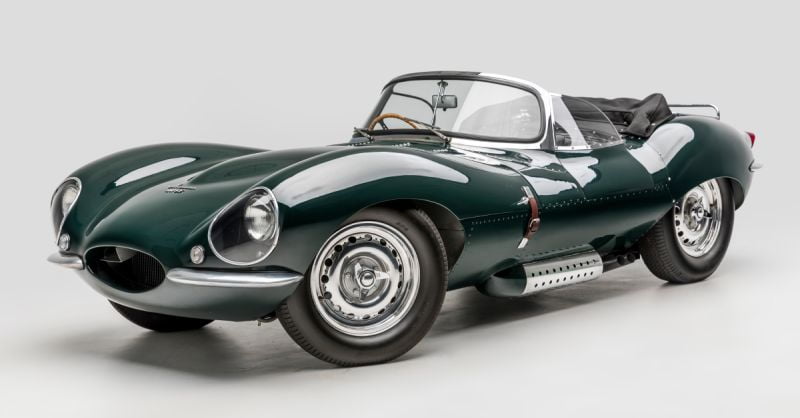
The XKSS was a road-going version of the successful Jaguar D-Type racing car.
Originally owned by noted Riverside Raceway designer James Edward Peterson, this example was later sold to TV personality Bill Leyden before being acquired by actor Steve McQueen. One of just 16 built, it was originally white with a red interior.
After purchasing the car, McQueen had it repainted a favorite shade of green, polished the Dunlop wheels, and had the interior re-trimmed in black by renowned upholsterer Tony Nancy. He enjoyed driving the car fast and is reported to have received so many tickets that his driver’s license was almost suspended twice during his first year of ownership. A capable mechanic, McQueen did much of the maintenance work himself.
He eventually came to consider the car too rare and valuable to race and sold it in the early 1970s to famed collector Bill Harrah. McQueen later reacquired the XKSS, keeping it until his untimely death from cancer in 1980. It was purchased at auction in 1984 by a local collector who refurbished the low-mileage car while carefully preserving several of its unique features such as the glove box door specially fitted by hot rod artist Von Dutch.
IONIQ 5 all-electric, midsize CUV debuted today in a virtual world premiere event
Design explores new experiences only possible with dedicated BEV platform…Evokes the daring attitude of Hyundai Pony, the company’s first production car, highlighting 45-year journey of Hyundai design and looking ahead to the future…Exterior achieves unique proportions on a 3,000-mm wheelbase emphasizing EV specific typology.…Interior raises bar of comfort and usability with flat floor and Universal Island
Reflects commitment to sustainability by utilizing eco-friendly materials and nature-inspired colours in many touchpoints
Delivers powerful performance and ultra-fast 400 V and 800 V multi-charging
Provides Vehicle-to-Load (V2L) function which can turn the vehicle into a charger on wheels
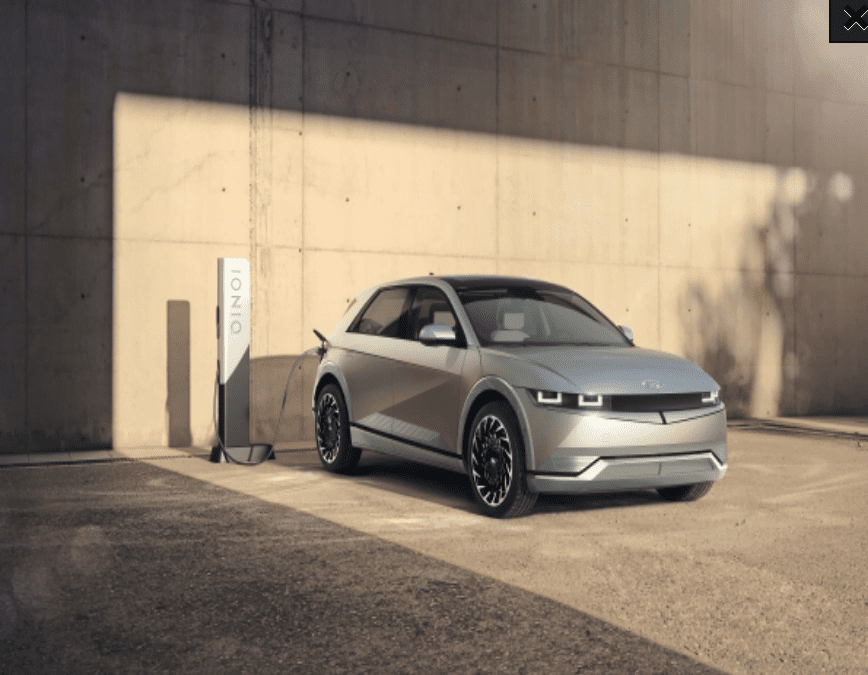
Hyundai Motor Company today launched the IONIQ 5 midsize CUV during a virtual world premiere event.
As the first model in Hyundai’s new IONIQ brand dedicated to battery electric vehicles (BEV), IONIQ 5 sets the benchmark to redefine the electric mobility lifestyle with sustainable and innovative features.
IONIQ 5 is built upon Hyundai Motor Group’s dedicated BEV architecture called Electric-Global Modular Platform (E-GMP), enabling it to have unique proportions on an elongated wheelbase. With E-GMP, IONIQ 5 offers innovative interior design with eco-friendly materials in many touchpoints, strong performance mated with ultra-fast charging and a Vehicle-to-Load (V2L) function as well as advanced connectivity and driver assistance features that will offer the ultimate in-car experience while ensuring safety.
“IONIQ 5 will accommodate lifestyles without limits, proactively caring for customers’ needs throughout their journey,” said Thomas Schemera, Executive Vice President and Global Chief Marketing Officer. “It is truly the first electric vehicle to provide a new experience with its innovative use of interior space and advanced technologies.”
Heralding a new era for EV design IONIQ 5’s progressive design represents a departure from past norms, exploring a new design freedom offered by a dedicated BEV platform. By evoking the daring attitude of Hyundai Pony, the company’s first production car IONIQ 5 highlights Hyundai’s 45-year journey to become a part of customer’s lifestyles, creating a common thread from past to present and future. This is the redefinition of timeless design, a theme that will expand as the IONIQ lineup grows.
IONIQ 5’s unique exterior design is characterised by the Pony-inspired profile over a 3,000-mm wheelbase. This extended wheelbase requires a more sophisticated approach to translate this new proportion into a contemporary EV typology.
The front of the car is equipped with Hyundai’s first clamshell hood that minimizes panel gaps for optimal aerodynamics. The front bumper is defined by an eye-catching V-shape incorporating distinctive daytime running lights (DRLs) that provide an unmistakable light signature unique to IONIQ 5. These small pixel-like clusters also appear at the rear of the vehicle.
On the sides, auto flush door handles provide clean surface styling and enhanced aerodynamic efficiency. The front and rear forms of the vehicle merge together at its doors, offering another example of Hyundai’s ‘Parametric Dynamics’ design first seen on the all-new Tucson. The strong C-pillar shape, inspired by Hyundai’s ‘45’ EV concept, gives IONIQ 5 a commanding presence clearly identifiable from a distance.
Aero-optimized wheels further echo the Parametric Pixel design theme and are offered in a super-sized 20-inch diameter, the largest rims ever fitted to a Hyundai EV. These complete IONIQ 5’s perfected proportions, optimized for Hyundai’s E-GMP.
“A new mobility experience for the next generation—this was the mission from the first day we began this project, to look ahead towards the horizon, but stay fundamentally Hyundai,” said SangYup Lee, Senior Vice President and Head of Hyundai Global Design Center. “IONIQ 5 is the new definition of timeless, providing a common thread linking our past to the present and future.”
The ‘Living Space’ theme runs throughout the interior, most notably embodied by the Universal Island, a moveable center console that can slide back as much as 140 mm. Universal Island, along with the flat floor where the batteries are stored, allows more freedom of movement inside the vehicle.
IONIQ 5 is also equipped with electronically adjustable front seats. The seats recline to the optimum angle, offering a weightless feeling for the occupant. Hyundai reduced the thickness of the front seats by 30 percent, providing more space for those seated in the second row.
Many of its interior touchpoints – seats, headliner, door trim, floor and armrest – use eco-friendly, sustainably sourced materials, such as recycled PET bottles, plant-based (bio PET) yarns and natural wool yarns, eco-processed leather with plant-based extracts, and bio paint with plant extracts.
Customers can choose from nine exterior colors, including five nature-inspired hues exclusive to IONIQ 5. The interior has three color options.
A range of power electric systems to suit every customer IONIQ 5 is available with a range of power electric (PE) configurations to fit the mobility needs of every customer, with no compromises on performance. Customers can select from two battery pack options, either 58 kWh or 72.6 kWh, and two electric motor layouts, either with a rear motor only or with both front and rear motors. All PE variations provide outstanding range and deliver a top speed of 185 km/h.
At the top of the electric motor lineup is an all-wheel drive (AWD) option paired with the 72.6-kWh battery, producing a combined power output of 225-kWh and 605 Nm of torque. This PE configuration can go from 0 km/h to 100 km/h in 5.2 seconds.
When equipped with two-wheel drive (2WD) and 72.6-kWh battery, IONIQ 5’s maximum driving range on a single charge will be around 470~480 km[1], according to the Worldwide Harmonized Light Vehicle Test Procedure (WLTP) standard.
Ultra-fast battery charging along with innovative Vehicle-to-Load (V2L) function IONIQ 5’s E-GMP can support both 400-V and 800-V charging infrastructures. The platform offers 800-V charging capability as standard, along with 400-V charging, without the need for additional components or adapters. The multi-charging system is a world’s first patented technology that operates the motor and inverter to boost 400- V to 800- V for stable charging compatibility.
With a 350-kW charger, IONIQ 5 can charge from 10 percent to 80 percent in just 18 minutes. IONIQ 5 users only need to charge the vehicle for five minutes to get 100 km of range, according to WLTP.
IONIQ 5 also provides an innovative V2L function, which allows customers to freely use or charge any electric devices, such as electric bicycles, scooters or camping equipment, serving as a charger on wheels.
The V2L function can supply up to 3.6 kW of power. The V2L port is located under the second-row seats, and it can be activated when a vehicle is on. Another V2L port is located at the charging port on the vehicle exterior. Using a converter, customers can charge high-power electric equipment. The outside port provides power even when the vehicle is turned off.
Innovative connectivity and driver assistance for safety and convenience IONIQ 5 seamlessly integrates advanced technologies for an enhanced digital user experience. The wide, configurable, dual cockpit features a 12-inch, full-touch infotainment screen and hoodless 12- inch digital gauge cluster that can be customized to meet customers’ needs.
For the first time in Hyundai, IONIQ 5 features an Augmented Reality Head-Up Display (AR HUD), essentially turning the windshield into a display screen.
IONIQ 5 is also equipped with the next level of Hyundai SmartSense, advanced driver assistance system, ensuring the highest levels of safety and convenience on the road. IONIQ 5 is the first Hyundai model to offer Highway Driving Assist 2 (HDA 2). Other driving assistance systems include Forward Collision-Avoidance Assist (FCA), Blind-Spot Collision-Avoidance Assist (BCA), Intelligent Speed Limit Assist (ISLA), Driver Attention Warning (DAW), High Beam Assist (HBA), and more.
IONIQ 5 will be available in the UK by mid 2021.
IONIQ 5 Specifications:
※ Editor’s note: The vehicle specifications and features in this press release may vary depending on country/region.
Dimensions
Wheelbase
3,000 mm
Length
4,635 mm
Width
1,890 mm
Height
1,605 mm
Cargo
Boot/trunk space
531 l/ 1591 l (when second-row seats are fully folded)
Front trunk
57 l(2WD) or 24 l (AWD)
Performance
Platform
Electric-Global Modular Platform
Maximum Driving Range (according to WLTP)
470~480 km (When pairing 2WD with 72.6-kWh battery option)
Long Range 72.6-kWh Battery
AWD
Power
225-kW (Front and Rear combined)
Torque
605 Nm (Front and Rear combined)
0-100 km/h
5.2 seconds
2WD
Power
160- kW Rear
Torque
350- Nm Rear
0-100 km/h
7.4 seconds
Standard Range 58-kWh Battery
AWD
Power
173 kW (Front and Rear combined)
Torque
605 Nm (Front and Rear combined)
0-100 km/h
6.1 seconds
2WD
Power
125 kW
Torque
350 Nm
0-100 km/h
8.5 seconds
Features (Please see additional details section below table for more information)
Supported Charging Infrastructure
400- V and 800- V (No need for additional adapters)
Ultra-fast Charging
10 % to 80 % in 18 minutes of charge 100 km of range (WLTP) in 5 minutes of charge
Vehicle-to-Load
Max. Output
3.6 kW
Port Locations
Inside: Under second-row seats Outside: vehicle charging port
Infotainment
Screen
12-inch, full-touch infotainment screen Hoodless 12-inch digital gauge cluster
Bluelink® connected car services
Remote Profile Management Remote Start Enhancements Vehicle Status Notifications POI Send to Car Now with Waypoints Maintenance Alert Enhancement Dynamic Voice Recognition
Exterior: Gravity Gold Matte, Shooting-Star Gray Matte, Digital Teal-Green Pearl, Lucid Blue Pearl, Atlas White, Cyber Gray Metallic, Phantom Black Pearl, Galactic Gray Metallic Interior: Obsidian Black and Dark Pebble Gray/Dove Gray, Dark Teal/Dove Gray
IONIQ 5 Additional Details:
Design & Sustainability
IONIQ 5’s progressive design language drew inspiration from Hyundai’s ‘45’ EV concept, which debuted at 2019 International Motor Show Germany. Guided by Hyundai’s ‘Sensuous Sportiness’ design identity, ‘45’ featured a monocoque-style body and a futuristic interior designed for electrification and autonomous technologies.
IONIQ 5 follows suit but goes one step further, offering a bridge to the future of electric mobility that is technologically advanced, eco-friendly and plugged into today’s customers’ needs.
Exterior featuring unique proportions and the longest wheelbase in the segment IONIQ 5’s unique exterior design is characterised by clean and sharp lines, creating a sleek and sophisticated look. The BEV’s precisely modelled surfaces and shapes give it an angular, almost geometric appearance. In addition, Hyundai’s designers integrated cutting-edge Parametric Pixel lights on the front and rear. This unique design element signifies Hyundai’s intent to fundamentally reinvent electric mobility with an EV-specific design that will carry over to future IONIQ models.
IONIQ 5’s crossover body type achieves unique proportions and short overhangs due to its elongated wheelbase. Measuring 4,635-mm long, 1,890-mm wide and 1,605-mm tall on a 3,000-mm wheelbase, IONIQ 5 offers D-segment-like space in a midsize CUV.
Customers can choose from eight exterior colors, including four nature-inspired, new hues exclusive to the model. These include two options with a Matte finish: the hero color Gravity Gold Matte and Shooting-Star Gray Matte, along with Digital Teal-Green Pearl and Lucid Blue Pearl. Other available exterior colours include Atlas White, Galactic Gray Metallic, Cyber Gray Metallic and Phantom Black Pearl.
Spacious, customizable interior is a home away from home IONIQ 5 sets itself apart from other midsize CUVs, especially those with internal combustion engines and conventional steer-by-wire systems, because the E-GMP enables a flat floor where the model’s batteries are stored, allowing for innovative interior design and extra legroom.
IONIQ 5’s 3,000-mm wheelbase, which is 100-mm longer than Hyundai’s flagship SUV Palisade, offers spaciousness of a large passenger car in a midsize CUV. The long wheelbase allowed Hyundai designers to apply a ‘Living Space’ theme to the interior, rather than a conventional car design theme.
The Universal Island moveable console complements the simple centre fascia with gear selector located behind the steering wheel. The sliding console allows passengers to not only enjoy more flexibility, but also freely enter and exit the cabin on either side when parked in a narrow spot. Second-row passengers also can enjoy center console features, such as cup holders, a 15 W fast wireless phone charger and USB ports. Universal Island truly redefines the centre console, offering greater functionality than a static storage box.
The vision roof of IONIQ 5 provides the interior with a greater sense of openness as IONIQ 5’s ceiling consists of one large glass panel without any support materials.
IONIQ 5 provides 531 litres of boot space, which increases up to almost 1,600 litres when the second-row seats are fully folded. For added versatility, the second-row seats can slide forward up to 135 mm and also be folded in a 6:4 ratio. Meanwhile, customers can enjoy additional storage space with a front trunk that offers as much as 57 litres of capacity[2], which is particularly useful for longer journeys, when extra luggage is carried.
Adjacent to the digital gauge cluster is a metal insert that can accommodate a multi-purpose tray holder. IONIQ 5’s infotainment system is the first to integrate a new design theme called Jong-e Graphic User Interface (GUI) that offers various interior ambience settings, such as soft, delicate and exuberant.
Customers can stay warm during the winter months by taking advantage of the heated steering wheel and heated front seat functions.
Customers can choose from three interior colourr options. The base pack includes Obsidian Black and Dark Pebble Gray/Dove Gray, while the optional colour pack offers Dark Teal/Dove Gray.
Sustainable, eco-friendly EV features accommodate lifestyles without limits IONIQ 5’s demonstration of environmental responsibility doesn’t stop with electrification. Sustainability is at the centre of IONIQ’s brand vision, which can be found throughout IONIQ 5 in eco-friendly materials and nature-inspired colours.
Many of its interior touchpoints – seats, headliner, door trim, floor and armrest – use eco-friendly, sustainably sourced materials, such as recycled PET bottles, plant-based (bio PET) yarns and natural wool yarns, eco-processed leather with plant-based extracts, and bio paint with plant extracts.
IONIQ 5 can also be equipped with an eco-friendly solar roof, which supports the vehicle’s electric power source by collecting energy and transferring it to the battery pack, improving efficiency. The solar roof can prevent battery discharge while providing an additional driving range.
Performance
IONIQ 5 is available with a range of power electric (PE) configurations to fit the mobility needs of every customer, with no compromises on performance.
At the top of the electric motor line-up is an all-wheel drive (AWD) option paired with the 72.6-kWh battery, producing a combined power output of 225-kWh and 605 Nm of torque. This PE configuration can go from 0 km/h to 100 km/h in 5.2 seconds. When AWD option is paired with the 58-kWh battery, this dual-motor layout can go from 0 km/h to 100 km/h in 6.1 seconds.
The single-motor layout with 160-kW rear motor (125-kW in combination with the 58-kWh battery) offers 350 Nm of torque and two-wheel drive (2WD). When paired with the 72.6-kWh battery, this PE can accelerate from 0 km/h to 100 km/h in 7.4 seconds. When paired with the 58-kWh battery, it can accelerate from 0 km/h to 100 km/h in 8.5 seconds.
In addition, IONIQ 5 can tow a trailer with a capacity up to 1,600 kg.
Features
Connectivity for the ultimate in-car experience Hyundai is offering the latest version of its upgraded Bluelink® connected car services that deliver a range of new features and allows customers to control their car with their smartphone or voice to make their drive more convenient and enjoyable. New Bluelink features include Connected Routing, Last Mile Navigation and a new User Profile feature.
The Bluelink app displays the vehicle’s range, battery state and charging times when plugged into public or private charging points. Customers can access an advanced battery management system in order to select charging times that best fit their schedule or their budget by making the most of off-peak electricity rates.
With the new cloud-based Connected Routing feature, driving routes are calculated on a powerful server inside the Bluelink cloud environment. This ensures more accurate traffic forecasting, more precise times of arrival, and more reliable route recalculation. With the all-new IONIQ 5, the database has been increased to show more charging stations on the map, showing availability and estimated charging time. By clicking on the station icon on the map, users can see whether AC, DC or high-powered charging, such as IONITY, is available.
Other Bluelink-enabled features include:
Remote Profile Management stores selected vehicle settings in the Bluelink cloud, with the ability to remotely update and push back to the vehicle, personalized to driver preferences such as individual driver settings for seating position
Vehicle Status Notifications inform customers if the vehicle is left with doors unlocked or windows open
With Remote Charging, IONIQ 5 drivers can start and stop charging with the push of a button on their smartphone app. During colder months, Remote Climate Control allows users to schedule pre-heating of IONIQ 5. Not only does this ensure comfort for occupants during the drive, but it also saves battery power that would otherwise be needed to heat the vehicle on the road.
IONIQ 5’s Dynamic Voice Recognition system accepts simple voice commands to conveniently control cabin A/C, radio, hatch opening/closing, heated steering wheel, heated/cooled seats and other functions. The system can also assist with various points of interest (POI) and weather status updates.
IONIQ 5 also features a premium Bose sound system. Its eight speakers, including a subwoofer, are strategically placed throughout the vehicle for a high-quality listening experience.
Head-Up Display with AR technology For the first time in Hyundai, IONIQ 5 features an Augmented Reality Head-Up Display (AR HUD), essentially turning the windshield into a display screen. Drivers can choose to use AR technology to project relevant information, such as navigation, advanced safety and the car’s surroundings, to their line of sight across the windshield. This allows drivers to process information quickly while keeping their attention on the road ahead.
Driver assistance system ensures highest levels of safety and convenience IONIQ 5’s Highway Driving Assist 2 (HDA 2) makes highway driving more convenient. Using front view camera, radar sensors and navigation data, HDA 2 works to control the vehicle speed and following distance, while keeping the vehicle centred in its lane. It can also assist the driver when changing a lane.
Forward Collision-Avoidance Assist (FCA) can detect a vehicle, pedestrian or cyclist and can help avoid a collision with any one of them. It includes Junction Turning, Junction Crossing and/or Lane-Changing Oncoming. FCA with Junction Turning activates the brakes if it detects oncoming traffic when the driver is turning left at an intersection. FCA with Junction Crossing senses vehicles approaching from the side when the driver is going straight through an intersection. FCA with Lane-Change Oncoming makes switching lanes safer. If FCA senses an approaching car that has crossed the centre line when the driver is changing lines, it automatically assists with avoidance steering, if there is no danger of secondary accidents. If a potential secondary accident is detected, FCA will only produce a warning.
Other semi-autonomous driving features include Intelligent Speed Limit Assist (ISLA), which adjusts vehicle speed to match the speed limit, and High Beam Assist (HBA), which automatically turns high beams on and off to avoid blinding oncoming drivers.
IONIQ 5 has several driver attention-related functions to ensure safety at all times by detecting if the driver is drowsy or distracted. Driver Attention Warning (DAW) displays the driver’s attention level and provides a warning when signs of driver inattentiveness are detected. DAW sounds a warning if the vehicle remains stopped for a long period of time (such as at a traffic signal) and the driver doesn’t react quickly enough when the vehicle ahead starts moving.
Several functions work in tandem to help avoid collisions in a variety of driving situations. Blind-Spot Collision-Avoidance Assist (BCA) helps avoid collisions at the rear side of the vehicle by using radar to detect other vehicles and applies differential braking, when necessary. BCA is particularly useful in situations such as changing lanes or exiting from parallel parking. Another function, Blind-Spot View Monitor (BVM), uses a camera to show the driver views to the left and the right of the vehicle on the cluster screen if the driver indicates to change lanes.
IONIQ 5 also assures the safety of backseat passengers with Safe Exit Assist (SEA), which helps keep the rear doors closed by maintaining the electronic child lock when there is oncoming traffic.
A variety of parking assistance features make parking in a variety of circumstances easier than before. Remote Smart Parking Assist (RSPA) allows the driver to remotely park or exit a parking spot from outside the vehicle. This feature works for both parallel and perpendicular parking and can be activated via a button on the vehicle’s smart key.
Surround View Monitor (SVM) uses an array of strategically located cameras to give the driver a 360-degree view of the area surrounding the vehicle, making it easier to park in tight spaces. Reverse Parking Collision-Avoidance Assist (PCA) works to help avoid collisions while backing up. If an obstacle is detected via the rear-view camera or rear ultrasonic sensors, PCA will display a warning and, if necessary, apply the brakes. Similarly, Rear Cross-Traffic Collision-Avoidance Assist (RCCA) can display and sound a warning, or apply the brakes, when a car approaches from the left or right side and the driver does not stop.
Charging network Hyundai Motor Group recently became the latest shareholder to join IONITY, a joint venture that builds and operates a high-power charging (HPC) network across Europe using advanced technology with a charging of up to 350 kW. Through its participation in this joint venture, Hyundai will drive the expansion of IONITY along Europe’s highways, promoting the further adoption of zero-emission mobility.
In selected countries IONIQ 5 customers can enjoy a free one-year subscription to IONITY, which forms part of Hyundai’s new pan-European integrated public charging service, Charge myHyundai. Charge myHyundai offers access to over 200,000 charging points across Europe. Users can enjoy a streamlined one-payment solution via a single card or an app for additional peace of mind. Customers can easily find available charging stations using the AVN system.
Charge myHyundai is initially available in four European markets: France, Italy, Norway, and Switzerland. The service will be activated for UK customers in the first quarter of 2021. Hyundai plans to extend the service to customers in more countries such as Germany, Spain, the Czech Republic, Denmark, and Sweden within the first half of 2021.
Next
IONIQ: More to come Hyundai’s new IONIQ brand represents the company’s strong commitment to sustainability and innovation. Under the mission of IONIQ brand, ‘Progress electrified for connected living’, Hyundai will offer electric vehicle experiences with a focus on customized, eco-friendly solutions that can fit any lifestyle, delivering the company’s vision ‘Progress for Humanity’. The introduction of IONIQ 5, is the first step in the company’s journey of dedicated electric vehicles, moving another step closer towards achieving its clean mobility goals.
Following the launch of IONIQ 5, Hyundai will expand its BEV lineup with IONIQ 6, an electric sedan, and IONIQ 7, a large electric SUV.
Online reservation of the limited edition IONIQ 5 “Project 45” following the world premiere Hyundai will launch a limited edition IONIQ 5 model in the UK & European markets. Customers will be able to reserve an introductory edition online called “Project 45”. It is the highlight of the IONIQ 5 range and offers a series of special benefits. “Project 45” includes all the technology and design features as part of the package, including the solar roof, 20-inch wheels and the Advanced Head-Up Display with selectable augmented reality functions.
Customers have the opportunity to reserve this limited edition model via an online reservation website. This launches following the world premiere and is available at: https://www.hyundai.co.uk/new-cars/ioniq5 In the UK, pricing for the Project 45 models will be £45,000 (including the Plug In Car Grant). Pricing for the rest of the IONIQ 5 range will be confirmed in due course.
Those who register to reserve the all-new IONIQ 5 “Project 45” edition will be the first in the UK & Europe to take delivery of the car. Customers will receive advance content in the form of exclusive videos, images and news updates, and they will remain informed about the status of their car from when it leaves the factory to when it is delivered.
Hyundai is also offering each “Project 45” customer a free two-year subscription to IONITY, Europe’s leading high-power charging network. With IONITY, drivers can charge their all-new IONIQ 5 at the maximum charging power and in a very fast time. The 800-volt battery is capable of going from a 10 to 80 per cent charge in just 18 minutes. With less than five minutes of charging, customers can enjoy 62 miles of range.
The exclusively branded “Project 45” model will be limited to 3,000 units across the UK & Europe. Deliveries will begin in summer 2021.
About Hyundai Motor Established in 1967, Hyundai Motor Company is present in over 200 countries with more than 120,000 employees dedicated to tackling real-world mobility challenges around the globe.
Based on the brand vision ‘Progress for Humanity,’ Hyundai Motor is accelerating its transformation into a Smart Mobility Solution Provider.
The company invests in advanced technologies such as robotics and Urban Air Mobility (UAM) to bring about revolutionary mobility solutions, while pursuing open innovation to introduce future mobility services.
In pursuit of sustainable future for the world, Hyundai will continue its efforts to introduce zero emission vehicles equipped with industry-leading hydrogen fuel cell and EV technologies.
About Hyundai Motor Europe HQ Hyundai Motor Europe HQ was formally established in 2000 with its main office in Offenbach, Germany. It is the regional headquarter responsible for over 40 markets with more than 3,000 outlets, taking 3.6 per cent market share in 2020 (ACEA data).
About Hyundai Motor UK Hyundai has sold vehicles in the UK since 1982. In 2005, Hyundai opened its own UK subsidiary, Hyundai Motor UK Ltd, which is now based in Leatherhead, Surrey. As of January 2021, Hyundai has one of the youngest product ranges of any manufacturer, with almost all models younger than 1 ½ years old. More than 75 per cent of the Company’s line-up is now available as an electrified version, and the company plans to electrify its entire range by 2025. Furthermore, Hyundai is a pioneer in zero-emission mobility, including its fully-electric 300-mile range Kona Electric, its second-generation fuel cell electric vehicle NEXO, and the soon-to-be launched battery-electric IONIQ 5, the first model in its new IONIQ line-up brand. All passenger cars come with Hyundai’s unique Five Year Unlimited Mileage Warranty package, providing customers with a five-year warranty with unlimited mileage, five years of roadside assistance and five years of vehicle health checks. The High Voltage battery warranty is 8 years or 100,000 miles.
The British Motor Show welcomes lockdown easing plan and looks forward to an action-packed summer show
2021 show to deliver even more content than planned for 2020
To include new Electric Motor Show sponsored by Select Car Leasing
Three Driving Experiences confirmed for event
Thousands of advance tickets already sold
Commitment to industry commended by exhibitors
More action, more content – and even more cars!
Show takes place August 19-22, 2021
Tickets cost just £18.50, or £37 for a family
The show will go on!
That’s the message from the organisers of The British Motor Show, who today are confirming that the UK’s most hotly anticipated automotive event will be a not-to-be-missed extravaganza for car fans and families looking for a great value summer event after the Prime Minister confirmed plans to ease lockdown completely by June 21st.
The organisers have confirmed an expanded show, including three driving experiences and the new Select Electric Motor Show (backed by Select Car Leasing) as news of the UK’s lockdown relaxation gives consumers and exhibitors confidence that events will return in a big way this summer.
“We’re now really pressing ahead and looking forward to a summer of freedom and excitement as the UK comes back to a more normal way of life,” said British Motor Show CEO Andy Entwistle. “People will have been desperate for a great day out for over a year and we’re absolutely committed to giving them one, with a motor show that reinvents the car show concept and will also give automotive companies an unmissable chance to reengage with the public after the toughest of times.
“The message from us is clear and simple – the show must go on, and it most certainly will! And it will be even better than the original event we planned. A truly unmissable event, and a highlight of what will be a great summer.”
Set to take place at Farnborough International from August 19-22, no other Motor Show has ever delivered such a variety of content, celebrity guests and live action, nor has it had such a focus on supporting our incredible automotive industry, which contributes £18.6 billion to the British economy at a time when it needs it most.
“Even through these toughest of times, we’ve really got behind and supported our exhibitors,” said Andy Entwistle. “Rather than sit it out and wait, we’ve invented the Pop-Up Motor Show concept, which has seen thousands of advanced ticket sales for the main event and has given our existing exhibitors and partners exposure when other exhibition companies had given up.”
The Show has also announced a major partnership with cinch, The UK’s fastest-growing online used car marketplace, which will run for the next five years
As well as a tantalising display of new cars, when the show opens its doors in August it will feature the Select Electric Motor Show, an action packed Live Arena, a Live Stage, motoring celebrities, a robot making competition, Retro-Electric Live, a Supercar Paddock, classic cars, the IMI Technology Theatre, test drives, a kidz zone and a dedicated marketplace area full of petrolhead gift ideas.
Three Exciting driving experiences have been confirmed, including The Caterham Experience, The Paul Swift Stunt Driving Experience and Under 17 Driving Lessons
The Caterham Experience, sponsored by Avon Tyres will offer consumers the chance to take a passenger ride in a Caterham, the Drift Taxi Experience will offer visitors the chance to experience the awesome handling and power of the latest Caterhams while being driven around a slalom course in one of our 3 out door arenas. Caterham will also be bringing along driving simulators, creating a showroom and offering test drives in their latest cars
The Paul Swift Stunt Driving Experience will let visitors experience all the tricks seen in the movies as an actual passenger. This adrenaline filled experience is from the team that will be delivering our amazing stunt shows in the Cazoo Live Arena. Paul and his team of professional stunt drivers will strap visitors in for passenger rides that they will never forget, while they perform stunts such as parallel parking, J turns and drifting, including an unforgettable lap of the slalom course. There are only a limited number of experiences available and are sure to sell out quickly.
The third driving experience to be announced, in partnership with The Big Learner Relay, are our Under 17 Driving lessons. Visitors will be able to get their youngsters behind the wheel for a 20 minute driving experiences in a manual car fitted with dual controls and with a fully qualified driving instructor. Children will practice steering, reversing parking and even a bit of slalom.
The Show will also feature the Automotive Careers Expo, which will run throughout the event and support the autotmotive sector and its employees as the Covid-19 Pandemic comes to an end.
Andy Entwistle added: “While it was soul-destroying to have to reschedule the 2020 show due to the pandemic when we had already built up so much support, the delay has allowed us to concentrate on some of the areas where we were already planning to enhance the show for 2021. We are now able to confirm that we will definitely giving car fans and families an amazing day out in 2021, and all for just £18.50 per head, or £37 for a family ticket.”
To find out more about the show, book tickets or keep up with the latest news, visit www.thebritishmotorshow.live