Evolved ŠKODA design language delivers a more striking look
Slimmer headlights with full-LED Matrix technology for the first time
Improved aerodynamics and lower CO2 emissions
Sustainable materials and more comfort features inside
Efficient engines from the EVO generation
State-of-the-art assistance systems and infotainment
Four years after its launch, the ŠKODA Karoq gets an update: the Czech carmaker has refreshed its second SUV model range to ensure its continued success.
In addition to an even more refined design language, the update brings sustainable materials, new technology and more efficient engines from the current EVO generation to the compact SUV. Surpassed only by the Octavia, the Kodiaq’s smaller brother was the second most delivered ŠKODA model worldwide in 2020, as well as in the first six months of 2021.
Thomas Schäfer, ŠKODA AUTO CEO, said: “With over half a million units sold, the Karoq is key to our brand’s success. To ensure that this will remain the case, we have developed it further: now sporting a fresher design and optimised aerodynamics along with state-of-the-art assistance systems and infotainment features. I am confident that this overall package will enable us to continue the Karoq’s success story.”
A fresh design, improved aerodynamics and sustainable materials in the interior ŠKODA AUTO has continued to develop its design language for the revised Karoq, making the SUV look even more striking. The wider, now hexagonal ŠKODA grille, slimmer headlights as well as tail lights, and aerodynamically optimised alloy wheels with black plastic Aero trim create fresh visual highlights. The new wheels, rear window finlets and a new rear spoiler all improve the car’s aerodynamics while lowering its CO2 emissions. The interior features new upholstery which, as an option, can be made from sustainable materials. New technology – such as full-LED Matrix headlights and an expanded range of assistance systems – also debuts in the range. Five efficient engines from Volkswagen Group’s EVO generation round off the Karoq’s update. Two diesels and three petrol engines deliver power outputs ranging from 81 kW (110 PS) to 140 kW (190 PS). The 2.0 TSI producing 140 kW is reserved for the Karoq SportLine with all‑wheel drive. The 2.0 TDI with an output of 110 kW is available with front- or all-wheel drive.
Launched in 2017, the Karoq was the Czech car manufacturer’s second SUV. Offering generous amounts of space, a high level of practicality and excellent value for money, it delivers on the brand’s promise. The Karoq is produced in the Czech Republic, Slovakia, Russia and China, and available in 60 countries.
Exterior: striking front profile and redesigned lights
Wider, hexagonal ŠKODA grille and new body-coloured rear spoiler
Slimmer headlights now also available with optional full-LED Matrix technology
Aerodynamically optimised alloy wheels with a diameter of 17 to 19 inches
More striking, more elongated and more aerodynamic: the updated Karoq is characterised by the refined ŠKODA SUV design language. As with other models by the Czech brand, it now sports a wider, hexagonal ŠKODA grille, which – together with the new front apron – makes the Karoq look more rugged. The headlights are slimmer, as are the tail lights, and feature a four-light cluster design, now also available with full-LED Matrix technology. A longer rear spoiler, a front apron with air curtains, aerodynamically optimised fuel tank undertrays and new alloy wheels with a diameter of 17, 18 or 19 inches help to reduce the car’s drag by more than 9% to a coefficient (cd) of 0.30. This makes the Karoq one of the most aerodynamic cars in its segment.
Oliver Stefani, Head of ŠKODA Design, said: “The revised Karoq now comes across as much more self-assured. The wider, hexagonal ŠKODA grille and the new bumper make the front more stunning. In addition, the slimmer, newly arranged LED headlights with a four-light cluster design lend the car a more dynamic look. The redesigned tail lights emphasise this appearance, while the new rear spoiler makes the Karoq look longer.”
The restyled and sculptured bumper is body-coloured while the wide lower air inlet comes in a crystalline mesh-effect design. The L-shaped finishing touches on the sides accentuate the air curtains while a rugged, black-grained spoiler completes the front section. The air curtains direct the air through the sides of the front bumper as well as through the wheels, reducing air vortices and improving airflow. To reduce underbody drag, the all-wheel-drive Karoq now comes with aerodynamically optimised fuel tank undertrays, which also cover the rear axle.
Newly arranged, slimmer headlights with full-LED Matrix technology as an option The significantly slimmer headlights extend to the ŠKODA grille. Redesigned daytime running lights, which are now split in two, further accentuate the car’s dynamic look. For the optional top‑end headlights, ŠKODA is offering full-LED Matrix technology for the Karoq for the first time. Here, two LED modules are arranged one above the other. They provide low beam and high beam, and create a distinct four-light cluster, particularly in driving mode in the dark. Even the entry-level Karoq comes with LED modules in the upper headlight as standard, with a separate fog light in the lower housing.
New rear apron and razor-sharp LED tail lights The redesigned rear of the ŠKODA Karoq SportLine and SE L models is now adorned with an extended, body-coloured spoiler, which makes the vehicle look longer when viewed from the side. Together with side finlets, as seen in aircraft construction, the spoiler reduces air turbulence at the rear, improving the car’s aerodynamics and lowering its CO2 emissions. The restyled rear apron is finished in body colour below the loading sill and the robust black plastic rear diffuser bears a striking sculptured shape. The ŠKODA designers have remodelled the Karoq’s tail lights too. They are now sharper and come with full-LED technology as standard. From the SE Drive trim level upwards, they feature dynamic indicators and an animated welcome effect. ŠKODA-typical design details include the crystalline structures and the brand’s signature C-shaped light cluster.
New Aero alloy wheels and two new colours There is a choice of nine body colours for the updated ŠKODA Karoq, with the two metallic paint finishes Phoenix Orange and Graphite Grey making their debut in the range. Aerodynamics are improved by three new alloys: two of which – Scutus (17 inch) and optional Sagitarius (19 inch) – feature black plastic Aero trim that reduces air turbulence. The 18-inch Miram alloy is also aerodynamically optimised. The SE L trim level comes with the Scutus design as standard, while the Miram and Sagitarius Aero wheels are optional.
Two trim levels and a SportLine variant The new ŠKODA Karoq is available in the SE Drive and SE L trim levels and as a SportLine variant. This model has a Black pack as standard, with gloss black roof rails and window frames. The new Karoq is 4,390 mm long and 1,841 mm wide. The front-wheel-drive features a wheelbase of 2,638 mm while the wheelbase of the all-wheel-drive measures 2,630 mm. The boot capacity is the same as in the previous model: 521 litres with the seats in their default position and 1,630 litres when folded down. With VarioFlex seats, the boot can hold 588 litres, or 1,605 litres with the rear seats folded down, and 1,810 litres with the rear seats removed.
Interior: more sustainability and additional comfort
Eco pack with seat covers made of vegan, recycled materials
Enhanced LED ambient lighting and optional electrically adjustable front passenger seat
New decorative strips on the instrument panel and door trims
The interior of the updated Karoq is even more sustainable and comfortable. The new, optional Eco pack includes seat covers made of vegan and recycled materials, while the enhanced LED ambient lighting and new decorative strips on the instrument panel and door trims create new visual highlights. As an option, the front passenger seat can now also be adjusted electrically.
Oliver Stefani, Head of ŠKODA Design, said: “Thanks to the redesigned decorative trim and seat covers, the Karoq’s interior has a fresh, modern look and the car now also comes with additional comfort features. A special highlight is the new Eco pack, in which we focus on the use of vegan, recycled and reclaimed materials. The seat covers, for example, are made of disposed PET bottles.”
With the Eco pack, ŠKODA is offering a particularly sustainable specification for the revised Karoq: the seat covers include details that are made of vegan, leather-like materials, and the trim-specific armrests are made of Suedia (microsuede) – exclusively in Mocha Brown. The Nisha decorative trim on the doors features a soft surface, complementing the enhanced LED ambient lighting, which now illuminates the front as well as the rear door panels in one of ten colour options and the footwell in white. On request, this is also available as a stand-alone feature separate from the Eco pack. The SE Drive specification can be ordered with a ‘Unique Chrome’ trim on the instrument panel, while Piano Black trim can be found from the Karoq SE L upwards. The door panels now bear an Anodized Cross Line (SE Drive) or a soft-touch Linear Diamonds design (SE L). In the Karoq SportLine, the interior is characterised by door trims in a carbon look, sports seats with integrated headrests and a multifunction three-spoke sports steering wheel.
Increased comfort thanks to new functions of the seats In addition to new decorative trims and upholstery, the revised ŠKODA Karoq offers increased passenger comfort. From the SE L specification upwards, electric adjustment including a memory function is available for the first time as an option for the front passenger seat. The built-in memory function saves personal settings and restores them at the touch of a button. Electrically adjustable lumbar support is also an option, allowing the front seats to be adapted to suit the driver and passenger preferences. The VarioFlex system is also available on request. This allows the three rows of seats to be divided in a ratio of 40:20:40.
Powertrains: EVO engines with lower fuel consumption and emissions
Five advanced engines delivering 81 kW (110 PS) to 140 kW (190 PS) output
All-wheel drive as standard for the most powerful petrol engine and optional for the range‑topping diesel
Choice of 6-speed manual or 7-speed DSG for three engines
The revised ŠKODA Karoq comes with a choice of five advanced and efficient EVO-generation engines from Volkswagen Group, which deliver an output from 81 kW (110 PS) to 140 kW (190 PS). With an injection pressure of up to 350 bar, the three TSI petrol engines are particularly efficient. The nitrogen oxides (Nox) emitted by the two diesels are significantly below the standards stipulated thanks to the ‘twin dosing’ exhaust gas treatment. ŠKODA offers the 2.0 TSI engine with an output of 140 kW (190 PS) exclusively in the Karoq SportLine in combination with 7-speed DSG and all-wheel drive. For the more powerful diesel, 4×4 and 7-speed DSG are available as options.
Johannes Neft, ŠKODA AUTO Board Member for Technical Development, said: “The current generation of our modern EVO engines have allowed us to make our cars more efficient while reducing their CO2 and NOx emissions. For the diesels, we apply a particularly effective ‘twin dosing’ exhaust gas treatment and for the petrol engines, we reduce fuel consumption by using high injection pressures, among other things. The current engines now develop their power much more harmoniously.”
ŠKODA Karoq engines at a glance:
Engine
Cylinders
Max. power output
Transmission
Max. torque
[Nm]*
[kW]
[PS]
1.0 TSI EVO
3
81
110
6-speed M
200
1.5 TSI EVO
4
110
150
6‑speed M
250
7-speed DSG
2.0 TSI EVO
4
140
190
7-speed DSG 4×4
320
2.0 TDI EVO
4
85
116
6‑speed M
300
7-speed DSG
250
2.0 TDI EVO
4
110
150
6-speed M
340
7-speed DSG 4×4
360
*preliminary data
Highly efficient EVO engines and reduced emissions ŠKODA AUTO has integrated a number of technical measures to make the current EVO-generation engines even more efficient and reduce their emissions. For the diesels, weight-optimised crankshafts and extensive modifications to the exhaust gas routing – as well as the turbo, injection and thermo-management systems – result in lower fuel consumption. In addition, the TDIs are equipped with a further developed SCR exhaust gas treatment system and two catalytic converters. Using what is known as ‘twin dosing’, AdBlue® is injected in front of the two SCR catalytic converters that are positioned one after the other, reducing nitrogen oxide (NOx) emissions to far below the required standards. As a result, the EVO-generation TSI petrol engines are more efficient than their predecessors. An injection pressure of up to 350 bar ensures lower hydraulic losses and a reduced fuel delivery rate. In the 1.0 TSI and 1.5 TSI engines, an innovative powder-coated layer measuring just 150 μm (0.15 mm) replaces cast-iron cylinder liners. This reduces internal friction, which lowers fuel consumption and emissions. Through better distribution and dissipation of heat in the combustion chamber, it also lowers the thermal load on the engine. Equipped with Active Cylinder Technology (ACT), the 1.5 TSI automatically shuts down two cylinders when engine load is low, thereby further reducing fuel consumption.
Connectivity: digital instruments as standard and advanced infotainment
Choice of two digital instrument clusters with an 8- or 10.25-inch display
Four infotainment systems with touchscreens measuring up to 9.2 inches
Permanent internet connection, ŠKODA Connect online services and infotainment apps
The ŠKODA Karoq’s connectivity features are state of the art: the SUV is equipped with systems from Volkswagen Group’s third-generation modular infotainment matrix and is always online thanks to a built-in eSIM. Infotainment apps provide weather forecasts and the latest news, and include calendar management. Every Karoq now comes with digital instruments: the 8-inch display is standard or there’s the option of a customisable 10.25-inch screen.
The Amundsen and Columbus infotainment systems are based on Volkswagen Group’s third-generation modular infotainment matrix. Thanks to a built-in eSIM, they offer digital DAB radio and are always online. The Amundsen system comes with an 8-inch screen and optionally receive web radio thanks to the permanent internet connection. The system can be operated via the touchscreen, the buttons and knurled wheels on the multifunction steering wheels, or through Laura, the digital voice assistant which, using online data, understands 15 languages. The range-topping Columbus system displays information on a 9.2-inch screen. Map and software updates are installed ‘over the air’.
Digital instrument cluster as standard Following the model update, the ŠKODA Karoq is equipped with a digital instrument cluster as standard. The 8-inch display replaces the previous analogue instruments. From the SE Drive trim level upwards, the digital instrument cluster (or ‘Virtual Cockpit’ as it is also referred to) is available with a 10.25-inch display. This offers five basic layouts and can be configured individually.
Mobile ŠKODA Connect online services and infotainment apps The Karoq provides access to a wide range of ŠKODA Connect mobile online services. The infotainment online services, for example, enable remote access to the vehicle via the MyŠKODA app. This allows the driver to lock and unlock their Karoq via a smartphone, display the car’s location on a map or activate the Honk & Flash function to make it easier to find the vehicle in a large car park. The online features in the new Karoq also include infotainment apps that display news and weather, and can connect a personal Google calendar to the vehicle. Smartphones can be paired with the car using Wireless SmartLink technology, Android Auto or Apple CarPlay and can also be inductively charged when placed in the optional Phone Box.
Safety: up to nine airbags and various assistance systems
Park Assist, Trailer Assist and Area View increase comfort
Travel Assist includes five to eight assistance systems
Rear side airbags optional as part of the improved Crew Protect Assist feature
Improved assistance and safety systems as well as up to nine airbags ensure the best possible protection for all occupants in the ŠKODA Karoq. Travel Assist incorporates five to eight assistance systems, including Predictive Cruise Control, Adaptive Lane Assist and an improved version of Traffic Sign Recognition. The optional Crew Protect Assist system reacts to impending collisions to prevent an accident or minimise the severity of its consequences.
The Karoq’s occupants are protected by up to nine airbags. Driver and front passenger airbags are fitted as standard in the EU, as are front side airbags, curtain airbags and a knee airbag for the driver. Side airbags in the second row of seats are optional together with Crew Protect Assist. If the vehicle sensors – now also at the rear – detect an imminent collision or register sudden braking, the system automatically closes any open windows and, if necessary, the panoramic roof, and activates the hazard lights and pre-tensions the front seat belts. Following a collision, the Multi-Collision Brake prevents the vehicle from rolling any further in an uncontrolled manner.
Increased safety and improved comfort thanks to various assistance systems In the EU, the standard equipment includes Front Assist with Predictive Pedestrian Protection and City Emergency Brake. The optional Travel Assist comprises several assistance systems, some of which are also available separately. There is a choice of two Travel Assist variants, both of which include Predictive Cruise Control, which uses images from the camera on the windscreen as well as data from the navigation system and, if desired, reacts in good time to speed limits or corners. In combination with a DSG, the cruise control’s Stop & Go function can automatically bring the vehicle to a standstill and have it pull away again automatically within up to three seconds. Travel Assist also includes a more accurate version of Traffic Sign Recognition (thanks to an improved camera), Adaptive Lane Assist (now able to identify road works and all road markings), Traffic Jam Assist and Emergency Assist. The enhanced version of Travel Assist also has Park Assist and Side Assist with Rear Traffic Alert. Side Assist warns the driver of vehicles approaching from behind up to 70 m away. Using Hands-on Detect, this system also checks whether the driver is touching the steering wheel every 15 seconds or if they no longer have control due to a potential medical emergency. In this case, Emergency Assist activates the hazard lights and brings the car to a stop in its current lane. Parking is made more convenient by the integrated Manoeuvre Assist – which detects obstacles in front of and behind the vehicle, and brakes automatically, if necessary – the 360‑degree image of the optional Area View system, as well as the optional Trailer Assist.
The ŠKODA Karoq SportLine: dynamic top-of-the-range model
Exclusive to the series with a 2.0 TSI petrol engine and 140 kW (190 PS)
Exterior with distinctive black finishing touches and 18-inch wheels as standard
Black design features in the interior and sports seats with ThermoFlux covers
The Karoq SportLine is the range-topping model of the successful ŠKODA SUV. Apart from the 1.0 TSI, it is available with any of the engines in the range, while the most powerful engine is exclusively reserved for this Karoq variant. The 2.0 TSI petrol engine delivers 140 kW (190 PS), which is transferred to all four wheels via a 7-speed DSG as standard. Visually, the Karoq SportLine can be identified by numerous black design features, and the interior is also dominated by black sports styling.
The range-topping model of the updated Karoq can immediately be recognised by the SportLine-typical black design features. These include the gloss black ŠKODA grille, which provides a stunning contrast to the body-coloured front apron. The Black pack, sporting gloss black window frames and roof rails, is part of the standard equipment. Additional black design details include the rear diffuser on the body-coloured rear apron, the wing mirror caps and the 18‑inch Procyon alloy wheels, which feature an Aero trim, as do the optional 19-inch Sagitarius alloys. The rear side windows and the rear window are tinted (SunSet), and the front wings are adorned with a SportLine badge. The standard equipment of the Karoq SportLine also includes full‑LED Matrix headlights.
Black ThermoFlux seat covers The interior is characterised by black sports styling, with Piano Black decorative strips on the instrument panel and a carbon-fibre-effect decor on the doors. The roof lining is also black, as are the breathable ThermoFlux covers of the sports seats with integrated headrests. The leather gearstick features silver contrasting stitching. The three-spoke multifunction sports steering wheel is adorned with a SportLine badge and the front door sill trims bear Karoq lettering. The LED ambient lighting is a standard feature in the sporty range-topping model and now also illuminates the rear door panels in one of the ten colour options.
With electrification at the center of long-term strategy, company will deliver exciting vehicles and technologies that empower customer journeys and society
To accelerate electrification plans with an investment of 2 trillion yen over the next five years
To launch 23 exciting new electrified models, including 15 new EVs, aiming for 50% electrification mix by fiscal year 2030
To introduce ASSB in fiscal year 2028
Nissan Motor Co., Ltd. today unveiled Nissan Ambition 2030, the company’s new long-term vision for empowering mobility and beyond. Responding to critical environmental, societal and customer needs, Nissan aims to become a truly sustainable company, driving towards a cleaner, safer, and more inclusive world. With this vision, Nissan wants to deliver strategic value by empowering journeys offering confident, exciting, and more integrated experiences to customers, and through collaborations, empower society to build a smart ecosystem with integrated mobility.
Over the next ten years, Nissan will deliver exciting, electrified vehicles and technological innovations while expanding its operations globally. The vision supports Nissan’s goal to be carbon neutral across the life cycle of its products by fiscal year 2050.
Nissan CEO Makoto Uchida stated: “The role of companies to address societal needs is increasingly heightened. With Nissan Ambition 2030, we will drive the new age of electrification, advance technologies to reduce carbon footprint and pursue new business opportunities. We want to transform Nissan to become a sustainable company that is truly needed by customers and society.”
Accelerating electrified mobility with diverse choices and experiences As a pioneer of electric vehicles (EVs), Nissan has democratized EVs and invested in building charging infrastructure and energy management. By placing electrification at the core of the company’s long-term strategy, Nissan Ambition 2030, the company aims to accelerate the electrification of its vehicle lineup and rate of technology innovation with investments of 2 trillion yen over the next five years.
Based on customer demands for a diverse range of exciting vehicles, Nissan will introduce 23 new electrified models, including 15 new EVs by fiscal year 2030 aiming for an electrification mix of more than 50% globally across the Nissan and INFINITI brands.
With the introduction of 20 new EV and e-POWER equipped models in the next five years, Nissan intends to increase its electrification sales mix across major markets by fiscal year 2026, including:
Europe by more than 75% of sales
Japan by more than 55% of sales
China by more than 40% of sales
The United States by 40% of EV sales in fiscal year 2030
“We are proud of our long track record of innovation, and of our role in delivering the EV revolution. With our new ambition, we continue to take the lead in accelerating the natural shift to EVs by creating customer pull through an attractive proposition by driving excitement, enabling adoption and creating a cleaner world,” said Nissan COO Ashwani Gupta.
Representing the next stage of Nissan’s electrified future, the company today also unveiled three new concept cars that offer enhanced experiences through sophisticated technology packaging. These concepts showcase the thrilling possibilities that Nissan strives to provide across a wide range of new advanced vehicles and ecosystems.
Further details on these exciting concept cars are available on Nissan’s website:
Increasing accessibility and innovation in mobility Nissan’s ambition is to support greater access to safe and exciting mobility. To make progress towards this, Nissan will continue to evolve its lithium-ion battery technologies and introduce cobalt-free technology to bring down the cost by 65% by fiscal year 2028.
Nissan aims to launch EV with its proprietary all-solid-state batteries (ASSB) by fiscal year 2028 and ready a pilot plant in Yokohama as early as fiscal year 2024. With the introduction of breakthrough ASSB, Nissan will be able to expand its EV offerings across segments and offer more dynamic performance. By reducing charging time to one-third, ASSBs will make EVs more efficient and accessible. Further, Nissan expects ASSB to bring the cost of battery packs down to $75 per kWh by fiscal year 2028 and aims to bring it further down to $65 per kWh to achieve cost parity between EV and gasoline vehicles in the future.
Nissan seeks to establish a global battery supply system to meet growing customer vehicle demand and support the growing number of EVs in use. Working with its partners, Nissan intends to increase its global battery production capacity to 52 GWh by fiscal year 2026, and 130 GWh by fiscal year 2030.
Though Nissan Ambition 2030, the company also seeks to extend the benefits of mobility by delivering its advanced driver-assistance and intelligence technologies to more customers. These combined efforts will likewise support Nissan’s continued efforts to establish new mobility services and partnerships.
Nissan aims to expand ProPILOT technology to over 2.5 million Nissan and INFINITI vehicles by fiscal year 2026. The company will also further develop its autonomous vehicle technologies, aiming to incorporate next generation LIDAR systems on virtually every new model by fiscal year 2030.
To meet the varying transportation needs of different countries, Nissan will collaborate with the most suitable partners to realize new mobility services for more efficient mobility in cities, as well as more sustainable mobility in rural areas.
Global ecosystem for mobility and beyond In addition to technology upgrade, Nissan will localize manufacturing and sourcing to make EVs more competitive. Nissan will expand its unique EV Hub concept, EV36Zero, which was launched in the UK to core markets including Japan, China and the U.S. EV36Zero is a fully integrated manufacturing and service ecosystem connecting mobility and energy management with the aim of realizing carbon neutrality.
Ensuring vehicle batteries remain sustainable will also continue to be a priority for Nissan based on its decade of repurposing and recycling expertise with 4R Energy. The company intends to expand its battery refurbishing facilities beyond Japan with new locations in Europe during fiscal year 2022, and in the U.S. in fiscal year 2025. Nissan’s refurbishing infrastructure will support a circular economy in energy management, and the company aims to fully commercialize its vehicle-to-everything and home battery systems in the mid-2020s. In addition, the company will invest up to 20 billion yen by 2026 towards charging infrastructure.
As Nissan increases its pace of innovation in mobility, it intends to hire more than 3,000 employees in advanced research and development globally while continuing to upskill its current workforce. The company will also build on collaboration across the Alliance to enable cost-savings and shared expertise in areas such as carbon-neutral technologies, electrification, software and services.
Beyond the Nissan NEXT transformation plan, the company will sustain its business over the long-term, with consolidated operating profit margin above 5%.
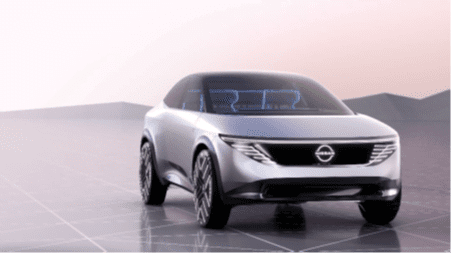
At Nissan Ambition 2030, Nissan unveiled four new concept models including the near-future EV: Nissan Chill-Out.
Next-generation Crossover EV Concept: Nissan Chill-Out: A new way to spend time on the move
A new way to think about mobility, Nissan Chill-out is a mobile haven. It features a sleek and modern design, advanced safety technology, and a productive and comfortable interior space. The crossover concept utilizes the CMF-EV platform, delivering high levels of comfort and an energizing driving experience.
Standout Features:
CMF-EV platform
e-4ORCE
Nissan EV Technology Vision and three concept cars
Nissan EV Technology Vision is a technology study that looks beyond the Ariya and next-generation crossover EV. The technology considers the direction of future EVs, and how advancements in battery technology, hardware and packaging can offer customers a wide variety of mobility solutions to match their needs and lifestyles. Examples of this can be seen with the recently unveiled future forward concept cars: Max-Out, Surf-Out and Hang-Out.
Innovative integration of body, chassis and battery
At the core of Nissan EV Technology Vision is the integration of all solid-state battery (ASSB) technology that integrates with optimized components into a skateboard-like structure that allows for a variety of vehicle types. The optimum hardware structure will bring out the full potential of future complex software configurations and further realize the precision, performance, efficiency and versatility of our EV offerings.
Nissan Max-Out concept: Surpassing the conventional perception of driving enjoyment
The Nissan Max-Out is a convertible concept that aims to deliver a new driving experience with its superlative stability and comfort. Dynamic cornering and steering response are balanced with limited body roll to optimize driver and passenger comfort, creating a feeling of oneness with the car.
The two-seater features the unique ability to morph the seating, flattening into the floor to offer more interior space when desired, making it ideal for drivers with and without passengers.
Standout Features:
Ultra-lightweight
Very low center of gravity
Advanced e-4ORCE
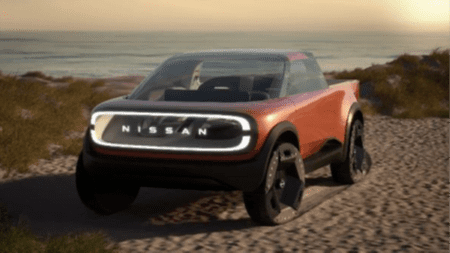
Nissan Surf-Out concept: Empowering customer’s range of activities
The Nissan Surf-Out concept aims to provide a smooth ride regardless of the terrain, enabling customers to go anywhere in comfort and with confidence. The vehicle’s variety of power outputs, and low and flat cargo space are aimed to help you go wherever you want and amplify your experience when you get there.
Standout Features:
Off-road performance
Electric power utilization from the vehicle
Extended cargo space
Advanced e-4ORCE
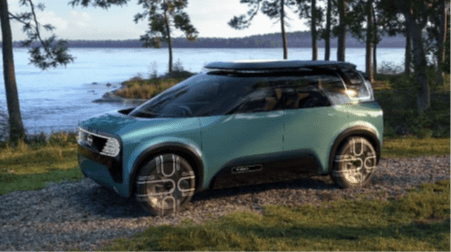
Nissan Hang-Out concept: Changing the perception of the mobile living space
With a completely flat floor that extends from the front to the back, the Nissan Hang-Out concept aims to surpass the conventional wisdom about interior layouts.
The Nissan Hang-Out concept is aimed to provide a new way of spending time on the move. It is designed to suppress vibrations and jolts, thereby reducing instances of motion sickness and interference while working on the go. Its spaciousness and quietness offers the comfort of your living room in a mobile space, expanding creature comforts on the go and off the beaten path. The theatre-like seating makes on-the-go movie nights with family and friends new and fresh, no matter where you are- or are going.
DS 3 CROSSBACK E-TENSE evolves to gain nearly seven per cent more range
The only 100 per cent electric model in its segment, it now achieves up to 212 miles on the WLTP combined cycle
Technical developments increase range in real-life use
DS 3 CROSSBACK E-TENSE demonstrates the knowledge and expertise garnered by DS Automobiles from winning four Formula E titles
The first 100 per cent electric model in the DS Automobiles range is evolving. On sale since 2019, DS 3 CROSSBACK E-TENSE can now achieve a range of 212 miles according to the WLTP combined cycle, an increase of nearly seven per cent.
During the development, priority was given to the real-life usage of DS 3 CROSSBACK E-TENSE. Notably, the heat pump has been developed with a moisture sensor for increased efficiency. Offered as standard, the heat pump enables heat to be produced by compression to generate hot air. As a result, energy consumption is greatly reduced.
From continued development and constant discussion with the Formula E championship winning team, supported by DS Performance, the gear ratio has also been perfected to further improve the efficiency of DS 3 CROSSBACK E-TENSE.
The range gain in real-life usage is also achieved through the adoption of new 17-inch A-rated tyres, developed by Continental. Offered in 215/60 R17 96H size, the Continental EcoContact™ 6 Q introduces a new compound with high silica technology to improve rolling resistance and reduce noise emissions.
With an electrification strategy in place since its creation, DS Automobiles is the multi-energy brand with the lowest average CO2 emissions in Europe (100.2 g/km of CO2 according to the WLTP cycle per registered car in the first half of 2021) and every model is available with an electrified powertrain. The brand has seen 40 per cent of its customers buy either a fully electric or plug-in -hybrid car in 2021, in the UK. This strategy is accelerating: from 2024, every new DS Automobiles model will be exclusively 100 per cent electric.
The DS 3 CROSSBACK E-TENSE is available from £31,500 OTR (including the government plug-in grant). For more information visit www.dsautomobiles.co.uk.
The Aston Martin Bulldog supercar restored by Classic Motor Cars. Ltd (CMC) in Bridgnorth, Shropshire, has hit three major milestones in just nine days
The car won the Royal Automobile Club restoration of the year award, CMC won specialist of the year at the Octane Historic Moring Awards, and on Saturday November 27 the car hit 162 miles an hour on its first shake-down session. The first time in over 40 years, the car has been driven at speed.
Nigel Woodward managing Director of CMC said: “The last few days have been something of a whirlwind, to win two prestigious awards within a week is fantastic and is a great tribute to the team at CMC who have worked so hard on the car for the last 18 months. But to cap that by accelerating through 162 on our first time out with the car is just the icing on the cake.”
The car was privately testing at the Royal Naval Air Station at Yeovilton in Somerset. This was part of a series of Royal Naval activities which has seen the car unveiled at the Hampton Court Concours by two Royal Naval apprentices from the Royal Naval Air Station. The car was showcased on board HMS Prince of Wales, Britain’s latest Aircraft carrier and the next testing taking place back at RNAS Yeovilton once analysis of Saturdays testing takes place and the conditions are right.
Richard Gauntlett, who represents the owner of the car Phillip Sarofim, and who sent the car to CMC for the restoration was elated: “Seeing the car run like this for the first time in forty years is a dream come true. I grew up with the car, I had a poster of it on my bedroom wall. I cannot thank the team at CMC enough for the hard work that they have put into this Project.”
Victor Gauntlett, Richard’s father, was Chairman at Aston Martin when the supercar which was planned to be the first production car to exceed 200 mph. But the project was axed after the car reached nearly 192 miles per hour in 1980. The car was then sold and disappeared occasionally surfacing around the world. It was purchased by Phillip Sarofim two years ago.
Richard added: “The car will be tested again either this year or at the beginning of next at the Royal Naval air Station before we go for the 200-mph record that it never did in 1980. The location of that attempt is still being discussed.
Nigel added; “There is still much to do but Saturdays session not only validated the car but also provided a lot of very useful data. The fact that without trying, and in the teeth of a 50 mph crosswind we sailed through the 160 mph mark in only ¾ of a mile, at reduced boost and on partial throttle says much. It was only a lack of bravery on my part and the fact that we were still evaluating the car that prevented us going faster”.
Silverstone Auctions, the UK’s leading specialist classic and sports car auction house, has integrated its Automotive Auctions business in-house and rebranded it as Silverstone Digital Auctions.
Launching on 1st December 2021 and quickly following on the phenomenal success of the recent Silverstone Auctions NEC Classic Car Show physical auction, the new platform retains all of the original functionality wrapped in the respected Silverstone Auctions banner. The new Silverstone Digital Auctions platform allows sellers to quickly list their vehicle for sale to an audience of credible buyers and with the support and assistance of highly-regarded Silverstone Auctions team of consignment experts.
The launch capitalises on the recent growth in digital car auctions during the pandemic period and means Silverstone Auctions can supplement the company’s number one position with a complimentary digital experience. Silverstone Auctions has an average sale price of £76,000 at an in-the-room sale event and hopes to attract a similar quality of vehicles for the digital offering. Speed of listing, exceptional customer service and a trusted reputation will set Silverstone Digital Auctions apart, and the company will focus on consignments of sports, classic, modern and luxury vehicles – including SUVs and racing cars.
Nick Whale, Silverstone Auctions founder comments “We recognise the convenience and benefits that a digital auction platform can deliver for both buyers and sellers. Whilst we remain firmly committed to our very successful physical auctions under the Silverstone Auctions and Classic Car Auctions banners, it makes sense for our company to offer this service. Combining our first-class expertise, knowledge and audience, our team will be focussed on providing the best auction solutions for our discerning customers. The Silverstone Digital Auctions brand is an exciting further development for the company and our customers.”
Silverstone Digital Auctions joins the portfolio which includes Silverstone Auctions, Silverstone Motorcycle Auctions and Classic Car Auctions. Consignments go live on 1st December. Each car consigned will be on sale for 7 days, with full marketing support through the company’s extensive database and social media channels. Selling your car through Silverstone Digital Auctions is free, and buyers pay a low 5% buying fee. Consignments are open immediately, please contact the Silverstone Digital Auctions team to find out more or get a free valuation today.
ABOUT SILVERSTONE AUCTIONS Formed in 2011, Silverstone Auctions is a world-class, specialist auction house for the sale of classic cars, modern supercars, all types of competition cars, modern and historic motorcycles as well as automotive memorabilia.
We hold the exclusive automotive auction rights for Silverstone circuit and host sales as stand-alone events as well as an integrated element of some of Europe’s biggest motorsport events such as the Silverstone Classic Festival.
In addition to our sales at the circuit, we also host a number of auctions each year at other major classic car events including the NEC Classic Motor Show and Race Retro.
At Silverstone Auctions we take pride in selecting the very best of breed vehicles for our sales which not only attracts buyers from around the world, but has already helped us achieve a number of record-breaking auction prices on behalf of our vendors.
We are committed to providing the best possible service for both buyers and vendors alike, so if you’d like to know more about buying or selling a classic vehicle with Silverstone Auctions, call us today on +44(0)1926 691141.
With the 2022 version, the Panigale V4 project takes the most significant evolutionary step since its presentation, to become even faster on the racetrack and at the same time more intuitive and less tiring for a wide range of sport riders
The Panigale family is the maximum expression of the continuous exchange of information and technology from the world of racing to production bikes and with the latest version it continues its evolution year after year, just as with the Ducati Corse prototypes
The new Panigale V4 2022 has been improved in all areas: aerodynamics, ergonomics, engine, chassis and electronics
In the fifth episode of the Ducati World Première 2022, the Borgo Panigale-based motorcycle manufacturer revealed the Panigale V4 2022 to all the fans and motorcycling enthusiasts in the world
The Panigale V4 2022 represents the last step in the characteristic path of the Borgo Panigale sports bikes and it takes life from Ducati Corse long-time experience married to continuous knowledge and technology sharing from the world of racing directly to production bikes. This new project expresses the uniqueness of a brand capable of winning the MotoGP constructors’ championship for the second consecutive time, which works to ensure that every single element designed for competitions can then be transferred on motorcycles built for enthusiasts. That’s the reason why the Panigale V4 is constantly refreshed and improved, just as it happens in MotoGP and WorldSBK.
With the 2022 version, the Panigale V4 project completes the most significant evolution since its birth. The improvements involve all areas: aerodynamics, ergonomics, engine, chassis and electronics. The result is an even faster bike on the racetrack and at the same time more intuitive and less tiring for a wide range of riders. In short, it offers great and rewarding excitement to pro-rider and amateur alike.
These exclusive features have been confirmed through a special testing on the Vallelunga racing track, in Italy. The Panigale V4 S 2021 and the 2022 version both equipped with Pirelli SC1 tyres gained centre-stage, ridden by two testers joined by the pro-rider Michele Pirro (Ducati Official Tester). At the end of the day, it turned out that the first tester improved his best lap on the new Panigale V4 S 2022 by 0.9 seconds, the second by 1.2 seconds, while Michele Pirro was faster by half a second, lapping just three seconds from his best time in Race 1 at Vallelunga, on the occasion of this year’s Italian Superbike Championship, where, however, he raced counting on the most performing SCX compound.
The first new feature of the new Panigale V4 2022 version has to do with aerodynamics. Ducati engineers concentrate in fact their hard work on the fairing, which now integrates more compact and thinner double-profile design wings with increased efficiency: this update guarantees the same vertical load, up to 37 kg at 300 km/h. Furthermore, the lower part of the fairing features redesigned extraction sockets to improve the cooling system and, as a consequence, the performance of the engine, in particular during racetrack days.
Ergonomics has also been a core focus of in-depth development with the aim of improving the control of the bike during track sessions and to allow the rider to get the most out of the Panigale V4’s performance, both on a single lap and heavy use on the track. The seat can now count on flatter shape and a different coating, to further support the rider when braking and allow easier movement of the body. Compared to the 2021 version, the tank has a new shape in the rear portion to allow the rider to better anchor when braking and allowing him to ride faster and longer. Thanks to this new ergonomics, the rider is also completely integrated into the bike and therefore more comfortable when riding in general; even the contact area of the arms during hanging off, namely when leaning completely outside the curves, has been enhanced.
The heart of the bike is represented by 1,103 cm3 Desmosedici Stradale MotoGP-derived, which has undergone a series of updates. The Desmosedici Stradale completes a further evolution for 2022, thanks to the introduction of some dedicated technical elements that allow an increase of power together with an instant throttle response.
The new engine has been updated in the lubrication circuit and is coupled to a new oil pump that reduces power absorption. The increased diameter of the silencer outlets allows to reduce the exhaust back pressure and, consequently, to increase the engine performance. Thanks to these interventions and a new dedicated mapping, the Desmosedici Stradale – Euro 5-compliant* – delivers 215.5 hp at 13,000 rpm, with a power increase of 1.5 hp compared to the previous version, which rises to 2.5 hp over the peak of maximum power at 14,500 rpm. The engine also delivers a torque of 123.6 Nm (12.6 kgm) at 9,500 rpm, and already from 6,000 rpm it provides 80% of the maximum torque available.
A detail that says a lot about the evolution characterising this new 2022 engine is the adoption of a new gearbox that provides for a lengthening of the ratio for the first, second and sixth gears. This new SBK gear ratio is therefore more “racing-oriented”, more suitable for use on track. The first gear has been lengthened by 11.6%, while the second by 5.6%. Thanks to this new gearbox, it is now easier to tackle the tightest corners in first gear, enjoying greater engine braking and better acceleration out of corners. Furthermore, the smaller jump in speed between the first two ratios allows the DQS, equipped with new calibration, to work more effectively, offering better performance. Lastly, sixth gear has been lengthened by 1.8% allowing, in combination with the increase in engine power, a top speed of 5 km/h higher than the Panigale V4 2021.
A new Power Modes logic has been implemented on the Panigale V4 2022 which provides for 4 engine configurations: Full, High, Medium, Low. The Full and Low configurations are newly designed while the High and Medium configurations use a new strategy. Power Mode Full is the sportiest ever adopted by a Panigale V4 and allows the engine to express its full potential with torque curves without electronic filters, except for first gear. A new Ride by Wire map management system has been developed for the High and Medium Power Modes; now dedicated to each of the six gears, which guarantees the rider the possibility of always having the optimal thrust when opening the throttle. The Power Mode Low, on the other hand, has been conceived to make road riding even more enjoyable, limiting the maximum power of the bike to 150 hp and offering a particularly manageable throttle response.
The performance of the Desmosedici Stradale can be further improved thanks to the racing exhaust systems contained in the Ducati Performance catalogue. In order to offer everyone the opportunity to ride with a full racing exhaust even on circuits with tighter noise limits, a new exhaust system is available, completely in titanium, developed in collaboration with Akrapovič, which falls within the 105 dB noise limit (102 dB with the dB killer fitted). The new exhaust is equipped with high silencers alongside the tail and ensures a power increase of 12.5 hp, bringing the maximum value to 228 hp, while the maximum torque value rises to 131 Nm, with an overall weight reduction of 5 kg. This new exhaust is added to the more compact full racing version already available in the catalogue, that extends under the engine and is also made entirely from titanium by Akrapovič, which at the same performance levels reduces weight by 6 kg and has a noise level of 109 dB which drops to 107 dB when the dB-killer is installed.
The Desmosedici Stradale is also a structural element of the chassis and directly connected with the aluminum front frame. The chassis is completed by the lightweight front frame made of magnesium and the seat post in cast aluminum.
The new Panigale V4 S is equipped with the new Öhlins NPX 25/30 electronically controlled pressurised fork that uses a pressurized cartridge damping system derived from that of Öhlins racing forks, minimizing the risk of oil cavitation compared to a traditional model. The result is improved braking support and at the same time better absorption of bumps, which translates into a better riding feeling for the rider. The new fork has 125 mm travel (+5 mm compared to the one that equips the Panigale V4 2021), thanks to which it can not only adopt softer settings improving the smoothness of the response even on rough tarmac, and grip in critical conditions, but it can also offer that racing plus that increases the feeling in the most demanding braking sections.
The new fork works in combination with the Öhlins TTX36 rear shock absorber and the Öhlins steering damper, both with event based control system. This system offers the rider the opportunity to customise the suspension intervention according to different riding situations (braking, cornering, acceleration), as well as changing the operating parameters of the hardware components. For the rider, this means a higher level of control over the dynamics of the bike for the benefit of road safety and lap times on the racetrack.
Furthermore, the pivot of the single-sided aluminum swingarm is positioned 4 mm higher than that of the 2021 bike version. This specific technical choice increases the anti-squat action, namely the reduction of the lowering of the rear, stabilizing the bike in acceleration.
The Panigale V4 S is equipped with 3-spoke forged aluminum alloy wheels and fitted with Pirelli Diablo™ Supercorsa SP tyres (120/70 ZR17 front and 200/60 ZR 17 rear). The braking system is equipped with Brembo Stylema® monobloc calipers at the front with four 30 mm diameter pistons each working on 330 mm diameter discs, ensuring exceptional braking power, while at the rear, a single 245 mm disc with 2-piston caliper.
Even the Panigale V4 standard version features a state-of-the-art chassis, which includes: 43 mm fully-adjustable Showa Big Piston Fork (BPF), Sachs steering damper, Sachs monoshock also fully adjustable and cast aluminum rims with a 5-spoke design.
The Panigale V4 2022 is equipped with latest-generation electronic package based on the use of a 6-axis inertial platform capable of instantly detecting roll, yaw and pitch angles of the motorcycle in space. The electronic package includes controls that manage all the riding phases, whose operating parameters are connected by default to the 4 Riding Modes available (Race A, Race B, Sport, Street).
These parameters can be viewed even more effectively thanks to the improved dashboard, which features a new distribution of the functions of the external lights. But that’s not all, Ducati technicians introduce an additional Info Mode, developed keeping in mind the MotoGP riders suggestions and named “Track Evo”, an option added to the existing Road and Track settings.
In the “Track Evo” screen, the tachometer moves on a horizontal scale positioned in the highest part of the instrument, which is the most visible, and the indication of the gear engaged is in the center of the screen. On the right area there are four sectors of different colours, each dedicated to an electronic control (DTC, DWC, DSC, EBC). These sectors light up individually when the electronics are working on a certain parameter, remaining on for the time necessary for the rider to identify which indicator is activated. This signaling mode facilitates the user’s task in understanding the control that has actually worked to allow him to intervene more precisely and punctually on the choice of the optimal level and to obtain better performance more quickly. The left sector completes the information with the stopwatch, the number of laps completed and the speed.
To make the gear change indication clearer, a green LED positioned on the left side of the dashboard, has been introduced. This solution makes all even more visible and precise in the feedback.
Even the look of the bike has been revamped, with a further dose of aggressive flavour. The unprecedented graphic design conceived by the Ducati Centro Stile includes the black color for the logos applied to the full red fairings, the double fabric saddle (two-tone on the S version) and, again for the S version, the red tag on the black rims.
The Panigale V4 and Panigale V4 S will be available starting at December 2021 in the classic “Ducati Red” colour.
The Panigale V4 can be equipped with the accessories included in the Ducati Performance catalogue. It includes both homologated components and pure racing elements designed for circuit riders. Ducati Performance accessories can be viewed via the online configurator on Ducati.com.
Aside a wide range of accessories, Ducati offers leather suits (with airbag system also available), helmets, boots and gloves, all in the name of the rider’s safety. To be precise, Ducati meets all the biker needs from the sporty riding on the racetrack to the on-road adventures wearing the perfect outfit as an official Ducati rider.
Toyota’s Hilux pick-up was the most sought after used light commercial vehicle for the second consecutive month according to Aston Barclay’s November LCV desirability index.
Aston Barclay saw the Toyota beat the Mercedes Sprinter and Peugeot Boxer into second and third place.
November is the first month that the same manufacturer has topped both Aston Barclay index, with the Toyota Prius also heading up the car list.
Despite the Ford Ranger and Mitsubishi L200 pick-ups joining the Hilux in the top 10, the larger panel vans rose to the top this month by taking the remaining seven places.
Parcel delivery companies and their sub-contractors are getting their fleets ready for another record Christmas of home deliveries. With the supply of new vans still restricted these companies have been forced to buy from the used market to get themselves ready for the festive season.
Last month’s second placed van the VW Transporter fell to eighth place, while three Fords, the Transit, Transit Custom and Ranger pick-up all making the top 10.
“The used van market continues to break records because the supply of used LCVs coming into the market continues to falter.
“Companies continue to hang onto used vans and are being forced to bid at auction to source used vehicles to expand their fleets. This looks likely to continue for many more months to come,” explained Geoff Flood, Aston Barclay’s LCV national sales manager.
Aston Barclay’s desirability index takes into consideration three key metrics: web views prior to sale, number of physical and online bids per sale, and the sale price achieved as a percentage of CAP average.
All-new model S-Cross makes a strong statement with bold, dynamic SUV styling complemented with a spacious and versatile interior and 48V mild hybrid technology.
New grade naming and two grade structure: Motion and Ultra.
1.4-litre K14D turbocharged petrol engine with Suzuki’s renowned Boosterjet technology offers a wide spread of available torque of 235Nm available from 2,000rpm.
CO2 emissions of just 120g/km and fuel consumption of 53.2 Combined mpg for 2WD models with six-speed manual transmission (both WLTP regulation).
ALLGRIP ‘Select’ four-wheel drive available as standard equipment on Ultra grade.
Dual Sensor Brake Support automated braking, Blind Spot Monitor, Rear Cross Traffic Alert, Traffic Sign Recognition and Adaptive Cruise Control included as standard on all versions.
High level of standard specification fitted to both new S-Cross grades include Apple CarPlay & Android Auto smartphone link, keyless entry and start, dual-zone auto air conditioning, heated front seats, front and rear parking sensors.
Ultra specification adds 360 view camera, leather upholstery, on-board navigation and large sliding panoramic sunroof.
100 per cent ‘Hybrids for all’ availability across the full Suzuki passenger car range offering 12V, 48V, Higher Voltage Hybrid and PHEV models.
Priced at £24,999 for 1.4 Boosterjet Hybrid Motion with manual transmission and £29,799 for 1.4 Boosterjet Hybrid Ultra ALLGRIP with manual transmission.
Six-speed automatic transmission available optionally on both grades at £1,350.
On sale in the UK in January 2022.
The Suzuki S-Cross has earned high acclaim for its stylish design, compact and easy to manage dimensions, good on-road performance as well as off-road capability with its optional ALLGRIP Select 4×4 system.
It is now replaced by an all-new model which takes advantage of Suzuki’s long established expertise in packaging vehicles above their class with flexibility, an even higher level of safety equipment and the latest technology to meet the diverse needs of both driver and passengers.
EXTERIOR DESIGN The S-Cross expresses Suzuki’s SUV styling heritage and the new model makes a strong statement featuring a bold and more muscular design that enhances its presence with larger and more angular wheel arches and smooth flowing lines. The front design incorporates a raised bonnet line, piano black front grille and new design three LED position headlamps that help portray a high centre of gravity. This theme continues at the rear with larger combination lamps that integrate horizontally with the rear centre garnish to emphasise a sense of width, in addition to roof rails and integrated rear spoiler. This all-new design is complemented with a more spacious and versatile interior and an even higher standard and safety specification than the previous model.
S-Cross is produced at the Magyar Suzuki plant in Hungary which also produces Vitara models for European markets as well as exports of both vehicles around the world.
SPECIFICATION HIGHLIGHTS New S-Cross now has an even higher standard specification than before and a full equipment table is listed at the end of this press pack and on the media website.
Standard equipment for Motion is comprehensive and includes seven airbags, 17-inch painted alloy wheels, three signature LED projector headlamps for low and high beam, Apple CarPlay and Android Auto smartphone connectivity, Traffic Sign Recognition, Blind Spot Monitor, Adaptive Cruise Control with speed limiter, keyless entry and start, dual zone auto air conditioning, heated front seats and front and rear parking sensors.
Moving up to Ultra adds 17-inch polished alloy wheels, leather seat upholstery, integrated on-board navigation, panoramic sliding sunroof and further driver safety and convenience with the fitment of a 360 view camera.
The new S-Cross is available in a total of six different shades of which one is a solid colour and five are optional metallic finish.
1.4-LITRE K14D BOOSTERJET TURBOCHARGED ENGINE The Boosterjet engine was developed with Suzuki’s ethos of reducing weight and size with added response and smooth power delivery to achieve the characteristics that Suzuki engines are renowned for.
The 1.4-litre engine was developed further in 2020 and is fitted to both model grades. Offering the same level of power and torque of a much larger capacity normally aspirated engine (2.0-litre), it delivers an effortless drive and genuine driving pleasure.
The 1.4-litre engine offers strong benefits in performance too with a 0-62mph acceleration time of 9.5 seconds (2WD models) for both manual and automatic transmissions and a maximum speed (where permitted) of 118mph.
48V HYBRID TECHNOLOGY The 48V Suzuki system is lightweight and consists of a lithium-ion battery, Integrated Starter Generator (known as ISG) and 48V-12V (DC/DC) converter to power components requiring lower voltage including lights, audio and air conditioning. The ISG acts as both a generator and starter motor, is belt driven and assists the petrol engine during vehicle take off for a higher level of torque with 235Nm available from 2,000rpm and up to 3,000rpm.
CO2 EMISSIONS CO2 emissions are low thanks to the use of hybrid technology, high tensile steel and other weight saving measures in the body. Weight savings during development help the new S-Cross remain one of the lightest SUV’s in its class at just 1,235kg for 2WD with manual transmission and an increase of only 70kg for the optional ALLGRIP model (manual transmission).
S-Cross monthly fuel cost versus competitors
Model
Engine Type
Fuel Economy mpg
Monthly Fuel Cost*
CO2 emissions g/km
S-Cross 1.4 Boosterjet Hybrid 129HP
Mild Hybrid
53.2
£115
120
3008 1.2 Puretech 130
Petrol
48.0
+£12
140
Mokka 1.2 130PS
Petrol
47.1
+£15
135
Ateca 1.0 TSI 110
Petrol
46.3
+£17
139
C5 Aircross PureTech 130
Petrol
46.3
+£17
139
Ateca 1.0 TSI EVO 150
Petrol
45.6
+£19
142
Qashqai DIGT 140
Mild Hybrid
44.5
+£23
143
Kadjar TCe 140
Petrol
44.1
+£24
140
Tucson 1.6 T-GDi 150PS 48V MHEV
Mild Hybrid
43.5
+£26
144
Tucson 1.6 T-GDi 150PS DCT
Petrol
41.5
+£33
151
*Based on 1,000 miles/month and petrol price £1.35/litre (AA Fuel Price Report September 2021)
FOUR-MODE ALLGRIP ‘SELECT’ SYSTEM Suzuki evolved its renowned four wheel drive technologies into a new generation that delivers driving pleasure and peace of mind in diverse conditions while promoting economy and limiting the burden four wheel drive cars place on the environment.
Suzuki’s ALLGRIP ‘Select’ system is fitted as standard on Ultra models and Suzuki is unique in the sector by offering 4WD with both manual and automatic transmissions. In combination with 48V Hybrid, the new S-Cross ALLGRIP with automatic transmission is also more fuel efficient than competitor 4WD vehicles with automatic transmission.
The ALLGRIP ‘Select’ system incorporates four driver-selectable modes for safe, enjoyable driving on diverse surfaces and has proved very successful. In further development, the ALLGRIP system was then enhanced by the addition of a feed forward function that allocates torque to the rear wheels before any slippage can occur. The system’s four driver-selectable modes are as follows:
SAFETY – S-CROSS RANGE The S-Cross’s passive and active safety systems are designed to intelligently anticipate and react to potentially dangerous situations with an excellent level of protection. One of its major safety features is Total Effective Control Technology which is a concept for occupant protecting impact absorption and low weight developed by Suzuki. Extensive use of high tensile steel and computer aided engineering technologies make the body light, highly crashworthy as well as fuel efficient.
Standard safety equipment includes seven airbags which includes a driver’s knee airbag as well as seat belt pre-tensioners and force limiters.
DUAL SENSOR BRAKE SUPPORT (DSBS) The advanced forward detection system fitted as standard on all S-Cross models supports numerous safety technologies of which collision-mitigating Dual Sensor Brake Support (DSBS) is included. With DSBS, at vehicle speeds from approximately 3mph to 62mph, if the system determines a risk of collision with a forward obstacle, it issues both an audio and visual warning. If there is a high risk of collision with a forward obstacle and the driver panic brakes, the system deploys brake assist,
COMFORT AND CONVENIENCE TECHNOLOGY
360 VIEW CAMERA Fitted as standard equipment to the Ultra model, the 360 view camera is equipped with four cameras – one each on the front, rear and sides of the vehicle. These are linked to the central display to provide a clear all-round view to the driver. Functions include a 3D opening view which enables the driver to check surroundings before moving off and a birds-eye view which supports safer parking. Further functions include a high resolution view that can be enlarged and automatic front-rear view display that switches according to gear selection.
PANORAMIC SUNROOF Ultra specification includes a large sunroof consisting of two individually sliding glass panels which extends over the front and rear seats, making the cabin more relaxing for all occupants.
When the sunroof is closed, the glass panels have a combined length of 1,000mm. When open, the aperture has a length of 560mm giving occupants an invigorating open-roof experience.
ADVANCED MULTI-INFORMATION DISPLAY New S-Cross utilises a 4.2 inch high-definition colour LCD display that shows a range of information including engine output and torque data, fuel consumption, average speed, acceleration and brake operation as well as driving G-force tracking.
DISPLAY AUDIO SYSTEM WITH NAVIGATION AND SMARTPHONE CONNECTIVITY The audio system fitted to the Motion grade has a Smartphone Linkage Display Audio (SLDA) with a seven inch touch panel display that enables intuitive operation. The system also allows the driver to use certain smartphone applications with MirrorLink, Android Auto and Apple CarPlay connection.
Apple CarPlay is the smarter and safer way to use iPhone in the S-Cross. Apart from making calls it also facilitates receiving directions for optimised traffic conditions, listening to music, accessing email, text messages and more.
For the Ultra grade specification, the screen size increases to nine inches and includes a three dimensional navigation map that makes landmarks easy to distinguish and includes a multitude of features. The system in Ultra models also enables Apple CarPlay and Android Auto connectivity wirelessly.
Plug & Go offer for buyers of Vauxhall’s electric and plug-in hybrid cars and LCVs
Offer includes free home charging unit, eight years’ roadside assistance and battery warranty, a free six-month BP Pulse subscription and three years’ free servicing
Vauxhall to offer an electrified variant across its entire model line-up by 2024 and have a fully electric vehicle range by 2028
Available to buyers across its electric car and van range, Vauxhall’s new Plug & Go offer includes a free home charging unit, eight years’ roadside assistance and battery warranty, a free six-month BP Pulse subscription and three years’ free servicing.
Every Vauxhall electric vehicle, including all-electric and plug-in hybrid models, comes with a free home charging unit (worth £800) and includes free home installation. Customers can choose from two wallbox options: PodPoint Solo 3 or Hive EV Charging.
All Vauxhall electric and hybrid models also come with eight years roadside assistance cover, that includes roadside, home service, relay and European assistance.
Plug & Go customers will also enjoy further peace of mind with Vauxhall’s eight years/100,000 mile battery warranty for electric vehicles. The warranty is transferable and guarantees at least 70 per cent charging capacity throughout the warranty period.
In addition, Vauxhall electric vehicle customers will also benefit from a free six month subscription to BP Pulse – the UK’s biggest charging network giving them access to over 7,000 charging points across the country.
And, if that wasn’t enough, every fully electric and plug-in hybrid Vauxhall vehicle comes with three years’ servicing included, absolutely free.
Paul Willcox, Managing Director, Vauxhall Motors, said: “Vauxhall is helping to move Britain into the electric era with our Plug & Go offer that aims to remove the barriers to making the switch to electric and simplify the EV ownership experience. Switching to electric is now an even better choice for Vauxhall customers with an easy, all-in-one package covering home and public charging, warranty, roadside assistance and servicing. Vauxhall is committed to making electric or plug-in hybrid vehicle ownership as simple as possible, as we continue to progress towards becoming a 100 per cent electric brand by 2028.”
Plug & Go is available to buyers of Corsa-e, Mokka-e, New Grandland Plug-in HYBRID-e, All-new Astra Plug-in HYBRID-e, Combo-e Life, Vivaro-e Life, Combo-e, Vivaro-e and All-new Movano-e.
Vauxhall will offer an electrified variant across its entire model line-up by 2024 and will have a fully electric vehicle range by 2028 – years ahead of the UK Government deadline. Across cars and LCVs, Vauxhall already offers five fully-electric models and, following the launch of All-new Astra, two plug-in hybrid models. One of those fully-electric models, All-new Combo-e, lands on UK shores in December, completing Vauxhall’s fully-electrified LCV line-up.
For Plug & Go offer, terms, eligibility and conditions apply. Variations may occur depending on wallbox provider.