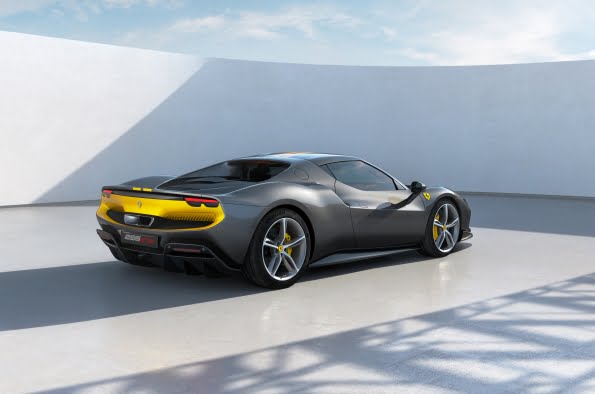
New Giulia GTA and GTAm to make official UK debut at 2021 Festival of Speed
GTAm to take on the infamous Goodwood hill climb
Uprated 2.9-litre engine powers the car from zero to 62mph in just 3.6 seconds
Sauber Engineering expertise used in the development of the GTA and GTAm
The new Alfa Romeo Giulia GTA and GTAm will make their first official UK appearance at the 2021 Goodwood Festival of Speed, taking place from 8 – 11 July.
In the 111th year of Alfa Romeo, the legendary GTA will once again be taking centre stage as it makes its UK debut in the First Glance paddock, before firing up its engine to take on the infamous 1.16 mile hill climb. Fans will be able to see, hear, smell and get up close to the car that resurrected the iconic GTA name, in a way that can only be done at Goodwood Festival of Speed.
Born in 1965, GTA is an acronym for Gran Turismo Alleggerita which means ‘lightened gran turismo’. Taking inspiration from its namesake, the new Giulia GTA is equipped with an enhanced version of the aluminium 2.9-litre V6 Bi-Turbo engine with 540hp, featured in the Alfa Romeo Giulia Quadrifoglio. Together with extensive use of lightweight materials and enhanced aerodynamics, developed in collaboration with Sauber Engineering, the GTA has a best in class power-to-weight ratio and handling to match.
Hyundai IONIQ 5 joins the line-up at Goodwood Festival of Speed, 8-11 July
Revolutionary electric vehicle will tackle the hillclimb in the First Glance category
IONIQ 5 also appears in the Festival’s Electric Avenue
The first model from Hyundai’s EV-exclusive brand, and available to order now
Available with 58 kWh and 73 kWh battery packs, with RWD or AWD powertrains
The trailblazing Hyundai IONIQ 5, the first new model in the EV-exclusive IONIQ brand – will make its dynamic show debut at the Goodwood Festival of Speed from Thursday 8 to Sunday 11 July.
Appearing on Goodwood’s famous hillclimb across the four days in the First Glance category, showgoers will have a chance to admire its retro-futuristic looks as it silently glides by. Able to charge from 10%-80% in just 18 minutes, accelerate from 0-62mph in as little as 5.2 seconds and with the 2WD version can travel up to 298 miles on a single charge, IONIQ 5 is an electric vehicle free from compromises.
For those hoping to get a little closer, IONIQ 5 will also be appearing in Goodwood Festival of Speed’s Electric Avenue. Visitors can admire the exterior design in detail, which evokes the daring attitude of the Hyundai Pony, the company’s first production car, but modernized with the freedom of a dedicated EV platform. The front of the car is equipped with Hyundai’s first clamshell hood that minimizes panel gaps for optimal aerodynamics, the front bumper is defined by an eye-catching V-shape incorporating distinctive daytime running lights and on the sides, auto flush door handles provide clean surface styling and enhanced aerodynamic efficiency.
Goodwood guests can also admire the ‘Living Space’ cabin, complete with flat floor and reclining seats allowing for levels of comfort and flexibility never before seen in this segment. Many of the interior touchpoints are eco-friendly too: the seats, headliner, door trim, floor and armrest use sustainably sourced materials, such as recycled PET bottles, plant-based (bio PET) yarns and natural wool yarns, eco-processed leather with plant-based extracts, and bio paint with plant extracts.
A new dedicated EV ‘E-GMP’ platform provides IONIQ 5 flexibility in powertrain options, with customers having the choice of three battery and drive types; a 58 kWh rear wheel drive, a 73 kWh rear wheel drive, or a 73 kWh all-wheel drive. IONIQ 5 features 800V charging as standard, which when combined with a 350kW ultra-rapid charger will provide 80% charge in just 18 minutes or 62 miles of driving range in five minutes.
Ashley Andrew, Hyundai Motor UK Managing Director, said: The launch of IONIQ 5 is a hugely significant moment for Hyundai – it heralds a new era for clean mobility. Goodwood Festival of Speed will be one of the first opportunities that the UK public will have had to see IONIQ 5 on the move and up close, so we’re thrilled to be able to share this landmark in our history with the many enthusiasts expected at the Festival.”
The revolutionary Hyundai IONIQ 5 is available to order now, priced from £36,995. IONIQ 5 will be available in three specification levels, SE Connect, Premium, Ultimate, which join the comprehensively equipped special launch edition Project 45. The Project 45 edition was oversubscribed by three times just 24 hours after reservations first opened.
MY22 brings significant changes to ID.3 and ID.4 ordering process for a focus on flexibility and convenience to customers
Pre-configured trim-level structure altered in favour of offering customers choice over option packs when ordering an ID.3 or ID.4
Seven ID. variants are now eligible for the Plug-in Vehicle Grant
Volkswagen has rolled out updates across the model range as the brand switches to its 2022 model year.
The most marked changes are reserved for the ID.3 and ID.4 models. For the first time since launch, the two award-winning EVs are now offered with configurable trim levels, and a range of option packs are now available across all derivatives. The ID.3 also receives a major price revision that sees it represent even better value for money.
As the most notable update in the Model Year 2022 (MY22) revisions, the ID.3 and ID.4 are subject to changes in their ordering process, with greater customisation possible. Previously the trim levels came pre-configured, offering a fixed suite of packages, with only colours and wheels being customisable. The MY22 update sees customers able to choose a trim level that best fits their needs and then specify further option packs on top.
This new structure considerably increases the flexibility of the ID.3 and ID.4 in the customer’s ordering process. For example, previously it was not possible to configure an Augmented Reality Head-up display on any ID.3 model other than the Max and Tour. Now, a customer can choose any trim level and add the Infotainment Package Plus to receive the AR HUD, alongside the additional speakers that are part of the pack. Just as before, the different trim levels will still feature pre-determined packs as standard equipment, but now customers can choose to add additional packs to cater to their individual needs. A list of these packs for both models can be found below.
To further streamline the offering, the recently-introduced ‘City’ trim is now called ‘Life’ while the ‘Business’ and ‘Tech’ equipment levels have been discontinued.
Another significant part of the MY22 changes is a new pricing strategy for the ID.3. Under the new pricing, two more variants become eligible for the Government’s Plug-in Vehicle Grant – bringing the total to six – with the ID.3 Family Pro and Family Pro Performance now sitting under the £35,000 threshold for the £2,500 grant. These models, now priced at £33,640 and £34,960 respectively, fall to £31,140 and £32,460 OTR with the incentive applied. Overall, seven ID. models are now eligible for the grant including the ID.4 Life Pure.
Elsewhere in the ID.3 range, the highly-equipped Max and range-topping Tour have been reduced by £3,800 – the Tour, with its 77 kWh battery and 340-mile range (WLTP, combined) is priced from £38,800, with the equipment-packed Max starting at £37,730. For full pricing details, a table is provided below.
Elsewhere in the Volkswagen range, MY22 has brought subtle tweaks and changes to other models, with new paint colours a theme among the suite of enhancements. The T-Cross benefits from boosted standard equipment with items such as power adjustable, folding heated door mirrors, and a multifunction steering wheel all part of the standard offering. The full range of revisions can be explored in the Volkswagen model configurator: https://www.volkswagen.co.uk/configurator
Andrew Savvas, Director of Volkswagen UK, said: “The battery electric vehicle segment is rapidly evolving and our ID. family of net-carbon-neutral electric vehicles is moving with it. In particular, the ID.3 range is peerless in the breadth of its offering, with several models now available for under £30,000 and different battery options providing a range between 200 and over 300 miles.
“The ID.3 is our ‘Electric People’s Car’ and continues to receive acclaim and awards from the motoring press. It’s one of the UK’s best-selling BEVs in the segment according to the SMMT (Society of Motor Manufacturers and Traders). The aim of the price revision is to maintain the car’s long-term competitiveness in the fast-moving sector.
“We strive to continue to make e-mobility straightforward and affordable for everyone. These changes to the ID.3 and ID.4 order process, and our pricing update for the ID.3, together demonstrate our commitment to that promise.”
ID.3 range: updated MY22 pricing
Model
Price (OTR)
0-62 mph
Top speed
Range ( WLTP combined)
Life Pure Performance (45 kWh, 150 PS)
£27,120 (£29,620 exc. PIVG)
8.9 sec
99 mph
216 miles
Style Pure Performance (45 kWh, 150 PS)
£31,520 (£33,720 exc. PIVG)
8.9 sec
99 mph
214 miles
Life Pro (58 kWh, 145 PS)
£30,920 (£28,420 exc. PIVG)
9.6 sec
99 mph
264 miles
Family Pro (58 kWh, 145 PS)
£31,140 (£33,640 exc. PIVG)
9.6 sec
99 mph
262 miles
Life Pro Performance (58 kWh, 204 PS)
£29,740 (£32,240 exc. PIVG)
7.3 sec
99 mph
264 miles
Family Pro Performance (58 kWh, 204 PS)
£32,460 (£34,960 exc. PIVG)
7.3 sec
99 mph
262 miles
Max Pro Performance (58 kWh, 204 PS)
£37,730
7.3 sec
99 mph
258 miles
Tour Pro S (77 kWh, 204 PS)
£38,800
7.9 sec
99 mph
340 miles
The complete list of option packages, with some feature highlights available for the ID.3 across all specifications, is as follows:
ID.3 option packs: June 2021
Package
Highlights include
Price
Infotainment Package
Discover Navigation Pro capacitive touch-screen navigation infotainment system with 10-inch displayWireless smartphone charging
Standard on all ID.3s
Infotainment Package Plus
Includes the above, plus…Augmented Reality Head-up DisplaySound pack: 6+1 speakers
£2,200
Comfort Package
Winter pack including heated front seats and steering wheelElectrically heated, folding adjustable mirrors with projection light
Standard on all ID.3s
Comfort Package Plus
Includes the above, plus…‘Air Care Climatronic’ 2-zone air conditioning systemVariable boot floor, height-adjustable and removable
£1,190
Assistance Package
Rear-view cameraIlluminated door handlesKeyless entry including Start/Stop
£1,040
Assistance Package Plus
Emergency AssistSide AssistTravel Assist
£2,000 (or £960 where base Pack is standard)
Design Package
Illuminated band between headlightsTinted glass from B-pillar backwardsIQ.Light LED matrix headlightsInterior ambient light with 30 colour optionsLED tail lights with animation dynamic indicator
£1,780
Design Package Plus
Includes the above, plus…Panoramic sunroof
£2,470 (or £690 where base Pack is standard)
Sport Package
Progressive SteeringSports suspension
£340
Sport Package Plus
Includes the above, plus…Dynamic Chassis Control (DCC)
£1,140
The complete list of option packages with some feature highlights available for the ID.4 across all specifications is as follows:
ID.4 option packs: June 2021
Package
Highlights include
Price
Infotainment Package
Discover Pro 10-inch infotainment system with navigationMobile phone interface ‘Comfort’ with inductive charging feature
Standard on all ID.4s
Infotainment Package Plus
Includes the above package, plus…Augmented Reality Head-Up DisplayDiscover Max 12-inch infotainment system with navigation
£2,200
Comfort Package
‘Air Care Climatronic’ 2-zone automatic climate controlHeated front seatsLeather-wrapped touch multi-function steering wheel, heated
Standard on all ID.4s
Comfort Package Plus
Includes the above package, plus…:‘Air Care Climatronic’ 3-zone automatic climate controlVariable boot floor
No current option. Standard on Style, Family and Max.
Assistance Package
Rear view camera systemKeyless locking and starting system ‘Keyless Access’
Standard on all ID.4s
Assistance Package Plus
Includes the above package, plus…:Travel AssistLane AssistEmergency AssistSide AssistArea View including rear view camera systemEasy Open & Close – sensor controlled luggage compartment opening and closing with remote unlocking
£2,180
Design Package Exterior
Illuminated bar between headlightsTinted glass from B-pillar backwardsIQ.Light LED matrix headlightsLED taillights with animation dynamic indicator
£1,880
Design Package Exterior Plus
Includes the above package, plus…:Panoramic roof
£2,610 (or £730 where base Pack is standard)
Sport Package
Progressive SteeringSports suspension
£340
Sport Package Plus
Includes the above package, plus…:Dynamic Chassis Control (DCC)
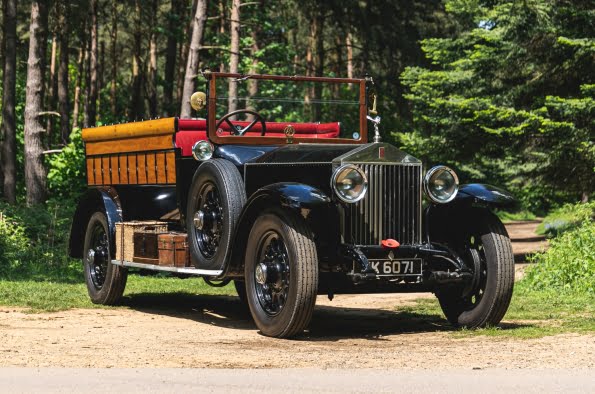
Superbly restored 1927 Rolls-Royce Phantom 1 Open Tourer
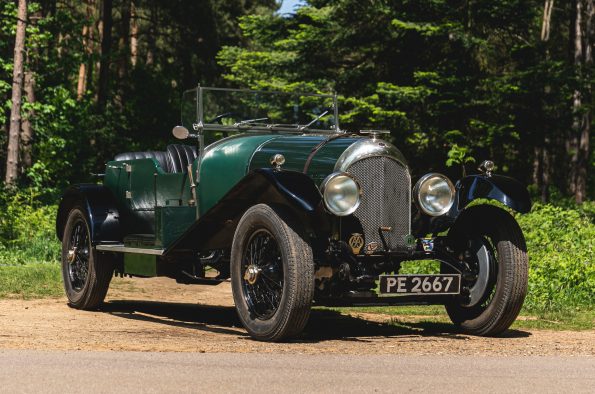
A genuine, matching numbers 1925 Bentley 3.0-Litre Vanden Plas-style Tourer
Silverstone Auctions are inviting entries for The Classic Sale at Silverstone on the weekend of Friday 30 July – Sunday 1 August.
Their lot list is rapidly growing, so don’t miss your chance to submit your car or motorcycle today before their catalogue closes on Monday 12th July.
The line-up is already looking fantastic and confirmed is this 1927 Rolls-Royce Phantom 1 Open Tourer. This is a superbly restored 1926 Phantom 1 Tourer which was rebodied in the eighties with an Edwardian Shooting-Brake flat body with its own story to tell. To ensure Rolls-Royce cars could be fitted with the finest bodies in the world, they introduced the ‘New Phantom’, which remained in production in the UK until 1929, by which time some 2,269 chassis had been delivered. This particular car is accompanied by a dozen photocopies of original documents which include build sheets, spring testing, component selection, weight reports, inspections and pleasingly the car’s service records (at the Works) up until early 1938.
In 2004 the car was purchased by Raymond Lippiatt, who is the current owner. Raymond is a long-term Rolls-Royce and Bentley enthusiast who is well known by the respective Owner’s and Driver’s Clubs. The most unusual thing about the venerable Rolls was its distinctive ‘Shooting Brake’ rear bodywork which had been saved from the scrapyard in 1987. The rear bodywork of this car has seen life at every level and it’s good to see that it’s back enjoying the party, however, beneath the frivolity lies a well prepared and well-presented 1927 Phantom 1, which is referred to as ‘The Best Car in the World’.
Gary Dunne Sales Controller for Silverstone Auctions added “The catalogue for our flagship sale is truly superb and to have two pre-war classics as part of the offering is truly special. These two phenomenal examples have a fascinating history and we welcome anyone interested to come and view them on the dedicated viewing days.”
The second delightful example heading to The Classic is this 1925 Bentley 3.0-Litre Vanden Plas-style Tourer. This is a genuine, matching numbers, mid-twenties 3-litre which has a fascinating history that would be welcome anywhere in the world! With characteristic humility ‘W O’ was constantly amazed by the enthusiasm of later generations for the products of Bentley Motors Limited, and it is testimony to the soundness of his engineering design skills that so many of his products have survived. It was clothed from new by HJ Mulliner with their ‘All weather’ bodywork and finished in Grey and Black, normal for the period as green was very seldom used at the time.
PE 2667 is also offered from Raymond Lippiatt and the car itself looks absolutely splendid; standing all-square and proud and belying the thirty years since its restoration. This example is finished in BRG (Napier Green) and Brooklands Green with black wings, running boards and wire wheels. The black leather interior of the car is delightfully patinated and looks exactly as a well-used and well-loved Vintage (pre-1931) Bentley should look and the car’s period appearance is complemented by its original toolbox, spares chest, Pratts petrol can and hessian-covered suitcase.
Silverstone Auctions classic and competition car sale is taking place on Saturday 31vJuly and Sunday 1 August with their dedicated motorcycle sale on Friday 30 July at The Classic.
If you are interested in submitting an entry, the auction house are inviting you to join their growing lot list for the sale. To talk to a member of the team, you can email enquiries@silverstoneauctions.com or contact them on 01926 691141.
For high resolution copies of the images please get in touch with the PR contact below
2021 AUCTIONS The Classic Sale at Silverstone: 30th July – 1st August The NEC Classic Motor Show Sale: 12th – 14th November
ABOUT SILVERSTONE AUCTIONS Formed in 2011, Silverstone Auctions is a world-class, specialist auction house for the sale of classic cars, modern supercars, all types of competition cars, modern and historic motorcycles as well as automotive memorabilia.
We hold the exclusive automotive auction rights for Silverstone circuit and host sales as stand-alone events as well as an integrated element of some of Europe’s biggest motorsport events such as the Silverstone Classic Festival.
In addition to our sales at the circuit, we also host a number of auctions each year at other major classic car events including the NEC Classic Motor Show and Race Retro.
At Silverstone Auctions we take pride in selecting the very best of breed vehicles for our sales which not only attracts buyers from around the world,but has already helped us achieve a number of record-breaking auction prices on behalf of our vendors.
We are committed to providing the best possible service for both buyers and vendors alike, so if you’d like to know more about buying or selling a classic vehicle with Silverstone Auctions, call us today on +44(0)1926 691141.
New Mercedes-Maybach S-Class now on sale with prices starting from £162,390
Available in three model lines: Maybach S 580 4MATIC, Maybach S 580 4MATIC First Class and Maybach S 680 4MATIC First Class
Two petrol engines – a V8 and V12 – available with 4MATIC all-wheel drive
Mercedes-Maybach debuts Rear Seat Entertainment, rear-axle steering, E-ACTIVE BODY CONTROL and First Class Lounge
Available to order now, with first UK vehicles arriving in early Autumn
The Mercedes-Maybach S-Class is now on sale with prices starting from £162,390 for the Maybach S 580 4MATIC, and £177,025 for the S 580 4MATIC First Class.
The Maybach S 680 4MATIC First Class costs £204,375.
Particularly suitable for chauffeured driving, the wheelbase is 18 cm longer compared to the long variant of the Mercedes-Benz S-Class. This focus on the rear area is underlined by even more refined appointments, with new massaging functions and an extensive upgrade for the First Class rear compartment.
The S 580 4MATIC features a 4.0-litre V8 petrol engine, which produces 503 hp and 700 Nm of torque. A further 20 hp and 200 Nm of torque is available thanks to the EQ Boost mild hybrid system. This features an integrated starter-generator powered by the 48 V on-board electrical system, improving overall performance and efficiency. It can reach 62 mph from standstill in 4.8 seconds and has an electronically limited top speed of 155 mph. The S 580 4MATIC can deliver between 24.1 and 25.5 mpg on the combined cycle and emits 253 g/km of CO2 (the First Class variant releases 265 g/km).
The range-topping six-litre V12 S 680 4MATIC First Class, starting from £204,375, produces 612 hp and 900 Nm of torque. The sprint to 62 mph takes just 4.5 seconds, while it delivers 19.8 mpg and emits 325 g/km of CO2.
All models come as standard with a 9G-Tronic nine-speed automatic transmission and are only available in long wheelbase form.
The Maybach S 580 4MATIC comes with the next generation of Mercedes-Benz User Experience (MBUX); High-End Rear Seat Entertainment; MBUX Rear Tablet; MBUX Interior Assistant; Augmented Reality Head-Up Display; a digital TV tuner; 12.8-inch OLED Media Display; Burmester High-End 4D Sound System; ENERGIZING Package Front; designo piano lacquer flowing lines trim; 20” Maybach 5-hole forged wheels; Rear Seat Comfort Pack including massage functions; Exclusive nappa leather upholstery; high pile floor mats; DINAMICA roof liner; garage door opener; Comfort Doors in the rear; steering wheel in wood and nappa leather; Active Ambient Lighting; Adaptive Rear Compartment Lighting and KEYLESS-GO with seamless door handles. Exclusive to the S 580 4MATIC is rear-axle steering with 10° steering angle adjustment.
In addition, the First Class models feature 21-inch Maybach multi-spoke forged wheels; two wireless headsets; folding tables in the rear; nappa leather roof liner; rear-axle steering (4.5°); designo backrests in wood; champagne flutes; 10-litre capacity rear fridge compartment; designo brown open-pore walnut wood trim with aluminium lines and a nappa leather steering wheel. While the S 580 has five seats, First Class is only available with luxury individual rear seats.
E-ACTIVE BODY CONTROL – only available on the S 580 4MATIC and S 580 4MATIC First Class – is an entirely new, fully active suspension system based on the 48 V electrical system. It uses five multi-core processors, more than 20 sensors and the stereo camera, to react proactively to each driving situation. The S 680 features AIR BODY CONTROL air suspension.
DIGITAL LIGHT headlights, offering a resolution of more than 2.6 million pixels per vehicle, are standard across all variants, as are Maybach Exclusive tail-light animation and the Mercedes-Maybach Logo Projector in the Exterior Mirrors.
Maybach Exclusive Two-Tone Paints are available in eight different choices for an extra £13,650. The Mercedes-Maybach Exclusive nappa leather designo package, £28,000, is available as an option on First Class models adding; designo black piano lacquer trim with flowing lines, designo roof liner in nappa leather with topstitching, finished in crystal white, front centre console sides in nappa leather with topstitching, insert in the door sill panels in nappa look, MAYBACH Exclusive nappa leather in designo crystal white and silver grey pearl, multifunction steering wheel in wood/leather, nappa leather covering on sun visors, pockets on driver’s and front-passenger’s backrest, window frame, A-, B- and C-pillars and upper and side cover on the instrument panel, and two upholstery cushions covered in nappa leather, with diamond quilting and Mercedes-Maybach logo plus piping in contrasting colour.
Automobili Pininfarina will attend Goodwood Festival of Speed for the first time with the pure-electric Battista hyper GT making its debut at the event
The Battista will feature at the forefront of the event’s new Electric Avenue as the ultimate expression of sustainable luxury and peerless design
As the world’s first pure electric luxury carmaker, Automobili Pininfarina has more than 90 years of iconic Italian design heritage, which helped inspire the exclusive hand-built Battista
Goodwood debut follows the luxury hyper GT’s successful prototype testing schedule around Europe as the programme builds towards making the first customer deliveries later this year
Automobili Pininfarina will be at the forefront of the electric revolution at the 2021 Goodwood Festival of Speed, from the 8th to 11th July, with the Battista pure electric hyper GT*.
Aiming to lead the sustainable automotive luxury movement, Automobili Pininfarina will take the centre stage at Goodwood’s Electric Avenue exhibition space.
The Electric Avenue display will be located at the heart of the event and forms part of the Festival’s ongoing focus on innovation, immersing visitors in the journey towards zero emissions as they explore the diverse range of electric vehicles available.
The Battista launch model will be showcased within this section, giving Goodwood visitors a first chance to view the hyper GT at the world-famous event. It channels more than 90 years of iconic Italian heritage and is the most powerful Italian sports car ever made, combining exquisite design with luxurious sustainable materials and a sophisticated pure-electric powertrain to represent the pinnacle of the EV technology.
Per Svantesson, Chief Executive Officer, Automobili Pininfarina, said: “We are excited to bring Battista to the iconic Goodwood Festival of Speed for the first time. This hyper GT and our future portfolio of luxury electric cars will offer the beautiful design and personalisation opportunities one expects from Automobili Pininfarina, with thrilling performance enabled by zero-emissions powertrain technology and an array of sustainably sourced design features and finishes. Goodwood’s Electric Avenue is a perfect showcase for this vision of future luxury.”
Automobili Pininfarina’s attendance at the Goodwood Festival of Speed follows a successful prototype testing programme, which has seen the Battista undergo rigorous assessment at some of the most demanding test tracks across Europe.
The project is on schedule to deliver the first customer cars later this year after confirming that Jardine Motors Group will be the London and southern UK retailer for the exclusive new model, helping customers in the region specify and personalise their vehicle from a comprehensive choice of contemporary interior and exterior finishes.
The exclusive Automobili Pininfarina Battista is making its Goodwood debut at this year’s event, but has already received critical acclaim, after scooping the Electric Dream award from the expert judges at Electrifying.com earlier this year and the Electric Hypercar of the Year prize at last year’s GQ Car of the Year awards.
New Rolls-Royce Collection of Wraith and Dawn Black Badge
Landspeed Collection celebrates the records set by British engineer Captain George Eyston in Thunderbolt, powered by two Rolls-Royce R V12 aero engines
Interior details recall the Bonneville Salt Flats in Utah, where Eyston pursued his record-breaking endeavours in 1937-38
Salt Flats’ fissured texture is perfectly reproduced in the engraved fascia; steering-wheel detail mimics the dark track-line marked on the surface during record runs
Starlight Headliner precisely depicts the night sky on 16 September 1938, when Eyston set his third and final land-speed record of 357.497 mph
Silhouettes of the long-lost Thunderbolt, and its three record-breaking speeds, are laser-engraved on the front tunnel
Subtle detail in driver’s-side door reproduces ribbon colours of the honours awarded to Eyston during his lifetime
Production limited to just 35 examples of Wraith Black Badge, and 25 of Dawn Black Badge
“It’s human nature to want to go further, do more, be greater than ourselves. The innate desire to extend horizons and define new limits is an instinct we’ve always understood at Rolls-Royce; and we have acted upon it once again with our new Landspeed Collection.
“The Collection, which includes both Wraith and Dawn Black Badge, celebrates someone with exactly that dauntless, fearless, pioneering spirit. His name was Captain George Eyston, a Cambridge University graduate, racing driver, gifted inventor and engineering genius. In the late 1930s, he broke the world land-speed record three times with his car Thunderbolt, powered by two Rolls-Royce R V12 aero engines. He was a true hero from an age of epic endeavours; yet both he and Thunderbolt have been all-but forgotten for more than 80 years.
“With this Collection, we have revived Eyston’s memory and retold his remarkable story. Throughout Wraith and Dawn Landspeed, clients will find numerous subtle design elements and narrative details that recall and commemorate his amazing achievements, grand vision and exceptional courage.” Torsten Müller-Ötvös, CEO, Rolls-Royce Motor Cars
Rolls-Royce has been associated with world speed records on both land and water for more than a century. But while the exploits of Sir Malcolm Campbell are well documented and widely known, another British hero who set three land-speed records using Rolls-Royce engines has been largely overlooked by history.
Now, after more than 80 years, Rolls-Royce recalls this hero’s inspiring exploits. With the new Wraith and Dawn Black Badge Landspeed Collection, the marque uncovers and retells the remarkable story of the redoubtable Captain George Eyston, and his extraordinary car, Thunderbolt.
Born in 1897, George Eyston was fascinated with motorsport from childhood, racing both cars and (under an assumed name) motorcycles while still at school. His degree in engineering at Trinity College, Cambridge, was interrupted by the Great War, in which he served with distinction, rising to the rank of captain and winning the Military Cross. He spent the 1920s and 30s developing and driving racing cars; a talented inventor, he also held a number of patents, particularly in the field of supercharging.
In 1935, Eyston was among the first British racers to travel to the Bonneville Salt Flats in Utah, where he set new 24-hour and 48-hour endurance speed records. He subsequently received the Segrave Trophy, awarded to ‘the British national who demonstrates Outstanding Skill, Courage and Initiative on Land, Water and in the Air’.
In 1937, he returned to the Flats and went on to set three world land-speed records with Thunderbolt. This extraordinary machine had three axles, eight wheels and weighed seven tonnes, earning it monikers such as ‘behemoth’ and ‘leviathan’ in contemporary reports. The body was made from aluminium and, in its original form, had a blunt, heavyset profile topped with a large triangular tailfin.
CELEBRATING ACHIEVEMENT, INNOVATION AND COURAGE
The Rolls-Royce Landspeed Collection draws inspiration from George Eyston’s remarkable life and record-breaking feats. It also has strong aesthetic links to the unique, otherworldly landscape of the Bonneville Salt Flats where Thunderbolt made him, albeit briefly, the fastest man on Earth. The Collection Car duo is presented in a specially created two-tone finish, which marries Black Diamond Metallic with a new Bespoke colour, Bonneville Blue. This specially developed hue bears particular significance to the Collection, with a colour that transitions under sunlight from light blue to silver, illustrating the reflections of both the vast sky over Bonneville and the crisp salt flats on Thunderbolt’s aluminium body.
Thunderbolt was powered by a pair of Rolls-Royce R supercharged 37-litre, V-12 aero engines, each producing well over 2,000 horsepower. Around only 19 of these engines were ever made: indeed, they were so rare that Thunderbolt’s engines had a previous career in the Schneider Trophy-winning Supermarine S6.B seaplane that would lay the foundations for the legendary Spitfire.
Today, Thunderbolt’s two R engines are preserved at the Royal Air Force Museum, Hendon and the Science Museum in London. The car itself, however, has been lost. After being exhibited at the 1940 Centennial Exhibition in New Zealand, it was placed in storage, but was sadly destroyed in 1946 when 27,000 bales of wool, housed in the same building, caught fire.
HOLDING THE LINE
Eyston set his records on the International Speedway, a specially compacted section of the Bonneville Salt Flats 10 miles (16km) long and 80 feet (24m) wide. The terrain is perfectly level in all directions and shines brilliant white in the sunlight: the absence of landmarks and ferocious glare combines to make holding course and judging distance extremely difficult at high speed.
George Eyston himself, commented, “On the salt bed, which has to be carefully prepared by dragging, we paint one or more black lines along the whole length. These lines act as guides and prevent the driver straying; for errors of a few feet in steering might culminate in disastrous results. You see, you might drive a few feet away from the absolute line, something else might happen and you get a few feet more and, believe me, you will never get back”.
As he recognised, deviating from the speedway would have been extremely hazardous, particularly given Thunderbolt’s enormous weight. In response, Eyston’s team painted darkened track lines on the salt surface for Eyston to follow – effectively his sole means of keeping Thunderbolt straight at over 350 mph.
This simple yet ingenious idea is recalled in the Landspeed Collection by a subtly perforated dark detail in the upper-centre of the steering wheel, which continues through the centre-line of the driver’s seat, accentuating both Wraith and Dawn’s driver focused appeal.
The Bonneville Salt Flats may appear smooth; but in fact, they’re seamed with tiny fissures. This distinctive texture is perfectly reproduced, digitally retraced from the surface itself, in the wooden veneer of Landspeed Collection’s fascia and console lids. The interior references continue with Thunderbolt’s unique silhouette, and the records it achieved, depicted on the polished, anodised aluminium surface of the Landspeed Collection’s front tunnel. Dawn Landspeed additionally celebrates George Eyston’s vision with the outline of the Silver Island mountains, which dominate the Bonneville horizon, engraved on the upper ‘waterfall’ between the rear seats.
According to the history books, Eyston’s third and final land-speed record of 357.497 mph stood for 341 days. In the new Collection Cars, it is commemorated for all time, engraved into the housing of the dashboard clock alongside the name ‘Bonneville’, in homage to where the record was set.
Thunderbolt was originally left unpainted, which caused an unexpected problem. During the first record attempts, the photo-electric timing equipment was unable to detect the polished aluminium body against the searing white of the Salt Flats’ surface, making accurate timing impossible. Eyston’s brilliantly simple solution was to paint a large black arrow with a yellow circle on the side, to heighten visibility when travelling at great speed. Bright yellow accents throughout the Landspeed Collection, including two-tone yellow and black bumper inserts, pay tribute to this vision.
The clock’s design recounts this theme. Based on the instrument dials from Thunderbolt, with yellow and black details, black-tipped hands are inspired by the arrows painted on the original car’s exterior.
The allure of the Bonneville Salt Flats draws not only record-breakers, but astronomers, too. Stargazers prize this vast, unpopulated wilderness for its exceptionally dark night skies, which create perfect conditions unspoiled by artificial light.
In Wraith Landspeed, the Starlight Headliner perfectly recreates the heavens as they appeared over the Flats on 16 September 1938, the date on which Eyston and Thunderbolt set their third and final world land-speed record. The constellations are precisely marked using 2,117 individually placed fibre-optic ‘stars’, the largest number of stars in a Rolls-Royce Wraith Starlight Headliner ever featured.
During his lifetime, George Eyston received three significant honours. He was awarded the Military Cross (MC) while serving in the Great War; in 1938, after his record-breaking runs with Thunderbolt he was made a Chevalier of the Légion d’honneur, France’s highest civilian decoration; and in 1948, he received the Order of the British Empire (OBE).
These honours are marked in both Wraith and Dawn Landspeed with a subtle detail in the driver’s door, made in the same Grosgrain weave silk and colours to match the original medal ribbons. The armrests on both the passenger side and below the ribbon detail are specially padded to give them the comfortable ‘club armchair’ quality that Eyston favoured in his driving seats, much to the amusement of his fellow racers.
Production of Landspeed Collection cars is strictly limited to just 25 examples of Dawn and 35 of Wraith, all of which have already been allocated to customers.
In closing, Mr Müller-Ötvös said, “Rolls-Royce has been synonymous with adventure, daring and pushing boundaries throughout its history. We are delighted that with the Landspeed Collection, we can add another hitherto unsung hero to the illustrious roll call of pioneers associated with our great marque. With his vision, boldness, determination and genius for innovation and invention, George Eyston embodies so much of what makes Rolls-Royce unique. These cars are a fitting and long overdue tribute to a truly inspiring character.”
TECHNICAL SPECIFICATIONS
Wraith Black Badge: NEDCcorr (combined) CO2 emission: 367 g/km; Fuel consumption: 17.5 mpg / 16.1 l/100km; WLTP (combined) CO2 emission: 370-365 g/km; Fuel consumption: 17.2-17.4 mpg / 16.4-16.2 l/100km
Dawn Black Badge: NEDCcorr (combined) CO2 emission: 371 g/km; Fuel consumption: 17.3 mpg / 16.3 l/100km; WLTP (combined) CO2 emission: 382-380 g/km; Fuel consumption: 16.7-16.9 mpg / 16.9-16.8 l/100km.
FURTHER INFORMATION You can find all our press releases and press kits, as well as a wide selection of high resolution, downloadable photographs and video footage at our media website, PressClub.
Unveiled today the 296 GTB, Ferrari’s new mid-rear-engined berlinetta sports car
New Ferrari V6 hybrid architecture capable of delivering up to 830 cv
The 296 GTB’s plug-in hybrid system maximises usability and driving pleasure
The 296 GTB is also available with the extreme high-performance Assetto Fiorano package
The Ferrari 296 GTB, the latest evolution of Maranello’s mid-rear-engined two-seater berlinetta, was premiered today during an online event broadcast on Ferrari’s social media and web channels.
The 296 GTB redefines the whole concept of fun behind the wheel, guaranteeing pure emotions not just when pushing the car to its limits, but also in day-to-day driving situations.
The 296 GTB ushers in an authentic revolution for Ferrari as it introduces a new engine type to flank the marque’s multi-award-winning 8- and 12-cylinder power units: a new 663 cv 120° V6 coupled with an electric motor capable of delivering a further 122 kW (167 cv). This is the first 6-cylinder engine installed on a road car sporting the Prancing Horse badge; it unleashes its massive 830 cv total power output to deliver previously unthinkable performance levels and an innovative, exhilarating and unique soundtrack.
The car’s name, which combines its total displacement (2992 l) and number of cylinders was chosen, with the addition of the GTB (Gran Turismo Berlinetta) acronym in finest Ferrari tradition, to underscore this new engine’s epoch-changing importance to Maranello. It is not simply the living, beating heart of the 296 GTB, but it also ushers in a new V6 era that has its roots deep in Ferrari’s unparalleled 70-year-plus experience in motor sports.
The very first Ferrari V6, in fact, featured a 65° architecture and debuted on the 1957 1500 cc Dino 156 F2 single-seater. This was followed in 1958 by bigger displacement versions on the front-engined sport prototypes – the 196 S and 296 S – and F1 cars, such as the 246 F1 which powered Mike Hawthorn to the F1 Drivers’ Championship title the same year.
The very first Ferrari to sport a mid-rear-mounted V6 was the 246 SP in 1961, which won the Targa Florio both that same year and in 1962, amongst many others. Also in 1961, Ferrari secured its first Constructors’ title in the Formula 1 World Championship with the 156 F1, which was powered by a 120° V6. Ferrari first installed turbos between an engine’s cylinder banks on the 126 CK in 1981 and subsequently on the 126 C2 in 1982, which became the first turbo-charged car to win the Formula 1 Constructors’ World Championship title. This was followed up with a second title in 1983 with the 126 C3. Lastly, V6 turbo hybrid architecture has been used on all Formula 1 single-seaters since 2014.
The 296 GTB’s plug-in hybrid (PHEV) system guarantees it is an incredibly usable car as well as cutting pedal response times to zero and delivering a 25km range in all-electric eDrive mode. The car’s compact dimensions and the introduction of innovative dynamic control systems as well as meticulously honed aero ensure that the driver will instantly experience its astonishing agility and responsiveness to commands. Its sporty, sinuous design and extremely compact dimensions also visually underscore its exceptional modernity, brilliantly referencing the likes of the 1963 250 LM, the perfect marriage of simplicity and functionality.
As was the case with the SF90 Stradale, for clients who want to exploit the car’s extreme power and performance to the utmost, particularly on the track, the 296 GTB is also available with the Assetto Fiorano package, which includes lightweight features and aero modifications.
POWERTRAIN The 296 GTB is the first Ferrari road car to sport a V6 turbo with a vee with an angle of 120° between the cylinder banks, coupled with a plug-in electric motor. This new V6 has been designed and engineered from a clean sheet by Ferrari’s engineers specifically for this installation and is the first Ferrari to feature the turbos installed inside the vee. Aside from bringing significant advantages in terms of packaging, lowering the centre of gravity and reducing engine mass, this particular architecture helps deliver extremely high levels of power. The result is that the new Ferrari V6 has set a new specific power output record for a production car of 221 cv/l.
As the V6 turbo is integrated with an electric motor at the rear, the 296 GTB’s combined maximum power output is 830 cv, putting it at the top of the rear-wheel-drive sports car segment as well as making it extremely flexible. This is true both in terms of day-to-day contexts (the 296 GTB has a full-electric mode range of 25 km), and in driving enjoyment (accelerator pedal response is instant and smooth at all engine speeds).
The powertrain assembly comprises a V6 turbo ICE, with the 8-speed DCT and E-Diff, and the MGU-K located between the engine and the gearbox. A clutch is set between the ICE and the electric motor to decouple them in electric-only eDrive mode. Lastly there is a high-voltage battery and the inverter which controls the electric motors.
INTERNAL COMBUSTION ENGINE Thanks to its 663 cv and 221 cv/l, the 296 GTB’s ICE sets the new specific power output record for a production road car. Central to achieving this result was the introduction of the 120° vee configuration with equally-spaced firings as well as the positioning of the turbos inside the vee which produces a much more compact engine and optimally distributed masses.
The architecture is also ideal in terms of combustion sequence and the integration of the intake plenums and the engine supports on the intake sides of the cylinder heads. The engine is thus lighter and more compact because of the elimination of the plenums and exterior supports, while the fluid-dynamics benefit from the reduction in volumes, boosting intake efficiency. The 120° vee architecture, which offers more space between the cylinder banks than a 90° vee, meant the turbos could be installed centrally, thus significantly reducing the unit’s overall size and the distance the air has to cover to arrive in the combustion chamber, maximising the fluid dynamics and efficiency of the intake and exhaust line ducts.
To obtain this specific power output, the pressure in the combustion chamber had to be pushed to new heights. Boosting the pressure in the chamber demanded exceptional development from both a thermal-fluid-dynamic and structural point of view without compromising on engine weight and reliability. To that end, Ferrari poured all of its significant expertise in alloys, dimensioning and components into engineering the aluminium engine block and cylinder heads. Both components are new and specific to the new V6 architecture.
The distribution is completely new: drive is transmitted to the pump assembly (water and oil) via a timing chain and to the valvetrain via an offset sprocket and a dedicated timing chain per cylinder bank. The main chain has a dedicated hydraulic tensioner, two bush chains with relative hydraulic tensioner and different calibrations for right and left bank, as well as a dedicated chain for the oil pump assembly. The valvetrain, which has roller fingers with hydraulic tappets, has specific intake and exhaust valve profiles.
The engine benefited from the latest Ferrari combustion chamber development introduced on the SF90 Stradale: central injector and spark plug with 350-bar pressure injection system that improves the fuel-air mix in the chamber, performance and reduces emissions. The intake and exhaust ducts were redesigned and tuned to maximise volumetric efficiency and thus guarantee high levels of turbulence in the chamber.
The IHI turbochargers have been completely redesigned using higher performance alloys. This meant the maximum revs of the turbos could be increased to 180,000 rpm, with a consequent improvement in performance and boost efficiency, which increases by 24%. The symmetrical, couter-rotating turbos are of the mono-scroll type: the technical solutions adopted have reduced the compressor wheel diameter by 5% and the turbo rotor 11% compared to the V8 applications, despite the very high specific power. The reduction in the rotating masses (the inertia of the two rotating elements has been reduced by 11% compared to the 3.9l V8 solution) has reduced the spool up time ensuring instantaneous power delivery.
The crankshaft is made from nitrided steel. To ensure it has a 120° crank angle, after the initial forging of the rough ingot, the crankshaft is twisted and then subject to a deep nitriding heat treatments (to guarantee resistance to high loads), machining and balancing. The firing order of the new V6 (1-6-3-4-2-5) is the result of the crankshaft’s journal geometry. 100% of the rotating masses and 25% of the alternating masses are balanced, and therefore its level of balance allows loads on the bushings to be reduced without increasing the weight of the engine.
A new variable displacement oil pump was developed to guarantee that the oil pressure is continuously controlled right across the engine’s entire operating range. A solenoid valve, controlled by the engine ECU in a closed loop, is used to control the pump’s displacement in terms of flow and pressure, delivering only the amount of oil required to guarantee the functioning and reliability of the engine, whilst simultaneously providing a reduction in the power absorbed by the pump itself. On the oil scavenge side, to minimise splashing losses, the suction system was made more powerful using six scavenge rotors: three specific dedicated rotors for the crankcase below the crank throws, one for the distribution compartment and two for the cylinder head compartments.
In Ferrari engines, the intake plenum is normally located in the centre of the vee. However, the V6 hails a paradigm shift in that regard: its plenums are on the side of the cylinder heads and are integrated with the support for the throttle valve. The light thermoplastic material used to make them keeps engine weight down. This solution boosts performance because of the shorter ducts and consequent fluid-dynamic detuning, in addition to reducing time-to-boost as a result of the high pressure line’s smaller volume.
The new architecture also led to the development of a more linear exhaust line located in the upper part of the engine compartment. The shape of the exhaust reduces back pressure and contributes to boosting performance. The exhaust manifold and catalyser housings are made entirely from Inconel®, a steel-nickel alloy that reduces the weight of the exhaust and makes it more resistant to high temperatures.
Sound-wise, the 296 GTB rewrites the rulebook by harmoniously combining two characteristics that are normally diametrically opposed: the force of the turbos and the harmony of the high-frequency notes of a naturally-aspirated V12. Even at low revs, inside the cabin, the soundtrack features the pure V12 orders of harmonics which then, at higher revs, guarantee that typical high-frequency treble. This Ferrari’s soundtrack matches its performance, creating a sense of unprecedented involvement, and marking the turning of a new page in Maranello’s berlinetta history.
Even to those outside the car, the shrill sound of the engine is instantly recognisable. The first in the F163 engine family, this V6 earned itself the nickname “piccolo V12” (little V12) during the development phase. The 120° V architecture guarantees a symmetrical firing order while the equal-length, tuned exhaust manifolds combined with the single exhaust line outside the hot-V amplify the pressure waves. These characteristics are what lend such purity to the orders of harmonics, which are further helped by a limiter that hits an impressive 8500 rpm. The patented “hot tube” has been completely redesigned for the 296 GTB and is positioned prior to the exhaust gas treatment systems so that it channels the pure sound into the cabin, further enhancing driver involvement and excitement.
ELECTRIC MOTOR This is the first ever Ferrari with a rear-wheel drive-only PHEV (Plug-in Hybrid Electric Vehicle) architecture in which the ICE is integrated with a rear-mounted electric motor producing up to 122 kW (167 cv) derived from the Formula 1 application from which it also inherits the MGU-K (Motor Generator Unit, Kinetic) moniker. The electric motor and ICE communicate via the Transition Manager Actuator (TMA) which allows them to be used both together to produce a combined power output of 830 cv or decouples them to allow the electric motor to run solo.
Aside from the V6 turbo and the 8-speed DCT already adopted on the SF90 Stradale, Ferrari Roma, Portofino M and the SF90 Spider, the powertrain architecture also includes the MGU-K electric motor positioned between the engine and gearbox, the TMA to decouple the electric motor from the ICE, the 7.45 Kwh high voltage battery, and the inverter which controls the electric motors.
The MGU-K is a dual-rotor single-stator axial flux motor. Its compact size and its structure allowed the length of the powertrain to be reduced which, in the final analysis, helped shorten the 296 GTB’s wheelbase. The electric motor charges the high voltage battery, turns on the ICE, supplies it with additional torque and power (up to 167 cv) and allows the car to be driven in all-electric eDrive mode. The MGU-K’s improved design allows it to reach maximum torque of 315 Nm, around 20% more than previous applications.
The TMA (Transition Manager Actuator) allows very rapid static and dynamic transitions from electric to hybrid/ICE mode and vice-versa, thereby guaranteeing smooth, progressive torque. Its control software, which was developed entirely in-house by Ferrari, communicates with the DCT, motor and inverter software to more efficiently manage ICE ignition and its connection and disconnection to the transmission. Thanks to new generation components, the TMA allowed the design of an incredibly compact transmission: the system has an overall impact on the length of the powertrain of just 54.3 mm. Its architecture comprises a triple-plate dry clutch, a clutch command module in line with the driveline with a clutch control linkage, and ECUs.
Thanks to an innovative design manufactured using laser welding, the 296 GTB’s high voltage battery has a 7.45 kWh capacity and a competitive weight/power ratio. The battery pack is located under the floor and to minimise volume and weight, the cooling system, structure and fixing points are integrated into a single component. The cell modules contain 80 cells connected in series. Each Cell Supervisor Controller is installed directly in the modules to reduce volume and weight.
The 296 GTB’s inverter is based on two silicon modules connected in parallel, the power deliver mode of which has been optimised to achieve the MGU-K’s torque increase to 315 Nm. This component converts the electric energy with an extremely high level of efficiency (over 94%) and can supply the power required to start the V6 even when there is maximum demand for electric power.
AERODYNAMICS The 296 GTB bursts into the mid-engined berlinetta sports car range, with several radical and innovative solutions. The turbo has been installed above the vee of the crankcase in a hot-V configuration. This means that all of components most critical to heat generation are clustered in the upper centre area of the engine bay, which in turns allows more efficient heat management both of the engine bay itself and of the electrical components. This sharp break from the past is further highlighted by aero choices, which have turned the active aero paradigm introduced from the 458 Speciale onwards, on its head. On the 296 GTB, for the first time, an active device is being used not to manage drag but to generate extra downforce. The LaFerrari-inspired active spoiler integrated into the rear bumper allows the 296 GTB to generate a high level of rear downforce when required: the equivalent of a maximum of 360 kg at 250 km/h in high-downforce configuration with the Assetto Fiorano package.
This impressive performance was achieved by seamlessly optimising the car’s volumes. The result is a car with an extremely clean, elegant design in which all the performance-oriented elements meld effortlessly with the styling, underscoring the inextricable marriage of technology and aesthetics that is the signature of all Ferraris. The aero development work done on the 296 GTB means that even in low-drag configuration the car can deliver more downforce than previous applications. In high-downforce configuration, there is an additional 100 kg in downforce thanks to the active spoiler.
The ICE and the gearbox are cooled by two radiators installed at the front of the car, ahead of the front wheels, where there are also two condensers for the high-voltage battery cooling. The hot air is evacuated along the underbody, to avoid it interfering with the cooling air to the intercoolers along the upper part of the flanks. This choice made it possible to maximise efficiency and thus minimise the size of the air intake, further streamlining the car’s already clean styling. The radiators for the hybrid system have been given two vents just below the side sections of the spoiler. This solution frees up the central part of the front of the car, which has thus been used to generate downforce, and optimises the routing of the various circuits, to the direct benefit of packaging and weight.
The engine bay incorporates both the usual ICE components, which can function at peak temperatures of over 900 ° Celsius, and electric and electronic components that must function at lower temperatures. This led to a complete redesign of the turbo layout and the entire exhaust line.
The brake cooling system was developed around the Aero callipers introduced on the SF90 Stradale with ventilation ducts integrated into their castings. This brake cooling concept requires a dedicated duct to correctly channel cool air coming in through the air intakes on the front bumper through the wheelarch. In the case of the 296 GTB, the intake has been integrated into the headlight design. Just below the DRL, on the inner section, an aperture connects the wing to the wheelarch via a duct running parallel to the chassis strut, thus providing the cool air to the brakes.
This made it possible to push the design of the car’s underbody to new extremes, increasing the cooling capacity of the underbody without having to adopt any active front aero mechanisms. The signature aerodynamic element at the front of the 296 GTB is the ‘tea-tray’. The arrangement of the radiating masses at the sides of the car frees up a central volume into which the tea tray is set, framed by the bridge that perfectly integrates it into the architecture and styling of the front bumper. This aero device uses a concept widely applied to single-seaters: the rear surface of the bumper works in synergy with the upper surface of the tea tray to create a high overpressure field, which counteracts the depression field that characterises the underbody.
The two different pressure regions remain separate as far as the edges of the tea-tray. But at those points, the two fields of opposing pressure come together once again and the air flow rolls back on itself creating an extremely coherent and energised vortex that is directed below the underbody. The vortex movement of the air translates into a localised acceleration of the flow that produces a high level of suction and greater downforce over the front axle.
Looking at the car from the front, the side volume creases sharply inwards, almost folding up over the side splitter. The empty volume thus created allows the flow to be more efficiently channelled and maximises the flow of air in the lower part of the bumper. To exploit the potential of the flow striking the side splitter to the fullest, the bumper ahead of the wheel is completed by a vertical nolder which generates a local recompression area that increases downforce and increases the extraction capacity of the hot air from the radiators. Also on the side of the bumper, the side air curtain channels the air from the front part of the bumper towards the wheel well, so that it vents through a specially created opening in the wheelarch. The exit section of this duct is calibrated to contain the transverse expansion of the wake.
The most significant modification to the central section was a localised lowering of the surfaces to the minimum height permitted under homologation requirements. This brought the underbody closer to the road, exaggerating the suction created as a result of ground effect, as well as front downforce. Immediately downstream of the lowered central area, the underbody has been slightly raised above the minimum height to maximise the quality of air flowing between the underbody and the ground, and also to expose more of the vertical surfaces of the vortex generator strakes. Their specific geometry and effect on the rear underbody guarantee that the car remains correctly balanced in all dynamic driving conditions.
The adoption of the ‘Aero’ brake callipers allowed the dedicated cooling system to be created without an intake duct under the suspension arm. The extra space freed up was used to widen the flat underbody in that area, which increased the downforce generating surface, and also to add an extra vortex generator with an innovative L section.
The styling of the tail hails an unequivocal break from traditional Ferrari coupé design by adopting an architecture that creates a spider-like discontinuity between roof and rear engine cover. This choice makes the 296 GTB both unique and instantly recognisable and, from an aerodynamic perspective, led to the addition of a new wing profile on the roof which extends into two side fins that hug the edges of the rear engine cover.
The main aerodynamic signature of the rear of the 296 GTB is an active spoiler that generates extra downforce and maximises the car’s handling and braking performance at high speeds. The active aero concept is actually diametrically opposed to the one introduced on the Ferrari’s berlinettas from the 458 Speciale onwards. In previous applications, flaps on the diffuser allowed a transition from a high-downforce (HD) configuration to a low-drag (LD) one that allowed maximum speed to be reached on the straight. However, on the 296 GTB, when the active aero device is deployed it increases downforce.
The active rear spoiler is seamlessly integrated into the bumper design, taking up almost all of the space between the taillights. When maximum downforce is not required, the spoiler is stowed in a compartment in the upper section of the tail. But as soon as acceleration figures, which are constantly monitored by the car’s dynamic control systems, exceed a specific threshold, then the spoiler deploys and extends from the fixed section of the bodywork. This combined effect results in a 100 kg increase in downforce over the rear axle which enhances the driver’s control in high-performance driving situations and also minimises stopping distances under braking.
To avoid compromising the functioning of the rear of the car, it was essential to guarantee that the flow over the rear remained extremely efficient in both low drag and high downforce conditions. Not having a rear screen running from the trailing edge of the roof to the tail meant that the flow separation from the roof had to be meticulously managed, by creating a virtual fairing that would allow the air flow over the roof to strike the rear of the car correctly, as if it were being channelled by an actual but invisible rear screen. This is how the very successful duo comprising the wing profile and consequent blown area over the end section of the cabin work. The latter was a detail specifically calibrated during CFD development and then validated in the wind tunnel.
The significant development of the front required the effect on the rear to be counterbalanced in low drag configuration i.e. when downforce over the rear does not benefit from the extra 100 kg. In this regard, the designers fully exploited the opportunities opened up by the layout of the exhaust line which clustered the main heat sources in the upper part of the engine compartment. This allowed the ventilation apertures for the components under the cover to be optimised, thereby clawing back large surfaces for downforce generation, particularly in the central area under the engine, which avoided damaging impacts on the efficiency of the underbody flow.
Because the flow upstream from it is so efficient, the diffuser has a very clean, linear design that is in perfect symbiosis with the upper section of the rear bumper. The central channel of the diffuser is characterised by a double kink line. Thanks to this device, it is possible to modify the direction in which the flow sucked along the underbody is released into the car’s wake, thereby containing the vertical expansion of the car’s wake and thus drag.
VEHICLE DYNAMICS The 296 GTB’s dynamic development focused around boosting the car’s pure performance, delivering class-leading levels of driver engagement making full use of the new architectural solutions (V6, hybrid powertrain, shorter wheelbase) as well as improving the usability and accessibility not just of the car’s performance, but also the functionalities afforded by the hybrid layout.
The targets were achieved by honing the architecture and keeping all the main vehicle components as compact as possible, as well as managing energy flows and their integration with the car’s vehicle dynamic controls. New components were developed specifically for the 296 GTB, not least the Transition Manager Actuator (TMA) and the 6-way Chassis Dynamic Sensor (6w-CDS) – a world first for the automotive sector. There are also new functions, such as the ABS evo controller, which uses the data gathered by the 6w-CDS, and the grip estimation integrated with the EPS.
In Ferrari, the way the car handles and provides feedback to the driver (what internally is referred to as the fun to drive factor) is measured by five different indicators:
Lateral: response to steering wheel inputs, the prompt reaction of the rear axle to steering inputs, effortless handling
Longitudinal: rapidity and smoothness of the accelerator pedal’s response
Gear shifting: shifting times, sensation of coherent progression through the gears with every gear change
Braking: brake pedal feel in terms of travel and response (efficiency and modular travel)
Sound: level and quality in cabin and progression of engine sound as revs rise.
How easily accessible and usable the performance is is also of significant importance when driving the 296 GTB: for instance, in electric-only eDrive mode, the car can reach speeds of up to 135 km/h without resorting to the ICE. In Hybrid mode, on the other hand, the ICE backs up the electric motor when higher performance is required. The transition between electric and hybrid driving modes is managed very fluidly to guarantee smooth, constant acceleration and to make the power of the powertrain available as rapidly as possible. Stopping distances in the dry have been significantly shortened by the new ABS evo and its integration with the 6w-CDS sensor, which also ensures more consistent braking force under repeated heavy braking.
From a chassis perspective, the wheelbase is 50 mm shorter than previous Ferrari mid-rear-engined berlinettas to the benefit of the car’s dynamic agility. Other solutions that enhance the car’s handling and performance include the brake-by-wire system, the ‘Aero’ brake callipers, electric power steering, the rear active aero device and SCM-Frs magnetorheological dampers.
Meticulous attention was paid to reducing weight to ensure the car’s balance and delicacy of handling: adding the weight of the hybrid system was offset by a number of different solutions, including the new V6 engine, which weighs 30 kg less than the V8 unit used on previous berlinettas, and the extensive use of lightweight materials. The result is a dry weight of just 1470 kg that is class-leading in regards to the overall weight-to-power ratio: 1.77 kg/cv.
Weight was also saved by equipping the 296 GTB with a single electric motor driving the rear wheels only. With regard to the main charging functions, there is regenerative braking at the rear in normal braking conditions as well as when ABS intervenes, overbraking on the rear axle on lift-off and battery charging via combined management of the ICE and electric motor.
Aside from electric traction control and energy recovery thanks to the new brake-by-wire unit, which guarantees hydraulic and electric blending in all operating modes (including ABS), another traction control and distribution solution making its world premiere on the 296 GTB is the brand-new ‘ABS evo’. Thanks to brake-by-wire, pedal travel is reduced to an absolute minimum, which boosts the feeling of sportiness without neglecting efficiency when braking lightly or the pedal travel feel when on the track. The new ABS control module, which is integrated with the new 6w-CDS sensor, allows the grip limits of the rear tyres to be pushed still further, makes for greater repeatability of stopping distances and thus improving performance when turning into corners.
The transition between electric and hybrid modes is fundamental to the sports car characteristics of the 296 GTB, as is how the powertrain manages the power available. Both play a fundamental role in the integration with the car’s dynamic functionalities: this is why a power management selector (eManettino) has been adopted alongside the traditional Manettino. The eManettino has four positions:
eDrive: the internal combustion engine is off and there is pure electric drive to the rear wheels; with a fully-charged battery the car can cover 25 km at a maximum speed of 135 km/h
Hybrid (H): this is the default mode on ignition. The power flows are managed for maximum efficiency and the control logic defines the intervention of the internal combustion engine. With the engine on, the car develops its maximum power and performance
Performance: the ICE is always on and helps maintain the battery efficiency to ensure full power at all times. This is the ideal setting for press-on driving
Qualify: provides maximum performance but at the cost of lower battery recharging
The grip estimator in the Side Slip Control (SSC) system is flanked by a second device based on the electric power steering. By using the information from the EPS and cross-referencing it with the side slip angle estimated by the SSC, it can estimate the grip of the tyres during every steering manoeuvre, including when the car is not being driven on the limit, in order to guarantee that the controllers intervene correctly based on grip conditions. When driving on the track, grip estimation is 35% faster than previous applications.
The 296 GTB has a new ABS control module developed exclusively for Ferrari and available from the ‘Race’ position upwards. It uses the information from the 6w-CDS to obtain a more precise estimation of speed and optimise braking distribution compared to the Yaw Rate Sensor used up until now. The 6w-CDS measures both the acceleration and the speed of rotation on three axes (X, Y, Z) enabling the other vehicle dynamic controls to more accurately read the car’s dynamic behaviour thus optimising their intervention. This accuracy allows the longitudinal force of the tyres to be better exploited when braking in a straight line and on switchbacks, when the rear axle is subject to the natural compromise between braking performance and lateral stability. The result is an excellent improvement in braking distances: compared to the F8 Tributo the 296 GTB reduces the 200-0 km/h braking distance by 8.8% and also improves the repeat braking efficiency from that speed by 24%.
STYLING
EXTERIOR The Ferrari 296 GTB’s design is the result of the desire of the Ferrari Styling Centre to redefine the identity of the mid-rear-engined two-seater berlinetta by giving it an extremely compact line with an original, modern look. Thanks to its short wheelbase and its monolithic, sculpted structure, the 296 GTB is indeed the most compact berlinetta to emerge from Maranello in the last decade. The typical berlinetta fastback configuration has been abandoned in favour of creating a cabin architecture that visually seems set into an imposing volume – the combined effect of the short wheelbase and the composition of elements, such as very muscular wings, the visor-style windscreen, robust flying buttresses and a new vertical rear screen. These forms produce a highly original cabin silhouette that dominates the overall perception of the car.
The 296 GTB’s impeccably clean, simple architecture seems the work of a single pencil stroke. There are neither artificial optical effects designed to lighten the car’s volumes nor stark colour contrasts. Instead the designers chose the most convincing archetype to give the car a unique identity all of its own, so unique it rewrote the entire rulebook by rediscovering the most authentic principles of Italian car design. Its clean forms and interlocking volumes enhance the 296 GTB’s uncompromisingly sporty character, ensuring it is the worthy heir to a philosophy that can be traced back to the very roots of Ferrari tradition. Its exceptional modernity references 1960s’ Ferraris, which made simplicity and functionality their signatures. The 250 LM from 1963, in particular, provided the designers with inspiration through elements such as the sinuous, sculpted look of the body, the design of the B pillar, the unusual composition of the wings into which the air-intakes are set, and the delicately proportioned Kamm tail.
One of the most recognisable aspects of the 296 GTB’s design is its cabin, which has a visor-style windscreen that wraps around onto the side windows. Already adopted on several limited-edition Ferraris, including the J50, and one-offs, such as the P80/C, this theme has now reached its maximum expression on a road car. The wraparound theme at the front connects organically to the flying buttress theme at the rear, together with a transparent engine cover that showcases the engine.
The 296 GTB’s aesthetic and performance prowess are instantly clear at the first glance of the car from the rear three-quarters. The powerful relationship between body and cabin is emphasised by the cut line of the roof, the conformation of the flying buttresses and the muscle of the wings. The result is a very compact car in which the cabin is visually inset into the surrounding volumes.
The 296 GTB reveals all of its elegance in the side view, which is characterised by the sinuous muscle of the wings. A clear, strong crease line runs along the doors and melds with the large air intakes positioned at the most aerodynamically efficient point. The cylindrical volume of the air intakes gives rise to the protrusion of the muscular rear wing. The cross section of the rear wing was meticulously designed to guarantee that the air flow to the spoiler was sufficient to deliver the high aerodynamic performance required of this car.
The 296 GTB’s front volumes are very pure, clean and extremely compact, a result that demanded meticulous honing of the geometry of the surfaces. Compared to previous mid-rear engine V8 models, the front of the 296 GTB is much more tapered. Seen from above, the crest of the front wing delineates the entire perimeter of the front of the car, creating a styling theme that elegantly divides the functions of the headlight assemblies.
The headlights take their inspiration from the “teardrop-shaped” headlights of the past. On the 296 GTB, this styling theme is interpreted through two “faired-in teardrops” which are set into the front of the car like jewels. The effect is completed by the formal composition of the DRL, which acts as the signature of the front of this car, and the brake air intake. The central single-grille styling theme has been given a new twist by reducing the height of the grille in the centre. The result is a bar-bell shape which hints at the presence of the two powerful radiators. In the central section is a compact suspended wing, reminiscent of solutions adopted in F1.
The upper surface of the ultramodern tail is dominated by an imposing flying buttress. At its base, it incorporates the engine bay cover which has a unique, three-dimensional glass surface. The central section features a striking body-coloured element that references a styling theme dear to Maranello that can be traced all the way back to the iconic likes of the Ferrari Testarossa and F355 GTB.
The 296 GTB’s other rear-end styling feature is its Kamm tail, a surface carved out of a solid volume, that underscores the car’s compact volumes. The upper section of the tail also incorporates a horizontal element that incorporates the taillights and integrated retracting spoiler. With the lights off, a thin “black screen” line runs horizontally the entire width of the rear. When the taillights are on, two strips of light appear on either end of the rear. The designers chose to reinterpret the traditional twin round taillights by incorporating the other light functions in two semi-circular indents in the rear surface below the side lights.
The 296 GTB features a single central exhaust tailpipe – a modern touch. The exhaust design completes the lower part of the profile of the centre of the bumper, which extends upwards to the taillights at either end, thereby emphasising the horizontal feel of the rear of the car. The central wing is stowed in the bodywork between the taillights and completes the design. This integrated solution is the perfect marriage of functionality, technology and design, guaranteeing that the aerodynamic performance required is delivered without sullying the purity of the design.
The 296 GTB sports a new alloy wheel with a twin-spoke design that accentuates the sculptural effect of the starburst shape. There are also specific five-spoke forged wheels where the effect is highlighted by a diamond-cut finish. Each of the five main spokes is twinned with a second, dynamic, curved element, creating a slot between them that improves air extraction from the wheelarch. There is also the carbon-fibre wheel option, which is 8 kg lighter than their forged counterpart and sets a whole new performance benchmark.
COCKPIT The 296 GTB’s cockpit was developed around the new concept of an entirely digital interface which Ferrari first debuted on the SF90 Stradale. This interior layout draws on the latter’s stylistic coherence for its forms. While with the SF90 Stradale the designers wanted to highlight the presence of the advanced technology and underscore a clear break with the past; in the case of the 296 GTB, the idea was to clothe that technology in a sophisticated way. The result is a pure, minimalistic connotation characterised by a powerful elegance that, on an aesthetic level, perfectly mirrors the design of the exterior.
The 296 GTB’s cabin raises the concept of the formal purity of the functional elements to new heights. From a formal perspective, when the engine is off, the onboard instruments go black, enhancing the minimalist look of the cabin. Exclusive Italian leather trim to the seats and trim is further enhanced by the noble technical materials used on the functional components.
Once the capacitive ‘Start Engine’ button is touched, all of the components gradually spring to life and the 296 GTB reveals its technological glory in the form of an exceptionally modern, ergonomic and completely digital interface. The main instrument cluster is set into a deep cleft carved out of the dashboard trim, itself characterised by a deliberately clean, taut surface. From this styling solution emerges the steering wheel and the instrument cluster supported by two visible structural supports, which taper seamlessly into the dashboard. Completing the picture are two side satellites, each with its own capacitive touch area, and an air vent. The passenger side is very minimalistic with the standard passenger-side display, allowing them to live the driving experience very much as a participant, almost a co-driver.
The sculptural door panel is a seamless continuation of the dashboard in terms of both materials and colour. On the central medallion, the styling cue is a deep lozenge-shaped scoop, a three-dimensional element. This type of architecture makes the entire door panel look extremely light and integrates the theme that connects it to the rear trim. The tunnel incorporates the SF90 Stradale-inspired modern take on the classic gear-shift gate and a compartment for stowing the ignition key with its characteristic Prancing Horse badge. For the 296 GTB, the designers created specific diapason-style seats using contrasting grooves which coordinate aesthetically with the edge strip of the instrument cluster.
An example of the application of Ferrari’s philosophy of maximum formal purity is the HUD (Head Up Display) which is integrated into the leather trim. The design of the speakers follows the same principle. Rather than metal, the designers have opted for a thermoplastic cover in the same colour as the dash.
ASSETTO FIORANO For clients who want to exploit the car’s extreme power and performance to the utmost, the 296 GTB Assetto Fiorano package is available; it is completely uncompromising in terms of maximum performance, thanks to significant weight reduction and aero content. Most notably, these include special GT racing-derived adjustable Multimatic shock absorbers optimised for track use; high downforce carbon-fibre appendages on the front bumper that can deliver an additional 10 kg of downforce, a Lexan® rear screen, and more extensive use of lightweight materials such as carbon-fibre for both cabin and exterior.
The Assetto Fiorano package involves much more than simply replacing elements. Some components required that the standard basic structure be redesigned, including the door panel, resulting in an overall weight-saving of 12-plus kg. Lastly, a special livery inspired by the 250 Le Mans can also be ordered exclusively by owners who opt for the Assetto Fiorano package. Its design runs from the front wings and hugs the central grille and delineates its edges. This styling element continues along the bonnet, creating a hammer motif before running lengthways up to the roof and then down onto the rear spoiler. Other content available to order solely with the Assetto Fiorano package includes an ultralight Lexan® rear screen that brings the overall weight reduction to 15 kg, and Michelin Sport Cup2R high performance tyres which are especially suited to track use because of their grip.
7 YEARS MAINTENANCE Ferrari’s unparalleled quality standards and increasing focus on client service underpin the extended seven-year maintenance programme offered with the 296 GTB. Available across the entire range, the latter covers all regular maintenance for the first seven years of the car’s life. This scheduled maintenance programme for Ferraris is an exclusive service that allows clients the certainty that their car is being kept at peak performance and safety over the years. This very special service is also available to owners of pre-owned Ferraris.
Regular maintenance (at intervals of either 20,000 km or once a year with no mileage restrictions), original spares and meticulous checks by staff trained directly at the Ferrari Training Centre in Maranello using the most modern diagnostic tools are just some of the advantages of the Genuine Maintenance Programme. The service is available on all markets worldwide and from all Dealerships in the Official Dealership Network.
The Genuine Maintenance programme further extends the wide range of after-sales services offered by Ferrari to meet the needs of clients wishing to preserve the performance and excellence that are the signatures of all cars built in Maranello.
296 GTB – TECHNICAL SPECIFICATIONS
POWERTRAIN
Type
V6 – 120°
Overall displacement
2992 cm3
Bore and stroke
88 mm x 82 mm
Max. power output ICE*
663 cv
Max. power output hybrid system**
610 kW (830 cv) at 8000 rpm
Max. torque
740 Nm at 6250 rpm
Max. revs
8500 rpm
Compression ratio
9.4:1
High voltage battery capacity
7.45 kWh
DIMENSIONS AND WEIGHTS
Length
4565 mm
Width
1958 mm
Height
1187 mm
Wheelbase
2600 mm
Front track
1665 mm
Rear track
1632 mm
Dry weight***
1470 kg
Dry weight/power ratio
1.77 kg/cv
Weight distribution
40.5 % front / 59.5 % rear
Fuel tanks capacity
65 litres
TYRES AND WHEELS
Front
245/35 ZR 20 J9.0
Rear
305/35 ZR 20 J11.0
BRAKES
Front
398 x 223 x 38 mm
Rear
360 x 233 x 32 mm
TRANSMISSION AND GEARBOX
8-speed F1 DCT
ELECTRONIC CONTROLS
eSSC: eTC, eDiff, SCM, FDE2.0, EPS, ABS Evo, 6w-CDS; high-performance ABS/EBD with energy recovery
Honda reveals first image of its next-generation class-leading hatchback
Civic will be the latest model to use Honda’s e:HEV powertrain as standard
Available to European customers Autumn 2022
Achieves objective for all European mainstream models to feature electrified powertrains by the end of 2022
Honda has released the first images of the all-new Civic five-door, the 11th generation of the brand’s class-leading hatchback.
Civic remains a core model for Honda in Europe and the latest generation builds on almost 50 years of heritage, delivering the usability, comfort and visual appeal that the model is renowned for.
The all-new Civic will be offered exclusively as a hybrid, becoming the latest model to feature the brand’s advanced e:HEV (hybrid electric vehicle) powertrain, and meeting the objective for all European mainstream models to feature electrified powertrains by 2022.
Already powering the recently-launched Jazz and Jazz Crosstar, the 2020 CR-V as well as the all-new HR-V on sale later this year, the widely acclaimed hybrid powertrain will offer new Civic owners the perfect blend of fun-to-drive performance and efficiency.
Since its launch in 1972, the Civic has been well received by customers across the world, selling more than 27 million units across 170 countries. The all-new Civic e:HEV is set to continue this success and will be arriving in Europe from Autumn 2022.
The London Classic Car Show is just a couple of days away. Classic Car Auctions will start their sale at Syon Park (TW8 8JF) at 12pm on Saturday 26th June.
Brand Events and Classic Car Auctions would like to reassure you that the event is fully Covid-compliant and in line with current government guidelines.
Superbly presented in Titan Gray with a mid-grey half leather interior is this 1992 Audi Quattro 20v (RR). This example is one of only 295 right-hand drive 20V RR models produced and is believed to be the penultimate Quattro in the UK. This very late production car has 94,635 miles indicated, offered from eight years ownership and just three former keepers. The engine has been rebuilt with an impressive engine bay and Classic Car Auctions have stated that this exceptional Lot is amongst the best they have ever seen! Estimate: £50,000 – £60,000.
From 30 years ownership and going under the hammer this weekend is the 1982 Audi Quattro – Pre-Production Prototype. This is one of the 17, rare, surviving pre-production prototypes in right-hand drive which was substantially restored a few years ago by marque specialists. With a respray of Tornado Red, this is an ultra-rare car and is sensibly guided by Classic Car Auctions at £25,000 – £30,000.
Gary Dunne, CCA’s Sales Manager commented “We are so excited for our debut in London this weekend. In the past we have had a huge success selling Quattros and I cannot to do the same again on Saturday. Our team have worked very hard to bring you a superb lot list for this auction!”
Another car heading to London is this first-generation, 1985 Audi Ur-Quattro B2. It has been well presented with a recent fresh coat of Zermatt Silver over a black leather interior. This exceptional Ur-Quattro is offered from long-term ownership. With a fresh MOT, history file and original owner’s manual, Classic Car Auctions have estimated this example at £24,000 – £28,000.
The last of the fantastic four Quattro’s in their sale is the 1988 Audi Quattro Turbo B2. This original, UK-supplied car has only two previous keepers and is well presented in Brilliant Black with a Graphite leather interior. This smart, first-generation Ur- Quattro has been careful restored to a good standard, fully repainted and totally rebuilt with all genuine parts. Estimate: £30,000 – £35,000.
Classic Car Auctions e-catalogue is available to download where you can view the full lot list or visit where their website here.
Bidding for Classic Car Auctions Sale can be done in person, online, by phone or via commission (pre-bid). For absentee bidding, please complete the registration process at least 48 hours before the auction day to ensure your registration is processed. Alternatively, if you have any questions, please email the UK Auction House Market Leaders on enquiries@classiccarauctions.co.uk or call 01926 640888.
Forthcoming Auctions Friday 25th – 27th June – The London Classic Car Show Saturday 25th September – The Autumn Sale Saturday 11th December – The December Sale
About Classic Car Auctions (CCA) Classic Car Auctions (CCA) is a specialist auction house for the sale of ‘Everyman’ classic cars; offering enthusiasts the opportunity to buy an impressive selection of iconic classic cars from across the eras.
Created in 2015 by the highly respected team from Silverstone Auctions and now an established business itself; we have a consistent sales rate of over 75% for the last three years and have proudly sold over £15,000,000 worth of cars during the same period.
The majority of our sales are held at our home from home, The Warwickshire Event Centre, Leamington Spa. Here our sales average a total of £1.5 million, with hundreds of dedicated buyers attending the one-day sale of approximately 150 cars each time. We are also established at the Practical Classics Classic Car and Restoration Show which is held annually at the National Exhibition Centre (NEC), Birmingham, where we have been the official auction partner for the last three years.
At CCA our aim is to make buying and selling a classic car as easy and as straight-forward as possible. Our dedicated team of knowledgeable classic car specialists will provide sellers with honest and realistic estimates, combined with worldwide marketing and well-presented sale days which will help your car achieve a great price. We offer buyers a fantastic selection of affordable classic cars presented with extensive information and detailed condition reports along with low buyer’s fees.
If you’d like to know more about buying or selling a classic car with Classic Car Auctions, call us today on 01926 640888 or email enquiries@classiccarauctions.co.uk.